

History Undusted: The Wild Women of the Old West
Often unsung heroines, the women who trailblazed (alongside their husbands, or on their own through the loss of said man along the trail, or who headed west on their own to forge a new way of living) were the backbone of settlements. Without the women, there would have been no way for a man to survive for long. I grew up in Kansas, and my father’s ancestors were immigrants from Denmark who travelled west to Kansas in covered wagons in the 1880s; the farm which my great grandfather built was eventually inherited by my grandfather, and many of my happy childhood memories are associated with that farmstead. Looking back through family photos, there’s not a photo of a weak woman among them; weak women (and men, for that matter) simply didn’t survive the trail. They became the strength that built the West.
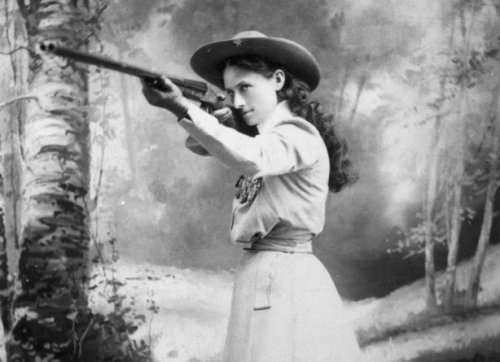
For a 46-minute documentary on the importance of the pioneer woman, and the legends that grew up around the likes of Calamity Jane, Annie Oakley and Belle Starr, please click on the image below. It’s well worth the time to watch, when you have a moment!
May 2, 2015
Filed under History, History Undusted, Military History, Videos
The Icelandic War Bride Mystery
I haven’t posted for a while, and I apologize; sometimes I just need “percolating” time: Those are times when I might not do much writing, but I’m thinking about it, gathering ideas and creative input. One idea or article or film leads to the next, and the next. An article that I came across recently was an amazing story called “The War Bride Mystery”:
A young Icelandic woman named Ragna Esther Sigurdardottir married an American GI just after World War 2; she was only 18 and married against her family’s wishes. Once in America, she found out that the man she married was a “bad apple” – a violent man who beat her through two pregnancies. The daughter would be mentally handicapped until her death at the age of 49. When Ragna was hospitalized from a beating, she finally obtained a divorce; the children were taken from her and placed in state care, and she disappeared. For 60 years.
What makes the story fascinating is that she went on to marry again, and have a second family. That second family knew nothing of her past until her daughter discovered on her own birth certificate that her mother had given birth twice before. Likely out of shame for past mistakes, and not wanting to hurt anyone, she’d kept the secret to herself. But her Icelandic family had never given up hope of finding her, and with the help of a stranger with skills in research, they were finally able to put the puzzle pieces together and connect with Ragna’s American family.
The story was published in the Oregonian newspaper in a series of articles; if you’d like to read the whole story, click here.
World wars opened up the possibilities for many cross-cultural relationships, and brought men and women into positions of both opportunity and vulnerability; being far from home, one could reinvent oneself, for good or bad. Ragna was unfortunate in the choice of her first husband, but her second appears to have given her a happy ending, and the story goes on as her Icelandic and her American families connect the dots, and come to peace about the story of the missing war bride.
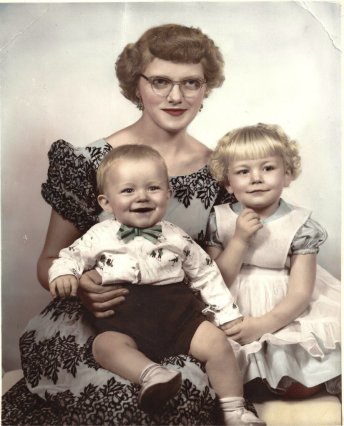
Ragna Esther Vickers with her second family’s children, in 1957; credit, Lou Ann LeMaster (right)
Filed under History, History Undusted, Military History
History Undusted: Mary Seacole
Have you ever heard of Mary Seacole? Probably not – I hadn’t, and I’m a history fan. Have you ever heard of Florence Nightingale? You probably had something taught to you in school about her. In reading about the two, the most striking difference, and perhaps the one that made all the difference in the paths their lives took, was that Florence was born into a rich, upper-class and well-connected English family; Mary was the daughter of a Scottish soldier and a Jamaican woman, who first taught her about medicine.

Mary Seacole. Source: Wikipedia
While Florence was famous for training nurses during the Crimean War, the English authorities refused Mary’s request to be sent there, too, even though it was known that the nursing care was far too inadequate; so she scraped the money together herself, travelled to the front lines on her own, and established a hotel in order to provide meals, a place of rest, and medical treatment for the wounded. She would often go out to the battles to bring in the wounded, and as mortars flew past, a soldier would shout, “Down, mother!” and she would hit the dirt, then pick herself back up and continue on. To tell her whole story would be a lengthy one here, but she has told it in her own words by writing a book: The Wonderful Adventures of Mrs Seacole in Many Lands, available for free as a Kindle or other formats here. You can also read more about Mary herself in the following links:
Her story is well worth reading, because it truly was an adventure, and it neither started nor stopped in Crimea. Kudos to the woman who overcame a triple-prejudice (being a woman of mixed race from a poor background) to achieve her calling and change the lives of the men she helped. It’s a history gem worth undusting!
Columbus’s Egg

Columbus Breaking the Egg, by William Hogarth, 1752
At the end of December, I began a new training course in crafting short stories; this has renewed my interest in finding good writing prompts. By focusing on something, you usually begin to see things related to it everywhere you go. For instance, if you’re doing a puzzle and focus on the edges, you’ll begin to see them right under your nose where they’d been all along – you just hadn’t seen them before because you’d been focused on a specific colour or a particular section.
My brain is usually on rapid-fire mode; in any given second, dozens of topics flash through my thoughts. Reaching into this stream and pulling out one particular topic to focus on can lead to interesting, related issues, and Columbus’s Egg is one of the results.
The original thought that I plucked from the stream this morning was, “How do you actually spell Kobayashi Maru?” (I know, right? I’m sure you had exactly that thought as soon as your feet hit the ground this morning; it’s just that my “morning” began this afternoon as I wrote through the night and got to bed at 9:30 this morning…) By looking it up, I came across the apocryphal story about Columbus:
The story goes that Christopher Columbus, while attending a dinner, was confronted with Spanish scoffers who said that, had he not been the first to discover the Americas, someone else would have done so. He made no answer but asked a servant to bring him an egg (presumably a boiled one). He then challenged everyone present: They must try to get an egg to stand on its end, with nothing to support it in that position. Everyone tried and failed; when it was Columbus’s turn, he tapped the tip of the egg on the table, and the crushed, flat end made the egg remain upright. the moral was that a solution is obvious to everyone, but only once it has been found by someone else.

the dome of the Santa Maria del Fiore cathedral
The story is recorded in Girolamo Benzoni’s History of the New World, published in 1565, as he related it to Columbus, but it is likely apocryphal as the same anecdote was circulating 15 years previously about the architect of the dome of the Santa Maria del Fiore cathedral in Florence, Italy.
My original thought’s term, Kobayashi Maru, is a term that any Trekkie will be familiar with: It was a no-win scenario designed to test Star Fleet cadets’ characters in the face of certain defeat. The term has gone beyond Star Trek and is used in business to illustrate the importance of changing the rules of the game in order to win, i.e. re-evaluating the foundation of a particular business scenario.
There are other such related terms, such as the Gordian Knot, Catch-22, and the Archimedean point. All of these concepts are about thinking outside the box, which is exactly what I try to do as a writer. If you’re also a writer, catch those thoughts – write them down, and let them foment into something interesting! Keep writing!
History Undusted: New Year’s Day
Happy New Year!
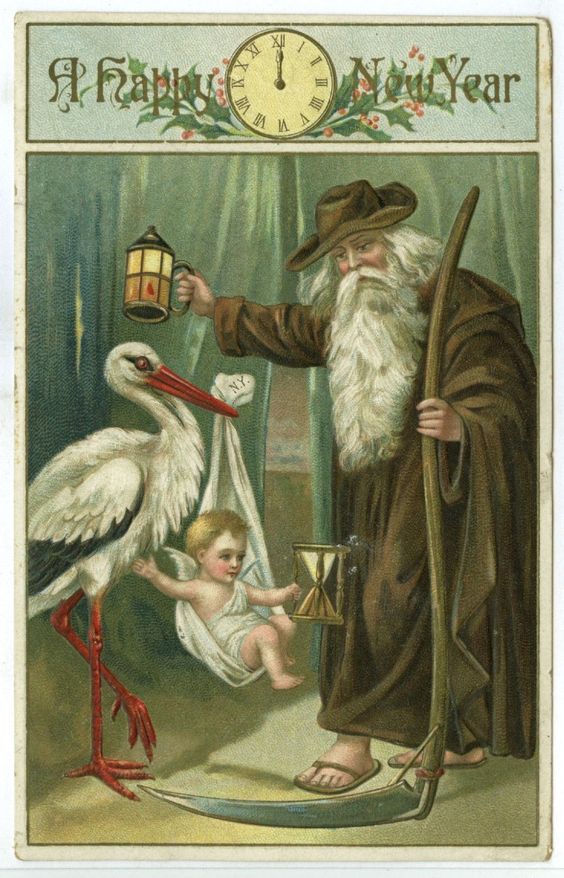 On such a day more than any other time of the year, one tends to think of time. Time has been personified through Father Time for centuries, with the New Year usually being a baby. But what we assume is a universal start of a new year actually isn’t. By the Julian calendar, today is 19 December 2018; by the Gregorian, 1 January 2019.
Perhaps it would help to review the Julian and the Gregorian calendars:
The Julian calendar was introduced by Julius Caesar in 46 BC as a reformation of the Roman calendar, which had months of 29 or 31 days (except February, which must have confused even the contemporaries of the system – it had 28 days or 23 or 24 some years). The Julian calendar has been gradually increasing in discrepancy to the Gregorian calendar, which means that currently, it is 13 days behind. It is still used today by the Eastern and Oriental Orthodoxy, and the North African Berbers.
The Gregorian calendar was introduced by Pope Gregory XIII in October 1582. The corrections spaced leap years to a set rule, making the average year 365.2425 days long. The rule is that every year exactly divisible by 4 is a leap year except those exactly divisible by 100; of the years divisible by 100, if it is exactly divisible by 400, it is a leap year. For example, the year 2000 was exactly divisible by 400, so it was a leap year; 1900 was not, so it wasn’t a leap year (it is exactly divisible by 100 but not 400).
Even though the Gregorian calendar is the only one most westerners have grown up using, it is not the only calendar in use – not by a long shot. There are many religion-related calendars, so some people grow up with 2 calendars (Ethiopian Coptics, Hebrews, and Chinese, to name a few). Added to the confusion is the civil interpretation of the leap year day of 29 February: If you were born on 29 February, in China your birthday in common years would be 28 February but in Hong Kong, it would be 1 March.
When the Gregorian calendar was introduced, imagine the confusion it must have led to (as it was not implemented everywhere at once): Pope Gregory XIII had no authority beyond the Catholic Church and the Papal States of the time, yet he was proposing changes to the civil calendar; this required adoption by the governing rulers of every individual country to have legal effect. It meant that, for the countries which adopted it, they had to have dual dates for clarity with neighbouring states and for their own people who were still adjusting to the fact that they’d just lost nearly 2 weeks. Other countries made a gradual transition, which must have confused things even more; for instance, Scotland adopted 1 January as the beginning of their New Year (previously, around 25 March) in 1600 (making 1599 a very short year), but didn’t switch to the Gregorian calendar until 1752, whereas the rest of the United Kingdom made both switches in 1752, meaning that for 152 years, Scotland’s dates were out of sync with their neighbouring countries.
So the next time you wish someone a Happy New Year, remember the privilege of sharing a mutual understanding of the same date with that friend. Even in our global village, it’s not something we can take for granted!

Filed under Articles, History, History Undusted, Science & Technology







 Stephanie Huesler