Tag Archives: Choctaw

Etymology Undusted: Native American Borrowings

Though some of these words have probably made it across the Pond, American English is the focus of these borrowings: When the pioneers and explorers began moving westward across the North American continent, they encountered geographical features, plants, animals, and situations for which they as yet had no word; thus, the Native American words were borrowed. I won’t go into the sordid history of colonisation’s tactics here; suffice to say, it was not a mutual exchange once Europeans began arriving in larger numbers.

According to some estimates, nearly half of the U.S. state names derive from or are directly related to the regional indigenous tribes. Here are a few place name examples: Chicago (from the Miami-Illinois Myaamiaki tribe’s word, shikaakwa, wild onion); Dakota (from the Sioux language, meaning friend or ally); Oklahoma (from Choctaw, red people); Utah comes from the Ute tribe; Mississippi (from the Ojibwe phrase misi-ziibi, meaning great river); Milwaukee (Algonquian, meaning good land); Alabama (from the Alabama tribe, Alibamu); Alaska (from the Aleut word alaskag or alyeska, meaning mainland or great land); Connecticut (from the Mohican/Algonquian word quinnehtukqet, meaning beside the long tidal river); Iowa was named for the Ioway people, commonly interpreted as beautiful land; Kansas, named for the Kansa/Kaw tribe, often translated as people of the south wind; Wichita, Kansas was named for the Wichita tribe.

Some animal names include caribou, chipmunk, husky, moose, muskrat, opossum, raccoon, skunk, woodchuck, coyote, ocelot, mole, chinchilla and condor.

Some geographical features include Lake Tahoe (Big Water); Potomac River (Place where people trade); Mount Moosilauke, New Hampshire, from moosi and auke, meaning bald place; Mount Tamalpais, California (from the Coast Miwok people, meaning bay mountain);

One example of the reverse is that the Ochese Creek tribe were called Creek after the geographical feature. Creek is likely from Old Norse kriki, meaning corner or nook, extended to inlet or short arm of a river; a Swedish dialect has krik, meaning corner, bend or creek, cove.

And finally, a few botanical borrowings (including some from the Nahuatl, or Aztec, tribe*): Hickory, pecan, persimmon, squash, succotash, chayote, pawpaw (tree), guava, avocado*, tomato*, guano*, mesquite*, and mezcal*.

Do you know any other words borrowed from Native American languages? Please share them in the comments!

(AI Gen Image)

7 Comments

Filed under Articles, Etymology, History, Liguistics, Linguistics, Lists, Nature

History Undusted: Code Talkers

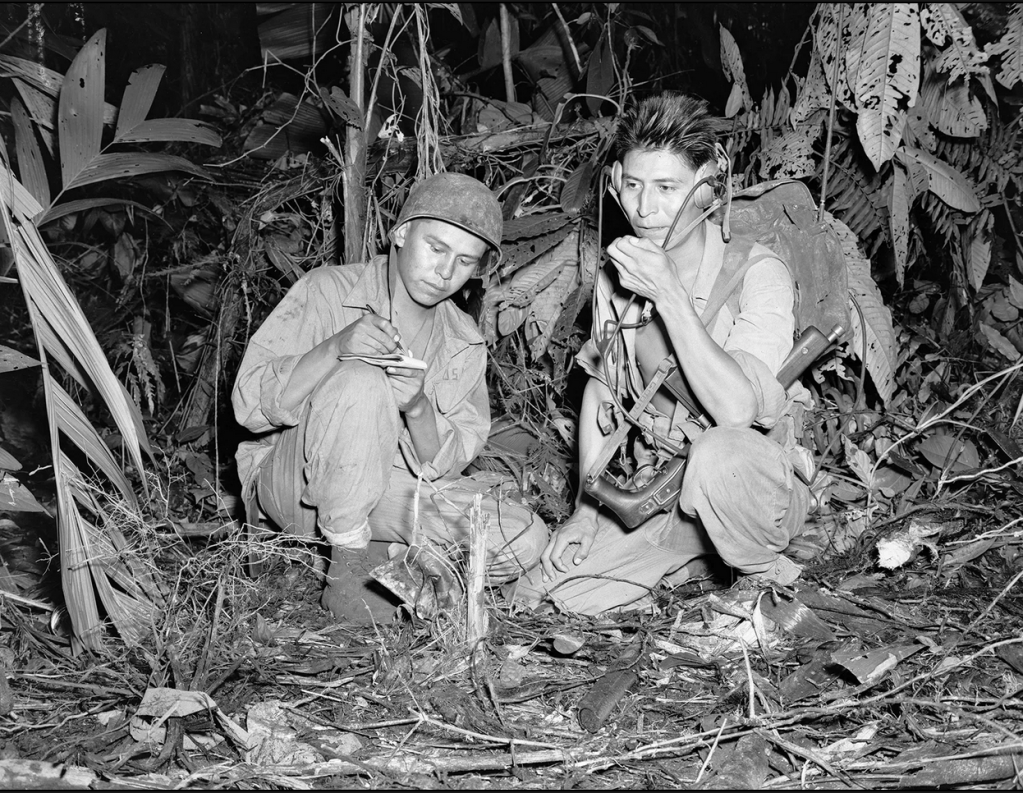
Navajo code talkers, Cpl. Henry Blake Jr. and PFC George H Kirk, who served with the Marine Signal Unit.
Source: Public Domain

Code talkers were Native Americans from various tribes who were employed by the US military during World War 2 as radio operators; their native tongues were indecipherable to anyone listening in, and as a result, their transmissions of sensitive messages were invaluable in allied victories on every Pacific island, including Iwo Jima, as well as in Europe in decisive battles.

Codes were developed based on the languages of the Assiniboin, Cherokee, Cheyenne, Choctaw, Comanche, Cree, Crow, Fox, Hopi, Kiowa, Menominee, Navajo, Ojibwa, Oneida, Osage, Pawnee, Sauk, Seminole, and Sioux peoples. These men could transmit over open radio channels, knowing that the enemy would be unable to break their code. If a military term did not exist in their languages, a phrase was used in its place: A submarine became an iron fish; a fighter plane became a hummingbird; a squad became a black street. In all, throughout WW2, over 400 terms were developed and needed to be memorised by each code talker.

The code talkers continued to be used after the end of the war, which delayed their recognition by the wider public – until documentaries about their service finally began to emerge in the 1990s. In 2002, the U.S. Congress passed the Code Talkers Recognition Act, followed by a similar act in 2008 to honour the tribes who used their languages in the wartime service of the United States.

The use of code talkers was a socially complex one: The languages that were so invaluable to the US military were the very tools that the US government had been trying to eradicate in the name of cultural assimilation. Between 1880 and 1905, boarding schools were established, in which Native American children were taken from their families and educated; they were taught to reject their Native values, languages, traditions and anything to do with their native culture. They were punished, sometimes severely, for using their native tongues; they were forced to dress like the “white man”, and were not allowed to wear their native garments or have any vestiges of their tribes. Some 100,000 Native Americans were forced to attend such schools. Parents who resisted the kidnapping of their children were imprisoned; several from the Hopi tribe were even imprisoned on Alcatraz Island. Though most of these schools had been closed by the 1930s, the cultural and psychological damage had taken its toll on many native people groups, many of whom still struggle with their cultural identities today. At the time these young warriors were called into military service or chose to join after the bombing of Pearl Harbor, many were not even legal American citizens, yet they fought for their land and their families.

With that background in mind, the dedication and ingenuity of the code talkers are all the more astounding. They were often in the first wave of soldiers deployed as they were needed to pass on messages for the strategic planning and execution of driving back the Japanese from the Pacific islands. In addition to the Pacific arena, the European front also benefited from the code talkers’ ability to communicate directly with each other: Comanche code talkers were assigned to the 4th Infantry Division when it landed at Normandy in June 1944. In this context, some of the Comanche substitutes were turtle for tank, a pregnant bird for bomber, and crazy white man was their term for Adolf Hitler – a more insightful term has never been more aptly applied.

For a fascinating look into a history largely forgotten, please click on the following video recounting code talkers telling their stories firsthand as they return to the Pacific Islands with their families and find peace after decades of PTSD. The video is 1:10, but well worth the time when you can take it: Navajo Code Talkers of World War II (2018) | Documentary

Other sources:

https://eji.org/news/history-racial-injustice-cultural-genocide/

https://www.britannica.com/topic/code-talker

8 Comments

Filed under History, History Undusted, Humanity Highlights, Liguistics, Linguistics, Links to External Articles, Military History, Psychology Undusted, Snapshots in History, YouTube Link

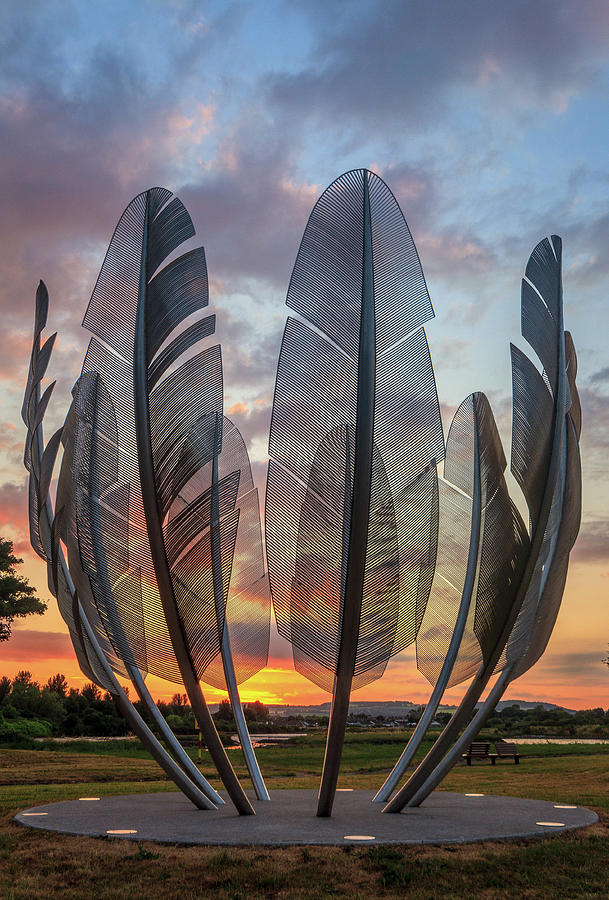
History Undusted: The Kindred Spirits of the Choctaw & the Irish

I recently heard of an unusual historical connection between a tribe of survivors from the Trail of Tears, and those struggling with survival half a world away during the Irish Potato Famine, 1845-1852.

The Choctaws were one of the Native American nations who were forcibly displaced between 1830 and 1850, along with Cherokee, Creek (Muscogee), Seminole and the Chickasaw nations. Basically, any land the white insurgents wanted, they took, driving out tribes from their ancestral homes; thousands died of exposure, starvation and disease on the road to their designated reserves.

But in the midst of their own sorrows, the Choctaw people heard about the plight of the Irish famine, and they responded with generosity. They collected $170 (which would be around $5,200 today) and sent it to the Irish in 1847. While gifts flowed to Ireland from various sources, the gift of this native tribe touched the Irish deeply; despite their own tragedies, they reached out and gave the Irish people hope – hope that they weren’t alone and that others cared.

Fast-forward to the Covid-19 challenges facing many Indian reservations: Many people are unemployed and barely scraping by; a lack of running water or electricity is common, so you can imagine how challenging it is for them to keep their hands clean and to be able to meet hygiene requirements – as a result, the Corona Virus has swept through these impoverished communities. A Navajo woman, Ethel Branch, started a GoFundMe, hoping to raise money to help support reservation families; she set the goal at $50,000, thinking it was far too ambitious and expecting only about a thousand dollars to come in. But the Irish heard about it, and they’ve been paying it forward, back to the people they never forgot and who they teach about in their history lessons; so far, over $5 million has been raised.

For a short news report on the story, click here.

One tweet made all the difference in this new chapter of an intercontinental friendship. This story reminds me that when we respond with empathy and generosity, even the smallest acts of kindness can encourage others, and, as the saying goes, what goes around comes around.

Stay safe, stay healthy, and keep an eye out for those who need an encouraging word or deed – you may change a life.

Alex Pentek’s “Kindred Spirits” sculpture, County Cork, Ireland

5 Comments

Filed under Articles, History, History Undusted, Snapshots in History, Videos