Tag Archives: Scotland

History Undusted: MacGyver and Blue Peter

This week’s topic arose from a conversation with my husband; we were discussing a temporary fix we had made at his mother’s home to make something usable until we could find a permanent solution. I said that we had “MacGyvered” it, and he had never heard the word before. That led me down a rabbit hole to naval flags, a card game, and British tele.

First, MacGyver: Though I knew the term, I had no idea what its origin was. The name comes from the eponymous character in a US television series that ran from 1985 to 1992; Angus MacGyver was a non-violent, resourceful genius, and his favourite tool was, of course, a Swiss Army knife. Though I was living in the States at that time, its running years explain why I didn’t know of the origin: In 1985, I was in college, having finished high school a year early (I took my final two years in one); I was too busy to watch television. In 1986, I moved to Hawaii to do a Discipleship Training School (DTS) with Youth With A Mission (YWAM), and went from there to the Philippines, where we worked in the red-light district of Olongapo. 1987 was a year of multiple jobs, earning money and hanging out with college friends – again, TV was not a priority. In 1988, I emigrated to Scotland.

The traits mentioned above made MacGyver a verb; when something is “MacGyvered“, a simple yet elegant solution to a problem is employed by using existing resources. At my mother-in-law’s home, we needed to level a new microwave that was sitting tilted atop the welded inserts that fit the original one. Our solution was to use an actual leveller, removing the end caps to make it fit inside the metal frame.

Now, down the rabbit hole: In the time of British ships of sail, when a blue flag with a white square or rectangle in the centre flew alone, it served as the sign for imminent departure (signifying P, leaving port); any passengers and crew in port would then return to the ship. The flag came into use in 1777, and by the turn of the century had become known as the blue peter. I have my suspicions that the term may have come from the card game of whist, in which a strategic manoeuvre known as the “blue peter” calls for trumps by throwing away a higher card of a suit while holding a lower one. No one can say for sure which came first, the ship or the card, so to speak, but the connection is likely.

The British children’s television programme, Blue Peter, first aired on 16 October 1958; the name was inspired when Owen Reed, the producer, was inspired by a radio programme for children (produced by Trevor Hill) that began airing on television once a month; it was launched aboard the MV Royal Iris ferry on the River Mersey, Liverpool, with presenter Judith Chalmers standing at the bottom of the gangplank to welcome everyone aboard. Reed was so captivated by the idea, and with the blue peter flag, that he asked to rename the programme (then called the Children’s Television Club) and take it to London.

Blue Peter, catering to younger children, is the longest-running children’s TV programme in the world; over the years it has changed with the times, and its content is wide-ranging, but they still give a nod and a wink to that original blue peter flag by giving out badges in the shape of a shield with a blue ship of sail on a wave. It is awarded to viewers for achievements, efforts, or creative work. There are different levels of badges, with the gold badge being the most prestigious; this is usually given to presenters upon their retirement or to people who have accomplished something extraordinary.

Among other things, the show is famous for its segments of “makes” – demonstrations of how to make useful objects, or how to make something to eat. This is the element that linked the term Blue Peter to MacGyver in my mind, so now ya know!

What is something that you have MacGyvered? And do any of my British followers know if “Blue Peter” is used as a verb in a similar fashion? Please comment below!

Blue Peter Badge

1 Comment

Filed under Etymology, Family History, History, History Undusted, How It's Made, Liguistics, Military History

What Rubber Ducks Tell Us about the World

Before we dive into today’s topic, let’s talk about two of my favourite words: Flotsam and Jetsam. I just love the way they sound! The way I understand them, the difference between the two is intention: Flotsam are things unintentionally donated to the sea – things washed overboard from a ship, or things blown off land by a storm. Jetsam is rather something intentionally jettisoned – if a ship needs to lighten its load to avoid sinking, for instance; in the case of the great garbage patches, it is a mixture of both: Without proper disposal systems in place, such as municipal garbage disposal, or education in ecological footprints, social debris is simply tossed and forgotten. But it ends up somewhere, often finding its way to the ocean through rivers and streams. And this leads us to the topic of ocean currents.

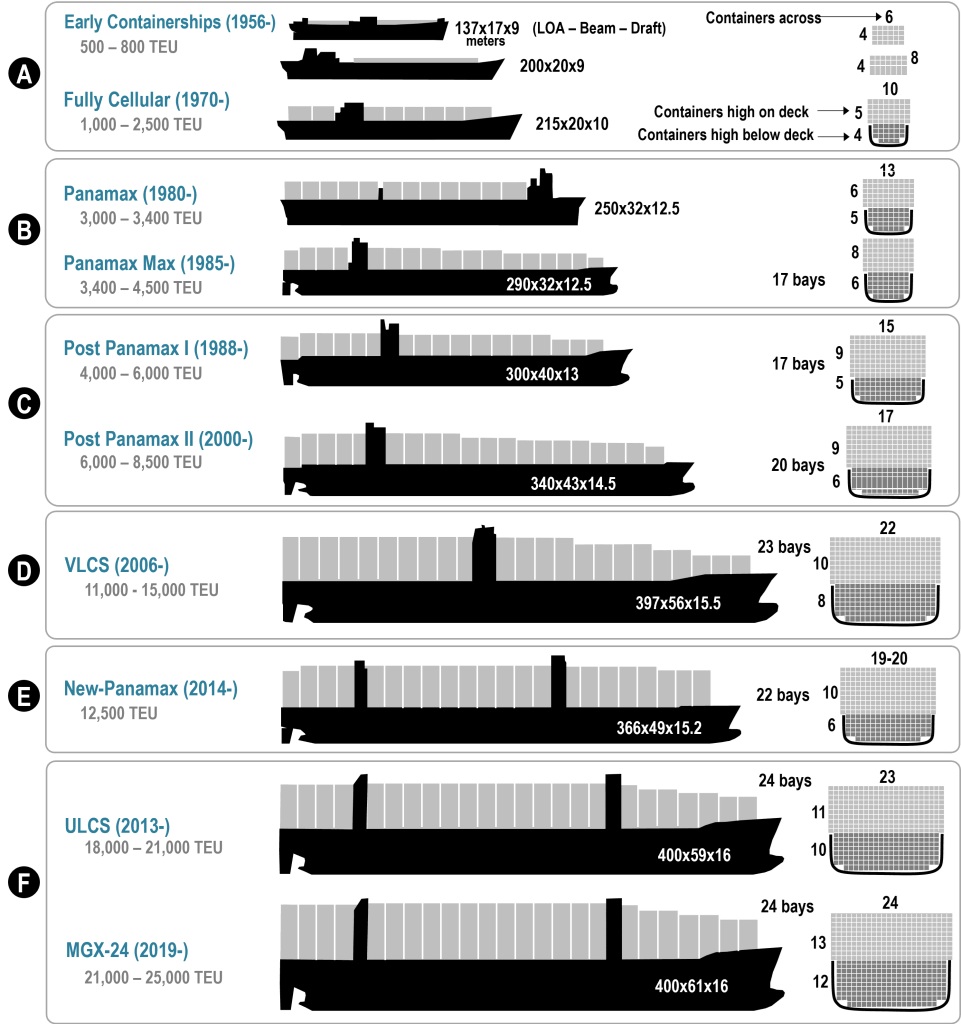
Today’s topic is a fascinating dive into a world of global trade; research has shown that around 90% of international trade is carried by shipping containers, and the World Bank statistics show that in 2019, nearly 800 million were shipped annually; given the increase over the past few years in online shopping, I can imagine that figure is by now significantly higher. The unit used for measuring how much a ship can carry is TEU (Twenty-foot Equivalent Unit); the chart below shows the adaptation of ship sizes over the years, driven by global trade:

Now, imagine a shipping container stacked at the top of a pile that’s the height of the actual ship; add to that ocean swells and waves. I’ve been on ships in the Atlantic facing waves so high, I could count fish through my window. I’ve been on ships in the “Sailor’s Nightmare” – the Pentland Firth passage between Scotland and the Orkney Islands – which is characterised by rough bathymetry (the underwater equivalent to topography) and extremely high currents (which also ricochet and collide off of the coasts of the islands and Scottish cliffs), tossing anything on the surface like a leaf in the wind. The World Shipping Council estimates that, over the past 16 years, an average of 1,500 containers have been lost at sea annually. Every year, the contents of those containers are carried along until the container is breached by either corrosion or impact. Then the contents are carried by ocean currents; where they finally make landfall depends on where they entered the ocean. If you were marooned on an island and tossed out an SOS in a bottle, it could make landfall anywhere between two and one hundred years – or never, if it’s caught in a gyre (more on that later). A message in a bottle was found on a beach in Norway that had been sent off 101 years earlier.

So what does that have to do with rubber ducks? In 1992, a shipping container with a consignment of what has been dubbed Friendly Floatees – 28,800 yellow rubber ducks, red beavers, blue turtles and green frogs – was washed overboard (along with 11 other containers) into the Atlantic. Because they are designed to float on water, they have survived at sea for an amazingly long time. Seattle oceanographers Curtis Ebbesmeyer and James Ingraham, who were working on an ocean current model, OSCUR (Ocean Surface Currents Simulation), began to track their progress; and those wee toys went on all kinds of adventures: Ten months after they broke free, some began showing up along the Alaskan coast; some showed up in Hawaii; some went to see the site of the Titanic sinking before getting frozen into ice, eventually emerging again and travelling to the US eastern coast, Britain and Ireland, making landfall around 2007. The researchers contacted coastal regions, asking beachcombers to report their finds; they recorded findings and began to accurately predict where landfall would occur. Over the years, the ducks and beavers had faded to white, but the blues and greens had retained their colours.

Flotsam and Jetsam have played key roles in helping researchers understand not only how ocean currents travel, but also how the areas known as garbage patches, oceanic gyres, are formed and retained by the swirl of ocean currents. Currently, five patches are known; many of the rubber ducks are likely caught in such currents, so we may hear about more white ducks finding their way to beaches in the coming years.

So the next time you see a rubber duck, think of all the adventures its siblings have been on!

If you’d like to see for yourself how ocean currents work, click here for an interactive map; just click on any area of the map to see how and where the currents carry debris from that point.

6 Comments

Filed under Articles, Etymology, History Undusted, Images, Nature, Research, Science & Technology, Snapshots in History

How It’s Made: Fireworks

Around the world, fireworks are a traditional part of certain celebrations: Here in Switzerland, the two national nights would be the 1st of August (1291, Independence Day), and New Year’s Eve. In America, the 4th of July is probably the most widespread fireworks night. In Japan, fireworks competitions are enjoyed by spectators during the Sumidagawa Firework Festival, and in India, it’s Diwali, the Festival of Lights. In many countries in South America, Christmas is the big night; in Britain, Guy Fawkes Night is celebrated with both fireworks and bonfires (in Scotland); he was most associated with a failed gunpowder plot intended to blow up parliament and assassinate King James I of Scotland / James IV of England and Ireland.

Most people have, at some time in their lives, seen fireworks go off; but most people have no idea how they produce varying shapes and colours. Derek Muller, aka Youtuber of the Veritasium channel, goes into the details of what makes fireworks take shape, have varying colours and enable them to have precision timing in displays. To watch the video, called “The Hidden Science of Fireworks”, which includes footage of a drone’s perspective amid a fireworks display, just click on the image below! Enjoy!

1 Comment

Filed under How It's Made, Nature, Science & Technology, YouTube Link

Psychology Undusted: Digital Dysmorphia

This topic is a bit of a rabbit hole, and longer than my usual article, but I feel that it’s an important issue to address.

Image Credit: Spark.ac.in

On one hand, living in a digital age is a blessing: It allows us to reach out and stay in contact with distant friends, family and, in these months of lockdowns and home offices, our co-workers. It allows us to learn anything, with a world of libraries and teachers and experts at our fingertips, but on the other hand, this age has also brought with it a phenomenon known as Digital Dysmorphia, Zoom-, Instagram-, Snapchat-, Facebook-, or simply Body Dysmorphia.

When lockdowns started in 2020, it wasn’t only a personal challenge for many, but also a huge challenge for businesses of every branch. Suddenly their personnel could no longer travel to international, or even national, meetings; they couldn’t meet their co-workers face to face, or even go into the office. Home office became, for many that still had work, a dream come true: Businesses that for years had claimed that home office would be too impractical suddenly found ways to carry on using tools like Zoom and Skype to gather virtual groups together for meetings. It became a common joke that many would be dressed for success on the top half, while the unseen half was PJs or boxer shorts or tutus, like John Krasinski’s “Some Good News” YouTube channel.

So what is Digital Dysmorphia? It’s the separating of oneself from one’s own real image by the distortion brought about through filters, enhancers and additions of body parts (e.g. large eyes, or bunny ears), using apps such as Snapchat; it’s the altering of reality, modifying self-perceived flaws, and presenting an altered reality of not only one’s physical appearance, but even one’s lifestyle (Instagram). Its danger is the destruction of self-esteem, fear of getting “caught in the lie” by being seen face-to-face by someone who only knows your digitalized self-image, and therefore fear of seeing people in person. It’s a different phenomenon than, say, knowing you need to update your online profile picture that was taken a decade ago. This dysmorphia, also known as BDD (Body Dysmorphic Disorder), is an active destruction of self-esteem through choosing distortions over reality. When someone has BDD, they are focused on their supposed physical flaws for hours a day, and they may take drastic measures to hide or fix them. BDD is sometimes diagnostically confused with OCD, social anxiety disorders, social phobia or depression. BDD was first described around the turn of the 20th century, but has only been taken seriously as an illness in the past few decades. To find out more, here is an interesting YouTube video (~8 min.)

The reason visual apps such as Zoom have made a negative impact on people is because we often see the image of ourselves onscreen as unflattering, perhaps because the camera sits too low, but also because we are looking at our own face for an hour or more at a time (it’s natural to be curious about how others see us, and our eyes are drawn to our own image because of it); while you might not be a teenager glued to your phone, if you’ve used Zoom or Skype, you’ve seen yourself through digital eyes.

Women especially, but not exclusively, have an added challenge: Every magazine image, and many social media images, are all air-brushed, photo-shopped and tweaked beyond humanly-attainable standards. We can never live up to the standard of beauty that marketing companies press on us, and that can wear on someone’s self-esteem.

Another danger in the digital age is the addiction to selfies: Trying to capture the perfect shot, the perfect moment, keeps people so focused on themselves that they completely miss the actual moment they’re trying to capture themselves in. Once in Scotland, my husband and I were enjoying a window-side lunch in a small road-side restaurant on the Isle of Skye; a bus-load of Asian tourists pulled up, and they faced the restaurant to take selfies of themselves with the background (which was the majestic Cuillin mountain range); they did not once turn around to see the actual scenery, but took dozens of photos of themselves before loading back up into the bus and leaving. They could have just saved themselves the trip, stayed at home, and put up a green screen with an image in the background.

Although we may tend to think of girls when we think of selfie addiction, the first British documented case was in 2014, then-19-year-old Danny Bowman. To read a fascinating article, click here: “Faking it: How Selfie Dysmorphia is Driving People to Seek Surgery”. Danny got to the point that he tried to commit suicide but was found in time by his parents and rehabilitated. He now raises awareness about mental health issues.

Image Credit: Bored Panda, Byron Denton

A few years ago, plastic surgeons were being asked to make a person look like this or that celebrity. Then lockdowns came into our collective lives, and Zoom became a household name; but with the sudden increase in digital contact, another, darker phenomena also increased, dubbed by cosmetic surgeons as the “Zoom Boom” to describe the increase. Now to be fair, Zoom is by no means solely responsible; every social media platform has the same dangers. Today, cosmetic surgeons are getting requests to make a person look like their digitalized self; but the requests are often not only impossible (e.g. Anime eyes or removing skin pores to give a porcelain complexion), but would also damage the person’s self-image further. A psychological anorexia, of sorts, it’s addictive and destructive. Plastic surgeons that place the patient’s mental health above their dollar signs must draw moral lines of age limits (younger and younger people are trying to get “preventative Botox” or “corrective” surgeries) and psychological screening.

For more in-depth articles on the topic, just click on the images in this article.

So, how can we avoid falling into the BDD traps? There are a few things you can do:

  • TURN OFF THE CAMERA: Just because you have the ability to have a visual call does not mean you must. If the caller complains that they can’t see you, just tell them to use their imagination, but leave the camera off. This can also apply to phone cameras – if you’re tempted to take selfies, put a sticker over the camera [this is something I do anyway, over front and back cameras – not because I take selfies, but because apps such as Google can and do hijack your camera to see you and your environment, and listen in… so keep your cell phone on flight-mode whenever possible, and “blindfold” them!].
  • LEARN TO IDENTIFY NEGATIVE THOUGHT PATTERNS: Everyone has something about their physical appearance that they don’t like; but if you catch yourself dwelling on a particular feature, try to change your perspective about it – try to compliment yourself, and then move on… positively focus on someone or something else besides yourself.
  • APPRECIATE YOURSELF: Taking care of yourself, getting enough rest, eating wisely, and exercising will all go a long way to restoring your self-esteem. Set small goals for yourself each day, and celebrate those times your reach those goals, giving yourself a big dose of grace when you’ve not been able to reach them. Taking this attitude will alleviate stress, which goes a long way toward supporting mental health.
  • GIVE COMPLIMENTS: This not only takes the focus off of ourselves, but it may be that the other person is struggling in this area, and a timely compliment may be the thing that saves their lives, literally. It’s never wrong to compliment someone, friend or stranger.

I hope that this “undusts” this topic a bit for you; if you know anyone who’s struggling with their self-image, let them know that they’re not alone, and that they’re beautiful.

5 Comments

Filed under Articles, Links to External Articles, Lists, Psychology Undusted, Research, Science & Technology

Wallace Hall of Heroes: Margaret MacDonald Mackintosh

After our holidays in Lugano, mentioned in the last post, I went to Scotland with my husband for a five-day whirlwind visit with friends. Spending time together with them morning and evening, we took day trips out in between and were able to see astonishingly much in that short time!

One of the things we went to see was the Wallace Monument, near Stirling; we trekked up the steep, narrow spiral staircase to the top, stopping along the way at each of three levels before reaching the top (with a stunning view). One of the levels was called the “Hall of Heroes”: Filled with marble statues of Scottish scientists, politicians, shakers and makers of the past centuries, without exception, they were all men. Until this year. Two statues of women have been added, along with 6 pillars of women who were chosen by a panel of judges from among the long list of Scottish women who have been influential in Scottish history.

As the saying goes, “Behind every great man, there’s a great woman”. Many of these women were ignored by history, which is more often than not written down by men, from a man’s perspective, for a man’s world. I’m not a feminist by any stretch of the imagination; but I do have a strong sense of justice, and I am a woman who has often been overlooked and marginalized by society, by prospective bosses, and by mentalities that belittle women solely based on gender. So I take pleasure when I see women from the past being acknowledged for the contributions they’ve made, and I take special pleasure in “undusting” their history for you here on my blog. With that said, here’s the first:

How many of you are familiar with Charles Rennie Mackintosh? Perhaps not the name, but certainly the distinctive art style he is known for:

Charles Rennie Mackintosh Rose

He is frequently claimed as Scotland’s most influential and distinguished artist, yet he once reportedly said of his wife (whom he married on 22 August 1900), “Margaret has genius, I have only talent.” If you look at her own work, you see that she was the main inspiration behind his more simplistic designs; the famous “Mackintosh rose” is clearly seen in her works:

This slideshow requires JavaScript.

Margaret MacDonald Mackintosh, born 5 November 1864, was part of what was known as the “Glasgow Four”, which included her sister Frances, Herbert MacNair, and Charles Rennie Mackintosh, and during her lifetime, she was recognized for her defining influence in the “Glasgow Art” style of the 1890s, during which period she and her sister opened an art studio together (the MacDonald Sisters Studio at 128 Hope Street, Glasgow) – at a time when women were still very much expected to get married and live a quiet life in submission to a husband. Though she was known and respected in her own lifetime, consequent generations have forgotten her genius; for instance, Charles was famous as an architect, yet in a letter to his wife he wrote, “Remember, you are half if not three-quarters in all my architectural work.” Her interior designs (often mixed mediums, including the use of gesso, beads, metal and textiles) made his buildings typically “Mackintosh”, yet there is not a single mention of her in an article about Mackintosh architecture on a website devoted to architectural design, though they had ample opportunity to give her deserved recognition.

Margaret MacDonald Mackintosh - Interior Design for a Music Room

Margaret MacDonald Mackintosh – Interior Design for a Music Room

Between 1895 and 1924, she contributed to more than forty European and American exhibitions. She exhibited with her husband at the 1900 Vienna Secession, where her work could arguably be described as an influence on the Secessionists Gustav Klimt and Josef Hoffmann, yet again, she is ignored posthumously.

Ill health decreased her artistic output from around 1921, and she passed away in 1933, five years after her husband’s death. Her artwork lives on, and I hope her legacy earns equal recognition with that of her husband’s as times change, and the women of history begin to receive the recognition they truly deserve.

6 Comments

Filed under Articles, History, History Undusted, Research, Snapshots in History

Life & all that Jazz: Flash Flood

LimmattalerZeitung May 2018

Credit: © KEYSTONE/EPA MTI/PETER KOMKA

For weeks, my husband and I had marked in our agendas this past Friday as the evening to do a bit of cleaning in our cellar – getting rid of bits & bobs we no longer use.  Nature gave us a helping hand in the decision process (you know the sort: Do we really need this? Should we chuck that?) when our town was hit by a flash flood last Wednesday.  To have a (muddy) tour of our area, just click here. A waterfall came pouring in around the frame of our cellar window, flooding the entire level; every neighbour had the same problem, so we’ve seen a lot of each other this week! Fortunately, our micro-geography kept us from getting a mudslide from the nearby (higher) agricultural and forest areas, and the water only reached 4-5 cm.  Others were not so well-situated, and several underground parking garages were buried in mud baths up to the car roofs; some people had hurried home to avoid hail damage to their cars, only to have them totalled as they were parked inside…


The company that handles our property’s administration organized de-humidifiers and large fans for each cellar room, but we had a busy few days trying to assess damage, getting things dried off or off the floor to let it dry out; the only things potentially disasterous were the small freezer we had there (fortunately, we didn’t have much in there at the time!), and boxes of one of our music CDs (ironically, titled “Plausch im Räge” – “Fun in the Rain”!); only the bottom boxes were affected, so I only had to hand-towel-dry 300.  When Friday rolled around, it was quick and easy to downsize our storage! It’s liberating to simplify; we tend to collect things over the years – large plant pots, picture frames that we used to have hanging in our old flat but which have had no wall space here (because of odd-shaped walls in every room), an assortment of hardshell suitcases that weigh more than half of today’s luggage allowance when empty, and so on and so forth. What we could, we gave to a charity shop, and the rest was quickly disposed of at a nearby collection service.  There’s still more to sort out, but we’ll have to wait for the floor to dry completely before we can move things back into place to get to the other half.

I was reminded once again what great neighbours we have; everyone pitched in together, and asked if they could help, or were concerned if others had suffered loss; all of our cellars have been open and drying, and everyone trusts each other with that; everyone is in and out of the other cellars, emptying the dehumidifiers’ tanks when they need them, checking window seals, etc. I’ve lived in areas (e.g. in Paisley, Scotland) where that would simply not have been possible – a nearby neighbourhood, Ferguslie Park, was one of the roughest in the UK, and if you left a bike outside of your flat inside your building, even with a lock, it would be gone within a few hours – or sometimes even minutes.  I hadn’t realised how used to the sound of gunfire I’d become until I moved to Switzerland; when the first national holiday approached and people started setting off fireworks a few days early, I’d just assumed they were gunshots.  Here, neighbours pull together; people greet each other, even strangers, in the streets; and though modern society tends to isolate each of us in our own, busy little bubbles, sometimes it’s a good thing that those bubbles of self-sufficiency, routine and agendas get popped.

14 Comments

Filed under Articles, Links to External Articles, Videos

The History of Wedding Rings

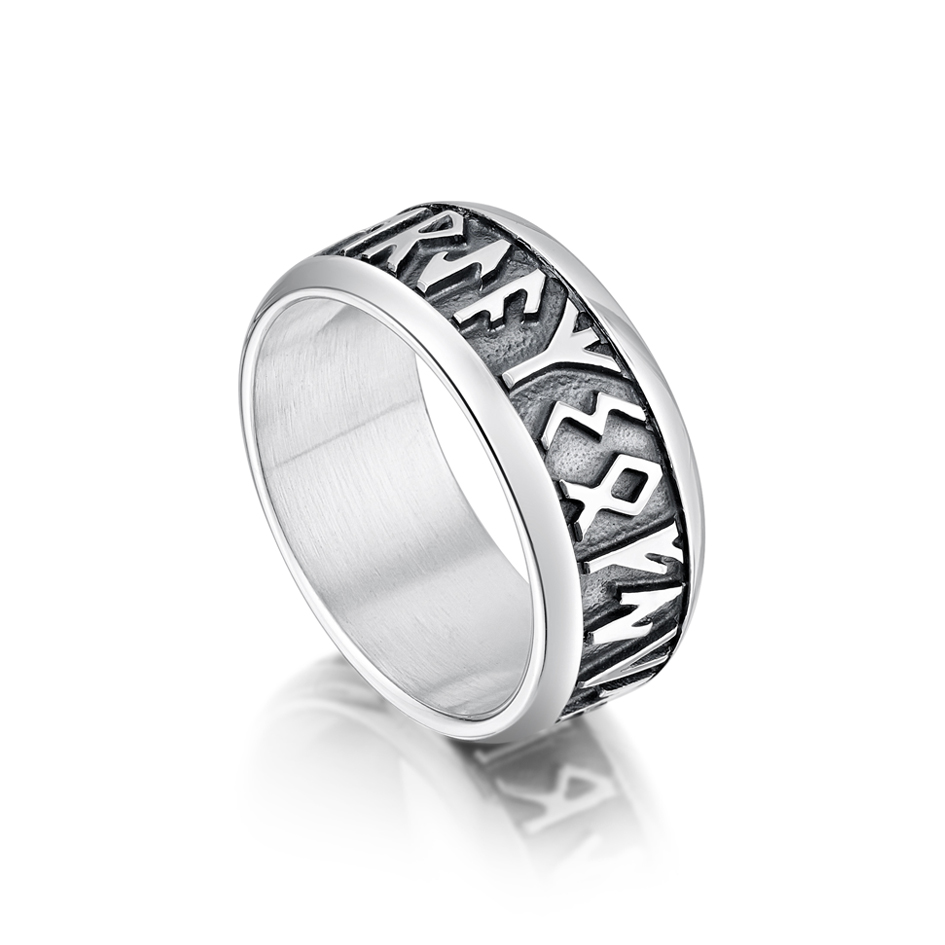
Have you ever wondered when the tradition of wedding rings began?  How they developed in various cultures around the world?  To read a fascinating article on the topic, just click on the image below; the article includes images of amazing works of art worn on fingers centuries ago.  The image below, by the way, is of my own wedding ring; it’s a runic ring designed by Sheila Fleet in Orkney, Scotland, and it says, “dreams of everlasting love”.

Runic Wedding Ring


16 Comments

Filed under History, History Undusted, Links to External Articles, Research

History Undusted: Loch Eriboll, Scotland

map-loch-eriboll

Loch Eriboll and region.  Click to enlarge.

Loch Eriboll is a sea loch along the northern coast of Scotland, roughly 16 km (10 mi) long.  It’s been used (probably as long as inhabitants were in the area) as a safe anchor from the stormy seas off of Cape Wrath and the Pentland Firth.  Bronze Age remains can be found in the area, including the souterrain I wrote about recently.  There’s also a well-preserved wheelhouse on a hillside above the western shore, and on the small peninsula jutting out into the loch you’ll find the ruins of a small scale lime industry that developed there in the 19th century.  The shores around the area are fascinating, as the geological composition is a conglomeration of an amazing variety, split along the eastern shore of the loch by the Moine Thrust.  Even along the roads, you’ll find chunks of pink metamorphic rocks glittering with mica. 

DCF 1.0

Loch Eriboll, taken Summer 2012, © Stephanie Huesler. Click to enlarge.

In 1945, thirty-three German U-boats surrendered in the deep loch, ending the Battle of the Atlantic.  Eilean Choraidh, the largest island in the loch, was used as target practice for aerial bombing due to its size and resemblance to the shape of a ship.  Along the western hills, you can see words written with stones near the settlement of Laid:  They are the names of warships, such as the Hood and Amethyst, arranged there by the sailors of those ships. 

152-traigh-allt-chailgeag-20-july-2012

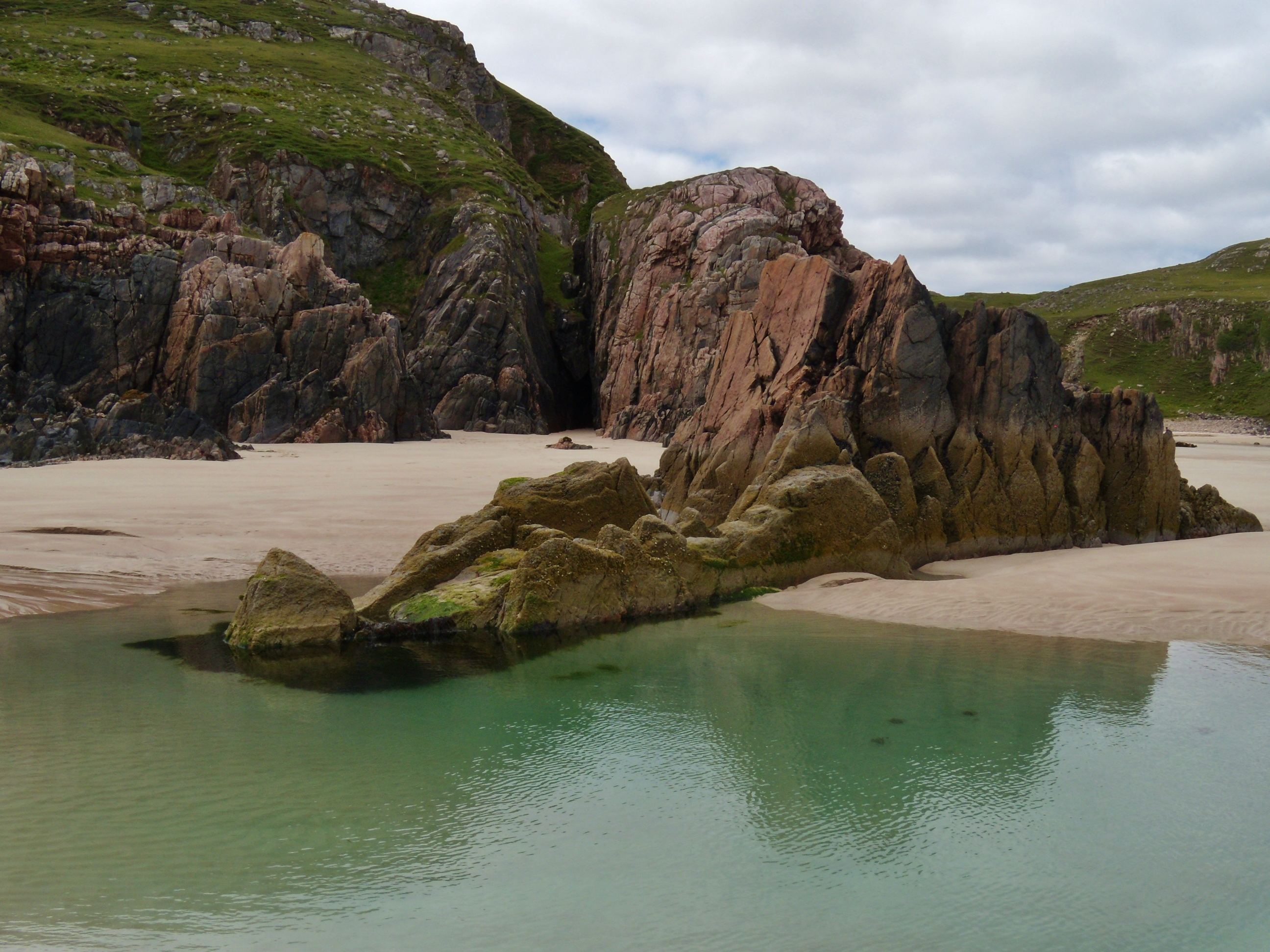
Tràigh Allt Chàilgeag Beach, taken Summer 2012, © Stephanie Huesler.  Click to enlarge.

Not far from Loch Eriboll, on the way to Durness, is a treasure:  Tràigh Allt Chàilgeag is a beach of vertical walls of stones layered in colours ranging from black to pink.  When the tide is out the beach is endless, and when it’s in, climb the rocks!  The beach was created as the Ice Age sheets began to melt, pushing the walls of rocks upward as the island actually rose, no longer being held down by the massive weight of ice. 

On a clear day, you can see the southern-most Orkney Isles, and the waters around the coast are still busy highways for ships of all sizes.

My husband and I were on holiday in Scotland in 2012, and we spent several days in this area so that I could do research for The Cardinal; both the souterrain and the above-mentioned beach play a role in the story.

Originally Posted on History Undusted,

Leave a comment

Filed under History Undusted, Musings, Research

History Undusted: Atlantic Iron Age Souterrains

DCF 1.0A Souterrain is a type of underground construction mainly associated with the Atlantic Iron Age.  Built near settlements, they were used as storage for food or as a hiding place from raiders.  After being dug out, they were lined with flat stones and staircases down into their depths.  Of those excavated throughout the UK and Ireland, artefacts are rare, indicating that they were merely in use temporarily.  Some are very small, while others resemble passageways; my guess is that it would depend on the size required by the settlement, and how much time they had to prepare it.

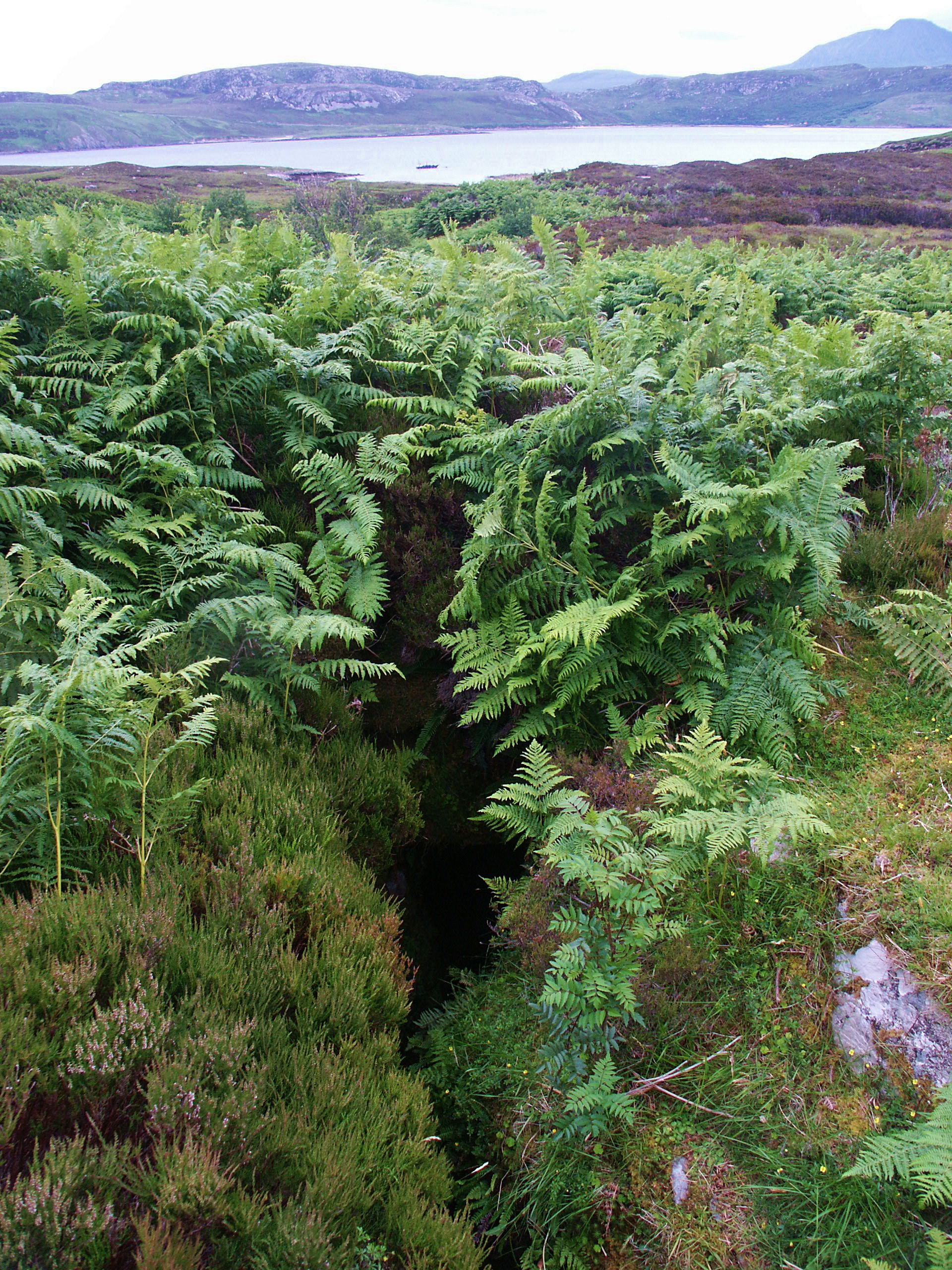
Day 8, 1.146 - Souterrain, Loch Eriboll, 21 July 2012I came across a souterrain along Loch Eriboll in 2012, as I was in the area doing research for my novel, The Cardinal.  In these photos, you can see that, if you were walking out there at night or dusk, they could be very treacherous.  My husband crawled down inside to take a picture back out; it was roomy enough for him to stand once inside (in this particular souterrain even the ceiling was lined with large stone slabs), though the narrow stone stairs and proportions, in general, indicated a much shorter population than modern humans.  You can see from the photo of myself how overgrown the bracken and heather is; the entrance was nearly completely hidden; we were looking for it based on a geological map’s markings, but if we hadn’t known it was there, it would have gone completely unnoticed.

I needed a tunnel entrance in the exact location of the souterrain for the novel, so it enriched the story by fitting reality and the fantasy together perfectly!

Day 8, 1.149 - Souterrain, Loch Eriboll, 21 July 2012

12 Comments

Filed under Articles, History, History Undusted, Nuts & Bolts, Research

History Undusted: Skara Brae, Orkney

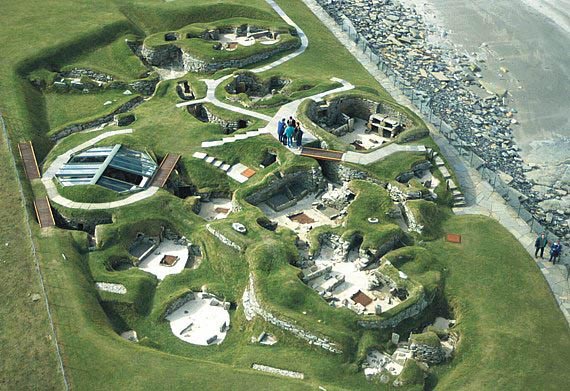
Skara BraeSkara Brae is probably the single most famous Neolithic settlement uncovered in the world.  It gives us the most complete picture of everyday life in that period of time, and has quite a few surprises:  Indoor running water?  Dressers and beds?  Yep.  They had storage rooms, and even toys for the kids.  There are some objects that they can’t figure out, but that just makes it all the more tantalizing.

Originally much farther from the shoreline, over the centuries erosion has eaten away at the land; Skara Brae will itself eventually succumb to the pounding Atlantic waves.

I was there in 1989 for the first time, and again in 2002; the first time I was there, I was with a group of friends, and we were given a private tour by a friend’s uncle who worked there.  It was an amazing way to see this prehistoric site, tourist-free and (back then) largely untainted by tourism.  In 2002 it was a different matter altogether:  A tourist shop had sprung up, and we had to time our viewing between bus-loads of day-tourists from “doon sooth” (down south = Scotland).  Also on that second visit, the Atlantic winds were so strong that we were literally leaning into the wind at a 45° angle; if it had had a sudden lull, we would have been flung into the sunken dwellings; it was an adventure.

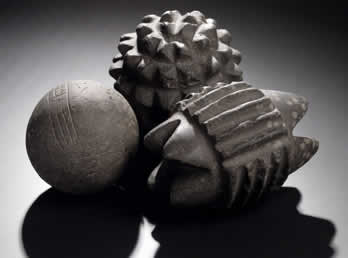
Skara Brae stone objectsIf you get a chance to go, do so; take at least a fortnight on Mainland Orkney.  It’s known as the Archaeologist’s treasure trove, and for good reason – just about any stone you turn over has some kind of historical significance, and there are many sites to take in:  Maeshowe, Ness of Brodgar and the Ring of Brodgar, and chambered cairns to name a few, and even more modern sites such as Churchill Barrier, and sunken World War 2 vessels (some portions are visible in low tide).

The stretch of water between Scotland and Orkney, the Pentland Firth, is known as “The Sailor’s Nightmare”; there are several currents that flow and mix into this bottleneck, not only making for treacherous sailing, but it can also make even the hardiest sailor lose his lunch.  Word to the wise:  When heading out of Thurso with the ferry to the Mainland (the largest island in the Orkney group), a) don’t eat yet (it usually leaves around lunch time, and believe me, you won’t keep it long…), and b) as soon as you get on the ferry, head to the dining room and get a window-side table; this is because they will not only fill up fast, but once you’re out of the relatively calm / wind-sheltered bay into the open strait, you’ll be glad for a ring-side view from a wind-sheltered, spray-sheltered spot; keeping your eye on the horizon helps the brain deal with the swells, and keeps seasickness at bay…

Originally posted on History Undusted,

2 Comments

Filed under Articles, History, History Undusted, Nuts & Bolts, Research, Science & Technology