Tag Archives: Vikings

Obsoletusvocabularium…  Up with Archaism!

English is relatively young, as languages go. Like a sponge, it absorbs words and meanings from other languages, then squeezes them out in a similar (or widely different) form.  In other words, English is a survivor; it has survived the attempts to destroy it by the Danish Vikings, the French (Normans, aka Vikings disguised as French), and the Germans. These historical encounters give me high hopes that it will survive the age of the Cell Phone.  With each skirmish, it has come out stronger, more versatile and more flexible.  When the Pilgrims packed up English and crated it off to the New World, it was locked, as it were, in a time capsule. British English absorbed a few bad habits from the French before they thought better of it and distanced themselves during the French Revolution, but in the meantime, contentious pronunciation differences to that time-capsule relative over the Pond had crept in and persist to this day. One example: The American pronunciation of schedule (/skedju(e)l/) is from the original Greek pronunciation, which was used in Britain for onk-years until they took on the fancier French-ified pronunciation of /shedju(e)l/.  For a fascinating glimpse into how Modern English was formed, William Caxton (~1422-~1491) is your man.

While English pilled through the pockets of invaders stealing loose grammar, we also lost a few words along the way:  Some words are known to us in one form but not the other, while other words have been lost altogether due to a more convenient absorption or form arising.  You know of disgruntled (adj.), but what about gruntle (v.) or disgruntle (v.)?  And dis– in this particular case is not used to form the antonym of gruntle, but means exceedingly gruntled.  And I don’t know about you, but conject as a verb makes more sense than “conjecture” to me.  And shall we vote to bring back “Oliphant,” as J.R.R. Tolkien saved it from extinction through his use of it in Lord of the Rings?  What about pash (n.), contex (v.), or spelunk (n.)?  We know of fiddle-faddle, but what about plain ol’ “faddle” (to trifle)?  Some, admittedly, are not missed; toforan is better served with heretofore, in my humble opinion (IMHO).  Needsways is a Scottish word, obsolete in England and America perhaps, but alive and well north of the Border.  There are some deliciously eccentric words which deserve resuscitation, such as loblolly, bric-a-brac, sulter, pill (v., to plunder, pillage – ought to come in handy, that), quib, bugbear, uptake (as a verb), wist (intent), or sluggy.  If Sir Walter Scott can save words such as doff and don from extinction, so can we.

Oh, and if you’re wondering about the word archaism, it means “retention of what is old and obsolete.”  So twinge your language to include these mobile words and their meanings, and revelate your intelligence! And if you’re curious, yes, Grammarly and spellcheck were going batship crazy with this post!😎

(Comic from xkcd used under a Creative Commons license)

1 Comment

Filed under Cartoon, Etymology, Grammar, History, History Undusted, Humanity Highlights, Liguistics, Linguistics, Snapshots in History

Insatiable Fascination

Throughout history, people have always been fascinated by thinking beyond their own known world; before widespread writing and reading, ancient cultures thought about their own mortality (which, in some ages, wasn’t that far off) and the afterlife. Various cultures prepared for the afterlife in their own ways: The Egyptians removed organs and embalmed the rest, making sure to send on the heart & co. in separate jars (except the brain – who’d need that in the next world?), then sent them on their way with an army of servants (killed for the occasion); the Vikings buried their most honoured dead within a ship with their favourite animals and servants (ditto). Other cultures built pyres to send their loved ones up in smoke.

When writing came along, at first it was used to capture the past and the natural world, ala Pliny the Elder; poems, sagas, verbal tales and folklore began to be recorded; we have such writings still with us today: The Greek Epic Cycle, the Orkneyinga Sagas, the Heimskringla, the Poetic Edda.

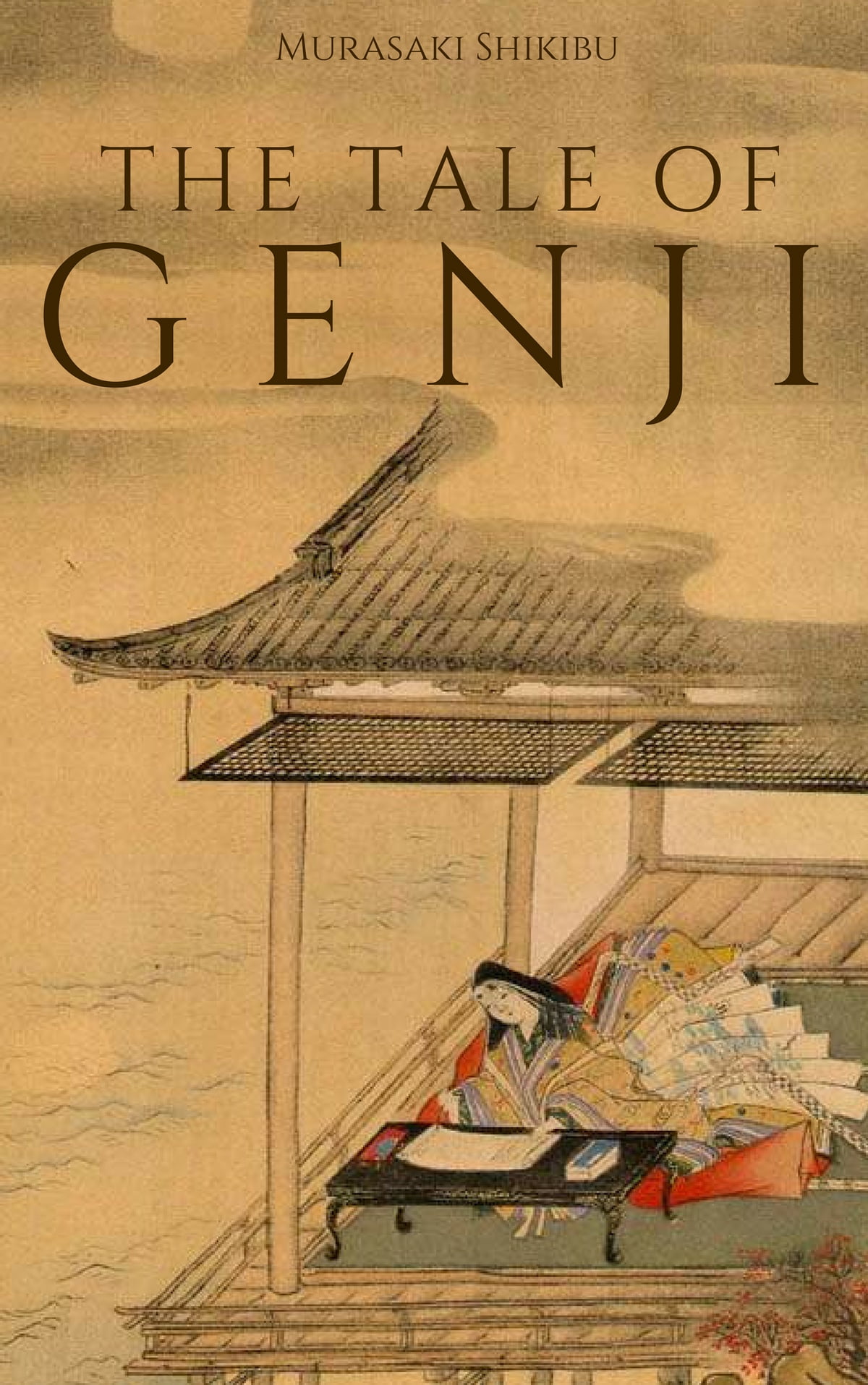
The first novel came along only 1,000 years ago: The Japanese epic The Tale of Genji was written by a woman, Murasaki Shikibu; novels were, for several centuries more, considered on the bottom rung of the literary hierarchy ladder, far behind “serious works” like history. Ironically, Mark Twain referred to history as “fluid prejudice”; it was nearly always recorded by powerful (white) men – hardly ever by a commoner, a member of an ethnic minority, or a woman. The interpretation of events was firmly in the hands of the conquerors. Because of that fact, for instance, we know more about Rome’s version of ancient Britons (Picts, Celts) than we do from their own artefacts; most Celtic and Pictish art is found outside of the UK – many carried off by the Vikings, but that’s another tale. Hollywood has helped perpetuate some of those ancient Roman notions (think of a blue-faced Mel Gibson in Braveheart).

In fact, we don’t even know what the Picts called themselves – the term derives from the Latin Picti, first seen in the writings of Eumenius in AD 297. It can be interpreted (dangerous words) as “to paint” – but there is no evidence that any people groups in northern Britannia painted themselves. Picts is simply a generic term for any people living north of the Forth-Clyde isthmus who fought the Roman Empire’s advancements into their territories. Again, the ink of history flowed from a Roman stylus.

Even Jane Austen herself didn’t begin publishing her novels under her own name. She was a single young woman – for shame that she would dare stain the male-hallowed ground of literature. The saga of how she got published speaks to her tenacity and the support of her family. But she got the last laugh, becoming famous within her (short) lifetime, and she is far better known today than any of the stuffy old men who wrote “proper” books of her day.

The insatiable fascination with other perspectives than our own explains why novels are so popular today. They take us into another time, place and situation, leading us through a story that, if written well, we can relate to and perhaps learn something from. In 1726, Jonathan Swift gave us Gulliver’s Travels. Though he originally wrote it as political satire, to “vex the world rather than divert it”, we know it still today. The fascination with someone being a giant in one land and a miniature in the next grabs our imagination; he travels to floating kingdoms, to an island of immortals, a la Death Becomes Her, and a land of talking horses.

Book Nook (Instagram repeat)

In the age of internet, visual arts have expanded as far as the global imagination can span: Not only paintings or drawings, but even crafts take us into another perspective. I recently saw a series of images in which people have taken the humble walnut shell and turned them into tiny worlds with bookshelves, ladders, lamps, beds and creatures. Book nooks are popular, too: A tiny village, street, or room within the space of a book on a shelf. Science fiction art takes us off-planet.

Films are visual perspectives that take us into other worlds, times and places: When George Lucas showed us a “commonplace” bar scene on Tatooine in the Mos Eisley Cantina in Star Wars, he blew our minds and kicked off a new era of visual storytelling. Avatar took us to another planet and another perception of reality, all the while being an allegorical tale of ecological care vs. abuse. Somewhere along the way, sometime in your life, I’ll bet you’ve been fascinated by a different perspective, whether presented to you through a book, a documentary, a sermon, a play, a film or a conversation.  What did you learn from that encounter? How did it change you, or help shape your perspective? And what is your favourite “escape”: Films, books, visual arts, or music? Please comment below!

8 Comments

Filed under Articles, History Undusted, Humanity Highlights, Images, Psychology Undusted

History Undusted: Rolf Ganger, Viking Outlaw and Founder of Normandy

How does a rabble-rousing Viking end up causing a war centuries after his death (as if stirring up trouble during his lifetime wasn’t enough fun and gigs)? Read on… this is going to be a quick, deep dive into history, so buckle up!

Firstly, let’s start with Rolf Ganger, aka Rollo, Rolloun, Rollon, or Hrôlfr – depending on which language you read. On his tomb, the Latin version of his name is Rollonis (see image).

Tomb of Rollonis (Rolf) Ganger, the first ruler of Normandy, in Rouen Cathedral (He’d probably roll in his grave to find himself so simperingly portrayed…!)

The Heimskringla is a collection of ancient Norwegian sagas about Norwegian kings and rulers, written by Snorri Sturluson (great name, by the way) around AD 1230. It tells us that Rolf was the oldest legitimate son of Earl Ragnvald, best friend of King Harald Harfager (“Fair Hair” – a nickname given to him by the Earl due to Harald’s thick, fair hair), who was the first king of Norway, reigning from ca. AD 872 to 930. It tells us that Rolf was so hefty that no horse could carry his weight; thus, he had no choice but to walk everywhere, from which Ganger, his second name derives (I cannot find a direct translation of the meaning of the name, but Germanic languages have similar words: In German, “gehen” means go or walk; “gangart” means gait, or way of walking).

Harald Harfagre, First King of Norway – Statue in Haugusund, Norway

He was rowdy, even by Viking standards. Heimskringla records that he plundered most of the East Sea (likely referring to what is now the region around the Baltic Sea). Then, “One summer, as he was coming from the east on a Viking’s expedition to the coast of Viken*, he landed there and made a cattle foray. As King Harald happened, just at that time, to be in Viken, he heard of it, and was in a great rage; for he had forbid, by the greatest punishment, the plundering within the bounds of the country. The king assembled a Thing**, and had Rolf declared an outlaw over all Norway.”

*Viken was a region that lay over the modern border between Norway and Sweden.

**To assemble a Thing means to gather a council or general assembly. These still take place in some parts of Switzerland, as well as on the Isle of Man and in Scotland; the Icelandic Althing is considered the oldest active, surviving parliament in the world, dating back to the AD 900s. The first detailed description of such a Thing was made by Tacitus, a Roman historian and senator, in AD 98; the oldest reference to a Thing is inscribed on a stone near Hadrian’s Wall, dated as early as AD 43.

According to the Heimskringla, Rolf, now banished from Norway, headed toward the Hebrides, and from there to “Valland” [In Norse legend, Valland is the name of the part of Europe which is inhabited by Celtic and Romance peoples, and Snorri Sturluson mentions it several times as the Old Norse name for Gaul, which was a region of Western Europe first clearly described by the Romans, encompassing present-day France, Belgium, Luxembourg, and parts of Switzerland, the Netherlands, Germany, and Northern Italy, and covering an area of around 494,000 km2.].

Arriving in Gaul, he did what he did best – went a-Viking, plundering and pillaging and “subduing for himself a great earldom”. He populated it with his own best rabble of Norsemen, which the French called Normanz, literally “north men” which quickly led to the Anglicized term Normans (similar to the word for the people group and language, Norse).

One of the places known to have been invaded by the Vikings in AD 841 is the Jumièges Abbey, which is along the Seine River on its way to Rouen, which they also ransacked. At some point (around AD 885), Rolf also raided Bayeux, carrying off a woman, Popa (whose lineage is unverified – later historians for the duke may have sanitized her parentage to legitimize their son’s noble lineage, as she was married “more danico”). She gave birth to his heir, William Longsword. When Rolf and his gang were all done hacking their way through towns and villages along the Seine, they eventually made their way back to Rouen, where he established the Duchy of Normandy in AD 912.

So, how did Rolf cause a war centuries later? Well, his son, William Longsword, fathered a son, Richard the Fearless (who became ruler of Normandy at the age of 10 when his father died). Richard’s son was called Richard the Good, and he became the father of Robert the Magnificent and grandfather to the illegitimate William the Bastard, who became known as William the Conqueror (a sword seems to have cleared up his illegitimacy quite neatly) – from whom all the subsequent English kings descended. Now to the crux of the matter: William, descendent of Rolf Ganger, fathered English kings, who thus claimed their right to the Norman throne by connection, birth, rank… in short, any excuse for raiding was still in their blood. Rouen was one of the largest and most prosperous cities of medieval Europe, and (as mentioned in my last post) was made wealthy through textiles and trade along the Seine River and beyond. Rouen became the focal point of the Hundred Years’ War (1337-1453) because of that pesky connection. So now ya know!

5 Comments

Filed under Articles, Etymology, History, History Undusted, Links to External Articles, Quotes

History Undusted: The Great Clock of Rouen, France

Last summer, my husband and I rented a privately-owned motorhome in Caen, France, and travelled around Normandy for 10 weather-perfect days. One of the places we had on our short list to see was the city of Rouen, a region with a long and rich history. One icon of the city is a clock. Not just any clock. The Great Clock of Rouen.

Rouen was a pivotal location in the Hundred Years’ War (1337-1453 – calling it the “Hundred-and-Sixteen Years’ War” is more accurate but not as catchy, though the name is likely based on the fact that there were periods of fragile truces); the central conflict was the English claim to the French throne. In the context of this war, Joan of Arc became a victim of male chauvinism and political expediency. But that’s another story.

The mechanism of this clock was built in 1389. Let’s put that into perspective: That’s over 100 years before Columbus set out to discover a western passage to the East Indies and inadvertently discovered America; Richard II took over as king of England; it was made during the Hundred Years’ War; Joan of Arc would have seen this clock on her way to her execution (by burning at the stake). It was made more than 190 years before our modern Gregorian calendar replaced the Julian calendar, in 1582.

The mechanism deserved not only a grand position, but a grand façade: The Rouennais aldermen decided that the town needed a clock, and the construction of a tower to house the clock took 9 years; the architect was Jehan de Bayeux, though the tower was completed by his son in 1398. The original designer of the clock’s facades, Jordan Delettre, was no more (whether he died or was removed is unknown), and it was completed by Jean de Felain, who became the first “governor of the clock”, maintaining it in exchange for a home in the clock’s tower. Towers and wars came and went, and the clock survived; it was moved to its current location in 1410, now housed astride an ornately carved stone archway.

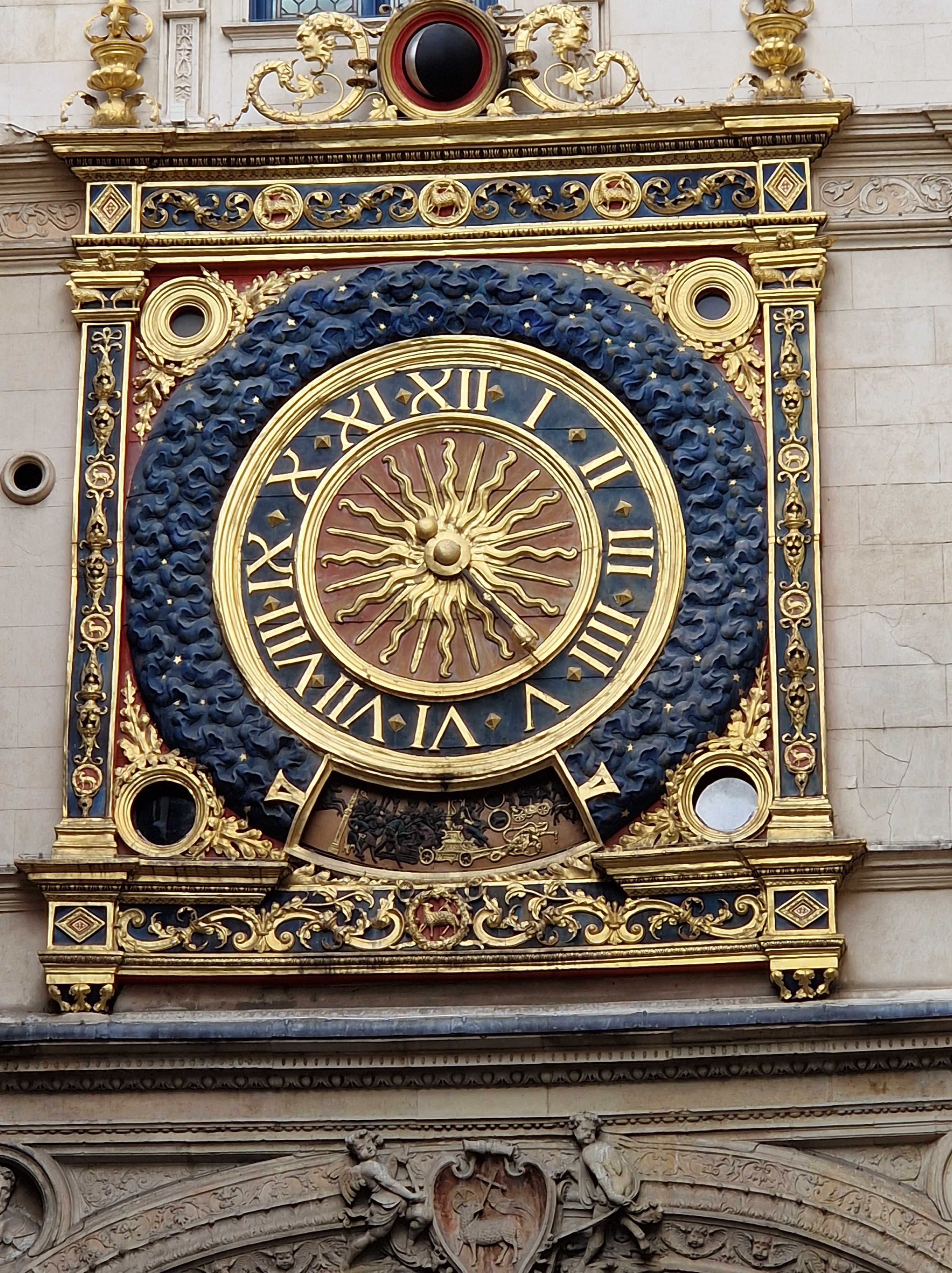
The clock faces (on both sides of a stone archway and connected to a central mechanism shared by both) are 2.5 metres (over 8 feet) in diameter, and each has only a single hand, tipped with the depiction of a lamb, which shows the hour; moon phases are indicated in the 30 cm oculus above the clock face, which makes a full rotation every 29 days. The face depicts 24 rays of the sun surrounded by a dark blue starry frame. A hand which shows the day of the week is located in an opening at the base of the dial, with each day represented by a different Greek god: Diane as the moon (Monday), Mars (Tuesday), Mercury (Wednesday), Jupiter (Thursday), Venus (Friday), Saturn (Saturday) and Apollo (Sunday).

Although the mechanism of the clock still works, it has been powered by electricity since 1928, and the tower itself was renovated in the late 1990s.

Underneath the clock in the centre of the archway, the coat of arms of Rouen can be seen: It depicts the Paschal lamb on a red background (the official colour of Rouen); it is held by two angels (if you look closely at the angel on the right, you’ll notice that its head is on wrong; it is thought to be due to disgruntled construction workers – obviously an age-old problem…). Beneath the arch are elaborate bas-reliefs of Jesus as the Good Shepherd caring for his flocks; the clock’s hand, the coat of arms and the reliefs all echo the importance of textile and wool trade to the city. One clock face alone has at least 15 sheep (zoom in on the picture of the clock and see if you can spot them all!). Next to the clock is a Gothic belfry tower built in the 14th and 15th centuries which houses the bells connected to the clock, which ring on the quarter-hour.

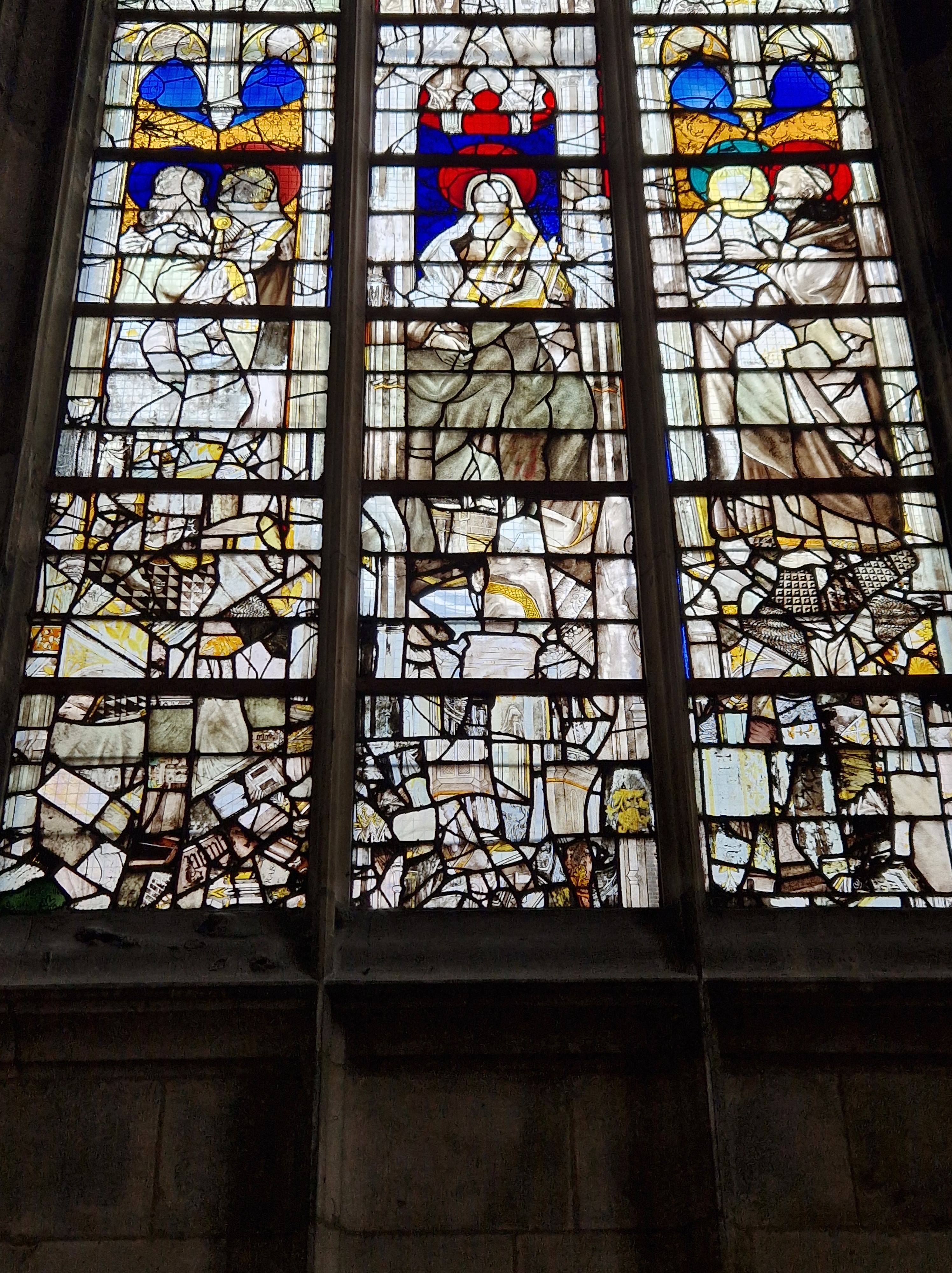
Rouen is a survivor: It has outlasted Viking raids that travelled up the Seine River, the Hundred Years’ War, the Religion Wars of the Renaissance period, the Franco-Prussian War of 1870, the French Revolution, and even World War 2; the latter damaged nearly half the city, and shrapnel and bullet scars can still be seen in façades. The cathedral’s stained-glass windows were shattered by a WW2 bomb and were subsequently reconstructed using the fragments, creating jumbled images that reflect its history and its survival.

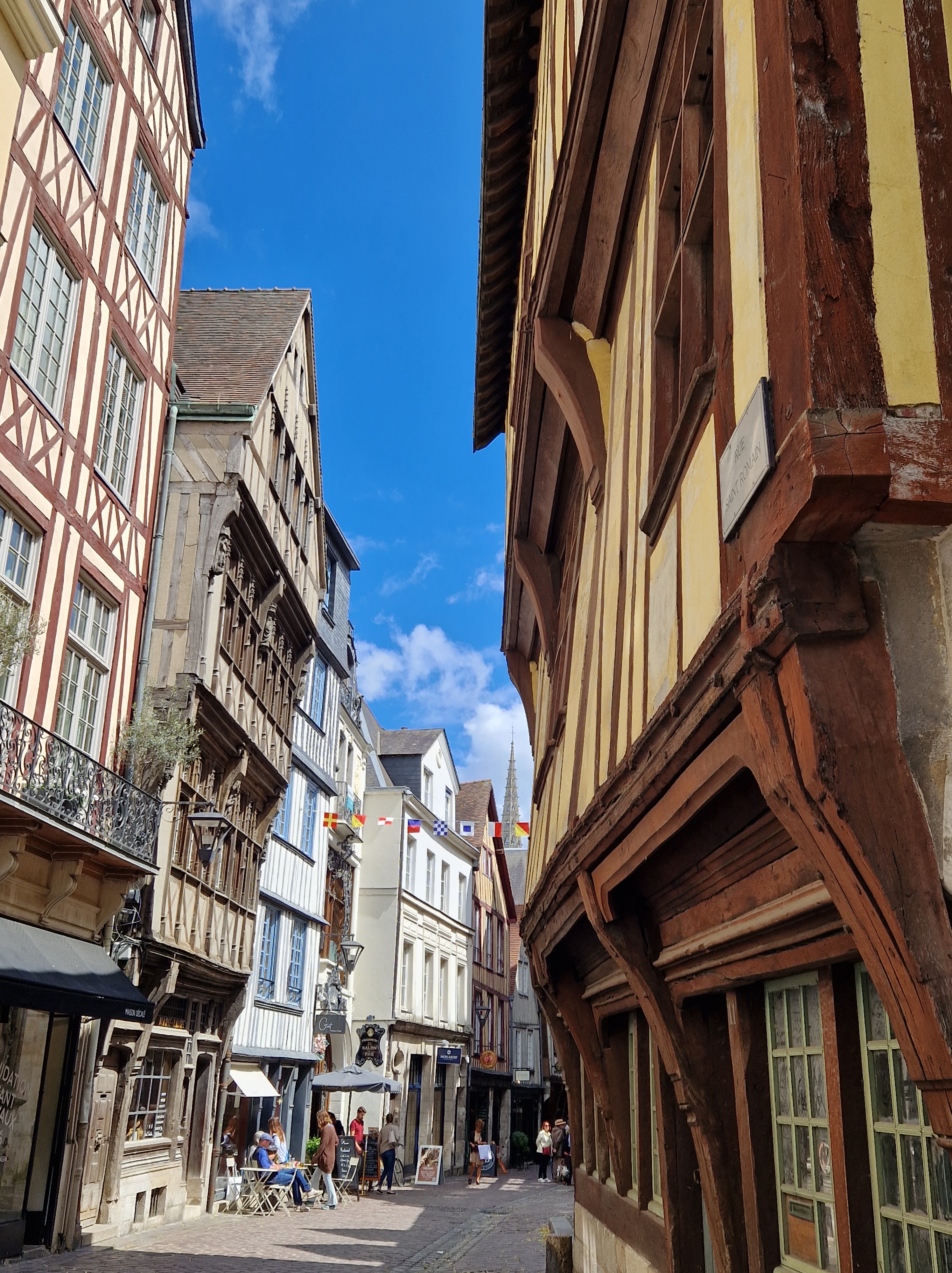
For me, the clock must really be seen within its context to truly appreciate it; it’s surrounded by wonky Medieval buildings which are three or four stories tall and built when plumb lines and uniformity were still futuristic concepts. They were built out of timber, as there is abundant forest nearby but no stone quarries.

The clock adorns the arch over the Rue du Gros-Horloge (“Street of the Great Clock”), which runs between the Gothic cathedral, made famous by Claude Monet (who painted over 30 canvases centred on the cathedral), and the old market square, where Joan of Arc was burned at the stake. Perhaps ironically in light of the latter event, the street just off of the clock’s archway is called Rue Massacre

Though I do not speak French, I know that in French, clocks today are referred to in the feminine form, la horloge; but prior to the 18th century, clocks were masculine; so, the great clock of Rouen, in French, is still Le Gros-Horloge.

Below are a few of our holiday photos: They include the cathedral’s jumbled windows and the clock from various angles, as well as a few of the wonky buildings. Enjoy!

5 Comments

Filed under History, History Undusted, Military History, Science & Technology, Snapshots in History

History Undusted: A Small Treatise on the Viking Age, begun at Lindisfarne

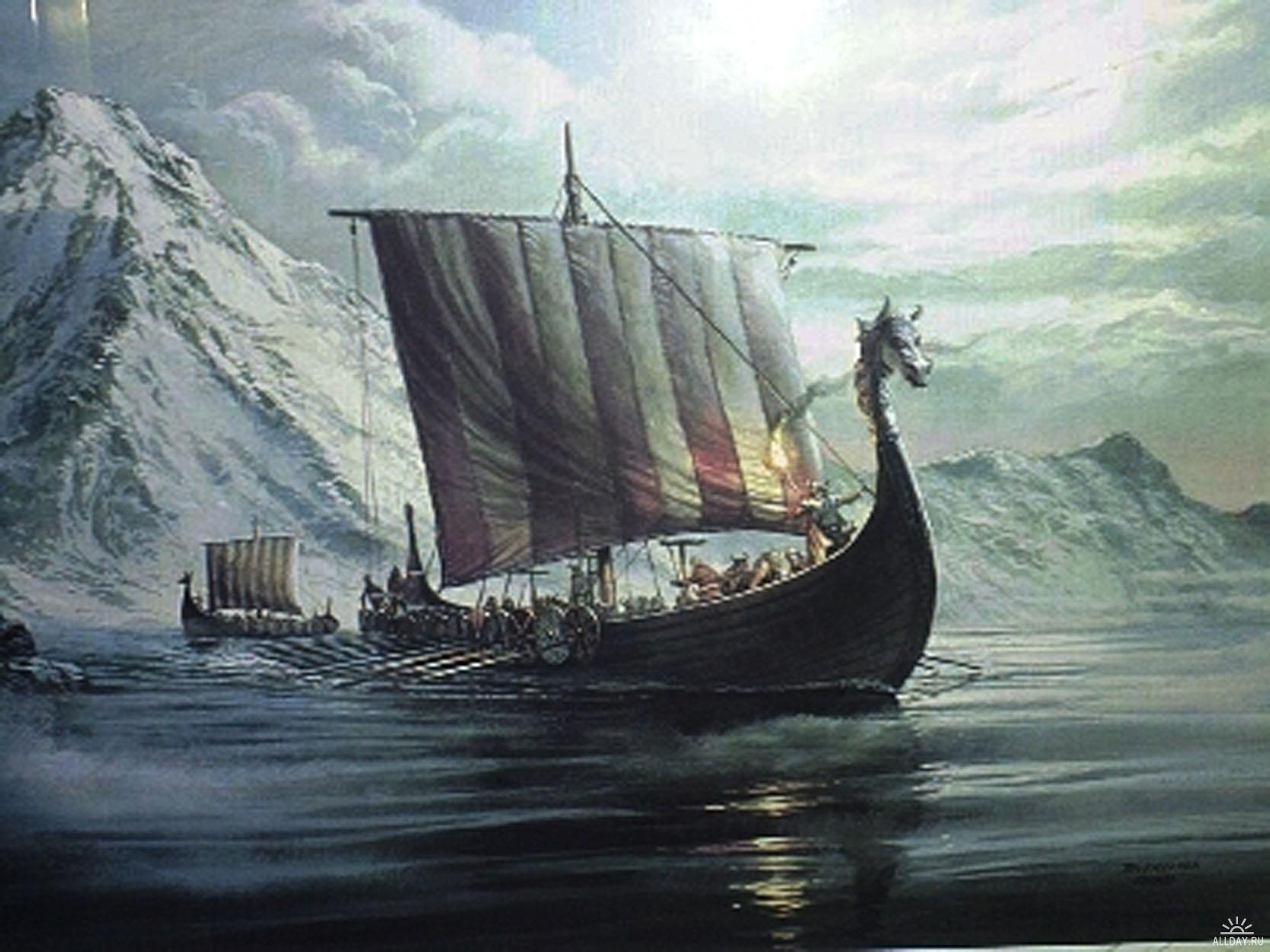
Viking ship

In researching for my novel, “The Cardinal“, I did a lot of research into the Viking Age of Scotland, Norway, and in modern-day Britain.  The following is a snippet of the notes and thoughts I percolated over while studying into this amazing time in world history.  Some of the speculations, such as the motivations behind the Lindisfarne attack, are my own, based on studies and extrapolation.

I think it’s impossible to do justice to any information about the Vikings; their existence, culture, language, mentality, and the effect of their actions have had repercussions that echo down through the ages.  They gave names to countless cities throughout the world, and even entire regions:  The Norse kingdom of Dublin (Old Norse for “Black Pool”) was a major centre of the Norse slave trade; Limerick, Wexford and Wicklow were other major ports of trade; Russia gets its name from them, and the list goes on and on. Had they not been so successful in the slave trade and conquest, entire regions of the earth would be populated differently, place names would be vastly different, and English would be a far poorer language than it is today.

“A.D. 793. This year came dreadful fore-warnings over the land of the Northumbrians, terrifying the people most woefully: these were immense sheets of light rushing through the air, and whirlwinds, and fiery dragons flying across the firmament. These tremendous tokens were soon followed by a great famine: and not long after, on the sixth day before the ides of January in the same year, the harrowing inroads of heathen men made lamentable havoc in the church of God in Holy-island, by rapine and slaughter.” (The Anglo-Saxon Chronicle, pg. 37)

This reference from The Anglo-Saxon Chronicle, one of the most famous history books available in English, is a reference to what would become known as the beginning of the Viking Age, the attack on the Holy Isle of Lindisfarne.  Firstly, I’d like to clarify a few points:  “Viking” is a term that first came into being, in its present spelling, in 1840; it entered English through the Old Norse term “vikingr” in 1807.  The Old Norse term meant “freebooter, pirate, sea-rover, or viking”, and the term “viking” meant “piracy, freebooting voyage.”  The armies of what we would call Vikings were referred to by their contemporaries as Danes, and those who settled were known by the area they settled in, or visa-versa.  Those who settled in the northeastern regions of Europe were called Rus by their Arabian and Constantinopolitan trading partners, perhaps related to the Indo-European root for “red”, referring to their hair colour, or – more likely – related to the Old Norse word of Roþrslandi, “the land of rowing,” in turn related to Old Norse roðr “steering oar,” from which we get such words as “rudder” and “row”.

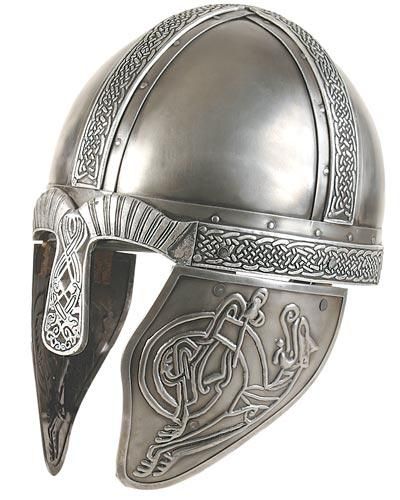
Oh, and not a single Norse battle helmet with horns has ever been found.

I’d like to focus on a key point of the Lindisfarne episode, if one could refer so glibly to the slaughter of innocent monks and the beginning of the reign of terror that held the civilized world in constant fear for over two centuries:  Yes, the Vikings were violent; their religion of violent gods and bloody sacrifices and rituals encouraged and cultivated it to a fine art.  Yes, the Vikings were tradesmen, but they were also skilled pirates and raiders, that skill honed along their own home coasts for generations prior to their debut on the rest of the unsuspecting world.  Yes, it was known that monasteries held items sacred to the Christian faith, that just happened to be exquisitely wrought works of art made of gold and jewels.

Gold was one enticement; but their primary trading good was human flesh; slaves.  It was by far the most lucrative item, and readily had along any coast they chose; if too many died in the voyage they could always just get more before they docked at Constantinople, Dublin, or any other major trading port.  So why did they slaughter the monks so mercilessly at Lindisfarne, when they would have gained more by taking them captive and either selling them as slaves or selling them for ransom?  The answer might actually be found in Rome.

Charlemagne (ruled 768-814 AD) took up his father’s reigns and papal policies in 768 AD. From about 772 AD onwards, his primary occupation became the conversion to Christianity of the pagan Saxons along his northeastern frontier.  It is very important to make a distinction between the modern expressions of the Christian faith and the institution of power mongers of past centuries; Christianity then had extremely little to do with the teachings of Christ and far more to do with political and military power, coercion, and acquisition of wealth through those powers; it was a political means to their own ends with the blessing of the most powerful politician in the history of the civilized world, the Pope.  Without his blessing and benediction, a king had not only very little power, but was exposed to attack from anyone who had “holy permission” to exterminate heathens; joining the ranks of the Christian church took on the all-important definition of survival, and protection from the others in those ranks being free to attack you at their leisure.

In the year 772 AD, Charlemagne’s forces clashed with the Saxons and destroyed Irmensul, the Saxon’s most holy shrine and likely their version of the Yggdrasil, the Tree of the World, of Scandinavian mythology.  In the Royal Frankish Annals of 775 AD, it was recorded that the king (Charlemagne) was so determined in his quest that he decided to persist until they were either defeated and forced to accept the papal authority (in the guise of “Christian faith”), or be entirely exterminated [Carolingian Chronicles: Royal Frankish Annals and Nithard’s Histories, trans. Bernhard Walter Scholz with Barbara Rogers (Michigan 1972: 51)].  Charlemagne himself conducted a few mass “baptisms” to underscore the close identification of his military power with the Christian church.

“In 782 the Saxons rebelled again and defeated the Franks in the Süntel hills. Charlemagne’s response was the infamous massacre of Verden on the banks of the river Aller, just south of the neck of the Jutland peninsula. As many as 4,500 unarmed Saxon captives were forcibly baptised into the Church and then executed.  Even this failed to end Saxon resistance and had to be followed up by a programme of transportations in 794 in which about 7,000 of them were forcibly resettled. Two further campaigns of forcible resettlement followed, in 797 and in 798….  Heathens were defined as less than fully human so that, under contemporary Frankish canon law, no penance was payable for the killing of one” [Ferguson, Robert (2009-11-05). The Hammer and the Cross: A New History of the Vikings (Kindle Locations 1048-1051). Penguin UK. Kindle Edition.]

The defining of a heathen as less than human was actually not a unique idea;  Scandinavians were familiar with that notion from their own cultures, which defined slaves as less than human and therefore tradable goods; and if a freeman announced his intention of killing someone (anyone) it was not considered murder as the victim was given “fair” warning.

The more I learn about Charlemagne’s brutal policies toward what he considered sub-human pagans, the more I understand the reaction of retaliation toward the symbols of that so-called Christian faith, the monasteries and its inhabitants.  They slaughtered, trampled, polluted, dug up altars, stole treasures, killed some, enslaved some, drove out others naked while heaping insults on them, and others they drowned in the sea.  The latter was perhaps a tit-for-tat for those at Verden who were forcibly baptised and then killed.

Lindisfarne was merely the first major attack in Britain that was highly publicized (as chroniclers of history were usually monks, and those such as Alcuin knew the inhabitants of Lindisfarne personally), in what would become a 250-year reign of terror, violence, slavery, raping, pillaging, plundering and theft either by force or by Danegeld.  But as in all good histories, it’s important to remember that hurt people hurt people; the perpetrator was at one time a victim.  One might say that what goes around comes around.  It’s no excuse or downplay of what happened there, which literally changed the course of the civilised world, but it perhaps gives a wider perspective on the Vikings of the times rather than just the vicious raiders portrayed in so many documentaries.  And it is important to remember that Vikings did not equal Norsemen; the majority of Scandinavians were farmers and fishermen, living as peacefully as their times would allow, and even themselves victims to the occasional Viking raid.

Originally posted on History Undusted on 14 July 2013
Image Credit: Origin Unknown, Pinterest

6 Comments

Filed under Articles, Etymology, History, History Undusted, Military History, Nuts & Bolts, Publications, Research

The Thorny Issue of Horns

As an author and writer, I do a LOT of research.  I love history particularly, but then I could say the same thing about the topics of geology, astronomy, archaeology, science and technology, crafting, drawing, botany, and a dozen others.  As I apply my studies to my work, I am sometimes faced with the issue of horns – Viking helmet horns.

Real Viking Helmet


Accurate Viking helmet, reproduction.  Photo credit, Pinterest, unknown


While everyone seems to accept as a historically proven fact that Viking helmets had horns, the actual fact of the matter is that they didn’t.  While there were many horned helmets dating to before the rise of the Norse powers of Sweden, Norway and Denmark, most, if not all, were for religious or ceremonial purposes.  However, if I write a description of a Norse helmet and leave off the horns, someone will inevitably point it out.

Recently I spent a couple hours on Skype with one of my Beta readers for my current project, the third book in the Northing Trilogy (set in 18th century England).  Several of her comments were based on her knowledge of the 19th century as portrayed by Georgette Heyer, while others were based on her lack of historical knowledge that I, as the author, have amassed over time.  While some of that knowledge needs to seep into my writing to help the reader along, I have to continually remind myself (especially with this particular book in the trilogy, as it is centred around the Royal Navy) that I am not writing a history book but a novel, and anything I include needs to support the plot – the plot should never be forced to support a history lesson.  So it is that questions arose as to the behaviour and manners of the children of the time.

In any time period up until the mid-20th century, children in western societies matured far sooner than their modern counterparts, both out of necessity and out of cultural understanding of their roles in society.  Many families were dependent on the contribution made by the children in their household, whether it was housework, factory work, or working on the streets as beggars, shoe shiners, chimney sweeps, street sweepers, selling newspapers, or any other job they could earn money with (this is still true in many poorer countries of the world today).

If they came from a wealthy family, children were educated, but as to what extent and to which form it took very much depended on their particular circumstances:  They were educated either at home by tutors, or sent away to a boarding school.  Leaving school might be anywhere between ten and twenty; Jane Austen finished her formal education at the age of 10 or 11, whereas Charlotte Brontë’s character Jane Eyre left school at 18.  Boys who were second sons were often educated (after their basic education in either a college or at home) toward the military or toward a life as a minister (if their families held a high status in society, they might be trained toward politics; first-born sons, heirs, were rarely sent to the military due to the inherent dangers).

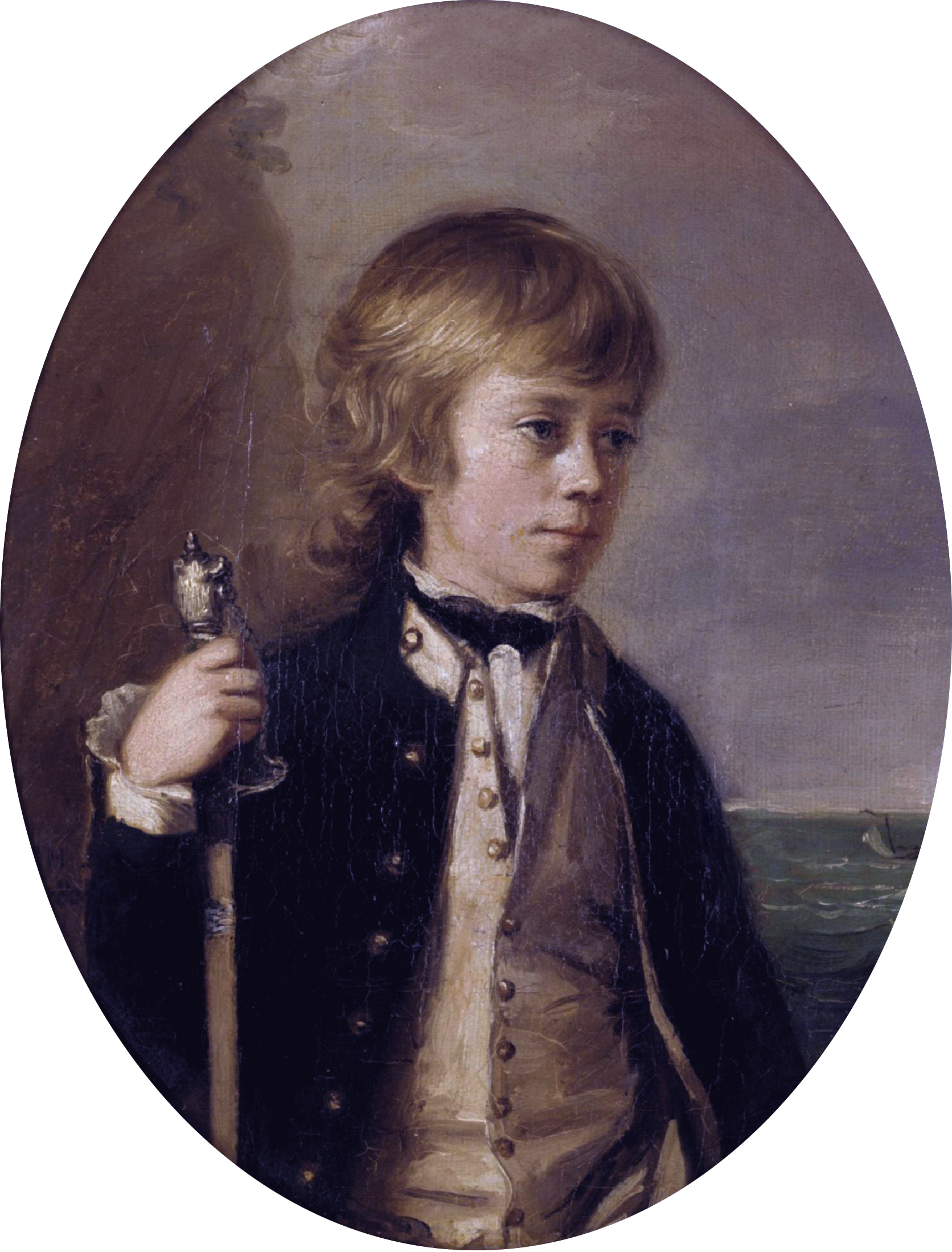
Midshipman Henry William Baynton, aged 13 -1780 - Wikipedia.jpg

Henry William Baynton, aged 13 years, 6 months, midshipman on the Cleopatra.  Photo Credit, Wikipedia.

If their fathers could afford to do so, these younger sons were often bought commissions in the military so that they would start off their career with some smidgen of position, such as a midshipman in the Royal Navy; the younger they entered, the sooner they could rise through the ranks, and thus it was not uncommon for lads of 7 or 8 to enter the navy.  Aboard ship they were trained in various skills, which included not only practical skills to do with the day-to-day running of the ship, but how to read navigational charts and how to use instruments such as sextants. How fast or slow they rose to higher ranks thereafter depended on their skills, intelligence, connections, and luck.

If poor children were either abandoned or given to workhouse orphanages because their families could not afford to keep them alive, they were also trained:  The girls were trained toward becoming servants (paying back society for the privilege of being alive), and the boys were trained for a life in the military (ditto).  They were taught to read using the Bible, and were expected to live by its principles.  Unfortunately, religion was often used as a guise for abuse and heavy-handed tyranny, but as the characters in Jane Eyre portrayed, some were true Christians in their behaviour toward her, such as her friend Helen, or the kind apothecary.  If the girls were going to become governesses, they would also be trained in more refined accomplishments such as French, drawing, needlework, history, etc.

All of this is to say that, were I to include all of this kind of information in a novel (and believe me, there’s a lot more where that came from!), it would get boring rather quickly.  And so I need to pick and choose what is used in the organic flow of the plot and character development that both serves those elements and also helps inform the reader; sometimes it’s a tricky balance.  So when the 11-year-old boy acts far more mature than a modern boy, unless the reader is aware of the historical context, I will inevitably get feedback to that effect.  Sometimes I can help their understanding by including e.g. the subjects he might be learning with his tutor, such as French, sciences, or elocution, but more than that might drag the story into the realm of a history lesson.

There are many modern myths, like the Viking horns, that people have accepted as historically accurate, when in fact they’re not.  One of my pet peeves is Christmas films that inevitably portray three kings showing up at the manger along with the shepherds in Bethlehem.  I won’t go into that here – if you’re interested in the historical details, read my article on History Undusted, here.  Other urban legends include:  We only use 10% of our brains; the full moon affects our behaviour; lightning never strikes the same place twice; cracking your knuckles gives you arthritis, and antibiotics kill viruses.  If I rankled any feathers there, or you said to yourself, “But that one is actually true,” then I would suggest you do your own research on the issue… I’ve got my plate full at the moment with the 18th century.

Save

7 Comments

Filed under Articles, History, Musings, Nuts & Bolts, Plot Thots & Profiles, Research

New Book Release: The Cardinal

Facebook Announcement with Website

Hi everyone!  I’m excited to announce the release of my latest books:  The Cardinal, Parts One and Two!  The Cardinal is an epic fantasy, spanning from the pre-Viking Age of Scotland and Norway to modern-day Scotland.

The Cardinal

790 A.D.

In the far northern reaches of the Highlands of Scotland a Pictish tribe, with their language of peat and stone, ally together with a strange kingdom of mist and whispers.  As a foe descends upon them in longships from the north with axe and smoke and they are scattered in defeat, will those left behind ever find those wrenched from their arms?  Will those slaves taken by the Vikings ever find their way to freedom and home or not?  Either way life will never be the same again.

Now

More than a thousand years later their lives, deaths and fates are brought to light by an archaeological team who uncovers the find of a lifetime… of a thousand lifetimes.  The more they discover the more perplexing it becomes; their finds challenge our very understanding of what it means to be human, and the assumption that myths are groundless and history is fact.  That we are not alone in the universe is one thing; that we are not alone on this earth is another thing entirely.

 “Legends come about when truth is considered too implausible.”—G.K. Chesterton

For further information, images and characters, please check out the page here.

If you enjoy the novels, please do leave feedback!  Both here and on Amazon would be excellent!  Every feedback is greatly appreciated, and the more the better!

5 Comments

Filed under Publications

The Etymology of February and Wednesday


February & Wednesday

We can blame both spellings on the Romans!  February is fairly clear:  Februa is thought to be a Sabine word (maybe we could blame them for italics, too), meaning “purifications”; Februarius mensis was the month of purification.  Before 450 BC this was actually the last month in the ancient calendar and referred to the feast of purification celebrated on the ides of that month throughout the Roman Empire.  Ides was the term used for approximately mid-month, being the 13th or 15th, depending on whether that particular month had 29 or 31 days.  Interestingly, in English it replaced the Old English solmonað (“mud month”… very appropriate, that) sometime in the 12th century when they began using the Old French term Feverier.

Wednesday accumulated slightly more pedigree before landing in our agendas:  It started off as the “day of (the god) Mercury,” the Latin dies Mercurii.  It was confiscated by the Scandinavians for their own religious version for Odin, Oðinsdagr (Old Norse) or Onsdag in Swedish.  This came with them over the Channel and was adopted by their English counterparts as wodnesdæg, or “Woden’s day.”  Old Frisian came fairly close to modern English with Wonsdei (I’ve probably seen that spelling on Facebook from people who can’t type with their i-phones properly…).  By the mid- 400 AD period, the Germanic Goths had been converted from Paganism to Christianity by Greek missionaries, and their language began to reflect the changes:  The astrological or religious terms gave way to ecclesiastical (or at least neutral) ones.  This difference is reflected in words like Mittwoch (German for Wednesday, meaning literally “mid-week”), sreda (Russian), or środa (Polish), both meaning literally “middle.”

So there you have it:  Blame it on the Romans, or the Vikings; but whoever you blame, just remember to spell them in correct modern English.

Leave a comment

Filed under History, Nuts & Bolts