Tag Archives: Writing Tools

Merisms

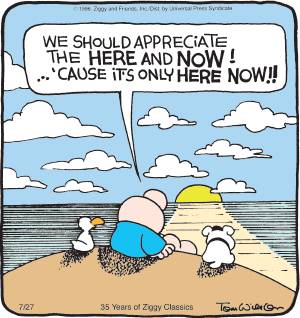
Here and NowMerisms are figures of speech in which a single thing is implied by stating several elements of it, usually contrasting concepts or parts, used to refer to an entirety; the elements can be literal or metaphorical.  They are striking features in ancient Biblical poetry, such as “The God of heaven and earth” meaning of everything (the universe).  Here are a few more:

here and there

here and now

life and death

body and soul

the length and breadth

high and low

ladies and gentlemen

young and old

rich and poor

kind and cruel

smart and stupid

from A to Z

Alpha and Omega

The beginning and the end

lock, stock and barrel

day and night

left and right

bag and baggage

the whole kit and caboodle


Can you think of any others?

Leave a comment

Filed under Cartoon, Grammar, Nuts & Bolts, Writing Exercise

Affect vs. Effect

aardvark - affect vs effectAffect and effect are probably two of the more confusing words in the English language.  Or should I say the use of them is the confusing bit.

A general rule of thumb is that affect is usually used as a verb, and effect is usually used as a noun.  As with other parts of speech, when in doubt try to replace it with a word you know the function of (i.e. clearly a verb, or clearly a noun); if it still makes sense then you know which one to use.

Example:  “The arrow affected the aardvark.”  “The arrow injured the aardvark.”  Injured makes sense here, so you need the verb form.

Effect is a noun, so try to replace it with another noun, e.g. “outcome.”

Example:  “The outcome was eye-popping.”  If you place these substitute words in the other sentences they wouldn’t make sense.

I hope that helps!  If you’re confused, just think of the aardvarks…

2 Comments

Filed under Articles, Nuts & Bolts, Writing Exercise

Spoonerisms

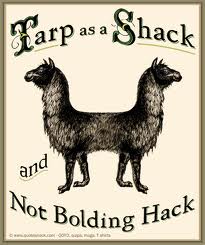
A Spoonerism is a deliberate (or accidental) play on words in which the corresponding consonants of two words, vowels, or morphemes are switched between two words in a sentence to create two new words.  For instance, “talking back” becomes “balking tack.”  The name comes from an Oxford minister, Rev. William A. Spooner, who was notorious for making these mistakes.  He must have been an entertaining minister to listen to!  The poor fellow didn’t appreciate the honour of using his name for such mistakes; he had enough on his plate with being Albino with poor eyesight, but he was well-liked, and the dubious honour accorded him was kindly meant.

spoonerism 3Here are a few examples (the interchangeable letters are capitalized):

The Weight of Rages will press hard upon the employer. (Rev. Spooner)

a Tip of the Slung

Dear old Queen / Queer old Dean

Runny Babbit

is the Bean Dizzy?

Fight in your Race

a Pack of Lies

Pest in DRink

the Might is in my Lies

Belly Jeans

BRimulate your Stain

as the FLow CRies

SMart Feller

I’d rather have a bottle in front of me than a frontal lobotomy.

SHake a Tower

well-boiled icicle, well-oiled bicycle

the Pea little THrigs

Roaring with Pain

Ragged Jocks

the Loose that Gaid the olden Geggs

the Mog in the Danger

the Pag at the STool

Beeping SLeauty

… and the Gist Loes on!


All I can say is, Roonerisms SPock!

Leave a comment

Filed under Articles, Nuts & Bolts

Paraprosdokians. Parawhat?

Paraprosdokian is not a word I would readily remember.  I can even admit freely I’d never heard of it until recently.  Maybe I’m just weird, but I can remember a word much better if I know where it came from; this one actually makes sense: (Greek) para– meaning “against”, and prosdokaō meaning “I expect.”  Against expectations.  It’s not actually that old, and is thought of by some linguists as a bogus term; but there are a lot of words that have crept into the English language on just such a pretext, and have hung around for centuries (thereby gaining loyalty from linguists).  I’d say that sounds like a bit of cosmic humour.

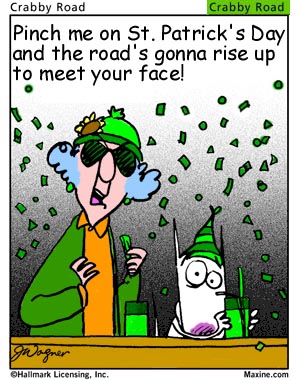
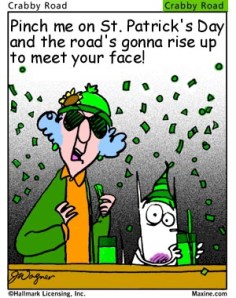
A Paraprosdokian is a phrase or sentence that ends with an unexpected twist.  Now it may be as common as rain where you live, but not here.  I tend to think of these sentences as one-liners, and with good reason – this figure of speech is popular with comedians as it’s short and ends on a punch.  Some Paraprosdokians use a familiar phrase and twist the ending such as the first sentence (“Where there’s a will, there’s a way”).  So I say, call them what you will – just use them well!
Crabby Road

Where there’s a will, I want to be in it.

I sleep eight hours a day and at least ten at night. (Bill Hicks)

The last thing I want to do is hurt you, but it’s still on my list.

Since light travels faster than sound, some people appear bright until you hear them speak.

You can always count on the Americans to do the right thing – after they have tried everything else. (Winston Churchill)

If I agreed with you, we’d both be wrong.

I don’t belong to an organized political party. I’m a Democrat. (Will Rogers)

We never really grow up, we only learn how to act in public.

War does not determine who is right – only who is left.

This is not a novel to be tossed aside lightly.  It should be thrown with great force.

Knowledge is knowing a tomato is a fruit. Wisdom is not putting it in a fruit salad.

They begin the evening news with Good Evening, then proceed to tell you why it isn’t.

He Ain’t Heavy, He’s My Brother. (Variations on this phrase are attested as early as 1884.)

There’s a fine line between cuddling and holding someone down so they can’t get away.

To steal ideas from one person is plagiarism. To steal from many is research.

If I am reading this graph correctly… I’d be very surprised. (Stephen Colbert)

I haven’t slept for ten days, because that would be too long. (Mitch Hedberg)

Money can’t buy happiness, but it sure makes misery easier to live with.

Buses stop in bus stations. Trains stop in train stations. On my desk is a work station.

I thought I wanted a career. Turns out I just wanted paychecks.

In filling out an application, where it says, ‘In case of emergency, notify, I put DOCTOR.

I like going to the park and watching the children run around because they don’t know I’m using blanks. (Emo Philips)

I didn’t say it was your fault, I said I was blaming you.

Women will never be equal to men until they can walk down the street with a bald head and a beer gut, and still think they are sexy.

Behind every successful man is his woman. Behind the fall of a successful man is usually another woman.

A clear conscience is the sign of a fuzzy memory.

You do not need a parachute to skydive. You only need a parachute to skydive twice.

I used to be indecisive. Now I’m not so sure.

He was at his best when the going was good. (Alistair Cooke on the Duke of Windsor)

You’re never too old to learn something stupid.

To be sure of hitting the target, shoot first and call whatever you hit, the target.

Nostalgia isn’t what it used to be.

Change is inevitable, except from a vending machine.

I’ve had a perfectly wonderful evening, but this wasn’t it. (Groucho Marx)

A modest man, who has much to be modest about. (Winston Churchill, about Clement Attlee)

If I could just say a few words… I’d be a better public speaker.

She was good as cooks go, and as cooks go she went.

Leave a comment

Filed under Articles, Cartoon, Grammar, Humor, Nuts & Bolts

All About Perspective

So much is exhibited to the eye that nothing is left to the imagination.  It sometimes seems almost possible that the modern world might be choked by its own riches, and human faculty dwindle away amid the million inventions that have been introduced to render its exercise unnecessary.  The articles in the quarterlies extend to thirty or more pages, but thirty pages is now too much. So we witness a further condensing process and, we have the fortnightly and the Contemporary which reduce thirty pages to fifteen pages so that you may read a larger number of articles in a shorter time and in a shorter form.  As if this last condensing process were not enough the condensed articles of these periodicals are further condensed by the daily papers, which will give you a summary of the summary of all that has been written about everything.  Those who are dipping into so many subjects and gathering information in a summary and superficial form lose the habit of settling down to great works.  Ephemeral literature is driving out the great classics of the present and the past… hurried reading can never be good reading.” – G.J. Goschen, First Annual Address to the Students, Toynbee Hall, London, 1894

1894.  We tend to think of such times as “the good old days,” when life was slow and time was taken to read, contemplate, and discuss topics at great length.  Compared to now of course, they did; but the time in which we live now will look slow to future generations.  We tend to think that women today tend to be more scantily dressed than 50 years ago, and it’s true; but 100 years ago they thought exactly the same thing of their own time.

Future generations will think it quaint that we had things called “CDs” or “DVDs” (that looked exactly the same but the playing devices were incompatible with one another!) that were physical discs you actually have to put into a machine to hear music or watch a film; or telephones that actually needed electricity, or computers that needed an internet cable, or batteries that needed changing.  Our miniscule cell phones will look as bulky and clumsy to them as ‘80s films’ cell phones do to us now.  Magazine ads from the late ‘60s were more wordy than some full-length newspaper articles today.  Ads today don’t even use words – they have to grab you with an image because you’ve just sped past in your car, on your bike, or in a tram or bus or train.

First passenger railway 1830, Liverpool & Manchester Railway.  Source - Wikipedia

First passenger railway 1830, Liverpool & Manchester Railway

Literature is changing too.  When was the last time you read a tome?  Do you like to enjoy slow reading, like fine cuisine, or do you prefer to read a book in a weekend, and if it will take much longer you’re not as interested?

“With the advent of cheap newspapers and superior means of locomotion… the dreamy quiet old days are over… for men now live and think and work at express speed.  They have their Mercury or Post laid on their breakfast table in the early morning, and if they are too hurried to snatch from it the news during that meal, they carry it off, to be sulkily read as they travel… leaving them no time to talk with the friend who may share the compartment with them… the hurry and bustle of modern life… lacks the quiet and repose of the period when our forefathers, they day’s work done, took their ease…” – William Smith, Morley:  Ancient and Modern, 1886

It’s all about perspective.  So the next time you get impatient, stop and think about those past generations who felt intimidated by the speed of a steam locomotive, and instead be grateful you’re stuck in traffic.

Leave a comment

Filed under Articles, Quotes, Research

That Low-Down Word

That Word CloudI run a forum on a British writers’ website for grammatical problems, and answer questions that come up in the course of their writing projects.  This week the question came up about that little word, “that” – when to use it and when to lose it.  When do you use that?  When do you use a comma instead?  And when is neither one necessary?  Ah, what a tangled web we weave, when first we practice proper grammar.  Hey, just kidding – it’s not that complicated!  Sometimes it doesn’t matter, and sometimes it can be confusing without it.  So, here’s the low-down:

1) Remember Rhythm:  How does your sentence flow?  Read your sentence aloud; does it have a better rhythm with or without that?  When in doubt and rhythm / comprehension is fine with or without, use it – inclusion may benefit the understanding of the sentence as a whole, and omission may cause misunderstandings.  Sometimes using that is a matter of personal taste.  Here’s a sentence that could be understood with or without:  “Fiona thinks (that) Alistair works too hard.

If you’ve already got a that in the sentence elsewhere, consider how your sentence can be reworded to avoid an overload. A double that is usually unnecessary.  In the sentence, “I realised that that would not be a good idea” the first that (acting as a conjunction, whereas the second acts as a pronoun) could be eliminated, aiding the flow but not impeding the comprehension.  Sometimes that is required in one part of a sentence, and when a second that comes up a choice needs to be made:  Take this sentence, from an AP report:  “Ford Motor Co. warned that it no longer expects to return to profitability by next year and that it is trimming North American production of pickups and SUVs for the rest of this year because of high gas prices and a shaky economy.”  The second instance could be eliminated thus:  “…next year; it is trimming…”

2) Comprehension:  Sometimes a sentence can be unintentionally misleading, and using that can help clarify.  For example,  “Fiona maintains Alistair works too hard.”  Does Fiona maintain Alistair and he works too hard? If you insert a that after maintains, it becomes clear that maintains refers to an opinion, and not maintenance of Alistair.

Sometimes in our writing, however, we want to intentionally lead the reader or a character down the garden path toward the wrong conclusion.  It’s a fine art, and understanding how another person interprets what you’ve written or could interpret it goes a long way toward walking that fine line between misdirection and deception; the first will leave a “gotcha” smile, and the latter might leave your next book unread….  As a plot element, it has its uses; but as a badly written sentence, it only results in confusing and frustrating the reader, who has to find the beginning of the sentence and read it again to understand it properly.

3) Commas:  Commas can sometimes replace the word that.  In this example, “Peter Coveney writes that ‘[t]he purpose and strength of . . .’” it would never be “Peter Coveney writes that,” or “Peter Coveney writes, that…” though it could be, “Peter Coveney writes, “…”

I hope that helps some of you dealing with similar issues in writing!

Leave a comment

Filed under Articles, Nuts & Bolts, Research

Coherency: Just sayin’…

gibberish-cartoonIs it just my imagination, or is written English slipping in quality, even among writers?  Is it that less attention is paid to the end results than to the actual “getting it out there to be read by others”?  I just returned to my blog after taking a jaunt around WordPress Land; the blogs I visited, I went to with good will, interested to see what others are thinking and writing about.  But I have to admit I couldn’t understand half of what was written.  Half.  Now, I’m an English teacher and writer and all that, and yes, I’ve been living in a non-English speaking environment for a quarter of a century.  But has it really deteriorated to the point of not only miscommunication, but of downright gibberish at times?  I’m not looking down my nose at those who are trying to communicate (something); I am simply throwing out this question into the cosmos and asking if I’m the only one who’s noticed this?

Where is the satisfaction of a job well done in a sentence that looks like it was fed through BabbleFish a few dozen times?  Where is the pride in having written something well, communicated the heart of the matter, and allowed others a glimpse into the mind of the writer without confusing them with poor spelling, syntax and punctuation?  I find myself editing more than reading sometimes, and that does not bode well for the writer.  As a writer I take my job seriously, in all its aspects, from research, to presentation.  If we as writers don’t set a good example to follow, how will the next generation know right from wrong, or rite from wong?

A few simple rules I follow:

1) Read your text aloud before you hit that “post” button.

2) Have a good dictionary available (such as onelook.com), and check those words you’re unsure of.

3) Do NOT trust a spell-checker!  Learn the basic rules of spelling, punctuation and syntax, and if you’re still not sure, double-check online with reliable sources.

Let’s swim against the tide of laziness and stagnation in writing; let’s expand our vocabulary instead of relying on the same ol’ same ol’; let’s set an example of good writing, even though it may not be perfect every time.


2 Comments

Filed under Articles, Cartoon, Nuts & Bolts, Writing Exercise

Cover Art, Cover Art, Where Art Thou

For those of us who are writers, you know what I mean when I say that we’d MUCH rather spend our time writing, creating, moulding, researching characters and plots, and basically ANYTHING else than the dusty technical nuts & bolts of publication.  With the hurdles one has to leap in the publishing world, it’s no wonder that e-books are becoming THE path of choice.  I spent those required months writing cover letters, creating packages to agents, etc. only to get those letters back that said, “Great ideas!  We loved it!  But…” when they already have clients in that genre, they’re not about to take on competition for them…  So like many others, I’ve chosen the route of Kindle.  I’ve got one book ready to go, and another first draft just completed, as well as no less than 5 other projects at various stages of completion.  A meeting with an artist proved fruitless to my purpose; he knows art, but not all the aspects of doing cover art.  I’ve worked with graphic artists for album covers and artwork, but I’m not prepared to invest several thousand at a time when I’ve got dozens in my future… so…

That’s where www.Fiverr.com comes in!  For a fiver, you can find just about any service you can think of, from fake testimonials, to placebo-effect health talks, to business advertising on the back of a Harley, to language lessons over Skype,  to cover art for e-books.  If you find yourself swimming in the Maelstrom of publishing, check it out.

But a word to the wise:  You get what you pay for.  Take it as a springboard, an idea; but take it and own it yourself.  Take the time to invest your energy in learning all you can about each step of the publishing, editing, and artistic processes.  Also, such offers only cover e-book cover art; they are lower in pixel than will be required for a paperback cover, so it’s worth looking into a solution that covers both formats.

Leave a comment

Filed under Nuts & Bolts, Research

Animal Idioms

Raining cats and dogs, 1817 caricatureI love idioms; they bring abstract concepts to life with vivid imagery, and range from the practical to the hilarious.  If I said someone was clumsy, that’s all clear and well enough; but if I said they were as clumsy as a cow on rollerskates?  I think you know where that one’s going…  Here are a just few of my favourite animal idioms:

“to be as nervous as a cat in a room full of rocking chairs” – very nervous

“to bark up the wrong tree” – to be mistaken in one’s goals or focus

“to be bright-eyed and bushy-tailed” – to be eager, lively (especially at unexpected times, e.g. morning)

“to have ants in the pants” – to be jittery, excited, animated, hyper

“to cry wolf” – to rouse others to action when it is not necessary

“to be raining cats and dogs” – to be raining hard

“in two shakes of a lamb’s tail” – very quickly

“to look a gift horse in the mouth” – to scrutinize or criticize a gift or an offer to help, etc.

“to look like something the cat dragged in” – to be very ill, to look ill

“not enough room to swing a cat” – a tight space, a small room

“to buy a pig in a poke” – to buy something without having seen its quality first (German:  “die Katze im Sack kaufen”, or “to buy a cat in a sack”)

“to cast pearls before swines” – to waste one’s efforts or investments on worthless schemes or people

“to fight like cats and dogs” – to fight with someone (regularly, or vehemently)

Leave a comment

Filed under Grammar, Images, Nuts & Bolts, Research, Writing Exercise

Mental Sparks: RAWs

Writers tend to have vivid imaginations.  If they’re organized like I am, they probably have a dozen books on the subjects of writing better, plotting, structure, syntax and the like.  But I sometimes find that I can become too bogged down in the nitty-gritty to enjoy; that’s when writer’s block can come.  I’ve found ways to spark creativity in such times (like many writers have, and have made books out of them to share with others), and my way is called RAW:  Randomly Applied Word.

I have a wee box on my desk filled with bits of paper (folded, wadded, you name it), and on each one is written a single word.  I also have a dice in the box that has sides of “place,” “time,” “name,” etc. written on it to give me a further direction if I need it.  I pull out a word and start brainstorming; these have led to short stories, and two manuscripts (so far) that I will be finishing off as novels.  The key for me in the exercise is to think outside of the box – look at it from different camera angles, if you will.  For instance, I pulled the word Drought; automatically I thought of desert; but what if that desert weren’t the usual tan or red colour?  Something completely unexpected?  That led to a science fiction manuscript (in the queue to finish next!), and studies in geology.  Another word was Cardinal.  From that came a modern two-part fantasy novel, The Cardinal.

When I come across an interesting or unusual word, no matter where, I write it down and toss it in the box.  If you want to apply this exercise, get a creative or decorative box or tin (mine is a wooden treasure chest), and start scrapping!

1 Comment

Filed under Nuts & Bolts, Writing Exercise