Category Archives: Research

The historical, geological, scientific & gadgety interests that inform and propel my writing.

Odd Jobs #4: Chicken Sexers to Cup Keepers

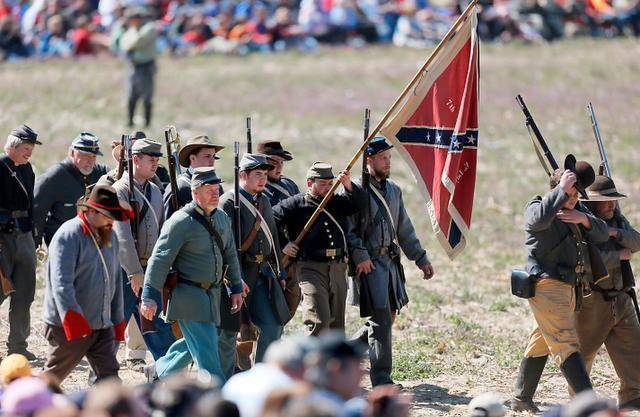
Civil War Re-Enactors - Newsobserver-com

Photo credit:  Newsobserver.com

The jobs in this week’s list range wide in their requirements; while some require only natural skills, such as the organisational skills needed to be a closet organiser, or the brawn needed to muss up someone trying to steal your client’s car in Brazil (or South Africa – check out the comments on last week’s post), others require proof of one’s trustworthiness, such as the Crown Jeweller or the Cup Keeper, and some require specific training such as the re-enactor (besides being knowledgeable about the era they portray and its clothing, etc., they need to be physically fit to wield a sword for hours on end – even minutes on end!).  To be a crime scene cleaner, at least for violent crimes, I think one would need nerves of steel and a good therapist…

Of all the jobs on this list, I think the only one I’d really like is being a closet organiser; I actually did that once:  A family hired me to help sort out their cupboards; they literally could not find anything, and no wonder… dishes were stuffed in with board games and bedding, towels were on the out-of-reach top shelf of a hall closet far from the bathrooms while the other shelves were stuffed with candles, plant pots and other bedding, and their bedroom closets held more dishes, crafts supplies, books and even clothing.  I’d never seen such chaos, and it was a good project to sink my organisational “teeth” into!

  • Chicken Sexer: Determines the sex of a chick, relying heavily on intuition. Usually hired by commercial hatcheries, these professionals (who are more common in the UK and Japan) make up to $60,000 a year.
  • Chief Listening Officer: Monitors a brand’s presence across social media platforms.
  • Civil War Battlefield Re-enactor : This category could be expanded to any kind of re-enactor – Viking, British, Renaissance, Medieval, etc.
  • Closet Organizer
  • Colour Expert / Wardrobe Stylist
  • Crack Filler: Using a silicone sealant, they repair the wear and tear inflicted on monumental structures, like Mount Rushmore. The job description also includes repairs to blacktop, asphalt driveways and sidewalks, etc.
  • Crime Scene Cleaner
  • Crown Jeweller
  • Cruise Ship Entertainer
  • Cuidacarros (Brazil): Hire these guys to watch your car when you’re gone and beat up anybody trying to steal it.
  • Cup Keeper: Paid to babysit expensive trophy cups, such as the Stanley Cup, as they travel.

3 Comments

Filed under Articles, Lists, Musings, Research

Odd Jobs #3: Bereavement Coordinator to Car Plate Blockers

JAPAN-ART-PAINTING

Body Painter.  Photo credit: YOSHIKAZU TSUNO/AFP/Getty Images

For most of the odd jobs in this week’s lineup, I was able to find a link with a description of some kind; but, not surprisingly, “one of these is not like the others” (a Sesame Street throwback…) – the only illegal job of them all; it seems to have found a niche market in a black market sense of the word.  In a weird way, it reminds me of “lines of desire” – where there’s a will, there’s a way.

I find it interesting to include “Blacksmith” in this list; what was once a trade found in any town worth its salt, and testified to by the number of people with the surname Smith, is now a rarity.

By the way, I’m running a similar series on my history blog under the heading “Odd Jobs of Bygone Days” in case you’re interested.

6 Comments

Filed under Articles, Images, Lists, Research

Odd Jobs #2: Ant Vendors to Beer Testers

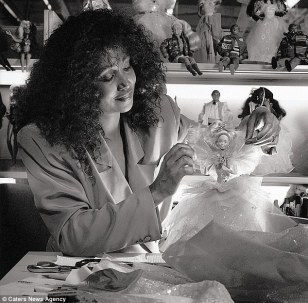
Odd Job - Barbie Doll dress designer, Nancy Rica Schiff

Barbie Doll Dress Desiger.  Image by Nancy Rica Schiff

Here are a few jobs that, only if one stops to think about it really (really) hard, might seem logical.  I guess that if you buy a ball, someone has to have tested it – at least random spot-checking of production lines; but selling ants?  Or making post mortem portraits from cremated ashes?  Or sniffing other people’s armpits (which is easier than sniffing your own, granted…)?  Go figure.  Follow the links to read more about them.

  • Ant Vendor: There are about 12,000 different species of ants in the world, so selling ants might actually be more complicated than you think. If you’ve ever had an ant farm, there was an ant vendor at work behind the scenes.
  • Armpit Sniffer
  • Ash Portrait Artists: Gets creative with the remains of loved ones. Following cremation, some people choose to hire these artists to create a token of remembrance, like a necklace or glass sculpture.
  • Barbecue Editor: Eating at restaurants and writing about it for magazines and newspapers. It may sound like a dream job until you stop to consider the fact that they must eat barbecue several times a day, every day…
  • Backpacking Instructor
  • Bed Tester
  • Ball Tester: Assess basketballs, footballs, volleyballs and soccer balls for air-retention, inflation, roundness, weight and reboundability. This job might also be called a “performance analyst” or “performance evaluation tester”.  If you think about it, someone’s got to test sports balls, tennis rackets for pros, etc.
  • Barbie Dress Designer: Fashion designers at Mattel Toys, the company behind Barbie, create hundreds of new styles for Barbie and her ever-expanding entourage.
  • Beefeater
  • Beer Tester: Taste — and spit out — beer all day to approve new and existing flavours.

9 Comments

Filed under Lists, Research

Not Just A Pretty Face

History is full of fascinating stories; some of them are so strange that they would be tossed onto the sludge pile of any self-respecting publisher if it came across their desk in the form of a novel’s premise.  As Mark Twain so elegantly put it, “Truth is stranger than fiction, but it is because fiction is obliged to stick to possibilities; truth isn’t.”  The proof is in the pudding, as they say, in the following story:

What do the following three things have in common:  A young Jewish woman by the name of Hedwig Eva Maria Kiesler, born in 1914 in Vienna, Austria; the spread-spectrum technology that enables Wi-Fi, CDMA & Bluetooth; and a Hollywood starlet discovered in Paris by Louis B. Mayer in 1937?  Quite a lot, in fact; because the woman born in Austria was otherwise known as Hedy Lamarr, inducted posthumously into the National Inventors Hall of Fame in 2014 for developing technology useful for a radio guidance system for torpedoes, the concept behind Bluetooth, Wi-Fi & CDMA (Code Division Multiple Access) and now used for entertainment and communication around the globe.

Lamarr, who became known as “the most beautiful woman in Europe”, was the only child of a prominent upper-class Jewish family, and her birth name was Hedwig (Hedy is the diminutive form).  At 18, she married Friedrich Mandl, reputed to be the third wealthiest man in Austria and an arms dealer who made a killing during the wars (in both senses of the word), in the proverbial bed with both Mussolini and the Nazis.  Lamarr would attend lavish dinner parties and business meetings with her husband as he networked with scientists and those involved in military technology, and her intelligent mind soaked up the information, nurturing her scientific talents.

Lamarr escaped her controlling and jealous husband by disguising herself as a maid and fleeing to Paris, where she obtained a divorce.  There she met Louis B. Mayer, who was scouting for European film talent; he had her change her surname to Lamarr, in homage to the silent film actress Barbara La Marr.  In 1938 she made her American film debut in “Algiers”, but because of her beauty, she was often typecast as a seductress; to alleviate the boredom, she set up an engineering room in her home and turned to applied sciences and inventing.  With the outbreak of World War II, she wanted to help in the war against the Germans, particularly in improving torpedo technology.  She met a composer, George Antheil, who had been tinkering with automating musical instruments; together they came upon the concept of “frequency hopping”:  Until then, torpedoes guided by radio signals could be jammed and sent off course just by tuning into their broadcasting frequency and causing interference; hopping frequencies would enable torpedoes to reach their target before their signal could be locked down.

Hedy Lamarr - Austrian-Actress-Invents-Control-Device

In classic Hollywood-portrayal style, the US Navy wasn’t interested in a technology developed by a beautiful actress and a musician in some suburban home.  I find the Stars and Stripes article above very telling as to their views of a pretty face actually being smart too; its tone is quite condescending from beginning to end.  The US military didn’t apply the groundbreaking technology for another 20 years, until the Cuban Missile Crisis in 1962.  That same technology serves as the basis for our modern communication technology, enabling many people to use broadband simultaneously without interfering with each other; such situations as portrayed between Doris Day and Rock Hudson in “Pillow Talk” are unthinkable today, and all because of Hedy Lamarr.

So the next time you’re sitting in a café using Wi-Fi next to someone else on their own cell phone, give a wink to the memory of Hedy Lamarr.  May you be inspired to reach beyond the possibilities, and create fiction worth reading even in the distant future!

Hedy Lamarr Quote

12 Comments

Filed under History, Quotes, Research

Deaf Space

Take a moment to stop what you’re doing, and close your eyes:  What do you hear?  A tea kettle? The hum of your computer?  a television?  A car driving by?  All of these sounds tell you something about your environment:  That water is boiling; that your computer is working well, or struggling, or processing something that makes it slower at the moment; that someone, perhaps in another room, is occupied; that traffic is flowing, or that it might be dangerous for children outside at play.

Now take away all those sounds.  It can be disorienting; it makes you feel insecure.  It also makes you more alert to other environmental cues, and to your other senses – particularly sight.  If a person mumbles, or turns away, or moves their hand across their face while speaking to a deaf person, communication is disrupted.  People can be sensitized to the challenges, but can architecture?  Yes.  It can be made suitable for various perceptions and perspectives.

When I lived in Scotland, I translated regularly (BSL) for the deaf in our church, and would hang out with deaf friends sometimes.  Some of them lived in a flat complex designed for the visually or auditorily-impaired, with bold red counter tops, light switches and phones to help them navigate, as well as light signals for various things such as the door bell or the phone ringing.  The deaf sports club was a wide-open space, with room for a large crowd to chat in groups; as a hearing person, it was a unique experience to be in a crowd of signing people:  There are few secrets in the deaf community, because even across the room one can understand the conversation; and though we were all signing, it was not quiet – sounds made with the mouth to support the sign, or the slap of skin on skin, or a laugh, or the shifting of clothing could be heard.

Look at the layout of your room, or office:  If your interaction with the people around you needs to be visual, what could potentially hinder it?  A solid wall, a glaring light fixture, blind corners, stairs (which must be focused on, to navigate), or a narrow passage that makes it difficult to walk side by side, signing.  Deaf architects have begun incorporating their unique considerations into designs, and they not only offer a unique perspective on architecture but, by doing so, have created some stunning spaces:  Deaf Space.  To see a short video on the topic, please click here.  Do yourself a favour, and watch the video at least once without sound.  Below are a few images of deaf space from Google Images.

As a writer, it is always fascinating for me to explore new perspectives, and to try to see the world around me through the eyes of others; doing so enriches the writing experience, and opens new possibilities in developing characters, environments, or situational elements.

This slideshow requires JavaScript.

5 Comments

Filed under Articles, Research, Signs, Videos

Writing Trivia: Earthen Floors

I do a lot of research online; sometimes it leads down the oddest of trails, and those are always the fun ones to follow – the road less travelled, and all that.  I keep a storehouse of “odds and ends” information, the trivial bits and bobs that might come in handy as I create a new world for a story.

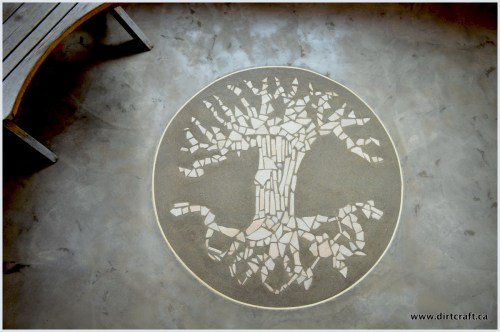
I was recently writing an article for one of my other blogs (click here to read it), and came across an interesting article on the topic of earthen flooring; such an element could be used in historical fiction, science fiction, or modern eco-escapism fiction.

What I found fascinating is the way the writer describes her first experience of walking on such a floor:  The leathery softness, the warmth, the texture, and the creative possibilities this type of flooring allows.

Such things stir my creative juices, and I have to remind myself to finish my current manuscript before moving on!  But such an element will come in very handy for my next book, which is a science fiction story… and now, because I’ve shared it with you, I’ll know where to find it when I need it!

Click on the image below to read the article, and be inspired.  Keep writing!

Earthen Flooring


5 Comments

Filed under Articles, Nuts & Bolts, Plot Thots & Profiles, Research

A Page in History

As a writer, I’m constantly absorbing information; I never know when something might come in handy!  It may inform my scene with more realism, or infuse a character with a quirk or a background that gives them depth.  History is full of oddities and amazing events that can spark our imaginations; the event below is one such event:  If you ever need to write a scene about an explosion, or the effects of wrong decisions gone awry, look to history to teach you how it’s done (or in this case, how it should not be done).  This story shows the importance of decisions, and begs the question, “What if?”  What if one of those factors had changed?  What if the captain of the SS Imo had given way to the captain of the SS Mont-Blanc?  We’ll never know, but as writers, we can use our greatest tool:  Imagination.

This day in history:  The Halifax Explosion

6 December 1917 will live on in infamy in Halifax, Nova Scotia, and in Canada, as one of the worst disasters in history.  On that day, the largest man-made explosion prior to the Nuclear Age occurred, wiping out several communities and reshaping Halifax forever.

The events that led up to the explosion that killed thousands and maimed thousands more reads like a thriller:  The delay of a shipment of coal; the climate of war that complicated the comings and goings from the harbour; an experienced captain now behind schedule who “bent the rules” for once; the captain whose impatience at previous delays pressed him to disregard the harbour speed limits and refuse to give way a third time; the third ship in his path who, because of their cargo (tons of explosives), could not make sudden manoeuvres and was relying on him to give way; a right decision made too late.  Curious onlookers who gathered at their windows to watch the blazing ship in the harbour had little idea that it would be the last thing most of them would ever see; if they were not obliterated in the initial blast, the light from the flash or the window glass shattering [in virtually every window within a 2.6-kilometre (1.6 mile) radius] blinded them; some 5,900 eye injuries were treated, leaving over 40 survivors permanently blind.

Confusion after the initial blast was compounded when people began evacuating thinking that it was a German bomb attack; fires throughout the city (caused by tipped oil lamps and ovens in collapsed homes) added to the confusion and hindrance to rescue efforts,  but within a few hours the true cause had become widely-enough known to calm initial fears.  Rescue teams started arriving from as far away as 200 km (120 miles), their help hampered by damaged roads and fears of secondary explosions from a munitions magazine at the Wellington Barracks.  To make matters worse, the next day blew in a blizzard which dumped 41 cm (16 inches) of heavy snow on the area; this blocked train transport with snowdrifts, and tore down hastily-erected telegraph lines.  Halifax was isolated, though the snow did help to extinguish the fires throughout the city.

Here in Switzerland, the NZZ (Neue Zürcher Zeitung) reported on the 7th of December:

“Zerstörung der Stadt Halifax? New York, 6. Dez. (Havas.)  Aus Halifax wird gemeldet: Die Hälfte der Stadt Halifax sei ein Trummerhaufen infolge einer Explosion.  Die Verluste werden auf mehrere Millionen geschätzt.  Der Nordteil der Stadt steht in Flammen.  Es gibt hunderte von Toten und an die tausend Verwundete.

[“Destruction of the city of Halifax?  New York, 6 December (Havas – a French media group based in Paris.)  From Halifax was reported:  Half of the city of Halifax lies in ruins as a result of an explosion.  The loss has been estimated at several million (unclear whether it means Canadian dollars or Swiss Francs).  The northern part of the city is in flames.  There are hundreds of dead and thousands injured.”]

On the 8th of December, a similar footnote was reported, adding, “Kein Haus der Stadt ist unbeschädigt geblieben…” (“No house in the city has remained undamaged”)

That it even made it into a footnote of the international news section is actually remarkable, considering that Switzerland was surrounded by war at the time and had far more pressing matters on the home front and in neighbouring countries with which to keep abreast.

In the end, it is estimated that over 2,000 people were killed and 9,000 injured (of those injured, it is unclear how many died of the injuries, and how many were permanently disabled in some way).  The blast was so hot that it evaporated water in the harbour, exposing the harbour’s floor momentarily; as water rushed back in to fill the void, the resulting tsunami erased a settlement of  Mi’kmaq First Nations along the shores of Bedford Basin, on the Dartmouth side of the harbour; how many were killed is not known, though around 20 families lived there at the time.

Halifax Explosion, 6 December 1917To read the fascinating history of this event, please click here.

Sources:  Wikipedia; NZZ digital archives

8 Comments

Filed under Articles, History, Plot Thots & Profiles, Quotes, Research, Translations

If These Walls Could Speak

There’s just something about abandoned places that speaks to me; each one has a unique history, and an ending that seems somehow premature.  Whether it be a shopping mall in Thailand now occupied by goldfish; cities within range of the radioactivity of Chernobyl; an island that was once inhabited but now forlorn; an underground station or even an entire train station in the middle of an inhabited city, or an abandoned house, they each have a story to tell.  If their walls could speak, what would they say?  What have they seen?  What would they have liked to see but were prematurely cut off from the habitation or transient experiences of humanity?

DSCN5118 - Overtoun House

Overtoun House. Image Credit: Stephanie Huesler

I once lived in a manor house in Scotland, called Overtoun House; it was often my home over the years that I lived in the UK; once we moved away it fell into disrepair, ransacked by vandals and left to rot by the town council that was charged with its maintenance.  Several years ago I went back to visit and actually cried at the state it had fallen into – it was literally like finding a good friend face down in the gutter.  Finally, a few years ago an organisation moved in to restore the building to its former glory, and it will be used to house women in distressed circumstances.  My husband and I met there in 1991, and this past summer we went back for a visit; it was comforting to see her in good hands once more.

If you google “abandoned places”, you’ll find thousands of photos and stories just begging to be told:  Salton City, former Olympic venues, World War Two installations, train stations, castles, theme parks, homes, libraries (abandoning books is just wrong), subway / underground stations, shipwrecks, asylums, private homes, and even (most tragic of all) the abandoned dead in the “death zone” of Mount Everest.  Each one with a history and a reason they were abandoned, yet also an inspiration for writers to dig below the superficial surface to create an untold tale.

If those walls could speak to your inner writer, what would you hear?  Write it!

21 Comments

Filed under History, Research, Writing Exercise

SWOT Analysis in Fiction

Writing fiction often brings the writer to a crossroads:  Should I take my character(s) down this road or that?  Will they decide this or that, and what will the consequences of either choice or decision be?  Which would fit best into my plot?  All of these questions can be answered by applying a corporate business tool called the SWOT analysis chart.  I have this baby hung on a magnet strip near my desk, along with other prompts such as the sensory image, and I apply it frequently.  Just last week I faced a crossroads:  Would A) my character run away, or would B) another character (or C) take her away?  On the latter question, I had another two options (thus, B & C); I needed the SWOT.

SWOT Analysis Chart, Watermark

This image shows you the variables of each option; internal vs. external influences or attributes of a situation or choice; helpful vs. harmful in reaching the character’s goals, or the consequences of the choices laid before you.  What are the Strengths, Weaknesses, Opportunities and Threats of each path at your character’s feet?

I’ll give you the example of my thought process as I applied it to my historical novel’s fictional situation:  If my character ran away (A) , the strength would be that she would be taking her destiny into her own hands – it’s what you want your main character to do; the threat would be that such an action might raise assumptions that would damage her reputation (was she pregnant?).  The opportunity of doing things in her own timing was overshadowed by the weakness of practicalities:  How would she, without support, get from her family’s estate to Portsmouth, at least a good half-day’s journey by carriage?  If the “B” character (her mother) took her to Portsmouth, the main character would be passive in the decision – the action would happen to her rather than her controlling or causing it.  The opportunity of solving the weakness of “A” by giving her a ride to Portsmouth was a strong incentive, but would raise a bigger threat in that it might seem like the mother was being just as manipulative as the father, forcing the main character into making a choice to suit the mother, which wasn’t the case.  If “C”, her future husband, came to sweep her away from the problems at home, again it would seem that the main female character wasn’t strong on her own two feet, or was too pliable and passive.

I took each scenario through the SWOT rigorously, and in the end I decided – well, when the book comes out next year, you can find out for yourself!

Applying such tools helps you focus your energies on finding solutions, rather than finding yourself stuck in writer’s block.

6 Comments

Filed under Articles, Images, Nuts & Bolts, Plot Thots & Profiles, Research, Writing Exercise

Truth into Fiction

Sometimes truth is more fascinating, more adventurous than fiction.  Sometimes a news article becomes a spark for a fictional story.  One of the greatest films of all time, Titanic, took its cue from real life; many books and films are based on real life stories, mysteries, narrow escapes, historical events and experiences.  The best kinds of story sparks are those things which capture our imagination; not only best for the reader, but also for the writer – for if you are not excited by and captivated by what you’re writing about, researching and investigating, how do you expect a reader to be excited or captivated by it?  Personally, history has always fascinated me; I wonder, “What would it be like to walk among them?” or “What would it be like to discover these events as a modern archaeologist?”  I explored such a theme in my novels, “The Cardinal“.

Here are a few historical sparks that might capture your imagination; just click on  each image to link to the article:

Artifacts from the Battle of the Egadi Islands, ca. 240 BC

Battle of the Egadi Islands, 241 BC

The City of Heracleion, Plunged into the Sea

Heracleion Artifacts

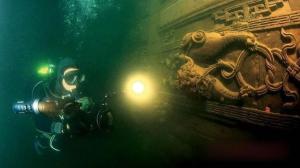
China’s Atlantis:  Shi Cheng

China's Atlantis of the East, Shi Cheng

The Skulls of  Sac Uayum

The Elongated Skulls of the Yucatan underwater cave, Sac Uayum

An Ancient Roman Shipwreck Reveals Medicinal Remedies

Roman Shipwreck with Medicinal Supplies

2 Comments

Filed under History, Images, Lists, Nuts & Bolts, Plot Thots & Profiles, Research, Writing Exercise