A Rabble of Animals
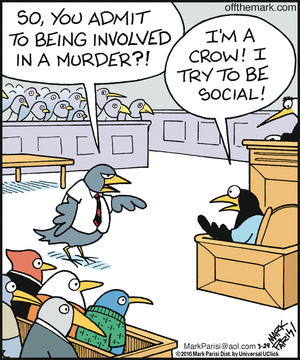
Did you know that a group of vultures has a sense of humour? Or at least the people who decided to name them did (likely back in the 16th century, when a slew of collective nouns emerged): While hanging out and doing nothing, vultures are called a committee. When feeding, they’re called a wake. There’s irony in them thar’ varmints.
Some collective nouns are common sense, and others simply common, such as packs of wolves, flocks of birds or herds of cattle; but did you know that lice flock, and sea urchins form herds, too? If I say swarm, you might think of flies or gnats or even minnows; but you could use the same word to describe a group of eels.
Worms bed, dotterels trip, cheetahs form a coalition, and Hippopotami bloat. Rhinoceroses either crash or form a stubbornness, while skunks stench and squirrels scurry. Jellyfish smack, brood or fluther, while oysters bed and goldfish glint or create a troubling. Butterflies flutter, swarm or kaleidoscope; caterpillars army, while grasshoppers cloud.
There are some fun combinations: Crows murder (they also gather as a storytelling or a parcel), Flamingos flamboyance, guillemots bazaar, gulls screech (don’t they, though?), and hawks kettle (flying in large numbers) and boil (two or more spiralling on an updraft). Hummingbirds charm, as do Magpies (unless they murder), and owls and rooks hold a parliament – I’d trust them to do so more than most politicians. Peacocks muster, ostentation and pride, while penguins tuxedo or huddle (I kid you not). Young penguins gather in a Créche, just like human toddlers, and seagulls squabble.
Starlings form beautiful murmurations and chatterings, while swifts scream and tigers ambush. I’d love to see a zeal of zebras, but not so much a prickle of porcupines. Whales pod while trout hover and stingrays fever; snails walk, frogs knot and, believe it or not, rattlesnakes rhumba! Elephants gather as a memory, while deer gang and bucks clash, and gnus form an implausibility. Running into a mob of kangaroos might be quite pleasant, but not an intrusion of cockroaches!
There are hundreds more such collective nouns; English is an ever-changing language, but some things are just too good to allow them to go the way of the Dodo, so add a few more colourful expressions to your language, and enjoy the idiosyncrasies of English!
I’ll just add that, by now, my grammar-checking program is having a nervous breakdown.
What a Buttload!
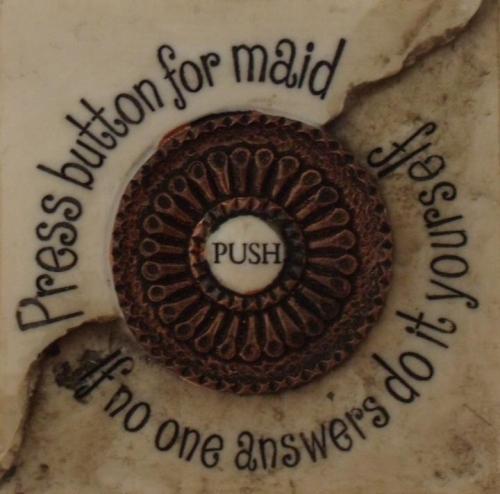
Now, now… if you thought I was going to be rude, you don’t know me very well. While I am certain that the term “butt” has led to countless jibes and jokes down through the centuries, it is (among other things) in fact an English measuring unit for wine. A Buttload is a unit for liquids which contains 126 gallons (~476 litres) which is one-half tun (252 gallons / 953 litres), and equivalent to the pipe (the latter also referred to the large container used for storing liquids or foodstuffs; now we rather use the terms cask or vat). That they needed a term for a unit of wine that massive may seem odd at first; but when you consider that the water they had to drink was the same water that flowed downhill from the landlord’s latrine, the cows in the pasture, and the washerwoman upstream, wine, beer and ale (depending on which harvest climate you lived in) was by far the safest thing to drink. If wine was available in your area, it was stored in barrels and thus was drunk relatively young; also, to counter the effects of drinking it at every meal, wine was often diluted 4 or 5-to-1 with water; that took all of the buzz out of it (and added who knows how many bugs that they were drinking wine to avoid in the first place…). Now you know. What a buttload off my mind… I think it’s time for a glass of (undiluted) wine.

Originally Posted on History Undusted, August 2015
Filed under Etymology, History, History Undusted, Nuts & Bolts, Riddles
History Undusted: Earrings in the 18th Century
I recently watched the film “Emma”, with Gwyneth Paltrow and Jeremy Northam; as the proposal scene was playing, I noticed her earring and wondered if that was historically accurate – did they have pierced earrings in England at that time (the early 1800s)? I’m not into fashion (that’s an understatement – I’m very pragmatic when it comes to clothes!), but the historical aspect fascinated me enough to look into the matter.
While we have probably all heard of “Girl with a Pearl Earring”, painted ~1665 by Johannes Vermeer (doubts have been raised as to whether it is actually pearl or rather polished tin or coque de perle, given the reflective qualities and size, but that’s another issue), it is a Dutch painting from the 17th century and thus doesn’t answer my question. My interest lies more in the 1700s (18th Century) of Britain, and so I began researching 18th C. English portraits.
I discovered that, while there are many portraits with earrings displayed, there are far more without. So it would have been possible, but was by no means as common as it is today. Also, sometimes the current hairstyle hid the ears, such as that of the 1770s and 1780s, or perhaps their ears were hidden by the custom of married women wearing mob caps, even beneath other “public” hats.

Typical 1780s hairstyle; such a style would have either hidden earrings or made them obsolete.

A married woman wearing a mob cap under her bonnet (though from the black cape and hat combined with a white dress, she may be at the end of a period of mourning, wearing “half weeds”). Mrs Lewis Thomas Watson (Mary Elizabeth Milles, 1767–1818) by Sir Joshua Reynolds, 1789
The portraits do not reveal whether or not they were merely clip-on earrings or studs, though ear piercing has been around for centuries, varying in intensity and use from culture to culture (some for religious purposes, some for ownership such as slave earrings, and others were status symbols for royalty or nobility). I’ve found many portraits from Europe as a whole, between the 16th and 19th centuries which portray women wearing earrings; here are a few, with their details:
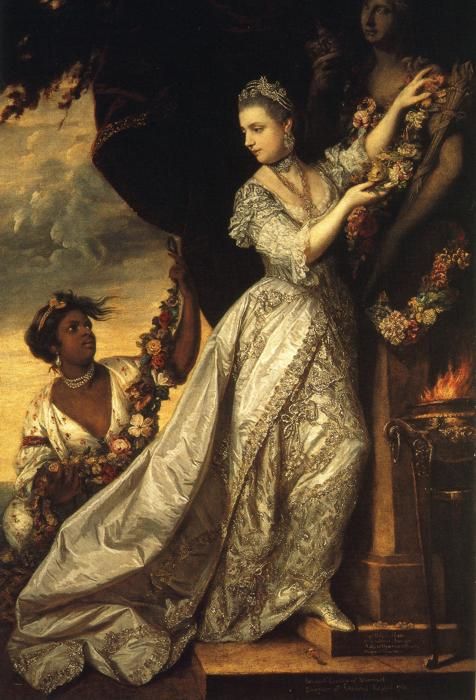
1761, by Joshua Reynolds: Lady Elizabeth Keppel. Note that the Indian woman is also wearing an earring(s), and a rope of pearls; I don’t know whether she is portrayed as a servant or merely inferior in rank, due to her placement in the portrait…
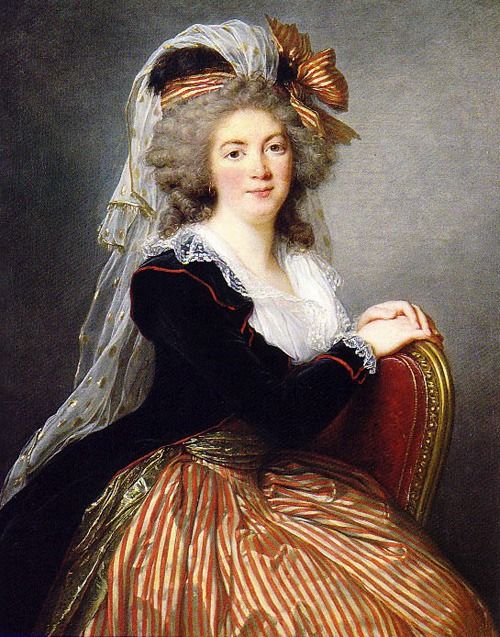
Genevieve-Sophie le Coulteux du Molay, 1788 by Elisabeth Louise Vigee Le Brun. Though this is a French portrait by subject & painter, it is from the period in question and displays a hoop earring, as well as the hairstyle common in this period in England as well.

Turkish Dress, c1776 Portrait of a Woman, possibly Miss Hill

A young woman in powder blue, ca. 1777

Thomas Gainsborough, 1727-1788 London, Portrait of Lady Anne Furye, née Greenly
Based on History Undusted Original Post, June 2015
Filed under Articles, History, History Undusted, Images, Links to External Articles, Research
History Undusted: Look, Ma – No Ropes!
Many men risked their lives, back in the days before safety finally became standard, to construct the world’s skyscrapers. The first image below is one of those daredevils who captured such moments on film for posterity. His name was Charles C. Ebbets, and he was himself an adventurer, stuntman, actor, wing-walker and photographer. If you’d like to know more about him, his daughter has set up a website to document his life and pictures; click here. Meanwhile, enjoy the images below – even if it’s just with morbid curiosity (if you’re afraid of heights, take a deep breath first).

Charles C. Ebbets

Charles C. Ebbets’ “Waldorf, Astoria”, © Bettmann Archives, Corbis

Charles C. Ebbets’ Laurel and Hardy, © Bettmann Archives, Corbis
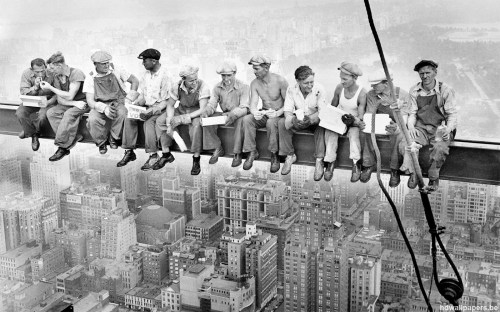
Charles C. Ebbets’ famous “Lunchtime atop a Skyscraper”
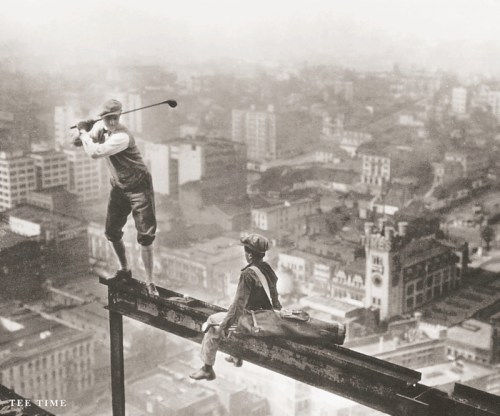
Charles C. Ebbets’ “Tee Time”, © Bettmann Archives, Corbis

Unidentified photographer, 1907

Worker painting the Eifel Tower, 1953

Construction workers on the Gold Gate Bridge

London, 1929
Filed under Articles, History, History Undusted, Images, Snapshots in History
The Long and Short
It’s been nearly 3 weeks since I last posted, for which I apologize. Sometimes life just takes over, and my mind gets going in several different directions; when that happens, it’s hard to focus on writing a blog that’s worth its content, and I don’t want to post just to post. It needs a purpose.
In my post about cutting my nails, I told you that I’m getting down to serious writing. It’s been an interesting process, as I’m actually writing two manuscripts at the moment – one from the perspective of the heroine, and the other, the villain. But as any villain will tell you, they are the hero of their own story; I started writing from the second POV to develop the character and decipher the plot ins and outs through that back door, so to speak – if I don’t have a clear grasp on the villain and their motives, this particular plotline won’t work.
But in the meantime, life has intruded (so rude of it) several times; I’m involved in leadership teams in our church, so that’s taken quite a bit of time in this phase of our growth; my husband and I also went away to the Alps for a long weekend this past week, and while it was enjoyable, I didn’t sleep much – and I didn’t have my laptop with me to work when I couldn’t sleep. [Sleep is a whole other kettle of fish; I’ll just say that I don’t sleep horizontally, as it’s too painful.] So, to pass the time, I watched stars or wrote short stories.
I started writing short stories several years ago – just as a hobby, really; but this year, I decided to take it to the next level – competitions, and looking into anthologies. My mother has been sending me helpful links in the latter category, and in the former, I have a whole list of month-by-month due dates that I could target. If I miss the deadline for a particular competition, I can still write a short using their criteria, for practice as well as having something ready the next time.
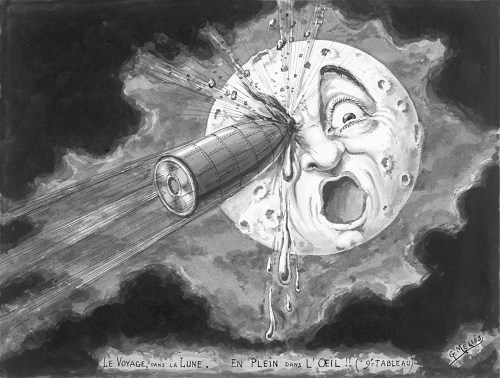
Part of my writing “time” has been spent trying to figure out a way around the monopoly that is Amazon. Basically, that’s been nothing but frustration. I used to be able to order paperback books through CreateSpace, at author’s cost, and have them shipped to Switzerland. They no longer ship here, because apparently, we’re now behind Timbuktu. Authors in other countries can buy author copies; basically, anywhere except Switzerland, Liechtenstein, and “some regions in Germany”. That’s a quote from a reply to my enquiry. How does one region of Germany differ from any other, I ask (rhetorically)? There is no longer a Berlin Wall – or does Amazon not realize this yet? If I could shoot Amazon to the moon, I would do it in a heartbeat. Any suggestions? I wonder if they sell rocket fuel?
History Undusted: Gibraltar
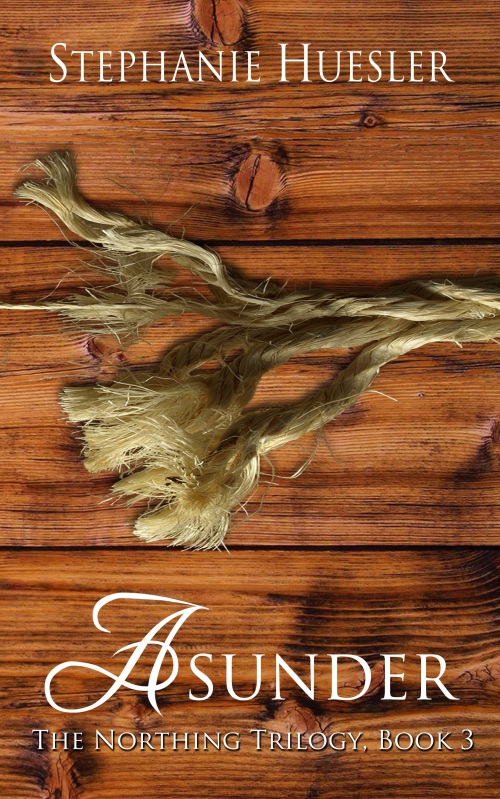
Back in 2015, my husband and I spent a few days in Gibraltar; it was the starting point for the first leg of his “south to north” European bike trips and a research trip for me; the book that resulted from such inspiration was “Asunder“.
Gibraltar is a tiny outpost of Britain at the gateway to the Mediterranean, spitting distance from Spain (as a matter of fact, I walked across the border and it took all of 2 minutes). Its history is disproportionately immense, spanning thousands of years, as it has always been a strategic nautical or military location. You can’t walk down a single street or lane without being reminded in some way of its military history: There are cannons everywhere, street names and square names reflect either military leaders or garrison locations, and even the town’s parks are walled in by fortress walls. The first known name of Gibraltar was “Calpe”, likely the Phoenician verb “kalph”, to hollow out, perhaps in reference to what is now known as St. Michael’s Cave. There was a Roman occupation, and in 400 AD, eastern barbarians invaded; Vandals, then the Goths, and then Berber Muslims followed. In 711 AD Tarik ibn Zeyad landed, leaving behind his name: The Arabic phrase “Jebel Tarik” (Tarik’s Mountain) has been corrupted into the modern name of Gibraltar. For over six centuries, with the exception of 1309 to 1333, the Rock was under Moorish occupation, though no town existed until 1160 (there were only fortifications).
In 1462 Gibraltar was retaken from the Moors by the Spanish; from there it was quibbled over between Spanish dukes, kings and queens until the Treaty of Utrecht in which Gibraltar was yielded to the Crown of Great Britain “forever”. The Great Siege, 1779 to 1783, was Spain’s last great attempt to reclaim the Rock, and it led to the vast destruction of the town and fortifications. Spain has never forgotten the sting of losing Gibraltar, and Brexit is likely a daily topic of discussion; Gibraltar is not part of the UK but is a British Overseas Territory, and voted strongly to remain in the EU; what they will be after Brexit finally comes about is uncertain. Chances are, it will become Spanish once again, or come under co-sovereignty with Spain and Britain.
In the 19th century the phrase “As safe as the Rock of Gibraltar” entered the English language, as Gibraltar became renowned for its impregnability. A civilian community began to grow up within the safety of the fortified walls, earning their living from commercial trade. Today, there is still a British and American military presence, and the local language is a mixture of Spanish and English.
The Rock is dominated by the presence of the only wild monkey population in Europe, of the Barbary macaques breed; they were most likely brought as pets during the Moorish occupation. Tourists are lower in the pecking order than the monkeys – because, in their social hierarchy, the lower in rank give their food to the higher in rank… just remember that the next time you want to feed monkeys. They usually stay up on the Rock, though we were warned not to leave our hotel window open, just in case. If they get half a chance, they’ll steal your picnic. When we first went up to the Rock, we were dismayed by the amount of rubbish everywhere, assuming it was discarded by careless humans; but it was, in fact, thieving monkies who don’t throw rubbish into the bins! And monkies were everywhere; walking toward St. Michael’s cave, we passed baby monkies playing, completely oblivious to humans; they know they’re celebrities up there, and they use it to their advantage every chance they get!
If you ever get the chance to go to Gibraltar, it’s well worth the experience. A week will give you ample time to enjoy everything it has to offer. If you like history and military history, you’ll love every nook and cranny of Gibraltar!
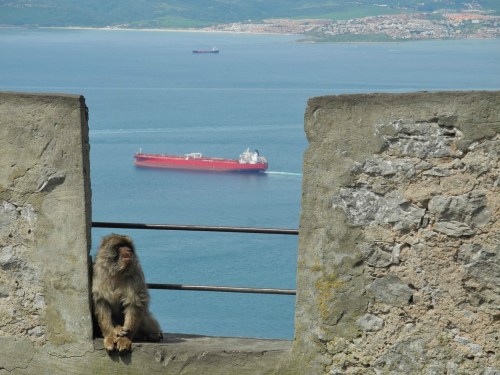
A Barbary macaque; Spain in the distance.

The Promenade, showing the City War Memorial honouring Gibraltarians who gave their lives in World War One. In the foreground is one of four Russian cannons (24-pounders) that arrived in GBZ in 1858 from England, having been captured in the Crimean War.

The Rock of Gibraltar, with Spain in the distance just beyond the airport’s single runway.
Filed under Etymology, History, History Undusted, Military History, Research