Tag Archives: greek

Etymology Undusted: Latin Borrowings

Believe it or not, the language second only to French in English borrowings is Latin. In all, it is estimated that up to 56% of English borrowings come from French and Latin (and since many French words come from Latin, it could be argued that Latin has had the greatest impact on the English language).

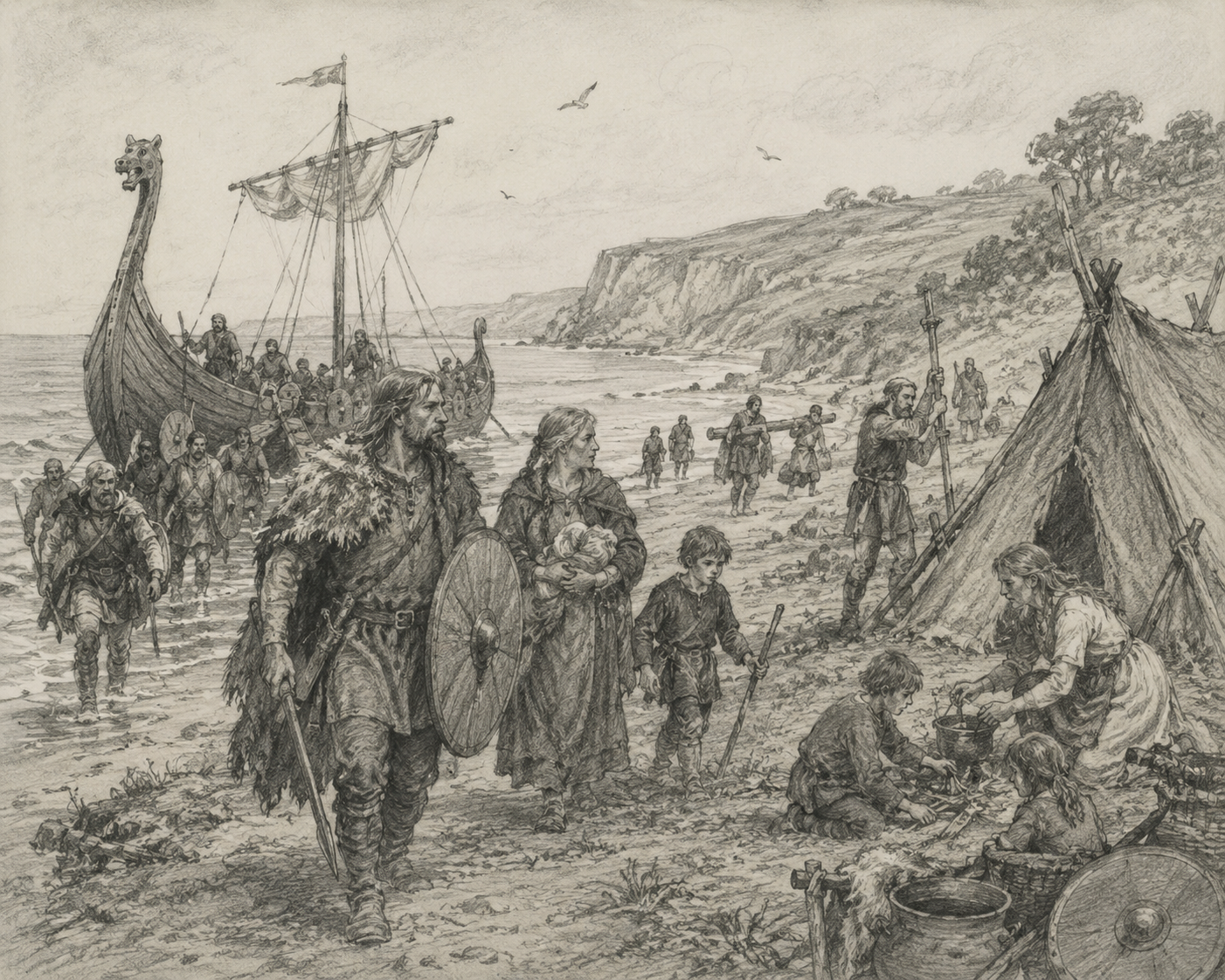
The Germanic tribes that fought the Roman Empire eventually moved west into what we know today as the British Isles; before they came, they’d already packed their linguistic bags with Latin terms, such as candle (candelabrum), cheese (caseum), camp (castra – from which we also derive castle), mile (mille passus, from which we also get [geographical] pass), mint (menta – for coins), pound (libra – for a weight unit, and from which the British pound sign £ is derived), and street (via strata), to name a few (many more were added during the period of Roman Britain, 55 BC – AD 410). The language of these ancient settlers was the ancestor of what would become English, but these tribes wrote in runes, and the language they spoke would be unintelligible to us today, as it had complex genders/noun cases and distinct vowel shifts.

Ancient Latin often borrowed words from Greek and then passed them on through the Romance languages to English, often through French. Some examples from Greek via Latin are school, anatomy, philosophy, music, machine, olive, bacteria, lamp, topic, idea, and place.

When Christian missionaries arrived in Britain in the 6th and 7th centuries, they brought Latin terms with them to describe new concepts. At that time, Latin was the Lingua Franca of medieval Europe. Sometimes, both the Old English and the Latin terms survived, such as OE Gospel (gödspell) and Latin evangelium (which comes from the Greek for “good news”; this is still the word used in German today). During that period, Latin terms tended to be used only in a religious context, with Old English being used in everyday life.

Latin moved beyond cathedral walls via science and technology; the era of scientific discovery required new words to describe new areas of knowledge and understanding. Words like carnivorous, apparatus, data, experiment, incubate, organic, structure, vertebra, and component entered the vocabulary during that time.

Other words borrowed from Latin include:

Absent, alter, amble, acceptable, agriculture, amiable, animal, appear, announce, aviary, barbarian, beatitude, benefit, campus, candidate, circumspect, civic, conspicuous, council, custody, deity, dictionary, digital, dragon, edible, extra, figure, focus, genus, habitat, imperial, invent, labour, legacy, library, marine, mediocre, medium, perfect, port, respect, ridicule, scholar, science, serpent, serve, superb, and so many more… ad infinitum!

2 Comments

Filed under Articles, Etymology, History, History Undusted, Liguistics, Linguistics

History Undusted – The Tactile Language of the Quipu

Throughout history, languages have come and gone; an estimated 30,000 have existed at some point in time, though currently, there are roughly 6,000 to 7,000 languages in use – and most are threatened with extinction. Think about that. The impact on the loss of cultural history, connection to ways of thinking, ways of communicating, and ways of processing information; senses of humour, and national heritages will be lost.

An example of a language nearly lost, but which is now familiar to most of us by sight, is the logogram language of Egyptian hieroglyphs. The knowledge of how to interpret the symbols had been lost for centuries, until 1799, when a stone was found near Rosetta, along the Nile Delta in Egypt; the stone was a stele with a decree issued in 196 BC; the texts carved into the stone were Ancient Egyptian (“demotic” text), hieroglyphs, and Ancient Greek. Because Greek was a known language, they could use the Rosetta stone to decipher the forgotten languages.

When we think of writing, we may think of various alphabets: Greek, Roman (of which English makes use), Norse Runes, or the logographic or ideographic languages of Asia, such as Chinese or Japanese, or the cuneiform writing of the Ancient Near East. But did you know that there have been languages based on string?

Quipu in the Museo Machu Picchu, Casa Concha, Cusco. Source: Wikipedia

The Inca people, in the region of modern Peru and Chile, used knots on an elaborate system of connected strings or cords for collecting data, keeping records, recording taxes or census records, making calendars, or for military organisation. When the Spanish Conquistadors swept through, they found numerous bundles of strings, but had no idea of their significance; they destroyed many of the quipu*, not realizing that they might have held in their hands a record of an individual’s wealth in animals or crops. [*Quipu is the Spanish spelling used in English; it is also spelled khipu or kipu.] Other cultures have also used similar concepts with knotted strings to record information, unrelated to South America; these include China, Japan, Taiwan New Zealand, Hawaii, and other parts of Polynesia.

As with most textiles, they unfortunately didn’t stand the test of time very well, and only a fraction remains today. The ancient world may have taken the concept of the quipu one step further in creating the more flexible abacus, though the latter was (and is still) used for temporary calculations, while the former was rather for recording information. Whether or not there is a historical link, both are visual tools that can be used for similar functions to a certain extent.

Even with such widespread use of these knotting records, their meaning was nearly lost, until a Harvard student, Manny Madrano, had time on his hands one summer and solved a centuries-old mystery!

For an interesting video on this topic, please click here. I hope you’ve learned something! Keep being curious about our fascinating world!

6 Comments

Filed under Etymology, History, History Undusted, Liguistics, Science & Technology, YouTube Link