
I love it when signs or notices are translated by non-mother tongue English speakers;it can be anything from cute to funny, misleading or just downright embarrassing. I especially love Asian translations! Here are a few examples.



I love it when signs or notices are translated by non-mother tongue English speakers;it can be anything from cute to funny, misleading or just downright embarrassing. I especially love Asian translations! Here are a few examples.
Filed under Images, Mistranslations, Nuts & Bolts, Quotes
What on the surface just looks like a man going through mid-life crisis in a pink tutu turns out to be a heart-warming and inspirational story that will make you smile every time you see a pink tutu from now on. Just click on the photo below to hear the story of a man’s love for his wife and the lengths he’s gone to, to bring a smile to her face in the midst of the trials of cancer, and where it’s gone from that simple desire.

Filed under Articles
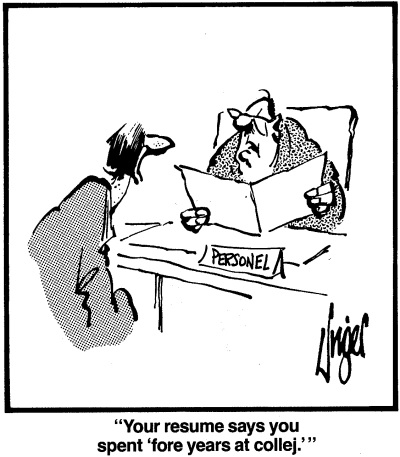 “Intellectual laziness and the hurry of the age have produced a craving for literary nips. The torpid brain… has grown too weak for sustained thought. There never was an age in which so many people were able to write badly.”
Israel Zangwill, the Bachelor’s Club, 1891
A Spoonerism is a deliberate (or accidental) play on words in which the corresponding consonants of two words, vowels, or morphemes are switched between two words in a sentence to create two new words. For instance, “talking back” becomes “balking tack.” The name comes from an Oxford minister, Rev. William A. Spooner, who was notorious for making these mistakes. He must have been an entertaining minister to listen to! The poor fellow didn’t appreciate the honour of using his name for such mistakes; he had enough on his plate with being Albino with poor eyesight, but he was well-liked, and the dubious honour accorded him was kindly meant.
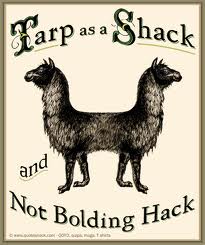 Here are a few examples (the interchangeable letters are capitalized):
The Weight of Rages will press hard upon the employer. (Rev. Spooner)
a Tip of the Slung
Dear old Queen / Queer old Dean
Runny Babbit
is the Bean Dizzy?
Fight in your Race
a Pack of Lies
Pest in DRink
the Might is in my Lies
Belly Jeans
BRimulate your Stain
as the FLow CRies
SMart Feller
I’d rather have a bottle in front of me than a frontal lobotomy.
SHake a Tower
well-boiled icicle, well-oiled bicycle
the Pea little THrigs
Roaring with Pain
Ragged Jocks
the Loose that Gaid the olden Geggs
the Mog in the Danger
the Pag at the STool
Beeping SLeauty
… and the Gist Loes on!
All I can say is, Roonerisms SPock!
Filed under Articles, Nuts & Bolts
Paraprosdokian is not a word I would readily remember. I can even admit freely I’d never heard of it until recently. Maybe I’m just weird, but I can remember a word much better if I know where it came from; this one actually makes sense: (Greek) para– meaning “against”, and prosdokaō meaning “I expect.” Against expectations. It’s not actually that old, and is thought of by some linguists as a bogus term; but there are a lot of words that have crept into the English language on just such a pretext, and have hung around for centuries (thereby gaining loyalty from linguists). I’d say that sounds like a bit of cosmic humour.
A Paraprosdokian is a phrase or sentence that ends with an unexpected twist. Now it may be as common as rain where you live, but not here. I tend to think of these sentences as one-liners, and with good reason – this figure of speech is popular with comedians as it’s short and ends on a punch. Some Paraprosdokians use a familiar phrase and twist the ending such as the first sentence (“Where there’s a will, there’s a way”). So I say, call them what you will – just use them well!
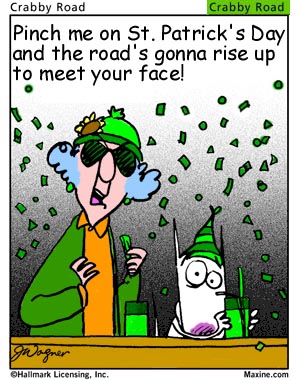
Where there’s a will, I want to be in it.
I sleep eight hours a day and at least ten at night. (Bill Hicks)
The last thing I want to do is hurt you, but it’s still on my list.
Since light travels faster than sound, some people appear bright until you hear them speak.
You can always count on the Americans to do the right thing – after they have tried everything else. (Winston Churchill)
If I agreed with you, we’d both be wrong.
I don’t belong to an organized political party. I’m a Democrat. (Will Rogers)
We never really grow up, we only learn how to act in public.
War does not determine who is right – only who is left.
This is not a novel to be tossed aside lightly. It should be thrown with great force.
Knowledge is knowing a tomato is a fruit. Wisdom is not putting it in a fruit salad.
They begin the evening news with Good Evening, then proceed to tell you why it isn’t.
He Ain’t Heavy, He’s My Brother. (Variations on this phrase are attested as early as 1884.)
There’s a fine line between cuddling and holding someone down so they can’t get away.
To steal ideas from one person is plagiarism. To steal from many is research.
If I am reading this graph correctly… I’d be very surprised. (Stephen Colbert)
I haven’t slept for ten days, because that would be too long. (Mitch Hedberg)
Money can’t buy happiness, but it sure makes misery easier to live with.
Buses stop in bus stations. Trains stop in train stations. On my desk is a work station.
I thought I wanted a career. Turns out I just wanted paychecks.
In filling out an application, where it says, ‘In case of emergency, notify, I put DOCTOR.
I like going to the park and watching the children run around because they don’t know I’m using blanks. (Emo Philips)
I didn’t say it was your fault, I said I was blaming you.
Women will never be equal to men until they can walk down the street with a bald head and a beer gut, and still think they are sexy.
Behind every successful man is his woman. Behind the fall of a successful man is usually another woman.
A clear conscience is the sign of a fuzzy memory.
You do not need a parachute to skydive. You only need a parachute to skydive twice.
I used to be indecisive. Now I’m not so sure.
He was at his best when the going was good. (Alistair Cooke on the Duke of Windsor)
You’re never too old to learn something stupid.
To be sure of hitting the target, shoot first and call whatever you hit, the target.
Nostalgia isn’t what it used to be.
Change is inevitable, except from a vending machine.
I’ve had a perfectly wonderful evening, but this wasn’t it. (Groucho Marx)
A modest man, who has much to be modest about. (Winston Churchill, about Clement Attlee)
If I could just say a few words… I’d be a better public speaker.
She was good as cooks go, and as cooks go she went.
Filed under Articles, Cartoon, Grammar, Humor, Nuts & Bolts
Okay, grammar pet peeve time: Apostrophe abuse. It needs to stop. Now.
There are only two instances in the English language in which apostrophes are used:
1) Contractions, as in: you are = you’re, or have not = haven’t, or I am = I’m. Just keep in mind that the apostrophe takes the place of the missing letter(s); if you take a letter out to combine (contract) two words together, place the apostrophe where the missing letter would have been written.
2) Possessives, as in: Steve’s hat (the hat belongs to Steve), or today’s specials (specials on for today)
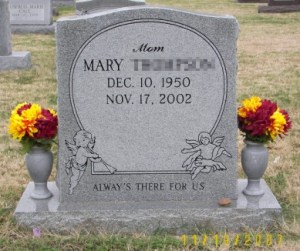
Alway’s there for us. Who is Alway?
Never, I repeat NEVER should an apostrophe be used to indicate a plural!! Never, EVER. If you see it used as a plural, it’s wrong – even if it’s on a tombstone (see the image below). 
In the illustration on the right, “Alway’s there for us,” it obviously means “Alway is there for us.” But who is Alway? I thought Mary was trying to rest in peace here… It’s just wrong on so many levels, because it’s not even a plural (which they were aiming for), but an adverb.
Let’s (as in “let us”) look at another very common mistake: 1) it vs. 2) it’s vs. 3) its:
1) “It” is fairly straightforward; it is the third person singular pronoun (used in place of a noun) for objects or gender-neutral references; e.g. The chair is red = It is red.
2) “It’s” is the contracted form of “it is”, as in It’s raining or “it has”, as in It’s been a long time since we saw each other last.
3) “Its” is the possessive form of the third person singular pronoun: “the dog’s paws” = “its paws” REMEMBER: You would never spell “his shirt” as “hi’s shirt”, or “her skirt” as “he’r skirt”; in the same way you should never use the contracted form as the possessive form of it.
It’s not “CD’s” or “DVD’s” as the plural form; this is actually the possessive (which therefore requires an object for that subject’s possessive form, as in the CD’s case), and I find myself asking, “CD’s what?”
If you want more examples, from tombstones to shop signs to tattoos that are embarrassingly wrong, take a look at www.apostropheabuse.com. Okay, pet peeve appeased. Glad to get that off my chest.
Filed under Articles, Cartoon, Grammar, Nuts & Bolts, Writing Exercise
This was posted by Andy over at his blog, and I just had to repost it – the questions are priceless, but I love the answers. True sarcasm is a fine art.
Obviously the answers are a joke; but the questions were (apparently) really asked.
Q: I have never seen it warm on Canadian TV, so how do the plants grow? ( England )
A. We import all plants fully grown and then just sit around and watch them die.
Q: Will I be able to see Polar Bears in the street? ( USA ) 
A: Depends on how much you’ve been drinking.
Q: I want to walk from Vancouver to Toronto – can I follow the Railroad tracks? ( Sweden )
A: Sure, it’s only Four thousand miles, take lots of water.
Q: Is it safe to run around in the bushes in Canada ? ( Sweden )
A: So it’s true what they say about Swedes.
Q: Are there any ATM’s (cash machines) in Canada ? Can you send me a list of them in Toronto , Vancouver , Edmonton and Halifax ? ( England )
A: No, but you’d better bring a few extra furs for trading purposes.
Q: Can you give me some information about hippo racing in Canada ? ( USA )
A: A-fri-ca is the big triangle shaped continent south of Europe Ca-na-da is that big country to your North…oh forget it. Sure, the hippo racing is every Tuesday night in Calgary Come naked.
Q: Which direction is North in Canada ? ( USA )
A: Face south and then turn 180 degrees Contact us when you get here and we’ll send the rest of the directions.
Q: Can I bring cutlery into Canada ? ( England )
A: Why? Just use your fingers like we do.
Q: Can you send me the Vienna Boys’ Choir schedule? ( USA )
A: Aus-t ri-a is that quaint little country bordering Ger-man-y, which is…oh forget it. Sure, the Vienna Boys Choir plays every Tuesday night in Vancouver and in Calgary , straight after the hippo races. Come naked.
Q: Do you have perfume in Canada ? ( Germany )
A: No, WE don’t stink.
Q: I have developed a new product that is the fountain of youth. Where can I sell it in Canada ? ( USA )
A: Anywhere significant numbers of Americans gather.
Q: Can you tell me the regions in British Columbia where the female population is smaller than the male population? ( Italy )
A: Yes, gay nightclubs.
Q: Do you celebrate Thanksgiving in Canada ? ( USA )
A: Only at Thanksgiving.
Q: Are there supermarkets in Toronto and is milk available all year round? ( Germany )
A: No, we are a peaceful civilization of Vegan hunter/gathers. Milk is illegal.
Q: I have a question about a famous animal in Canada , but I forget its name. It’s a kind of big horse with horns. ( USA )
A: It’s called a Moose. They are tall and very violent, eating the brains of anyone walking close to them. You can scare them off by spraying yourself with human urine before you go out walking.
Q: Will I be able to speak English most places I go? ( USA )
A: Yes, but you will have to learn it first.
Filed under Nuts & Bolts, Quotes
“So much is exhibited to the eye that nothing is left to the imagination. It sometimes seems almost possible that the modern world might be choked by its own riches, and human faculty dwindle away amid the million inventions that have been introduced to render its exercise unnecessary. The articles in the quarterlies extend to thirty or more pages, but thirty pages is now too much. So we witness a further condensing process and, we have the fortnightly and the Contemporary which reduce thirty pages to fifteen pages so that you may read a larger number of articles in a shorter time and in a shorter form. As if this last condensing process were not enough the condensed articles of these periodicals are further condensed by the daily papers, which will give you a summary of the summary of all that has been written about everything. Those who are dipping into so many subjects and gathering information in a summary and superficial form lose the habit of settling down to great works. Ephemeral literature is driving out the great classics of the present and the past… hurried reading can never be good reading.” – G.J. Goschen, First Annual Address to the Students, Toynbee Hall, London, 1894
1894. We tend to think of such times as “the good old days,” when life was slow and time was taken to read, contemplate, and discuss topics at great length. Compared to now of course, they did; but the time in which we live now will look slow to future generations. We tend to think that women today tend to be more scantily dressed than 50 years ago, and it’s true; but 100 years ago they thought exactly the same thing of their own time.
Future generations will think it quaint that we had things called “CDs” or “DVDs” (that looked exactly the same but the playing devices were incompatible with one another!) that were physical discs you actually have to put into a machine to hear music or watch a film; or telephones that actually needed electricity, or computers that needed an internet cable, or batteries that needed changing. Our miniscule cell phones will look as bulky and clumsy to them as ‘80s films’ cell phones do to us now. Magazine ads from the late ‘60s were more wordy than some full-length newspaper articles today. Ads today don’t even use words – they have to grab you with an image because you’ve just sped past in your car, on your bike, or in a tram or bus or train.

First passenger railway 1830, Liverpool & Manchester Railway
Literature is changing too. When was the last time you read a tome? Do you like to enjoy slow reading, like fine cuisine, or do you prefer to read a book in a weekend, and if it will take much longer you’re not as interested?
“With the advent of cheap newspapers and superior means of locomotion… the dreamy quiet old days are over… for men now live and think and work at express speed. They have their Mercury or Post laid on their breakfast table in the early morning, and if they are too hurried to snatch from it the news during that meal, they carry it off, to be sulkily read as they travel… leaving them no time to talk with the friend who may share the compartment with them… the hurry and bustle of modern life… lacks the quiet and repose of the period when our forefathers, they day’s work done, took their ease…” – William Smith, Morley: Ancient and Modern, 1886
It’s all about perspective. So the next time you get impatient, stop and think about those past generations who felt intimidated by the speed of a steam locomotive, and instead be grateful you’re stuck in traffic.
Before the diluting of the language through modern acronyms and text messages, insulting one’s foes was an art form in itself. Here are a few well-know gems:

“He uses statistics as a drunken man uses lamp-posts… for support rather than illumination.” – Andrew Lang (1844-1912)
“He has Van Gogh’s ear for music.” – Billy Wilder
“In order to avoid being called a flirt, she always yielded easily.” – Charles, Count Talleyrand
“I have never killed a man, but I have read many an obituary with a great deal of satisfaction.” Clarence Darrow
A member of Parliament to Disraeli: “Sir, you will either die on the gallows or of some unspeakable disease.”
“That depends, Sir,” said Disraeli, “whether I embrace your policies or your mistress.”
“He was distinguished for ignorance; for he had only one idea, and that was wrong.” – Benjamin Disraeli
“She runs the gamut of emotions from A to B.” – Dorothy Parker
“He loves nature in spite of what it did to him.” – Forrest Tucker
“What’s on your mind? If you’ll forgive the overstatement.” – Fred Allen
“I’ve had a perfectly wonderful evening. But this wasn’t it.” – Groucho Marx
“I’ve just learned about his illness. Let’s hope it’s nothing trivial.” – Irvin S. Cobb
“He is a self-made man and worships his creator.” – John Bright
“His mother should have thrown him away and kept the stork.” – Mae West
“Why do you sit there looking like an envelope without any address on it?” – Mark Twain
“I did not attend his funeral, but I sent a nice letter saying I approved of it.” – Mark Twain
“Thank you for sending me a copy of your book; I’ll waste no time reading it.” – Moses Hadas
“He has no enemies, but is intensely disliked by his friends..” – Oscar Wilde
“Some cause happiness wherever they go; others, whenever they go..” – Oscar Wilde
“He is simply a shiver looking for a spine to run up.” – Paul Keating
“He is not only dull himself; he is the cause of dullness in others.” – Samuel Johnson
“I feel so miserable without you; it’s almost like having you here.” – Stephen Bishop
“He had delusions of adequacy.” – Walter Kerr
“He has never been known to use a word that might send a reader to the dictionary.” – William Faulkner (about Ernest Hemingway).
An exchange between Churchill & Lady Astor:
She said, “If you were my husband I’d poison your tea.”
He said, “Madam, If you were my wife I’d drink it.”
“He has all the virtues I dislike and none of the vices I admire.” – Winston Churchill
“I am enclosing two tickets to the first night of my new play; bring a friend…. if you have one.” – George Bernard Shaw to Winston Churchill
“Cannot possibly attend first night, will attend second…. if there is one.” – Winston Churchill, in response.
“Yes, madam, I am drunk. But in the morning I will be sober and you will still be ugly.” – Winston Churchill
“He had just about enough intelligence to open his mouth when he wanted to eat, but certainly no more.” – P.G. Wodehouse
Filed under Quotes
“Fairy tales are more than true; not because they tell us that dragons exist, but because they tell us that dragons can be beaten.”
G.K. Chesterton





 Stephanie Huesler