Tag Archives: writing

Musings A to Z Challenge: K

Challenge:  Write a short paragraph (100 words or less) daily on a topic beginning with the sequential letter of the alphabet.

Kaleidoscope

I love kaleidoscopes and their constantly changing patterns, made just by turning a simple tube; the creative energy of endless possibilities is what draws me, and the same can be said of words.  Combined differently each time, they have endless possible patterns: It was a dark and stormy night; it was the best of times; it is a truth universally acknowledged; the sun shone, having no alternative, on nothing new; once upon a time.  Each opening pulls us into a completely different world.  A single premise may birth a thousand tales, each one inspiring a thousand more… so keep writing!

Kaleidoscope

Leave a comment

Filed under A-Z Writing Challenges, Images, Quotes, Writing Exercise

December Musings

December means a lot of things to a lot of people:  For some it’s a month for slowing down, or baking, or taking time with family and friends, or cuddling up on the couch with a good book while it snows and blows and freezes outside (for those of us in the northern hemisphere, at least); for others it’s a month of work stress in winding up the year-end’s tasks, or cramming in meetings and project plans that need to take off in the New Year; for others it’s stress due to shopping – either because one has no idea what so-and-so wants/needs yet one must give said person a gift, or because of the crowds that seem to defy population censuses for any given town.

For me, it’s the juxtaposition of wanting to cuddle up with a selection of books on the couch between our three cats, settling in with an Earl Grey tea and a blanket and ignoring the world for a day or two, versus reaching my goal of getting the first draft of my fifth novel done before Christmas.  Said draft goal is only realistic if I keep at it, every day, disciplining myself to ignore the urge to kick up my feet and read, and (I will admit it) even ignoring the urge to write for my blogs, until I’ve written 1,000 words toward the completion of the manuscript.  Once that’s done (or the equivalent in editing and tweaking), other things can be given attention.  Important tasks that come at the right time are “priority”, but when they come up at the wrong time and intrude on my concentration, they are merely distractions.

So here I sit, 2:30 a.m. and finally have time to sit down to write to you.   Whatever your December looks like – whether stressful or relaxed, planned to the gills or with room for the spontaneous – remember that each day we wake up is a fresh opportunity to get it right, and each time we go to bed is an opportunity to take a moment to remember the blessings that came our way that day.

Awkward

4 Comments

Filed under Cartoon, Musings

Tricks for Writing Dialogue

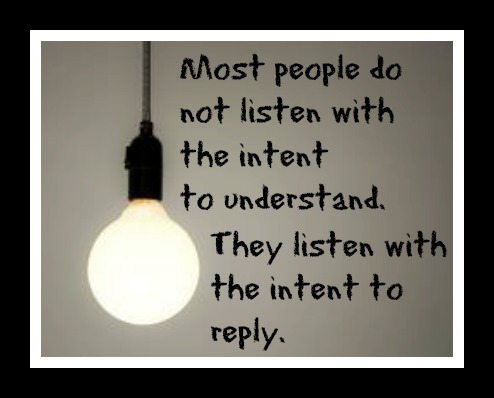
Listen, RespondI recently listened to a Ted Talk by British psychologist Elizabeth Stokoe, who analyses patterns, rhythms and wording in conversations. From her talk, I distilled a few interesting points that could be applied when writing a dialogue for fiction, and I’d like to share them with you:

  1. Are you willing?  If a person is given a sense of control or authority in the situation, they’re far more likely to cooperate.  If you ask, “Do you want this service / action to happen?” you may draw a blank response; but if you ask that person, “Would you be willing to receive this service / be willing to see X happen?” you’re more likely to get a positive response.
  2. How did you…?  When you want to find out particular information from a person, how and when you ask for that information in the course of a conversation / dialogue greatly decreases or increases your chances of getting a positive response / reply.  If rapport is first established, they are much more willing to reply.
  3. Why did you / were you…?  If an open-ended question is asked, target information may not come; but if a target-specific question is asked non-confrontationally, the desired information is more certain.  “Why did you do X?” or “Where have you been?” are both confrontational, and the reaction will likely be evasive or defensive.  But if you instead say, “I was wondering what your reasons for doing X were… could you explain?” or “I tried to reach you earlier, and was wondering where you were”, these are more likely to get a more positive response, or to solicit the information you’re searching for.
  4. Any or Some?  “Any” tends to elicit a negative response or a refusal, while “some” invites a more positive response.  A simple example is, “Would you like any tea?” – this implies an unwillingness or a reluctance on the speaker’s part to provide, whereas, “Would you like some tea?” implies the assumption of a positive response, and is thus more likely to solicit an affirmative response.  In both cases the person asked may want tea, but would be unwilling to coerce the one offering if they have the impression that the offer is made unwilling through the use of “any”.

When applying these ideas to writing a dialogue, a positive application will move your characters closer to a solution or resolution, whereas the negative application will lead them more toward miscommunication and conflict; depending on what you need to happen, you choose which way the dialogue takes your characters, and thus your readers.

Keep writing!

Leave a comment

Filed under Articles, Nuts & Bolts, Writing Exercise

Archetypes: Aphrodite vs. Dionysus

Throughout literary history, archetypes have been used to help us relate to characters, their stories, the morals of the tale and the paths they choose and why.  Understanding the archetypes helps to figure out how to portray a particular character; it keeps you on the “same page” as you write, as you develop characters, and try to figure out what makes them tick and where that ticking will take you and them.  Today I’d like to take a closer look at Aphrodite and her male counterpart, Dionysus.  I’ll give examples of these characters from films and books, relatable to most whether you like to read or prefer the visual experience of film.

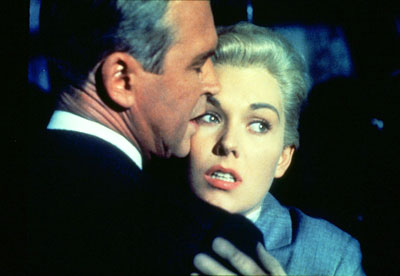
Kim Novak,  Vertigo

Kim Novak, Vertigo

Aphrodite was the Greek goddess of love, pleasure, beauty and procreation.  Like a coin, there are two sides to the character:  The Lover (or seductive muse), and the Femme Fatale.  On the Lover’s side of the coin, there are characters such as Julia Roberts in Pretty Woman, or Ginger on Gilligan’s Island.  The positive side of this character motivates others to improve themselves.  The flip side of that coin are seen in Sharon Stone’s portrayal in Basic Instinct, Kim Novak’s character in Vertigo, or the Bible characters of Salome or Delilah.  On one side you have a character that is nurturing, attractive, seductive and at the core often good, while the Femme Fatale is seductive with often quite dark ulterior motives.  Sean Young’s character in Blade Runner is a good example of the Seductive Muse; she forces Harrison Ford’s character to examine his own sense of humanity by her mere existence.

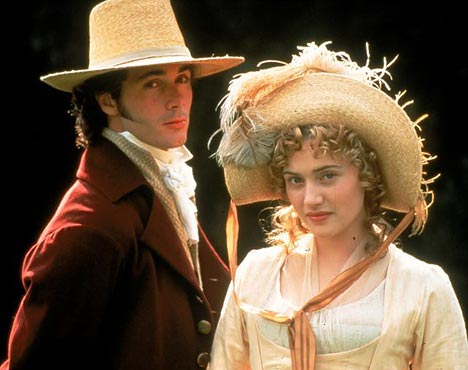
Mr. Willoughby, in Sense & Sensibility

Mr. Willoughby, in Sense & Sensibility

Dionysus is her male counterpart:  His two sides are the Woman’s Man, and the Seducer.  Either way, Dionysus needs women in his life.  He loves women; on the positive side, he loves to make women feel loved.  The flip side is abuse in one form or another, with darker motivations behind his love.  Fifty Shades of Grey is a touchy topic right now; on one hand it’s immensely popular, and on the other very harshly condemned as glorifying abuse, violence and manipulation in the guise of relationship or love.  I tend toward the latter view, as did the main actor in interviews during his junket (he often found himself apologizing to his co-star after their scenes, which speaks volumes about his instincts of what’s right and wrong, and Shades definitely crossed that line for him and for a growing number of critics).  Other examples are Mel Gibson’s character in What Women Want – his character makes the arc from the negative side to the positive; Cary Grant’s character in An Affair to Remember makes a similar arc.  Leo DeCaprio’s Jack in Titanic sits firmly on the positive side of the coin, and makes for a memorable and loved character.  Count Dracula is a typical Seducer, as is Jane Austen’s character of Mr Willoughby in Sense and Sensibility.

There are many other archetypes; if you’d like to know more on the topic, check out Victoria Lynn Schmidt’s 45 Master Characters.

Keep writing!

1 Comment

Filed under Articles, Plot Thots & Profiles, Research, Writing Exercise

Standing Up for Sitting Down

No, this is not an article about the pros and cons of the position you take while writing; but as a writer, I am fully aware that my job is mostly a sitting one… it’s hard to walk around writing or typing and not fall down the stairs.  But there are a lot of pseudo-scientific articles circulating recently about how sitting is the worst thing for your body.  I have news for you:  Stress about worrying if you’re sitting too much is far worse for your body than your actual physical posture.  Sit comfortably, sit straight and relaxed, and write creatively; take occasional breaks by getting up, moving around, stretching, and getting a hot cup of tea for the next round of writing!  For a good dose of sarcasm on the topic, click on the image below!

Standing-Desk-Measurements

2 Comments

Filed under Humor, Links to External Articles

Writing Tip: Dealing with Boredom

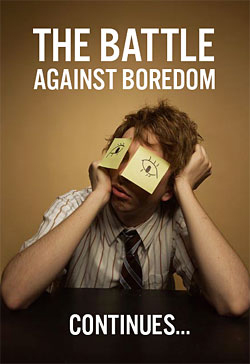
boredomIf you’re bored with the subject you’re writing about, it won’t work to try and think your way out of it, or to convince yourself to write.  I know all too well that when that’s the case I can find a million things that are suddenly far more pressing, like cleaning out a (clean) cupboard or repairing a household appliance.  But often, boredom is an indication that we don’t know enough about our subject matter, and that our writing has simply subsided into going through the motions.

There’s a simple solution:  Find out more!  Read more on your topic; travel to the location; find maps from your time period; investigate the place with Google Earth Street View; go to a museum; ask questions; look for original documents; engage your senses to gain more knowledge and understanding about your theme.  As you find out more, write scenes to inform your work, or a dialogue between characters that will inform you about their situation, setting, personalities or role in the story as a whole.  Beware of your motives in extended periods of research, however:  Are you procrastinating, or percolating?

I look at it this way:  If I’m not getting anywhere with a manuscript, I can either give in and call it “writer’s block” and allow it to paralyze me, or I can proactively work against that block in what I call “percolating mode” – thinking around the problems that I’ve run into, and use the time to inform myself, learn about the time period, and investigate aspects of the story that I am interested in.  That block may be like a boulder in the stream’s path, but my writing, like water, will eventually find a way around it.

Let that boulder of a writer’s block make you stronger and more diversified – and keep on writing!

2 Comments

Filed under Articles, Research, Writing Exercise

Writing Tip: Layering

Lightning BugIf you’ve ever painted a picture more than a colouring book or a paint-by-number, chances are you’ve learned something along the way about layers.  Layering is also a digital graphics technique in programs such as Photoshop, and as each layer is made, the image changes, taking on the shapes or colours as you add the consecutive elements.

Besides being a writer, I am also a vocal coach.  I only take on students who are already in bands, or preparing for recordings or competitions, and one of the things I teach them is layering within a vocal performance:  The nuances of thoughts, the power of imagination, the colouring of the vocals through not only the physical placement of the tone within their instrument (their body), but the placement of their imagination.  One can communicate boredom or interest or empathy with the exact same wording by merely varying the intonation, and that comes through the layering of the performance.

Writing is much the same way:  It is through the employment of grammar, spelling and punctuation that we signal the reader to prepare for a particular experience; as Mark Twain said, “The difference between the right word and the almost right word is the difference between lightning and a lightning bug.”  

Oh, the difference between, “It was rainy last night,” and “It was a dark and stormy night”!

So the next time you feel like your manuscript or poem is falling flat, take a minute to think about the layers, and see what creative brush strokes you can give your work.

1 Comment

Filed under Articles, Nuts & Bolts, Plot Thots & Profiles, Writing Exercise

7 Steps to a Powerful Opening

bottle-opener - millennium-falcon-

A powerful opener…

Anyone who writes novels worth reading can tell you that, as with any relationship, the first impression you make is the most important.  You know that you need to get your character from A to Z through the story, but how you introduce A is more important than B through Z – in other words, if you lose your reader’s interest from the get-go, they might not stick around long enough to find out where you want to lead them.  Here are 7 steps to remember that will lead you to that great first impression:

  1. Dive in! Hit the ground running!  Begin your story in the middle of an action scene, or in the middle of a conversation.  Let your reader feel like they’re eavesdropping on a decisive moment in your character’s life.  Make them wonder, make them ask questions they want answers to!  Who’s speaking?  What’s the context?  Why is there X problem / challenge / discussion?
  2. Make your character human: Give them sympathetic traits, a relatable nature, and attitudes that readers can identify with.  Do this through dialogue and actions, or by internalization (getting inside the character’s head, an “inner dialogue”).  It will help you to prepare your main characters by writing out a biography for them.  Give them memorable names (not complicated ones, or names that are difficult to work out how to pronounce).  The main character must be somewhat larger than life (more interesting than the average person in some way); do this through giving them idiosyncrasies, habits, a quirky sense of humour, etc.
  3. Romance: If your character is real, there will be romance – some kind of heart-to-heart relationship that touches that key human emotion.  I’m not talking about slutty romance novels; I’m talking about real human connection and rich emotional landscapes, whether it’s a small-town story, a science fiction planet, or a war zone.
  4. Supporting character: This might be a sidekick, a friend, partner, companion, or even an object or pet.  It is someone or something for the main character to share their experiences with.  The supporting character should contrast your main character – perhaps someone who asks the reader’s questions, or wants explanation of terms or concepts the reader might not be familiar with, without becoming “teach-y”.  They might be the voice of reason to an impulsive main character, or the voice of adventure to a staid hero/heroine.
  5. Antagonist: This opponent is an obstruction to the main character’s goals.  They create problems, sometimes danger.  They may be human, or non-human (e.g. man vs. nature), or may be an internal struggle of the main character (haunted by their past, or an addiction, a weakness such as impatience, etc.).
  6. Emotion: Build an emotional landscape (this links closely with # 3).  Show the main character as life-like, and develop relationships, or show struggles the character has with particular issues that give them depth and breadth.
  7. Style: Bring it all together in a style unique to your character’s voice and biography.  Show their feelings, conflicts, adding complications and subplots to take it deeper.  In your first chapter the goal of your character should come out – what their desires are, their determination, problems to solve, etc. – without making the arrival at that goal all too obvious!

6 Comments

Filed under Lists, Plot Thots & Profiles, Writing Exercise

Novel Writing Pyramid

Novel Pyramid

When writing or drafting a new story, sometimes it’s easy to get lost in the forest due to the trees – in the myriad of ideas that flash up in a brainstorm.  The pyramid above helps remind me of the emphasis each area needs in the overall structure:

If a story is too complex, you’ll lose or confuse your readers; but if it’s too simple, it becomes predictable and therefore no challenge to the mind of the adventurer who’s picked up your book to get lost in another world.  Most of the best stories are, at their heart, quite simple – “boy meets girl”, or “person achieves goal”.

If you don’t know what your settings and themes are, how can you effectively work toward the final outcome?  If you don’t know who your character is, and what your basic plot (goal and how it’s achieved) is, how can you guide the reader through dialogue or prose toward the desired conclusion?  Diction is important because it is central to creating the voice of each character, and sticking to genre-specific vocabulary and expressions (i.e. no proverbial airplanes through the scenes of a historical novel).  As Mark Twain once wrote,

“The difference between the right word and the almost-right word is the difference between lightning and a lightning bug.”

And if you have the top four slices of the pyramid in place, but don’t have proper foundations – in other words, know your grammar, spelling, punctuation and syntax (sentence structures, tense usage, etc.) then no matter how brilliant your plot might be, or your character development, if readers can’t get past your bad diction and grammar, you’ve lost them as present and future readers!

I’d like to encourage you to know your weaknesses, and develop them into strengths!  If grammar or spelling is a weakness, work on it – invest time into reviewing the rules – Wikipedia is an excellent source for articles on how to use punctuation, etc.  Buy a good grammar book, or even a grammar practice book with an answer key at the back (The “English Grammar in Use” series is one I used for years with EFLA students).  If plot or character development is a weakness, then make a list of questions for each, and take the time to think about and answer them.

Good writing is about quality; it’s about solid foundations and constant development, the honing of your skills; it’s about research, thinking outside the box, and being able to convey in words the images born in your mind.  Just as sharpening a pencil makes it easier to write, so does sharpening your mind and skills.

1 Comment

Filed under Articles, Images, Nuts & Bolts, Plot Thots & Profiles, Research, Writing Exercise

Plot Thots: 14 Tips from Steven Spielberg

Steven SpielbergHappy New Year!  2015 has begun, and with it I’ve begun the research for my next novel; this one, 18th century historical fiction (rounding off the Northing Trilogy with the final book), is taking me back into the world of workhouse orphanages, royal naval vessels, and 1760s fashions and mores.  As I research, read, take notes and wiggle my way into a mental corset (to limit myself linguistically, morally, historically and socially to the times), I can still take advice from a more modern medium:  Films.

I like to listen to good film commentaries, and one of the best teachers in the field is Steven Spielberg; he not only discusses the filming process itself, but the thought processes and philosophy behind his decisions and choices.  Here are a few notes I’ve taken from his commentaries, and where I noted the particular film, I’ll let you know in case you want to hear it for yourself:

14 Tips from Steven Spielberg:

  • Give environments a “used” feel – gritty, creaky, broken-in.  Don’t explain every little detail, but take some things for “granted” to give an authentic feel. (Star Wars)
  • The subconscious mind doesn’t know the difference between dreams and films – emotions will be touched equally.
  • Running gags create humour (e.g. Indiana Jones hates snakes).
  • One problem solved leads to another.  One bad decision leads down – the main character must either decide to be redeemed by good actions, or be ruined (e.g. Darth Vader).
  • If you have point A & point B of your plot, don’t be afraid to explore, to fill in the blanks to get you from A to B!
  • The clothes have to match the characters to be believable.  (Can you imagine Indiana Jones without that iconic hat?)
  • If you edit cerebrally, you will lose feeling; rather, edit to “it feels right.”
  • Sometimes you need a pointer scene, though it needs to be subtle:  “This is where we are; this is where we need to be; this is how we get there.” (e.g. strategy scene before Luke destroys the Death Star)
  • If there’s no emotional connection, there’s no point in doing something for narrative clarity.
  • Contemplation time is essential in the creative process – don’t fill it with brain work that distracts.  Take a bath.  Do the laundry.  Draw; doodle; do a craft.
  • Get under the skin of a character, or culture, or landscape.
  • Every act has three events.
  • What is your main character’s “third place”?  The first place is home; the second place is work; the third place is a socializer.
  • Establish the mystery, and then begin peeling layers away.

[Plot Thots is my own shorthand for anything to do with mapping out a storyline.]

4 Comments

Filed under Articles, Nuts & Bolts, Plot Thots & Profiles, Quotes, Research