Category Archives: Articles

How to Make a Positive Impact on the Climate

Most people know by now that our climate is changing; part of it is a natural cycle, but most of the recent changes are because of mankind’s carelessness and industrial advancements.  Intense storms, flooding, drought, fire, avalanches, landslides… and that’s all been within the past week.  Looked at as a whole, it might be overwhelming; people know changes need to be made, but what can one person do?  Quite a lot, actually – and if everyone begins changing certain habits to a greener alternative, the impact will be felt.  For your sake and mine, I’ve pulled together a list of things we can do:

Climate Changes

1. Get involved

Vote for green policies, support green campaigns and organisations, and get the word out to your friends and family about what they can do to become greener.

2. Be energy efficient

Switch off lights; change light bulbs to compact fluorescents or LEDs; wash clothes in cold or warm (not hot) water, and only when the load is full; hang dry your clothes when you can; keep your thermostat at minimum temperatures, and layer your clothes if you’re cool, or take off layers if you’re hot – don’t freeze your house in the summer, or heat it to the tropics in the winter.  Look for energy-efficient labels when buying new appliances.  If you’re thinking of moving, consider moving closer to your workplace, or closer to your usual shops – wherever you can to lower fuel consumption or allow alternative transport such as bike or bus.

3. Choose renewable power

Ask your utility company to switch your account to clean, renewable power, such as from wind farms, solar power, or earth-heat sources. If it doesn’t offer this option yet, ask it to.  The next time you need to buy an appliance, look for the greener brand.

4. Eat wisely

Buy organic and locally grown foods. Avoid processed items. Grow some of your own food. And eat low on the food chain — at least one meat-free meal a day if you’re not already vegetarian — since 18% of greenhouse gas emissions come from meat and dairy production.

5. Trim your waste

Garbage buried in landfills produces methane, a potent greenhouse gas. Keep stuff out of landfills by composting kitchen scraps and garden trimmings, and recycling paper, plastic, metal and glass, and donating things like clothes to charity shops. Let store managers and manufacturers know you want products with minimal or recyclable packaging.  If you do crafts or know anyone who does, upcycle.

6. Let polluters pay

Carbon taxes make polluting activities more expensive and green solutions more affordable, allowing energy-efficient businesses and households to save money. If your local government doesn’t have a carbon tax yet, ask your politicians to implement one.

7. Fly less

Air travel leaves behind a huge carbon footprint. Before you book your next airline ticket, consider greener options such as buses or trains, or try vacationing closer to home. You can also stay in touch with people by videoconferencing, which saves time as well as travel and accommodation costs.

8. Green your commute

Transportation causes greenhouse gas emissions, so walk, cycle or take transit whenever you can. You’ll save money and get into better shape! If you can’t go car-free, try carpooling or car sharing, and use the smallest, most fuel-efficient vehicle possible.

9.  Buy Less

Whether electronic items, or reusable grocery bags, you can reduce your carbon footprint by buying wisely, less often, and energy efficient.  Buy local or organic foods when possible; look for fair trade products, which not only give a better wage to the people producing the good but also tend to have cost-efficient transport; buy essentials in bulk to reduce plastic wrapping.  Recycle or upcycle that wrapping.  Use what you buy – don’t let foods go off, or buy any item around the house unless you need it and will use it. Buy products when possible that are sourced from sustainable programs – wood, paper, etc.  Don’t upgrade your cell phone until you must; that little gadget leaves a huge carbon footprint; and when you do upgrade your phone, make sure you recycle it. For every 1 million smartphones recycled, 35,274 pounds of copper, 772 pounds of silver, 75 pounds of gold and 33 pounds of palladium can be recovered.

10.  Unplug

Believe it or not, you may be spending more money on electricity to power devices when off than when on. Televisions, stereo equipment, computers, battery chargers and a host of other gadgets and appliances consume more energy when seemingly switched off, so unplug them instead.

11:  Shop Online

If you can’t buy something locally, or bike or walk to the shop, consider online shopping.  This is a catch-22, as local shops need your support; but if you have to drive further to find something, look for it online.  According to one study, in-store shoppers gave off slightly fewer carbon dioxide emissions than online shoppers at distances shorter than 8.6 miles. For longer distances, online shoppers’ footprints remained relatively stable, while brick-and-mortar shoppers’ emissions skyrocketed, up to 451.4 grams of carbon dioxide per transaction (when travelling more than 62 miles).  One UK study showed the average consumer would have to purchase 24 items at the market to make the trip equal to the carbon footprint of just one item ordered online.

12.  Carbon Footprint Awareness

What is your carbon footprint?  How many slaves do you use?  Become aware of what your past habits have done, and it will influence your future choices.  Here are a few links to help you figure out how you are impacting the environment:

How big is your environmental footprint?  Check out this Footprint Calculator

 How many slaves work for you?  Take this survey to find out.

Additional Information:

http://www.davidsuzuki.org/what-you-can-do/top-10-ways-you-can-stop-climate-change/

https://www.scientificamerican.com/article/10-solutions-for-climate-change/

http://mashable.com/2014/05/15/climate-change-impact/#ILorIHWGeaqw


Save

4 Comments

Filed under Articles, Lists, Musings, Science & Technology

History Undusted: Avaldsnes, Norway: A Hidden Gem

In the summer of 2013, I went to Norway on a holiday/research trip for “The Cardinal,” a 2-part fantasy-science fiction novel set in ancient Scotland, ancient Norway, and modern Scotland.  Norway, however, seems to carry its dislike of small-talk into the area of promotion and marketing, and as a result, its museums and attractions are not as well advertised, marketed or signposted as they could be; we only found out about this little gem of a site because we happened to run into a Swiss friend in Haugesund, and he knew of the place!  I promised the curators to get the word out, so here’ goes, and with pleasure:

On the island of Karmøy, along the western coast of Norway, sits Avaldsnes.  With over 50,000 islands in Norway, it wouldn’t seem to our modern minds (as dominated by cars and roads as we are) to be a significant location, but Avaldsnes is rewriting Norse history.  It has long been a place from which to control shipping passages through the narrow neck of the Karmunsundet, also called the Seaway to the North, or in Norwegian Nordvegen, and it is the maritime route that eventually gave its name to the country.

The kings of sagas and lays have become real at Avaldsnes, the rich archaeological finds there making it one of the most important locations in Europe for the study of Viking and Norse history.  Avaldsnes was a royal seat, so it’s not surprising that some of the most important burials in Norway have been found here:  One of its ship burials was dated to the 8th century (making it much older than any other such burials known of thus far).  It was clearly a king’s burial, and the findings there have proven its political importance several hundred years before King Harald Fairhair unified Norway.

This slideshow requires JavaScript.

Today there are three main points of interest at Avaldsnes, all within walking distance from each other:  St. Olav’s church, built on the site of the oldest church in Norway, was commissioned by King Håkon Håkonson around 1250 AD as part of the royal manor complex.  On the north side of the church stands the Virgin Mary’s Sewing Needle, one of Norway’s tallest standing stones, measuring in at 7.2 metres today (though it was originally much taller; it can be seen in the picture above):  Local legend says that when the obelisk touches the wall of the church, Doomsday will come; over the years, priests have climbed the stone in the dead of night to chip away any threatening pieces from the top, thus saving the world from annihilation.  This church was an important site for pilgrims on their way to Nidaros (the medieval name for Trondheim, the capital of the land’s first Christian kings and the centre of Norwegian spiritual life up until the Protestant Reformation); on the north side of the church is a sealed door which was originally the entrance for those pilgrims, as it is said that they had to enter any church with their backs to the north.

The next site is the Nordvegen Historic Centre; at first glance, it’s merely a circular stone monument, but it is actually a stairway leading down into the underground museum, built so as to not interfere with the landscape.  The exhibitions guide you (with a bit of modern technology) through 3,500 years of history through Avaldsnes, focusing on daily life, international contacts and cultural influences from those contacts.  Foreign trade and communication were major factors at Avaldsnes, and archaeological evidence shows it to be a barometer to the prosperity and decline of European commerce as a whole.  The museum has a hands-on section, as well as a gift shop that’s well-stocked with books covering various aspects of Viking history.

The third site is a hidden gem, located about 20 minutes’ walk from St. Olav’s:  The Viking farm.  The gravel path takes you along the shore, over two bridges and through a forest to a small island.  It’s well worth the hike, as you come through the forest to find a Viking village tucked behind a typical Telemark-style fence (pictured above).  A 25-metre longhouse is the centrepiece, a reconstruction of a 950 AD house, and built of pine and oak, with windows of mica sheets.  The aroma of tar wafts from the house as you approach, as it is painted with pitch to weatherproof it; the smell reminds me of a dark peat-whiskey, and also of Stave churches, which are also painted with the tar.  [The photo of the longhouse has one element missing to the trained eye:  The low stone wall which should surround the house, as insulation, is missing at the moment while boards are being repaired.]  Other buildings on the farm include pit houses (both woven twig walls as well as wattle and daub) used for activities such as weaving, cooking or food preparation, and other crafts necessary to daily life; a round house, a reconstruction of archaeological finds in Stavanger (which may be a missing link between temples and stave churches in their construction); various buildings of a smaller size; and at the shore is a 32-metre leidang boat house, representing a part of the naval defence system developed in the Viking Age:  A settlement with a leidang was expected to man the ship with warriors and weapons when the king called upon them for aid.  When the boat house was vacant of its ship it was used as a feasting hall, and the modern replica follows that example as it is often hired out for celebrations or festivals.

Both the museum and the Viking farm have friendly and knowledgeable staff; the farm staff are all in hand-made period clothing and shoes; as a matter of fact, one of the women was working on her dress while we were there, and she said it was linen; the total hours to make such a dress from start to finish would be around 600 hours (including shearing, spinning, weaving, then cutting and sewing).  Had it been made of or included leather, it would have taken much, much longer.  That is why clothing was very valuable, and most people only had the clothes on their back; you were considered fortunate, and even wealthy, if you had a change of clothing – even into the mid-eighteenth century in countries such as England.

If you are interested in Viking history, Avaldsnes is well worth the journey.  Take your time; we stayed overnight in the area to spread the visit out over two days, and we could have spent much more time there.  If you’re a natural introvert like me, you’ll need time to process the multitude of impressions, but that’s what we like – quality time, and quality input.  And then get the word out about these points of interest!


Originally posted on History Undusted, 14 September 2013

Leave a comment

Filed under Articles, Etymology, History, History Undusted, Military History, Nuts & Bolts, Research

Shetland

I don’t know about you, but when we go on holidays, we usually head to cooler climes.  We were recently (technically) in Scotland for a fortnight’s holiday, this time on the Shetland Isles:  For those of you who don’t know where that’s at, hop on to Google Earth, and have a vicarious look around.  Shetland is a subarctic archipelago in the Atlantic; you’re never more than 3 miles away from the sea because, though the total landmass is about 1,470 square kilometres, there are over 2,700 kilometres of coastline.

We stayed at the Lerwick Hotel, making day-trips out from there.  In the 2 weeks we were there we managed to see nearly every nook and cranny by rental car.  Many of the “towns” are no more than a collection of a house or two; Lerwick is really the only proper town on Shetland.  We covered everything from Sumburgh Head in the south to Hermanness on the northern tip of Unst, the northerly-most inhabited island of the UK.

We usually had perfect weather for being out and about; the wind was mild, and only one day of what’s known as a “flying gale”… that’s when the wind actively tries to either rip the car door out of your hands or slam it shut as you’re trying to get in or out of the car; flying gales drive ships ashore.  I point that out because great weather is not to be taken for granted on rocks in the middle of the Atlantic that have no naturally-occurring trees, i.e. windbreaks, and everything that happens is scheduled with the contingency of weather permitting.  While we were there, it was “Simmer Dim” = NO night; you could easily read a book outside, no matter the time of day or night.

Some of the Highlights:

Our hotel window:  We could see Breiwick Bay, the traffic of large ships coming and going from the harbour (even this large three-masted sail ship), and the wildlife of Shetland:  Otters, both grey and common seals, dive-bombing gannets, arctic terns flitting over the water like butterflies, and a variety of gulls that kept us entertained.

Mousa Isle:  We took a “dusk” (midnight) boat trip and hiked ½ a mile across the moors to the Mousa Broch, the most intact broch in the world.  In the walls of this ancient tower are around 500 pairs of Storm Petrels – swallow-like sea birds who sound like purring kittens with hiccups as they call for their mates, to be found by them in the crowded darkness.  Darkness is relative in the summer; they need to wait until it’s darkest before returning from their time at sea, as they are targets for larger bird’s menus.

Norwick Beach:  On northern Unst, this beach is a visual smorgasbord for any geologist, because it’s where an ocean floor was thrust upward to collide with the continent millions of years ago.  The stone formations jutting out in the middle of the beach are two distinct colours, dark and light, side by side.  That beach is just an example of the stunning geological history and beauty of the islands.  They’ve even got an app, “Geopark Shetland”.

Wildlife:  Shetland has the highest density of otters of anywhere in Europe, with around 1,000; Shetland ponies (everywhere!); puffins – the darlings of the sea, and one of our favourite birds; gannets, terns, guillemots, razorbills, oyster catchers, great black-backed gulls, great skuas, herring gulls, black-hooded gulls, kittiwakes, and dozens of other seabirds; cliff-dwelling rabbits (puffins are even known to share their burrows with them); Shetland sheep – they’ve got very soft wool, and tend to be brownish with black spots; some of them were adorable, with spotted eyes like pandas.

History:  With over 6,000 archaeological sites and dozens of great museums, there was never a dull moment!  Clickhimin Broch was a short walk away from our hotel; Mousa Broch was an amazing experience – to sit inside it, as people did 2,000 years ago… you could still see the slats in the walls where wooden beams would have supported upper floors.  We spent a lot of time at the Shetland Museum in Lerwick; well laid out, it was informative and inviting, with a great restaurant.

I could go on and on – and perhaps I’ll write an article or two more about some aspect of the Isles in the future, but for now, here are a few photos.

This slideshow requires JavaScript.

4 Comments

Filed under Articles, History, Images

Style Sheets, and the Recipe of Writing for Recipes

The Nitty Gritty

I have hundreds of recipes pinned to dozens of Pinterest boards, so I come across a wide range of offerings.  Nowadays, the images have to be perfectly lit and photoshopped to make them look appealing; it’s like sugar in pre-packaged foods… we’ve gotten so used to the artificial visual flavour that if a photo were undoctored in some way, it would be glaringly out of place.  But what is often missing is the same attention to detail in the writing.  I’ve seen “tablespoon” misspelt a few ways, or the abbreviations as Tbs., tb, tbs, tbsp, T., etc. So which one is correct?  And do the forms or the etiquette of choices differ between print and online versions?

I pulled out a cross-section of cookbooks in my library and thumbed through them; I took older, newer, American and British, and I scoured online recipe sites like Betty Crocker; here’s what I discovered:

  • When writing a cookbook for a printed version, editors/publishers tend to write out the entire word [tablespoon, teaspoon, cup, pound, ounce, etc.].
  • The two most standard contractions for tablespoon are Tbs. and tbsp.  They can be ended with a period or not; I would tend to do it so that the contraction looks intentional and not a typo!  I grew up learning Tbs. for tablespoon and tsp. for teaspoon.  To each his own.
  • Blogs that are a collection of recipes, or allow contribution from subscribers, will have a hodgepodge of abbreviations and contractions because it’s simply too difficult to keep on top of such issues.  Even professional sites such as Betty Crocker have gotten sloppy about it; for example, they often (but not always) spell out words like tablespoon, and then suddenly revert to contractions for pounds and ounce within the same recipe.  Consistency should be the golden standard if nothing else is.
  • Recipe instructions are written in the imperitive mood (bake this, stir that, knead this, eat with that, etc.).  You’ll never find 1st, 2nd or 3rd person pronouns within the instructions of a recipe; at most, you’ll find them in the short intro before a recipe begins.
  • In a printed book, NEVER does a recipe instruction include the ramblings about the cat in the kitchen, or what you changed about the recipe, or what you’re doing that’s unrelated to the topic at hand.  If you’re writing a personal blog, that’s a matter of personal preference; I tend to want the recipe itself streamlined to make it easier to read on the fly in the kitchen, but maybe that’s just pragmatic ol’ me.  If there are additional notes or something I’ve changed about a recipe for my own blog, I tend to put that in the introduction and not in the actual recipe, but there’s not a set rule – it depends on where it’s warranted or relevant.

As with any kind of writing, some things are a matter of personal preference; at that point, where there is no one grammar rule to apply, the most important thing is to be consistent throughout the manuscript.

Style Sheets

If you’re thinking of writing a cookbook (or any other manuscript for that matter!), I would recommend keeping what is called a style sheet; this is used in publishing houses where several people will have the manuscript in hand at some point; this sheet prevents someone else from undoing choices – they can look at the style sheet and know that it was an intentional decision, and leave it; otherwise the risk is that one man’s capital is another man’s lower case, and so on.

As an author, the style sheet is my running list of decisions to keep me on track as I  write; it can include sections for punctuation (have I decided to go with British or American English punctuation for things like Mr / Mr.?), unusual capitalisations (for me, one issue was when to capitalise “sir” as a substitute for a proper name – I could always refer to my sheet when in doubt), abbrevitation/contraction choices, etc.  It could also include a record of my choice of fonts, spacing between sections, indentations, and so on.  I have a section for my “cast of characters” – to remember how I’ve spelled a name, or what I’ve named an infrequent cast member. I might include an abbreviated description of a character so that I don’t give them green eyes in chapter one, and blue eyes in chapter ten.  What you can include in your style sheet is endless… foreign terms/spellings, reminders to check validity of hyperlinks, punctuations such as en- and em-dashes, how you’ve written specific gadgets (capitalised or not, hyphened or not, etc.).  Below is a basic style sheet template to get you started.

No matter what you’re working on, hone your craft, and keep writing!

Copy-Editing - Style Sheet

2 Comments

Filed under Articles, Grammar, Nuts & Bolts

History Undusted: Atlantic Iron Age Souterrains

DCF 1.0

A Souterrain is a type of underground construction mainly associated with the Atlantic Iron Age.  Built near settlements, they were used as storage for food or as a hiding place from raiders.  After being dug out, they were lined with flat stones and staircases down into their depths.  Of those excavated throughout the UK and Ireland, artefacts are rare, indicating that they were merely in use temporarily.  Some are very small, while others resemble passageways; my guess is that it would depend on the size required by the settlement, and how much time they had to prepare it.

Day 8, 1.146 - Souterrain, Loch Eriboll, 21 July 2012

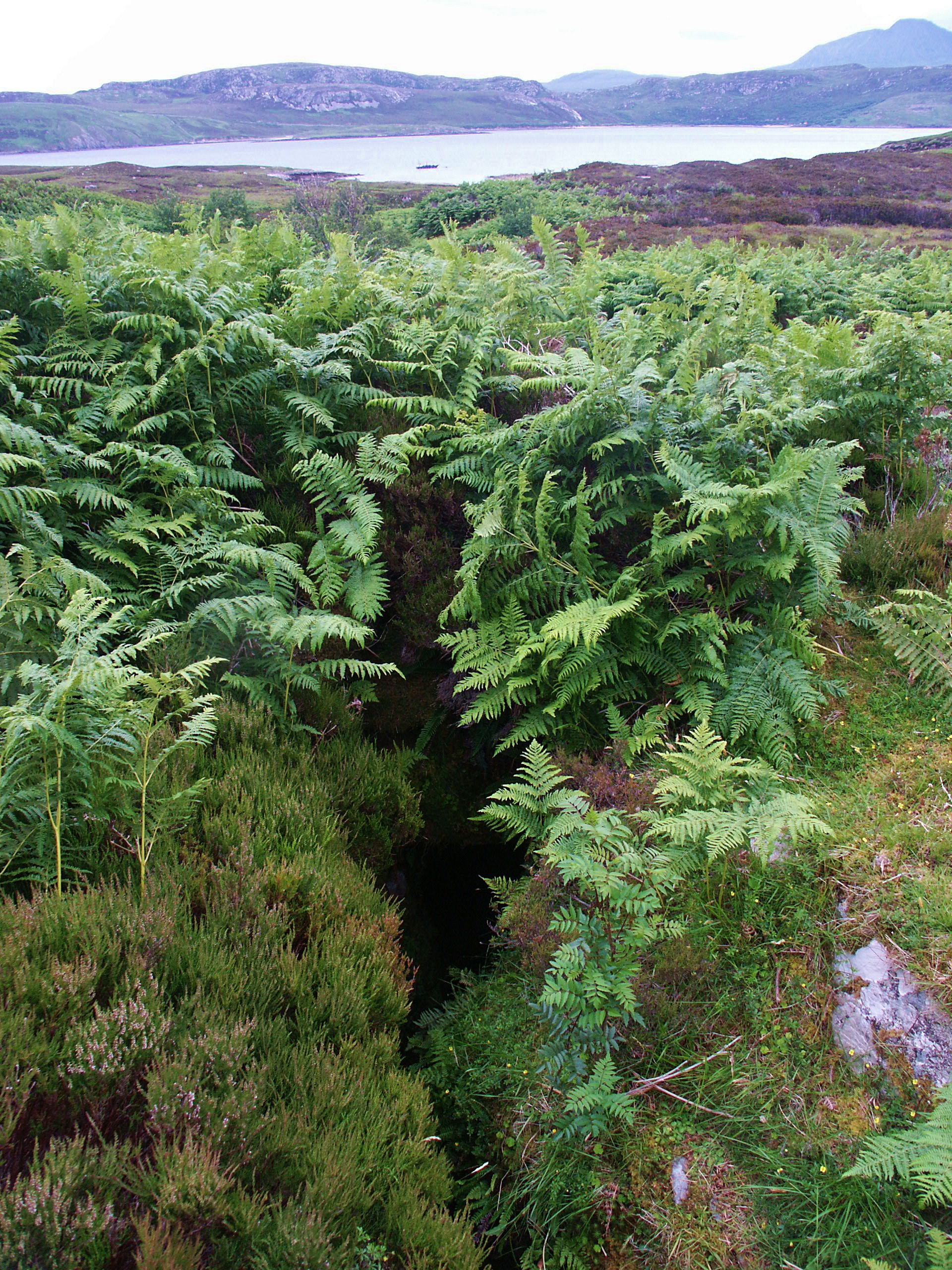
I came across a souterrain along Loch Eriboll in 2012, as I was in the area doing research for my novel, The Cardinal.  In these photos, you can see that, if you were walking out there at night or dusk, they could be very treacherous.  My husband crawled down inside to take a picture back out; it was roomy enough for him to stand once inside (in this particular souterrain even the ceiling was lined with large stone slabs), though the narrow stone stairs and proportions, in general, indicated a much shorter population than modern humans.  You can see from the photo of myself how overgrown the bracken and heather is; the entrance was nearly completely hidden; we were looking for it based on a geological map’s markings, but if we hadn’t known it was there, it would have gone completely unnoticed.

I needed a tunnel entrance in the exact location of the souterrain for the novel, so it enriched the story by fitting reality and the fantasy together perfectly!

Day 8, 1.149 - Souterrain, Loch Eriboll, 21 July 2012

12 Comments

Filed under Articles, History, History Undusted, Nuts & Bolts, Research

History Undusted: Skara Brae, Orkney

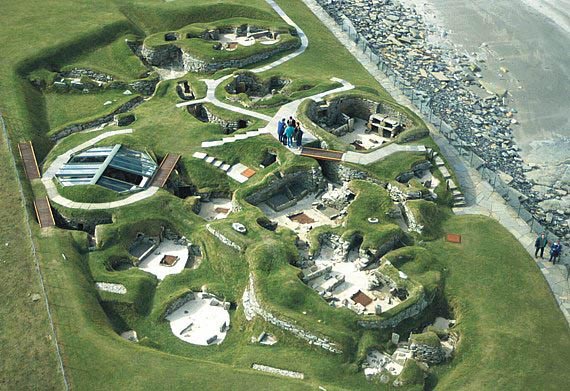
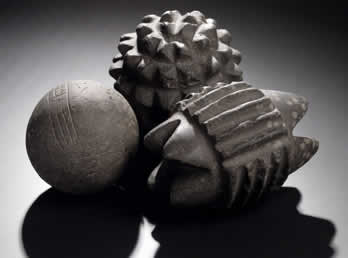
Skara BraeSkara Brae is probably the single most famous Neolithic settlement uncovered in the world.  It gives us the most complete picture of everyday life in that period of time, and has quite a few surprises:  Indoor running water?  Dressers and beds?  Yep.  They had storage rooms, and even toys for the kids.  There are some objects that they can’t figure out, but that just makes it all the more tantalizing.

Originally much farther from the shoreline, over the centuries erosion has eaten away at the land; Skara Brae will itself eventually succumb to the pounding Atlantic waves.

I was there in 1989 for the first time, and again in 2002; the first time I was there, I was with a group of friends, and we were given a private tour by a friend’s uncle who worked there.  It was an amazing way to see this prehistoric site, tourist-free and (back then) largely untainted by tourism.  In 2002 it was a different matter altogether:  A tourist shop had sprung up, and we had to time our viewing between bus-loads of day-tourists from “doon sooth” (down south = Scotland).  Also on that second visit, the Atlantic winds were so strong that we were literally leaning into the wind at a 45° angle; if it had had a sudden lull, we would have been flung into the sunken dwellings; it was an adventure.

Skara Brae stone objectsIf you get a chance to go, do so; take at least a fortnight on Mainland Orkney.  It’s known as the Archaeologist’s treasure trove, and for good reason – just about any stone you turn over has some kind of historical significance, and there are many sites to take in:  Maeshowe, Ness of Brodgar and the Ring of Brodgar, and chambered cairns to name a few, and even more modern sites such as Churchill Barrier, and sunken World War 2 vessels (some portions are visible in low tide).

The stretch of water between Scotland and Orkney, the Pentland Firth, is known as “The Sailor’s Nightmare”; there are several currents that flow and mix into this bottleneck, not only making for treacherous sailing, but it can also make even the hardiest sailor lose his lunch.  Word to the wise:  When heading out of Thurso with the ferry to the Mainland (the largest island in the Orkney group), a) don’t eat yet (it usually leaves around lunch time, and believe me, you won’t keep it long…), and b) as soon as you get on the ferry, head to the dining room and get a window-side table; this is because they will not only fill up fast, but once you’re out of the relatively calm / wind-sheltered bay into the open strait, you’ll be glad for a ring-side view from a wind-sheltered, spray-sheltered spot; keeping your eye on the horizon helps the brain deal with the swells, and keeps seasickness at bay…

Originally posted on History Undusted,

2 Comments

Filed under Articles, History, History Undusted, Nuts & Bolts, Research, Science & Technology

Pixar’s Rules of Storytelling

Recently I came across Pixar’s rule #19, quoted in James Scott Bell’s book, “How to Write Short Stories (and use them to further your writing career)”.  It’s an excellent book, and one of a few of his I’ve got in my Kindle collection.  But this rule reminded me of the whole list, full of good advice for storytellers whether their format is film or novel (from flash fiction to tome).  Most writing advice boils down to things like focus, self-discipline, detail work, and honing one’s craft to the best it can be – and that is an on-going process, a habit, an addiction.  It needs to be a passion.  Honing our craft means covering all the bases – grammar, syntax, plot, character, vocabulary, pacing, theme-building, and so, so, much more!  If you’ve got a weakness in your writing skills, the good news is that you can always improve it!  Make it a strength!  So be inspired, and keep writing!

Pixar's Writing Rules

5 Comments

Filed under Articles, Lists, Nuts & Bolts, Plot Thots & Profiles

History Undusted: A Small Treatise on the Viking Age, begun at Lindisfarne

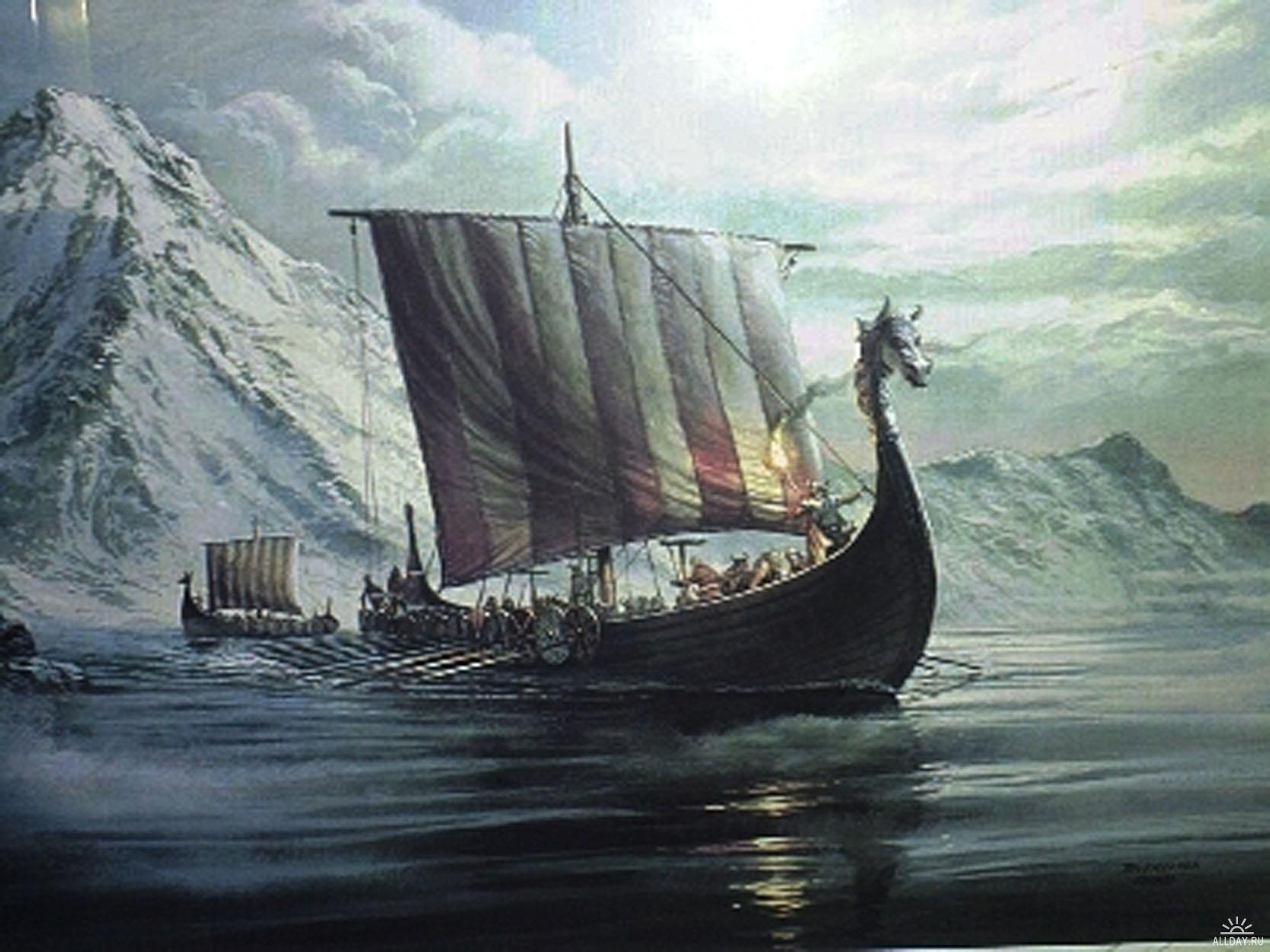
Viking ship

In researching for my novel, “The Cardinal“, I did a lot of research into the Viking Age of Scotland, Norway, and in modern-day Britain.  The following is a snippet of the notes and thoughts I percolated over while studying into this amazing time in world history.  Some of the speculations, such as the motivations behind the Lindisfarne attack, are my own, based on studies and extrapolation.

I think it’s impossible to do justice to any information about the Vikings; their existence, culture, language, mentality, and the effect of their actions have had repercussions that echo down through the ages.  They gave names to countless cities throughout the world, and even entire regions:  The Norse kingdom of Dublin (Old Norse for “Black Pool”) was a major centre of the Norse slave trade; Limerick, Wexford and Wicklow were other major ports of trade; Russia gets its name from them, and the list goes on and on. Had they not been so successful in the slave trade and conquest, entire regions of the earth would be populated differently, place names would be vastly different, and English would be a far poorer language than it is today.

“A.D. 793. This year came dreadful fore-warnings over the land of the Northumbrians, terrifying the people most woefully: these were immense sheets of light rushing through the air, and whirlwinds, and fiery dragons flying across the firmament. These tremendous tokens were soon followed by a great famine: and not long after, on the sixth day before the ides of January in the same year, the harrowing inroads of heathen men made lamentable havoc in the church of God in Holy-island, by rapine and slaughter.” (The Anglo-Saxon Chronicle, pg. 37)

This reference from The Anglo-Saxon Chronicle, one of the most famous history books available in English, is a reference to what would become known as the beginning of the Viking Age, the attack on the Holy Isle of Lindisfarne.  Firstly, I’d like to clarify a few points:  “Viking” is a term that first came into being, in its present spelling, in 1840; it entered English through the Old Norse term “vikingr” in 1807.  The Old Norse term meant “freebooter, pirate, sea-rover, or viking”, and the term “viking” meant “piracy, freebooting voyage.”  The armies of what we would call Vikings were referred to by their contemporaries as Danes, and those who settled were known by the area they settled in, or visa-versa.  Those who settled in the northeastern regions of Europe were called Rus by their Arabian and Constantinopolitan trading partners, perhaps related to the Indo-European root for “red”, referring to their hair colour, or – more likely – related to the Old Norse word of Roþrslandi, “the land of rowing,” in turn related to Old Norse roðr “steering oar,” from which we get such words as “rudder” and “row”.

Oh, and not a single Norse battle helmet with horns has ever been found.

I’d like to focus on a key point of the Lindisfarne episode, if one could refer so glibly to the slaughter of innocent monks and the beginning of the reign of terror that held the civilized world in constant fear for over two centuries:  Yes, the Vikings were violent; their religion of violent gods and bloody sacrifices and rituals encouraged and cultivated it to a fine art.  Yes, the Vikings were tradesmen, but they were also skilled pirates and raiders, that skill honed along their own home coasts for generations prior to their debut on the rest of the unsuspecting world.  Yes, it was known that monasteries held items sacred to the Christian faith, that just happened to be exquisitely wrought works of art made of gold and jewels.

Gold was one enticement; but their primary trading good was human flesh; slaves.  It was by far the most lucrative item, and readily had along any coast they chose; if too many died in the voyage they could always just get more before they docked at Constantinople, Dublin, or any other major trading port.  So why did they slaughter the monks so mercilessly at Lindisfarne, when they would have gained more by taking them captive and either selling them as slaves or selling them for ransom?  The answer might actually be found in Rome.

Charlemagne (ruled 768-814 AD) took up his father’s reigns and papal policies in 768 AD. From about 772 AD onwards, his primary occupation became the conversion to Christianity of the pagan Saxons along his northeastern frontier.  It is very important to make a distinction between the modern expressions of the Christian faith and the institution of power mongers of past centuries; Christianity then had extremely little to do with the teachings of Christ and far more to do with political and military power, coercion, and acquisition of wealth through those powers; it was a political means to their own ends with the blessing of the most powerful politician in the history of the civilized world, the Pope.  Without his blessing and benediction, a king had not only very little power, but was exposed to attack from anyone who had “holy permission” to exterminate heathens; joining the ranks of the Christian church took on the all-important definition of survival, and protection from the others in those ranks being free to attack you at their leisure.

In the year 772 AD, Charlemagne’s forces clashed with the Saxons and destroyed Irmensul, the Saxon’s most holy shrine and likely their version of the Yggdrasil, the Tree of the World, of Scandinavian mythology.  In the Royal Frankish Annals of 775 AD, it was recorded that the king (Charlemagne) was so determined in his quest that he decided to persist until they were either defeated and forced to accept the papal authority (in the guise of “Christian faith”), or be entirely exterminated [Carolingian Chronicles: Royal Frankish Annals and Nithard’s Histories, trans. Bernhard Walter Scholz with Barbara Rogers (Michigan 1972: 51)].  Charlemagne himself conducted a few mass “baptisms” to underscore the close identification of his military power with the Christian church.

“In 782 the Saxons rebelled again and defeated the Franks in the Süntel hills. Charlemagne’s response was the infamous massacre of Verden on the banks of the river Aller, just south of the neck of the Jutland peninsula. As many as 4,500 unarmed Saxon captives were forcibly baptised into the Church and then executed.  Even this failed to end Saxon resistance and had to be followed up by a programme of transportations in 794 in which about 7,000 of them were forcibly resettled. Two further campaigns of forcible resettlement followed, in 797 and in 798….  Heathens were defined as less than fully human so that, under contemporary Frankish canon law, no penance was payable for the killing of one” [Ferguson, Robert (2009-11-05). The Hammer and the Cross: A New History of the Vikings (Kindle Locations 1048-1051). Penguin UK. Kindle Edition.]

The defining of a heathen as less than human was actually not a unique idea;  Scandinavians were familiar with that notion from their own cultures, which defined slaves as less than human and therefore tradable goods; and if a freeman announced his intention of killing someone (anyone) it was not considered murder as the victim was given “fair” warning.

The more I learn about Charlemagne’s brutal policies toward what he considered sub-human pagans, the more I understand the reaction of retaliation toward the symbols of that so-called Christian faith, the monasteries and its inhabitants.  They slaughtered, trampled, polluted, dug up altars, stole treasures, killed some, enslaved some, drove out others naked while heaping insults on them, and others they drowned in the sea.  The latter was perhaps a tit-for-tat for those at Verden who were forcibly baptised and then killed.

Lindisfarne was merely the first major attack in Britain that was highly publicized (as chroniclers of history were usually monks, and those such as Alcuin knew the inhabitants of Lindisfarne personally), in what would become a 250-year reign of terror, violence, slavery, raping, pillaging, plundering and theft either by force or by Danegeld.  But as in all good histories, it’s important to remember that hurt people hurt people; the perpetrator was at one time a victim.  One might say that what goes around comes around.  It’s no excuse or downplay of what happened there, which literally changed the course of the civilised world, but it perhaps gives a wider perspective on the Vikings of the times rather than just the vicious raiders portrayed in so many documentaries.  And it is important to remember that Vikings did not equal Norsemen; the majority of Scandinavians were farmers and fishermen, living as peacefully as their times would allow, and even themselves victims to the occasional Viking raid.

Originally posted on History Undusted on 14 July 2013
Image Credit: Origin Unknown, Pinterest

6 Comments

Filed under Articles, Etymology, History, History Undusted, Military History, Nuts & Bolts, Publications, Research

Basque Musings

This slideshow requires JavaScript.

I just returned from a long weekend away with my husband in Bilbao, Spain.  I say that with trepidation, as, according to many Basque people, it is not Spain, but Basque Country.  There are some who are content to remain part of Spain and France, and others who want independence, so when in Basque Country, say it the Basque way.

As a lover of history, linguistics and just about everything else except strenuous exercise, I can say that it was a great weekend (even though a lot of exercise snuck in)!  Great weather, great food, great architecture, confusing languages, and interesting sites all round.  Here are some highlights:

Guggenheim Museum:  The building itself is well worth the visit!  The architect, Frank Gehry, literally designed the building on one of his free-form doodles. With only one straight wall that I could see, I can imagine that he was doodling when the phone rang and made his hand jerk, causing the straight line…  it’s an engineering feat, to say the least.  Just outside the Guggenheim are several sculptures, notably a giant dog made of flowering plants; it was intended to be a temporary display, but the people of Bilbao fell in love with it, and it’s now a permanent landmark.  There’s also one for us odd arachnophiles out there, a giant spider.  Two sculptures look like they’d float away, even though they weigh tons:  “Tulips”, and a tower of balls.

The weather was perfect, so we took a “Bilboat” tour down the waterway; it gave us the chance to see areas of the city which are usually far from the tourist route; areas that are in the throes of rejuvenation and restoration.

Pintxos:  You can’t go to Basque Country and eat in a usual restaurant!  You need to go (what my husband and I dubbed) “Pintxopping” – like pub crawling but for a Pintxos (“Pinchos”) dinner.  They are similar to Spanish tapas but far more elaborate; 5-6 will make a meal.  12 Euro will get you 6 Pintxos and a pint of beer.  Any Pintxos bar worth their salt will spread out a wide variety of the treats along the length of their bar, and diners choose a selection of hot and cold delicacies.  Bars pride themselves on signature creations; one bar we ate at had a mound of crab meat baked under a layer of squid-ink-tinted cheese, in the shape of a regional mountain.  Most are served atop toasted slices of Baguettes, though there are also many on skewers, or served as spring rolls.  If you’re now hungry, sorry about that – but you can find recipes all over Pinterest.

Language:  The Basque language (Euskara) is a language isolate – in other words, it is unrelated to any other known language. Within language families, one could interpret this or that word based on a known relative language, e.g. between English street and German strasse.  But looking at a road sign in Bilbao, you would have NO clue as to which word is the street name, and which is the word for street, road or path.  Unless you know Basque, you would have no chance of interpreting anything – even if the context is known. An example sentence from the article on Wikipedia illustrates that point:  “Martinek egunkariak erosten dizkit” means “Martin buys the newspapers for me”.  It is the last remaining descendant of one of the pre-Indo-European languages of Western Europe,  with every other language that might have existed in relation to it having gone extinct, so there’s no way to decipher it based on a comparative method, linguistically.  It may have been related to the Aquitanian language, which was spoken in the region before the Roman Republic’s conquest in the Pyrenees region, but the exact origins are unknown.  It’s a fascinating study, if you’re interested!

One of the images above was taken on my flight home; the Alps were in fine form, and the weather great for flying; Matterhorn can be seen in the centre. I hope you enjoyed my mini-tour, and I would recommend that you get yourself a pintxo or two to tide you over until your next meal…


12 Comments

Filed under Articles, Etymology, History, Images, Musings, Research