Category Archives: Psychology Undusted

History Undusted: Code Talkers

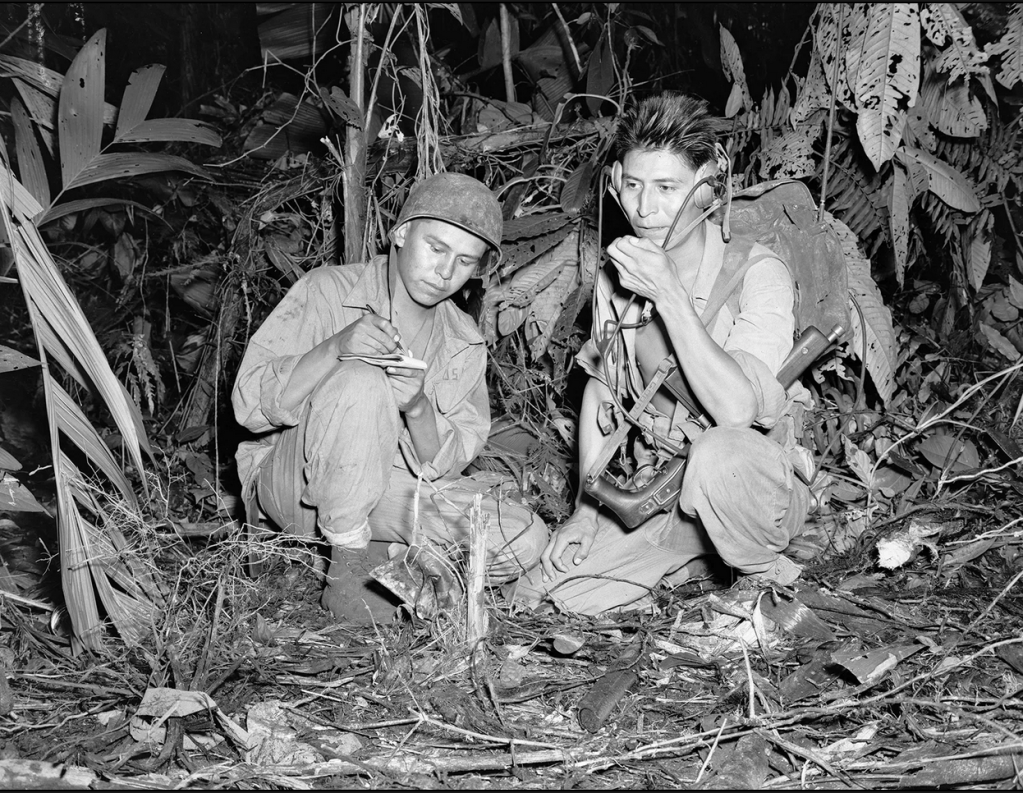
Navajo code talkers, Cpl. Henry Blake Jr. and PFC George H Kirk, who served with the Marine Signal Unit.
Source: Public Domain

Code talkers were Native Americans from various tribes who were employed by the US military during World War 2 as radio operators; their native tongues were indecipherable to anyone listening in, and as a result, their transmissions of sensitive messages were invaluable in allied victories on every Pacific island, including Iwo Jima, as well as in Europe in decisive battles.

Codes were developed based on the languages of the Assiniboin, Cherokee, Cheyenne, Choctaw, Comanche, Cree, Crow, Fox, Hopi, Kiowa, Menominee, Navajo, Ojibwa, Oneida, Osage, Pawnee, Sauk, Seminole, and Sioux peoples. These men could transmit over open radio channels, knowing that the enemy would be unable to break their code. If a military term did not exist in their languages, a phrase was used in its place: A submarine became an iron fish; a fighter plane became a hummingbird; a squad became a black street. In all, throughout WW2, over 400 terms were developed and needed to be memorised by each code talker.

The code talkers continued to be used after the end of the war, which delayed their recognition by the wider public – until documentaries about their service finally began to emerge in the 1990s. In 2002, the U.S. Congress passed the Code Talkers Recognition Act, followed by a similar act in 2008 to honour the tribes who used their languages in the wartime service of the United States.

The use of code talkers was a socially complex one: The languages that were so invaluable to the US military were the very tools that the US government had been trying to eradicate in the name of cultural assimilation. Between 1880 and 1905, boarding schools were established, in which Native American children were taken from their families and educated; they were taught to reject their Native values, languages, traditions and anything to do with their native culture. They were punished, sometimes severely, for using their native tongues; they were forced to dress like the “white man”, and were not allowed to wear their native garments or have any vestiges of their tribes. Some 100,000 Native Americans were forced to attend such schools. Parents who resisted the kidnapping of their children were imprisoned; several from the Hopi tribe were even imprisoned on Alcatraz Island. Though most of these schools had been closed by the 1930s, the cultural and psychological damage had taken its toll on many native people groups, many of whom still struggle with their cultural identities today. At the time these young warriors were called into military service or chose to join after the bombing of Pearl Harbor, many were not even legal American citizens, yet they fought for their land and their families.

With that background in mind, the dedication and ingenuity of the code talkers are all the more astounding. They were often in the first wave of soldiers deployed as they were needed to pass on messages for the strategic planning and execution of driving back the Japanese from the Pacific islands. In addition to the Pacific arena, the European front also benefited from the code talkers’ ability to communicate directly with each other: Comanche code talkers were assigned to the 4th Infantry Division when it landed at Normandy in June 1944. In this context, some of the Comanche substitutes were turtle for tank, a pregnant bird for bomber, and crazy white man was their term for Adolf Hitler – a more insightful term has never been more aptly applied.

For a fascinating look into a history largely forgotten, please click on the following video recounting code talkers telling their stories firsthand as they return to the Pacific Islands with their families and find peace after decades of PTSD. The video is 1:10, but well worth the time when you can take it: Navajo Code Talkers of World War II (2018) | Documentary

Other sources:

https://eji.org/news/history-racial-injustice-cultural-genocide/

https://www.britannica.com/topic/code-talker

8 Comments

Filed under History, History Undusted, Humanity Highlights, Liguistics, Linguistics, Links to External Articles, Military History, Psychology Undusted, Snapshots in History, YouTube Link

Community Care Quiz

With the increasing complexity of our world and a political climate of distrust and division being spread recently, I’d like to offer an antithesis by encouraging everyone to do good, to make a difference by responding in the opposite spirit. Below is a short quiz that might spark a few ideas of how you can make that difference:

WHEN WAS THE LAST TIME THAT YOU…

  1. …told someone that you appreciate what they do in your community?
  2. …sent a message of encouragement to someone?
  3. …invited someone out for a drink or a meal?
  4. …invited someone new to your home?
  5. …sent a message or made a phone call to someone who’s sick?
  6. …intentionally identified someone who needs encouragement, and then acted on that?
  7. …did something fun with one or more community members (e.g., a neighbourhood party, a bike ride, a picnic, or a fun-raising event)?
  8. …spent time with children in your community? (Sometimes young people need encouragement from older community members.)
  9. …thanked someone for their contributions to your community?
  10. …given a small financial gift (anonymously or known) to someone who really needs a sign that someone cares about them?

If you haven’t done any of the above for a while, plan to do something about it this coming week!

3 Comments

Filed under Articles, Humanity Highlights, Lists, Psychology Undusted, Quotes

Etymology Undusted: Catch-22

The idiom “Catch-22” comes from a book of the same title by American author Joseph Heller (1923-1999). The term originally referred to a military rule whose provisions are mutually frustrating. Heller used Catch-18 instead of Catch-22 when the first chapter of his book was originally published in 1955. He changed it by the time the entire book was published in 1961 because his publisher had already published a book that year with “18” in the title (Leon Uris’ novel, Mila 18). So in 1961, the phrase Catch-22 first appeared. It was first used figuratively in 1971 in Atlantic Monthly magazine. As far as the form goes, it is usually hyphenated and with a capital C, as that is the way Heller originally wrote it.

Since the author’s first usage of the idiom, it has taken on a life of its own: Today, its broader meaning is a paradoxical situation from which an individual cannot escape because of contradictory rules or limitations. It has also been used as a mnemonic for the symptoms of DiGeorge syndrome.

One particular quote from Heller is thought-provokingly insightful: “Everyone in my book accuses everyone else of being crazy. Frankly, I think the whole society is nuts – and the question is: What does a sane man do in an insane society?” In a way, this is perhaps an example of a Catch-22 for the sane person: If they stay in an insane society, they may lose their sanity; but by leaving such a society, they throw away any chance of bringing it back to a state of reason. Social and political polarisation are both poisons that infect society.

1 Comment

Filed under Etymology, Grammar, History Undusted, Images, Musings, Psychology Undusted, Quotes

Nature Undusted: The Phenomena of Ghost Lights

Pixar’s “Brave”, showing will-o’-the-wisps.

Back in January, I wrote about the phenomenon of the Hum, something that occurs around the world.

Another global phenomenon is that of “ghost lights,” also known as fata morgana, mirages (both inferior and superior), will-o’-the-wisps, fairy fires, or ignis fatuus (“foolish flame”).

I grew up in a climate zone with hot, dry summers and wide, flat highways that stretched to the horizon. On a hot summer day, you could see the cab of a semi-truck floating mid-air for some distance before you actually saw the truck finally touch the ground. Sometimes the highway would look flooded – this kind of water mirage is also a danger in desert regions. Death Valley is dangerous, not only because of the heat but also because of disorienting mirages.

Ghost Lights can have a variety of natural causes: methane gas combustion or other organic decay which can cause photon emissions (these lights often appear over swamp or boggy areas); light refraction in certain atmospheric conditions that cause the lights of cars on distant roads or firelights from campfires to “float” midair (like the semi-truck cab above); it may also be caused by the bioluminescence of various micro-organisms and insects.

Here are a few well-known lights:

Marfa Lights

Hornet Spooklight

Gurdon Light

Brown Mountain Lights

Hessdalen Lights

Min Min Light

Naga Fireballs (Thailand)

Palatine Light

Paulding Light

Chir Batti

St. Louis Ghost Train (Canada)

 plus many more!

For a fun dive into these phenomena, the Why Files has a video covering the topic (the actual content starts at 4:15); I enjoy his videos because the author in me likes the way he sets stories up as real – as if reporting facts – before he debunks them or offers probable explanations. While he knows that many people likely believe in the stories he eventually debunks, he goes about it in a respectful, tongue-in-cheek way.

For a shorter video on the topic, Joe Scott has an interesting one.

Have you ever seen any of these lights, or experienced mirages? If so, please tell us about it in the comments below!

Leave a comment

Filed under Articles, History, Links to External Articles, Lists, Nature, Psychology Undusted, Science & Technology, Space, Astronomy, YouTube Link

The Hues of Hogwash

Most English-speaking people have heard the term whitewashing: Literally, it means to paint a surface with a diluted white paint to lighten the surface and conceal blemishes. Figuratively, it means to downplay the negative aspects by emphasizing the positive ones of a person, event, or situation.

Greenwashing is a term related to environmental issues: It is the deliberate dissemination of a false or misleading impression of environmentally friendly practices used to conceal or obscure damaging practices.

Blackwashing is the use of public campaigns and advertising funded by the coal industry to draw attention away from environmentally unsustainable practices or to justify exclusion from carbon taxes.

Bluewashing is to tout a business or organization’s commitment to social responsibility while using this perception for public relations and economic gain; to present a humanitarian front while obscuring actual practices.

Redwashing is the practice of a state, organization, political party, politician or company presenting itself as progressive and concerned about social equality and justice, in order to use this perception for public relations or economic gain.

There are other colours of X-washing, but they all stem from greed: In marketing, these tactics are a way to charge customers more, because the higher price leads people to think, in connection with the misleading information or imagery, that the extra money spent is going to a good cause, e.g. schools for the workers’ children or working children, when in fact it’s likely going toward a CEO’s yacht.

On holiday recently, we’d forgotten to bring towels from home into the motorhome, so we went into a houseware store; I thought the towels would be a bit more expensive than another store I usually buy our towels from, but it was a whopping 50.- per towel more! On each towel was a tag; here’s the translation (the company name withheld):

Cotton (name)® Made in green, inspiring confidence. Tested for polluting ingredients and sustainably produced according to (name)® guidelines. The label “made in green” gives you the assurance that this textile product has been made by pollutant-free materials in environmentally friendly factories in protected and socially acceptable work environments.”

Nowhere is it mentioned where this product was made; their testing agency, for accountability, is them. Inspires confidence? On what grounds? Price? Notice that they don’t claim to have passed those tests or what they were testing exactly, nor do they state what their guidelines were supposed to be.

These schemes prey on first-world people’s sense of guilt, or of wanting to pay a bit extra to help those less privileged. Yet their concept of “environmentally friendly factories in protected and socially acceptable work environments” might have nothing to do with your or my concepts – would the company’s execs be willing to work in those factories? I doubt it. This is also an example of bluewashing.

An E-Talk was given to show the marketing tactics in connection with the foods we eat. The disclosures made in the short talk are enough to leave the audience in stunned silence. I challenge you to watch the video (less than 7 minutes long) here. Marketing’s most effective, secret weapon is you. They bank on willful ignorance (the avoidance of making undesirable decisions or taking actions that accurate information might prompt).

All of these wash-tactics boil down to hogwash. So the next time you find yourself looking at the claims of a label, or seeing the sunny kitchen in a perfect home with perfect families on a commercial, take a moment to challenge what you’re reading or seeing, and use your purchasing power wisely. Research; see if the company is on any blacklist by organisations that actually care (WEF, Greenpeace, or any from a long list of NGOs). Search the topic online – there are a lot of informative articles out there with practical tips for making informed decisions. Here’s a website for checking a brand’s ratings: https://directory.goodonyou.eco/. If you find that a company is making bogus claims, stop buying their products; make the effort to blow the whistle on them – social media can be a positive tool in that aspect.

This brings us back to that secret weapon of marketers, our willful ignorance: The tragic factor in all of these tactics is that, like water, humans usually choose the path of least resistance… least effort… least active involvement, least time required; and so willful ignorance prevails. However, since we’re making an average of 35,000 decisions a day anyway, (automatic, habitual, emotional, stress-related, worry-related, or environment-related) let’s neutralise that ignorance one wise, informed choice at a time.

6 Comments

Filed under Articles, Etymology, Humanity Highlights, Links to External Articles, Musings, Psychology Undusted

The Hum

Recently I came across an article on the phenomena of “The Hum” – a low-frequency sound heard by people across the globe. The hums are often given their location’s place name, such as the Taos Hum of New Mexico, the Auckland Hum or the Windsor Hum. While these sounds are clearly heard, no one seems to agree on the source of the sound: It could be produced by electrical equipment, an unfamiliar animal sound (such as the toadfish), the Jet Stream shearing powerline posts, volcanic eruptions, lightning static, ocean wave vibrations, or internal biological auditory signals.

If you stop and listen, there are sounds everywhere. But The Hum is not tinnitus, which has a much higher sound frequency. I’ve had tinnitus for years; when it’s quiet, I can hear up to eight tones of ringing in my ears. It’s something that affects around 15% of the population, but the only time it really becomes an issue is if it triggers a fight-or-flight response in a person – I’ve heard that the more you focus on the ringing, the more you hear it (the more it bothers you). In almost half of the people who have tinnitus, it can lead to phases of anxiety or depression, likely linked to that psychological fear response. Some people don’t even realize they have tinnitus – they automatically, subconsciously distract themselves with sound (music or television being common tactics). The causes of tinnitus vary, but in my case, I know exactly when it started: I was flying from London to Glasgow, and I had a head cold. The flight was just at that altitude where your ears almost pop, and it was excruciating. I can still hear fleas sneeze and “tell you if they’re male or female”, but the ringing is always present – I just ignore it for the most part. I hear so well that I sleep with earplugs each night – otherwise, I can hear electricity in the walls, and a battery charger at the far end of our home sounds like a car alarm to me!

Have you heard The Hum? Do you have tinnitus, and if so, does it bother you in any way or are you able to ignore it?

If you’d like to learn a bit more about The Hum, and what it could be or what it could mean, please click here for a 12-minute BBC report on the issue.

8 Comments

Filed under Articles, History, Humanity Highlights, Nature, Psychology Undusted, Science & Technology, YouTube Link

Insatiable Fascination

Throughout history, people have always been fascinated by thinking beyond their own known world; before widespread writing and reading, ancient cultures thought about their own mortality (which, in some ages, wasn’t that far off) and the afterlife. Various cultures prepared for the afterlife in their own ways: The Egyptians removed organs and embalmed the rest, making sure to send on the heart & co. in separate jars (except the brain – who’d need that in the next world?), then sent them on their way with an army of servants (killed for the occasion); the Vikings buried their most honoured dead within a ship with their favourite animals and servants (ditto). Other cultures built pyres to send their loved ones up in smoke.

When writing came along, at first it was used to capture the past and the natural world, ala Pliny the Elder; poems, sagas, verbal tales and folklore began to be recorded; we have such writings still with us today: The Greek Epic Cycle, the Orkneyinga Sagas, the Heimskringla, the Poetic Edda.

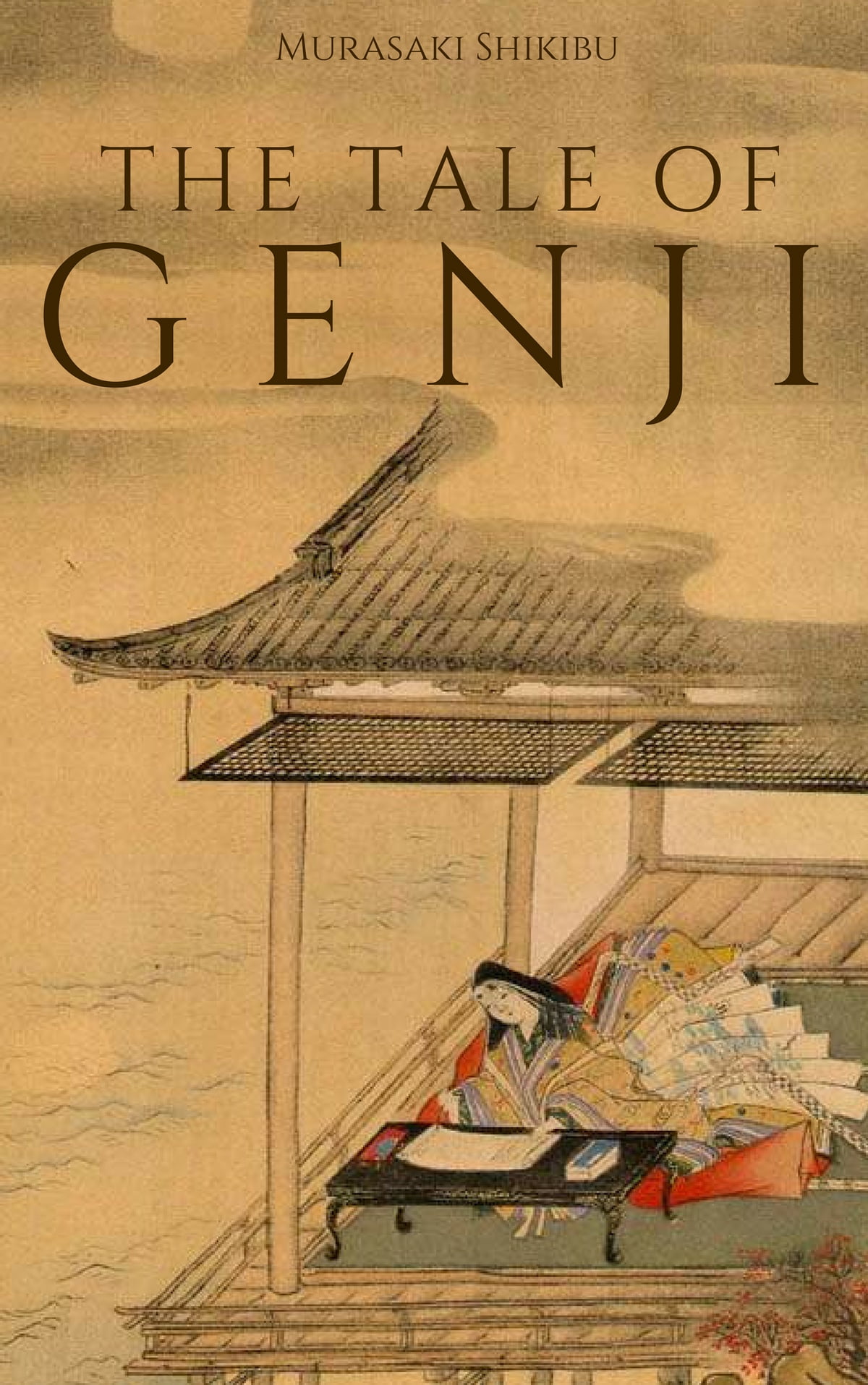
The first novel came along only 1,000 years ago: The Japanese epic The Tale of Genji was written by a woman, Murasaki Shikibu; novels were, for several centuries more, considered on the bottom rung of the literary hierarchy ladder, far behind “serious works” like history. Ironically, Mark Twain referred to history as “fluid prejudice”; it was nearly always recorded by powerful (white) men – hardly ever by a commoner, a member of an ethnic minority, or a woman. The interpretation of events was firmly in the hands of the conquerors. Because of that fact, for instance, we know more about Rome’s version of ancient Britons (Picts, Celts) than we do from their own artefacts; most Celtic and Pictish art is found outside of the UK – many carried off by the Vikings, but that’s another tale. Hollywood has helped perpetuate some of those ancient Roman notions (think of a blue-faced Mel Gibson in Braveheart).

In fact, we don’t even know what the Picts called themselves – the term derives from the Latin Picti, first seen in the writings of Eumenius in AD 297. It can be interpreted (dangerous words) as “to paint” – but there is no evidence that any people groups in northern Britannia painted themselves. Picts is simply a generic term for any people living north of the Forth-Clyde isthmus who fought the Roman Empire’s advancements into their territories. Again, the ink of history flowed from a Roman stylus.

Even Jane Austen herself didn’t begin publishing her novels under her own name. She was a single young woman – for shame that she would dare stain the male-hallowed ground of literature. The saga of how she got published speaks to her tenacity and the support of her family. But she got the last laugh, becoming famous within her (short) lifetime, and she is far better known today than any of the stuffy old men who wrote “proper” books of her day.

The insatiable fascination with other perspectives than our own explains why novels are so popular today. They take us into another time, place and situation, leading us through a story that, if written well, we can relate to and perhaps learn something from. In 1726, Jonathan Swift gave us Gulliver’s Travels. Though he originally wrote it as political satire, to “vex the world rather than divert it”, we know it still today. The fascination with someone being a giant in one land and a miniature in the next grabs our imagination; he travels to floating kingdoms, to an island of immortals, a la Death Becomes Her, and a land of talking horses.

Book Nook (Instagram repeat)

In the age of internet, visual arts have expanded as far as the global imagination can span: Not only paintings or drawings, but even crafts take us into another perspective. I recently saw a series of images in which people have taken the humble walnut shell and turned them into tiny worlds with bookshelves, ladders, lamps, beds and creatures. Book nooks are popular, too: A tiny village, street, or room within the space of a book on a shelf. Science fiction art takes us off-planet.

Films are visual perspectives that take us into other worlds, times and places: When George Lucas showed us a “commonplace” bar scene on Tatooine in the Mos Eisley Cantina in Star Wars, he blew our minds and kicked off a new era of visual storytelling. Avatar took us to another planet and another perception of reality, all the while being an allegorical tale of ecological care vs. abuse. Somewhere along the way, sometime in your life, I’ll bet you’ve been fascinated by a different perspective, whether presented to you through a book, a documentary, a sermon, a play, a film or a conversation.  What did you learn from that encounter? How did it change you, or help shape your perspective? And what is your favourite “escape”: Films, books, visual arts, or music? Please comment below!

8 Comments

Filed under Articles, History Undusted, Humanity Highlights, Images, Psychology Undusted

Psychology Undusted: Digital Dysmorphia

This topic is a bit of a rabbit hole, and longer than my usual article, but I feel that it’s an important issue to address.

Image Credit: Spark.ac.in

On one hand, living in a digital age is a blessing: It allows us to reach out and stay in contact with distant friends, family and, in these months of lockdowns and home offices, our co-workers. It allows us to learn anything, with a world of libraries and teachers and experts at our fingertips, but on the other hand, this age has also brought with it a phenomenon known as Digital Dysmorphia, Zoom-, Instagram-, Snapchat-, Facebook-, or simply Body Dysmorphia.

When lockdowns started in 2020, it wasn’t only a personal challenge for many, but also a huge challenge for businesses of every branch. Suddenly their personnel could no longer travel to international, or even national, meetings; they couldn’t meet their co-workers face to face, or even go into the office. Home office became, for many that still had work, a dream come true: Businesses that for years had claimed that home office would be too impractical suddenly found ways to carry on using tools like Zoom and Skype to gather virtual groups together for meetings. It became a common joke that many would be dressed for success on the top half, while the unseen half was PJs or boxer shorts or tutus, like John Krasinski’s “Some Good News” YouTube channel.

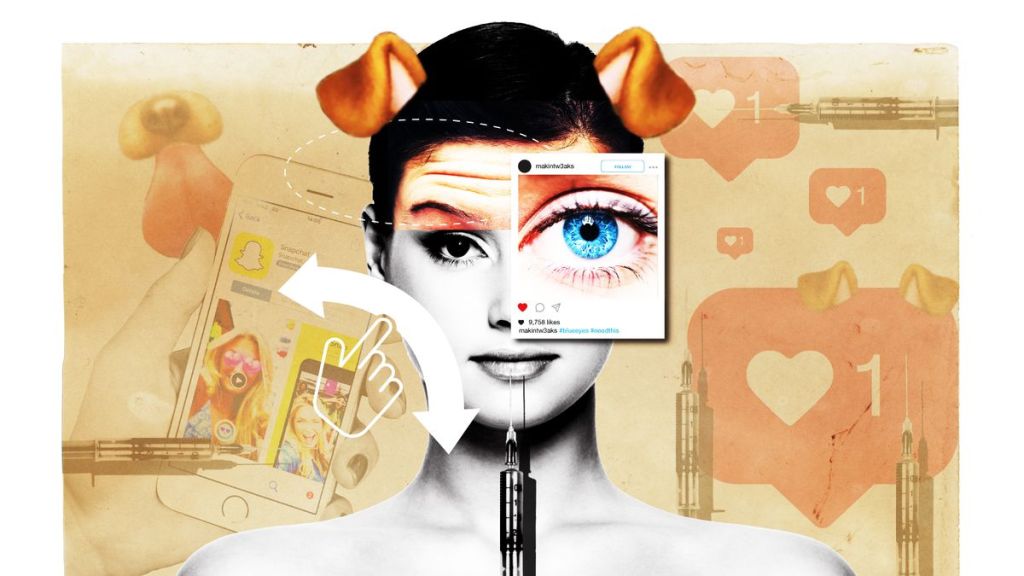
So what is Digital Dysmorphia? It’s the separating of oneself from one’s own real image by the distortion brought about through filters, enhancers and additions of body parts (e.g. large eyes, or bunny ears), using apps such as Snapchat; it’s the altering of reality, modifying self-perceived flaws, and presenting an altered reality of not only one’s physical appearance, but even one’s lifestyle (Instagram). Its danger is the destruction of self-esteem, fear of getting “caught in the lie” by being seen face-to-face by someone who only knows your digitalized self-image, and therefore fear of seeing people in person. It’s a different phenomenon than, say, knowing you need to update your online profile picture that was taken a decade ago. This dysmorphia, also known as BDD (Body Dysmorphic Disorder), is an active destruction of self-esteem through choosing distortions over reality. When someone has BDD, they are focused on their supposed physical flaws for hours a day, and they may take drastic measures to hide or fix them. BDD is sometimes diagnostically confused with OCD, social anxiety disorders, social phobia or depression. BDD was first described around the turn of the 20th century, but has only been taken seriously as an illness in the past few decades. To find out more, here is an interesting YouTube video (~8 min.)

The reason visual apps such as Zoom have made a negative impact on people is because we often see the image of ourselves onscreen as unflattering, perhaps because the camera sits too low, but also because we are looking at our own face for an hour or more at a time (it’s natural to be curious about how others see us, and our eyes are drawn to our own image because of it); while you might not be a teenager glued to your phone, if you’ve used Zoom or Skype, you’ve seen yourself through digital eyes.

Women especially, but not exclusively, have an added challenge: Every magazine image, and many social media images, are all air-brushed, photo-shopped and tweaked beyond humanly-attainable standards. We can never live up to the standard of beauty that marketing companies press on us, and that can wear on someone’s self-esteem.

Another danger in the digital age is the addiction to selfies: Trying to capture the perfect shot, the perfect moment, keeps people so focused on themselves that they completely miss the actual moment they’re trying to capture themselves in. Once in Scotland, my husband and I were enjoying a window-side lunch in a small road-side restaurant on the Isle of Skye; a bus-load of Asian tourists pulled up, and they faced the restaurant to take selfies of themselves with the background (which was the majestic Cuillin mountain range); they did not once turn around to see the actual scenery, but took dozens of photos of themselves before loading back up into the bus and leaving. They could have just saved themselves the trip, stayed at home, and put up a green screen with an image in the background.

Although we may tend to think of girls when we think of selfie addiction, the first British documented case was in 2014, then-19-year-old Danny Bowman. To read a fascinating article, click here: “Faking it: How Selfie Dysmorphia is Driving People to Seek Surgery”. Danny got to the point that he tried to commit suicide but was found in time by his parents and rehabilitated. He now raises awareness about mental health issues.

Image Credit: Bored Panda, Byron Denton

A few years ago, plastic surgeons were being asked to make a person look like this or that celebrity. Then lockdowns came into our collective lives, and Zoom became a household name; but with the sudden increase in digital contact, another, darker phenomena also increased, dubbed by cosmetic surgeons as the “Zoom Boom” to describe the increase. Now to be fair, Zoom is by no means solely responsible; every social media platform has the same dangers. Today, cosmetic surgeons are getting requests to make a person look like their digitalized self; but the requests are often not only impossible (e.g. Anime eyes or removing skin pores to give a porcelain complexion), but would also damage the person’s self-image further. A psychological anorexia, of sorts, it’s addictive and destructive. Plastic surgeons that place the patient’s mental health above their dollar signs must draw moral lines of age limits (younger and younger people are trying to get “preventative Botox” or “corrective” surgeries) and psychological screening.

For more in-depth articles on the topic, just click on the images in this article.

So, how can we avoid falling into the BDD traps? There are a few things you can do:

  • TURN OFF THE CAMERA: Just because you have the ability to have a visual call does not mean you must. If the caller complains that they can’t see you, just tell them to use their imagination, but leave the camera off. This can also apply to phone cameras – if you’re tempted to take selfies, put a sticker over the camera [this is something I do anyway, over front and back cameras – not because I take selfies, but because apps such as Google can and do hijack your camera to see you and your environment, and listen in… so keep your cell phone on flight-mode whenever possible, and “blindfold” them!].
  • LEARN TO IDENTIFY NEGATIVE THOUGHT PATTERNS: Everyone has something about their physical appearance that they don’t like; but if you catch yourself dwelling on a particular feature, try to change your perspective about it – try to compliment yourself, and then move on… positively focus on someone or something else besides yourself.
  • APPRECIATE YOURSELF: Taking care of yourself, getting enough rest, eating wisely, and exercising will all go a long way to restoring your self-esteem. Set small goals for yourself each day, and celebrate those times your reach those goals, giving yourself a big dose of grace when you’ve not been able to reach them. Taking this attitude will alleviate stress, which goes a long way toward supporting mental health.
  • GIVE COMPLIMENTS: This not only takes the focus off of ourselves, but it may be that the other person is struggling in this area, and a timely compliment may be the thing that saves their lives, literally. It’s never wrong to compliment someone, friend or stranger.

I hope that this “undusts” this topic a bit for you; if you know anyone who’s struggling with their self-image, let them know that they’re not alone, and that they’re beautiful.

5 Comments

Filed under Articles, Links to External Articles, Lists, Psychology Undusted, Research, Science & Technology

Psychology Undusted: Third Places

Several years ago, I wrote about this topic; but viewed from today’s perspective, I thought it might be worth ruminating on, so here’ goes:

Everyone has three places they spend time in: The first place is the home; the second is either school or the workplace; and the third is a place that feels comfortable – a home away from home, or a place we can unwind. The third place varies from person to person; it might be your local hairdresser’s, a pub, Starbucks, a small café, a favourite park bench, a nearby spot out in nature, or a library or museum. Companies like Starbucks have capitalized on people’s need for an environment of comfort; they have couches and armchairs and free Wi-Fi, and don’t make you feel like you need to drink up and move on. Your third place might even be virtual – Facebook and other social media sites where you like to “hang out” and connect with friends. It might be your local community centre; such places are crucial to a neighbourhood, whether or not we realize it, because they facilitate a sense of group identity. When a local crisis arises, they have been the places people gather to distribute clothing or food to those hit; meeting others, encouraging them, helping and being able to contribute to the greater good are all important to our sense of humanity; we all want to feel useful and needed in some way.

Thinking about that topic now through Covid-coloured glasses, at some point we’ve all lost our third places through lockdowns; the rules that govern social interaction have changed drastically, and it has effected the psychological health of both individuals and communities alike. While some of you may have been able to return to business as usual more or less, other regions have had multiple lockdowns; in either case, the subtle changes have made third places less inviting: Regulations about masks, needing to make reservations in restaurants that are half-empty, filling out contact tracing forms, etc. Perhaps your favourite haunt didn’t survive the financial strain of months of forced closure, or it closed because the owner passed away. More than missing that physical place, many people have suffered because of social distancing: Not being able to meet up with friends, spend time in good company, and, in the advent of mass home-office work, even the absence of spontaneous encounters with co-workers around the break room. Having a drink together over Skype or Zoom just isn’t the same; the spontaneity is missing. Those people who thrive on physical contact, such as a hug or a pat on the back, have suffered deeply on a psychological level whether they realize it or not.

Some positive effects have also come from lockdown: Many people have intentionally invested more into their local community; we’ve shopped locally or supported the local restaurants by ordering delivery or take-away more often than we normally would have, or bought from local farm shops (we’re blessed with an abundance of those in our area); by working at home, carbon emissions have been reduced by thousands of daily commuters (usually only one per car) not being on the road. Our holiday budgets have taken a breather. We’ve wasted less money on impulse-shopping. More and more people have felt the growing need to be off-grid and self-sufficient for future times of crisis, and the tiny home and homesteading movements are booming. More people are planting gardens, or they’re spending more time with their family.

Pre-pandemic habits made it easier to compartmentalize life: We had the home and the workplace in separate physical locations, which made it easier to leave the stress of one behind when returning to the other and, depending on your home or work environment, the relief of change might have been a subtle but necessary transition for your mental health. The potential emotional or mental strain that happened when those two places merged, at the same time losing our third place possibilities through lockdown, is not to be glossed over. The thing about the third place is that it’s also a responsibility-free zone; there are no expectations or obligations placed on us there; that kind of environment also inspires productivity and creativity, and many people have lamented becoming more “lazy” or “lackadaisical” in their habits over the past year; why get dressed up if you don’t have to go to work or be seen in public? Maybe you’ve grown comfortable in your “junk around the house” attire, or not wearing make-up or not shaving. The old adage of “Fine feathers make fine birds” is true: If you want to feel creative, dress for it; if you want to mean business in your schedule, dress for it. Even if you’re alone at home. Then, the transition to being seen by friends and strangers again might not be so daunting.

Returning to those third places may not be as easy at it sounds; we may never perceive such places the same ol’ way again. While some people can’t wait to get out and mingle, many of us have become cautious around groups of strangers – will they observe healthy social distancing and hygiene rules? Will they stay home if they’re sick? One thing I will never miss is someone giving me the Swiss three-kisses-to-the-cheeks greeting and then telling me they forgot to mention it – they have a cold. I’ve been far less sick in the last year, because of social distancing, than ever before*! I’ve been relieved to know that people are not wiping their noses on their hands and then offering it to me in greeting; hand disinfectants are ubiquitous now, and I’m perfectly fine with that.

[* I was recently chatting with my doctor about that topic, and she said that serious cases of influenza and pneumonia are already beginning to increase, even though it’s summer here; the suspicion in the medical community is that, because we’ve been disinfected and protected from fighting the minor cold viruses throughout the year, they’ve learned to hit aggressively if they get the chance. So talk to your doctor, or educate yourself through serious medical websites, about how you can support or encourage a healthy immune system.]

Today, while we were out for a day trip on the Lake of Zurich, I noticed that while many people have the typical pale blue medical masks, a variety of colours are becoming more common; they’ve at length become a fashion accessory. You can buy cloth masks in shops everywhere here now, or sew your own like I do. Back when this all started in 2020, many people scoffed at the idea of wearing a mask in public, and now it’s so engrained in us that we stare if someone forgot to put theirs on (here, they are required inside any building as well as when using public transport). Despite the hygienic regulations, things are slowly returning to a semblance of normalcy here; restaurants are open again (though masks can only be removed while you’re seated at your table); street cafés are popular because, as of right now, masks are not required outdoors (though that may change again now that the dangers of infection through aerosols are better understood and greater than previously assessed); and third places are becoming available again. People are cautious – and frankly, they have reason to be (I say this from the perspective of one who has long-term Covid symptoms that flare up every 3-4 weeks), but they’re starting to emerge from their hibernation, and that’s a good thing.

2 Comments

Filed under Articles, Links to External Articles, Musings, Psychology Undusted