Category Archives: Research

The historical, geological, scientific & gadgety interests that inform and propel my writing.

Who’s Who in Quotes: John Bertram Phillips

Deciding who to highlight here in this space sometimes comes down to a moral choice; some of the people I’ve investigated as a result of a quote from my collection have turned out to have lived lives that are, frankly, not worthy of my spending time and effort to share their history. One was a multi-billionaire who was a womanizer and a miser who loved tormenting people under his control. He lived a miserable life and died a lonely death. As Jesus said, “What good is it for someone to gain the whole world, yet forfeit their soul?” (Mark 8:36). Others, while they may have lived lives worth remembering, made strings of unwise choices that led to scandals and/or dodgy associations with corrupt foreign powers. While a quote or two from such a person might hold a grain of truth or wit, I personally find it difficult to un-see the stains behind the curtain, as it were, and so I choose to highlight lives that have something worth learning from or from those people who’ve done something worthy of our respect.

The person I’d like to highlight today is John Bertram Philips (1906-1982), best known for his translation of the New Testament and part of the Old Testament into modern English. This work wasn’t done in a stuffy theologian’s office, but in the bomb shelters of the London Blitz of World War 2. During that war, he was the Anglican vicar of the Church of the Good Shepherd in Lee, London, and he realized that the young people in his church had difficulty relating to, or understanding, the Authorized Version of the Bible, aka the King James Bible, which was first published in 1611*. By the mid-1940s, English had changed fundamentally, and it has continued to grow and adapt; the older version of the biblical translation was and is (for most people) stuffy and unrelatable. [For those of you wondering which version of the Bible is most accurately translated from the original Greek, Hebrew and Aramaic texts, the NIV Bible adheres most closely to them; 2011 saw a major revision to the NIV translation, based on recently published critical editions from biblical scholars.]

[*The history of how The King James Bible came to be the king’s Bible is long and sordid, littered with spies, political intrigue and betrayal, ending in the gruesome martyrdom of William Tyndale, whose translation was basically appropriated after his death, which is ironic, as he was tried because his translation was illegal…”unauthorized” by the Holy Roman Empire political elite… but that’s another story.]

Encouraged by his friend, C.S. Lewis, Philips published the first section of the New Testament, starting with Paul’s letters to the churches, in 1947, with the Gospels following in 1952. The final compilation of the New Testament was published in 1958. In the 1960s, he translated and published parts of the Old Testament, though this was never finished within his lifetime.

As a minister and translator, a communicator at heart, it’s no wonder that there are numerous quotes taken from his writings, sermons, and letters written during his lifetime; in some ways, like Tyndale, he was ahead of his time in his understanding of God and our relationship with Him. As the saying goes, we today see further because we stand on the shoulders of giants. Whether or not you believe in God, if you live in any nation with Judeo-Christian foundations, you benefit from those shoulders in more ways than you know.

If you’d like to read more about the life of this complex man, who struggled with clinical depression most of his life and yet remained firm in his faith, please click on the link to an article titled, A Bruised Reed Firmly Planted.

Without further ado, here is a selection of quotes from John Bertram Phillips:

  • The refusal to be committed and the attitude of indifference can, in fact, never be neutral.
  • Christianity is not a religion at all but a way of life, a falling in love with God, and through him a falling in love with our fellows (fellow man).”
  • Christ is the aperture through which the immensity and magnificence of God can be seen.
  • God is not discoverable or demonstrable by purely scientific means, unfortunately for the scientifically minded. But that really proves nothing. It simply means that the wrong instruments are being used for the job.
  • All poetry and music, and art of every true sort, bears witness to man’s continual falling in love with beauty and his desperate attempt to induce beauty to live with him and enrich his common life.”
  • It is refreshing and salutary to study the poise and quietness of Christ. His task and responsibility might well have driven a man out of his mind. But He was never in a hurry, never impressed by numbers, never a slave of the clock.”
  • You can throw the whole weight of your anxieties upon him, for you are his personal concern.” (from his NT translation)
  • There is… no easy answer to the evil and suffering problem and no easy road to its solution. But Christ tackled the matter radically and realistically by winning the allegiance of a few men and women to a new way of living…They were to be the spearhead of good against evil.”
  • Love knows no limit to its endurance, no end to its trust, no fading of its hope; it can outlast anything. It is, in fact, the one thing that still stands when all else has fallen.” (from his NT translation)

3 Comments

Filed under History, History Undusted, Links to External Articles, Military History, Quotes, Research, Snapshots in History

What Rubber Ducks Tell Us about the World

Before we dive into today’s topic, let’s talk about two of my favourite words: Flotsam and Jetsam. I just love the way they sound! The way I understand them, the difference between the two is intention: Flotsam are things unintentionally donated to the sea – things washed overboard from a ship, or things blown off land by a storm. Jetsam is rather something intentionally jettisoned – if a ship needs to lighten its load to avoid sinking, for instance; in the case of the great garbage patches, it is a mixture of both: Without proper disposal systems in place, such as municipal garbage disposal, or education in ecological footprints, social debris is simply tossed and forgotten. But it ends up somewhere, often finding its way to the ocean through rivers and streams. And this leads us to the topic of ocean currents.

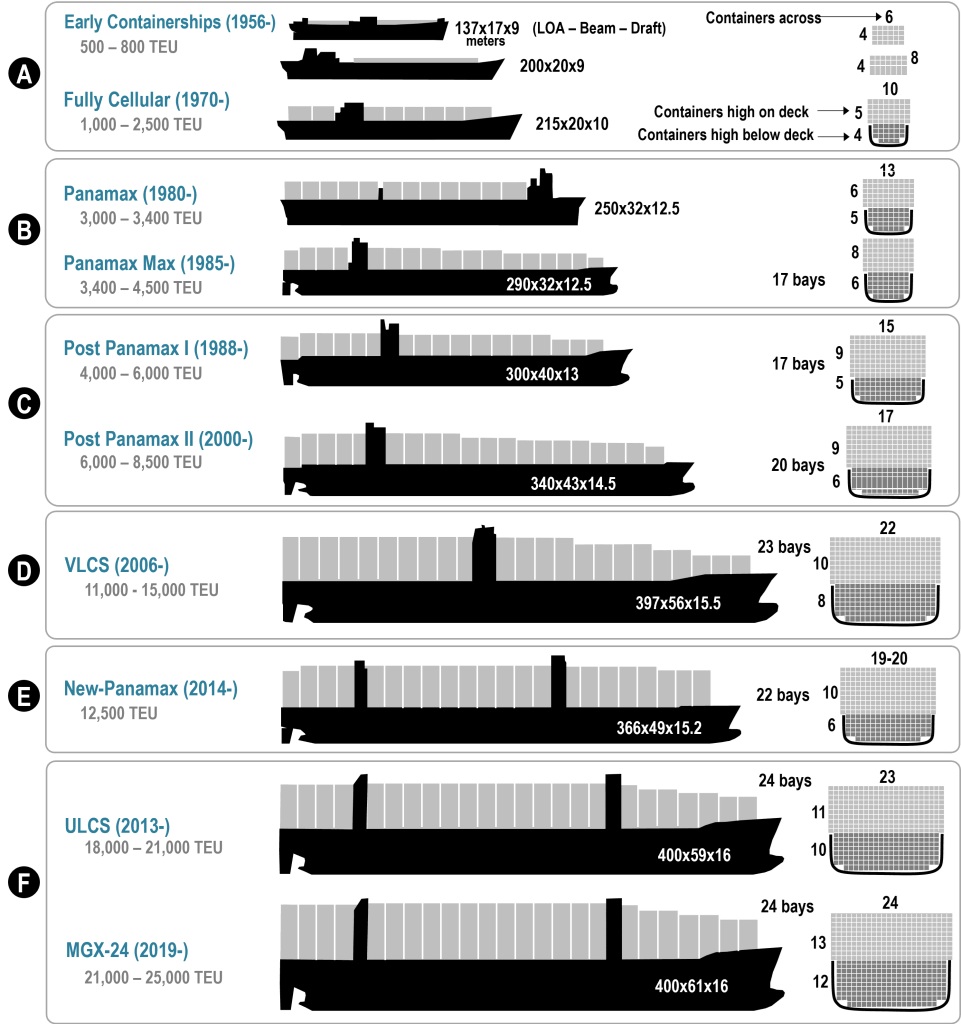
Today’s topic is a fascinating dive into a world of global trade; research has shown that around 90% of international trade is carried by shipping containers, and the World Bank statistics show that in 2019, nearly 800 million were shipped annually; given the increase over the past few years in online shopping, I can imagine that figure is by now significantly higher. The unit used for measuring how much a ship can carry is TEU (Twenty-foot Equivalent Unit); the chart below shows the adaptation of ship sizes over the years, driven by global trade:

Now, imagine a shipping container stacked at the top of a pile that’s the height of the actual ship; add to that ocean swells and waves. I’ve been on ships in the Atlantic facing waves so high, I could count fish through my window. I’ve been on ships in the “Sailor’s Nightmare” – the Pentland Firth passage between Scotland and the Orkney Islands – which is characterised by rough bathymetry (the underwater equivalent to topography) and extremely high currents (which also ricochet and collide off of the coasts of the islands and Scottish cliffs), tossing anything on the surface like a leaf in the wind. The World Shipping Council estimates that, over the past 16 years, an average of 1,500 containers have been lost at sea annually. Every year, the contents of those containers are carried along until the container is breached by either corrosion or impact. Then the contents are carried by ocean currents; where they finally make landfall depends on where they entered the ocean. If you were marooned on an island and tossed out an SOS in a bottle, it could make landfall anywhere between two and one hundred years – or never, if it’s caught in a gyre (more on that later). A message in a bottle was found on a beach in Norway that had been sent off 101 years earlier.

So what does that have to do with rubber ducks? In 1992, a shipping container with a consignment of what has been dubbed Friendly Floatees – 28,800 yellow rubber ducks, red beavers, blue turtles and green frogs – was washed overboard (along with 11 other containers) into the Atlantic. Because they are designed to float on water, they have survived at sea for an amazingly long time. Seattle oceanographers Curtis Ebbesmeyer and James Ingraham, who were working on an ocean current model, OSCUR (Ocean Surface Currents Simulation), began to track their progress; and those wee toys went on all kinds of adventures: Ten months after they broke free, some began showing up along the Alaskan coast; some showed up in Hawaii; some went to see the site of the Titanic sinking before getting frozen into ice, eventually emerging again and travelling to the US eastern coast, Britain and Ireland, making landfall around 2007. The researchers contacted coastal regions, asking beachcombers to report their finds; they recorded findings and began to accurately predict where landfall would occur. Over the years, the ducks and beavers had faded to white, but the blues and greens had retained their colours.

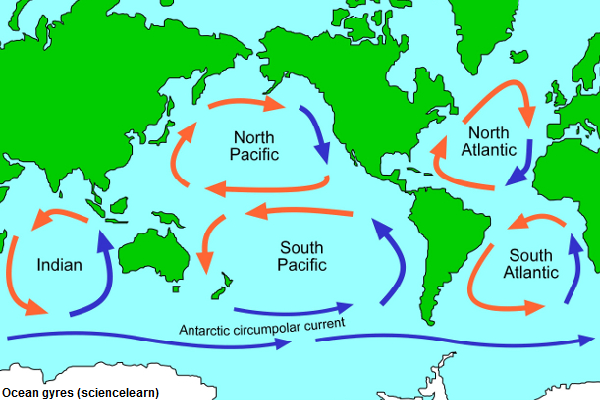
Flotsam and Jetsam have played key roles in helping researchers understand not only how ocean currents travel, but also how the areas known as garbage patches, oceanic gyres, are formed and retained by the swirl of ocean currents. Currently, five patches are known; many of the rubber ducks are likely caught in such currents, so we may hear about more white ducks finding their way to beaches in the coming years.

So the next time you see a rubber duck, think of all the adventures its siblings have been on!

If you’d like to see for yourself how ocean currents work, click here for an interactive map; just click on any area of the map to see how and where the currents carry debris from that point.

6 Comments

Filed under Articles, Etymology, History Undusted, Images, Nature, Research, Science & Technology, Snapshots in History

Yuka: Shaken Awake

All of us can relate to having some form of ruts in our lives: Favourite meals, restaurants, seats in places we visit often, clothes we prefer, products we buy, food brands or makeup brands (if you wear it); all, patterns of movement or place or things. Recently, I heard of an app that made me curious to try it out; when I did, it was an eye-opener about how many things I use that I’ve taken for granted that their claims are accurate – I know that’s naïve, but part of that naivety is that greatest of marketing tools, willful ignorance.

Case in point: Speaking to the women out there, you probably have favourite makeup products or brands that you’re used to. But what if you found out that half of their ingredients build up in your system, damaging your liver, your thyroid, and the environment? That’s exactly what I have learned lately, and it’s shaken me awake: the app I cannot recommend highly enough is called Yuka. If I had known years ago what I know now, perhaps I would still have a thyroid; tumours put an end to that several years ago – but I can prevent further damage to my body by being aware of what’s in a product and buying safe alternatives.

The app works like this: You scan a product’s barcode – anything from food items to makeup to body products such as shampoos and hand creams; the app then ranks the products on a set list of 100 points and tells you whether it’s excellent, good, poor or bad; it then lists the ingredients and gives you the option to read more about each one, ranking the ingredients (colour-coded) as hazardous, moderate risk, low risk, or risk-free. If the products rank as poor or bad, below them will be a list of alternative products, with their rankings and ingredients for further information. The recommendations are unbiased as they are not supported by any company. The app also keeps a record of products I’ve already scanned; if I’m at the store, and scan products I don’t buy because of their rating, I can then delete one or several items from the list to keep it streamlined to my products/foods.

There are things that this app is NOT: It is not a substitute for medical or nutritional advice; it is not the be-all and end-all for telling you what to buy. But what it IS: A good guide to weighing the benefits vs. the disadvantages of using one product over another. Some of my products may clock in as “poor” – but when I consider why that rating is given, I may decide to continue its use until something better becomes available in my area.

For me, I’ve found that one ingredient pops up in most makeup and hair products: Phenoxyethanol; it is listed as a potential endocrine disruptor, potential allergen, and irritant. In the EU its use in cosmetics is regulated – but not in the USA or in Canada. In itself it may be within regulatory limits in a product; but accumulatively (several products, from shower gel to lip balm to foundation) it exceeds the limit and becomes a health concern. Knowing this has helped me find new, healthier products. Even within a product range, the ingredients may vary; for example, one lip balm may be good, but another colour of the same brand differs to produce the colour or gloss and ends up being listed as bad. Honestly, I won’t buy a product now without knowing it’s healthy. It’s not that I can’t and won’t think for myself and let an app tell me what to do, but I can use it to weigh a decision.

This past week, I wanted to find a lip gloss to replace the one I’d been using which was marked as “hazardous”; but the store I was in didn’t have customer wi-fi, so I bought a small Vaseline, thinking, “This has been around for ages, so it must be simple and safe”. Wrong. When I got home, I scanned it: Petrolatum is the mineral oil used, which has a moderate risk with a big BUT: this oil may contain problematic residues, such as MOAHs (genotoxic carcinogens which promote cancers and damage DNA) and MOSHs (these accumulate in the body, particularly lymph nodes and the liver). These oils should be avoided, especially in products that may be ingested… such as lip balms (and these two residues were present in half of all tested lip balms!) So now, that little jar is in my craft room to be used as a lubricant for my tools.

We all need to take steps to protect ourselves; big companies are not putting customers first, but customers’ wallets. If we don’t shake ourselves awake and work against our own willful ignorance, we shouldn’t be surprised when health issues pop up; but who would associate lip balms and blush and hand creams or canned foods and pre-made packaged food with those bigger issues? We need to start looking into it for our own sakes.

13 Comments

Filed under Articles, Humanity Highlights, Links to External Articles, Musings, Research, Science & Technology

Fieldnotes

A few months ago, I began something that has added a layer of creativity and organisation to my life which, to be honest, is fairly creative and organised as it is. But this little addition adds a nice colour: Fieldnotes.

The original concept of taking fieldnotes comes from the scientific disciplines: An archaeologist in the field, taking notes on where, what and when something was uncovered; a geologist, botanist, ornithologist, or entomologist taking notes on observations, perhaps drawing an illustration of a specimen or a map of the landscape.

Fieldnotes can include writing, diagrams, drawings, or visual clues within an entry such as arrows or other visual connectors. They differ from a daily journal in that the fieldnotes are concise… rambling or expanding on a thought belongs elsewhere, but not in a “quick-draw” situation (pun intended).

Creative thinkers have jumped on the idea for reasons other than scientific observation: As a writer, fieldnotes help me capture snippets of ideas, dialogue, or an observation when out in public (I love to people-watch), or something I read – sometimes the comments on YouTube videos are a great capsule of humour! I also use fieldnotes to keep track of tasks on a busy day – lists of to-dos, to-writes, and so on. When I have a creative project, I take notes on the steps taken – such as making giant flowers that no one else has ever made; how to scale up a smaller version of a crepe paper flower is not always straightforward, and if I have several to make, it helps to have those detailed notes of the prototype phase for the next time around.

Taking fieldnotes might help get your creative juices flowing. If you’d like to start this practice, here are a few tips:

  1. Use a small notebook – one that can fit into a shirt pocket, man-bag, or purse. I’ve made my own with 70gsm blank paper, which allows me to make the same size and style repeatedly. But if you can’t do that, just use something like a moleskin notebook; these come in various sizes, with or without lined pages. There is also a company with books called Field Notes, though they seem a bit pricey for what you can do on your own…
  2. Use a good pen, or pencil, or coloured pencils if you want to sketch something with colour.
  3. You can either take chronological notes, such as dating each entry, or you can organise your notes into groupings: One page per character, scene or topic, or for a to-do list, or whatever you want to capture on the go.
  4. Use visual cues, such as boxes around certain elements or arrows connecting one thing to another. Use illustrations or draw diagrams; attach images from magazines, printouts, etc.
  5. Highlight tags or keywords; consider numbering each page and keeping an index at the back of the book to help you find things later on.
  6. One book that might help kick-start illustrative note-taking if it’s new to you is The Sketchnote Handbook, by Mike Rohde.
  7. Think about how you’re recording things on the page: Do you always want to write straight, top left to bottom right, or do you want to mix things up and write diagonally, sideways, or even backwards? Yes, sometimes that’s a thing; Leonardo da Vinci wrote privately in a mirrored direction, only writing normally when he wanted others to read his notes; he also developed his own shorthand.
Leonardo da Vinci’s Vitruvian Man, with mirrored writing.

I also have my own shorthand for many things; Sometimes I use what I call pigeon Asian (I use this when I don’t want anyone else to read it); it’s something I learned when living in Hawaii. It looks like Kanji (the logographic writing of Japan), but it’s not – that’s all I’ll explain! I also use logographs, such as the ancient Anglo-Saxon rune of daeg, which includes the concept of day, dawn, intuition or breakthrough; I use this to designate those times when I’m writing: Rather than writing, “Today, I wrote/worked on the manuscript for...” I just write that symbol plus the name of the manuscript and details. I have a whole series of such shorthand symbols that I use daily.

While there are note-taking apps available (and I use one, called “Keep My Notes”, on my phone for things like shopping lists or feedback notes for singing students or bands that I take during performances and review with them later), sometimes it’s helpful to get away from digital screens. Sometimes I’ll write whole scenes away from the computer – I don’t use my fieldnotes for that, though it will probably be used to outline a scene that comes to mind until I get to another notebook. Something about writing long-hand sparks a level of creativity that might not come while working at a computer; hand-eye coordination should never be underestimated in creative endeavours. Once a scene has developed enough away from the screen to be integrated into my current manuscript, it then takes on another reiteration as I type it in, tweaking and changing… it’s what I call a “ripening process” as a wine metaphor for the creative maturing process a scene goes through by this method. It gets my head into a new space figuratively, literally, and literarily!

In an age when we are constantly bombarded with visuals wherever we go, sometimes it’s healthy to go back to good ol’ pen and paper. On those days so busy that I can’t remember what I’ve actually done, it’s helpful to look back at my fieldnotes as I write out my thoughts in my daily journal.

Do you write? Do you ever make lists for shopping, chores, people to contact, or things to do? If so, how have you kept track of such things so far? If it’s a system that works for you, brilliant! But if you find yourself wanting to switch things up or wanting to improve your use of time, would you consider taking fieldnotes? Please comment below!

2 Comments

Filed under Articles, Etymology, Humanity Highlights, Links to External Articles, Lists, Musings, Nuts & Bolts, Research, Science & Technology, Writing Exercise, Writing Prompt

Rabbit Holes

These past few weeks have flown by so quickly, I’ve hardly had time to look up from my keyboard! Except when I went to the optometrist for new glasses (there might have been a slight connection between the two). I’ve been editing my final sci-fi draft. When I need a break from editing, I’ve been reading into articles by the new ebook company I’ll be working with, Draft2Digital, which has recently merged with Smashwords (my current and former platform). And in the context of editing, I’ve been down several rabbit holes:

Dashes

Back when I learned English, we had the good ol’ hyphen and the dash. Somewhere along the way the en-dash and the em-dash moved in, and they turned out to be worthy additions to the conversation. Now to make things confusing, 2em-dashes and 3em-dashes have elbowed their way into the punctuation party. I’m not sure how I feel about them yet, but their definitions seem to have squeezed the others so close that they often overlap or exchange places on the definition and usage dance floor. Until I need them to fix me a drink, I’ll probably ignore the party crashers.

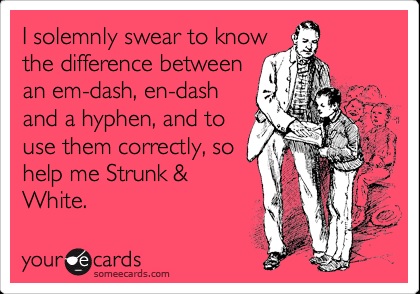
Strunk and White’s The Element of Style is a cornerstone of grammar and writing style and is widely considered timeless; in fact, it was listed by TIME in 2011 as one of the 100 best and most influential books written in English since 1923. The irony of this cartoon is that when I recently pulled out my copy to find out the nitty-gritty of using en- and em-dashes in dialogue, I found not a jot or tittle about them in the entire book. It covers hyphens and dashes, both briefly, but nary a word beyond. Every website that I looked at had contradictory definitions and usages of all types of dashes; so until an authoritative source comes up with a defined set of rules, I will continue to use them the way I’ve learned them, and just be consistent in my punctuation within my current manuscript.

Dialogue Tags vs. Action Tags

Another rabbit hole I went down was a learning curve on the two types of tags. On one hand, I’d never honestly thought about the fact that there could a difference in punctuation between the two; on the other hand, for the most part, I’ve intuitively done it right, though not always, which is why I’ve added it to my checklist of edits – and something I will keep a closer eye on in the future. Here’s an example:

He said, “Oh, the irony of ignorance!” – This is a dialogue tag with its attending punctuation. Dialogue tags are any verb that can be spoken – said, cheered, whispered, etc.

He nodded. “I hadn’t thought about it, but that makes sense.” – Nodding is something done, and this is, therefore, an action tag. Notice that its attending punctuation is a period separating the action tag from the dialogue.

Two things make less logical sense to me; if you have insight on them or experience using them or reading them in novels, please comment! [Keep in mind that these are American English rules; I am writing my current novel in American English, though until now, I’ve written in Commonwealth English (I use that term rather than British English because it is used beyond Britain).]

  • How often have you spoken and laughed, chuckled, or smiled simultaneously? These are, for me, nuances in spoken vocabulary, and not action tags. Would you rather write: He smiled, “I thought you might say that.” or He smiled. “I thought you might say that.” ? In this particular instance both would work, but there are times when it has the potential to break up the rhythm of a sentence or scene too much. Which do you prefer?
  • When an action interrupts dialogue, it needs to be separated with (IMHO) rather odd punctuation, for example: “From what I’ve read about these dwellings” –he looked at the woman kindly– “they’re far from mud huts.” My years as an English teacher mean that missing commas and attached en-dashes hurt my eyes; maybe that’s why I needed new glasses!

Euphemisms

Another tangent this week has been looking for creative swear words. Nothing irritates me more, when reading a book, for the author to fall back on standard F-bombs. That just says too lazy to be creative to me. It’s unimaginative. It doesn’t make a character stand out from the rest of the lazy crowd. There are so many fun alternatives, there really is no excuse! Here are a few I’ve come across and found myself smiling:

  • People cussing in a foreign language; it sounds better to them.
  • Fart knocker (e.g. “you little fart knocker”)
  • Sun of a nutcracker! Sun of a biscuit!
  • Cheese n’ crackers!
  • Shoot a monkey!
  • Shiitake mushrooms!
  • Well, butter my bum!
  • Clusterfluff!
  • In a type of Chinese Whispers, “Hells bells” became “hells bells, conker shells”, misunderstood by kids as “hells bells, taco shells” – now that family just yells, “Taco shells!” when they’re upset!
  • Names as swear words might backfire if you happen to meet someone by that name; here are a few: Christopher Columbus; Gordan Bennett (in Scotland); Gottfried Stutz (here in Switzerland – I actually taught English in a company that had an employee with that name!)
  • Sugar Honey Ice Tea!
  • Sunny Beaches
  • Fudgenuts
  • Someone I used to know would say things like “bug knuckles” or “dog feathers” or “ants pants” when she was upset.
Credit: Getty Images

These are just a few of the areas I’ve delved into in the past few weeks; I’m still deep in the editing/proofreading process; once that’s complete, the “behind the scenes” checklists begin – those are the things readers will never see: The number of hours put into finding the right images and designing the best cover art possible; choosing the right fonts; formatting for the various mediums online and print; writing blurbs, preparing marketing bits and bobs, and setting up all the dominoes in a row for the final push of publishing!

Clusterfluff! I’d better get my fanny in gear!

10 Comments

Filed under Articles, Etymology, Grammar, Lists, Musings, Nuts & Bolts, Research

Project TeamSeas

If you don’t follow certain vloggers on YouTube, you might not have heard of #TeamSeas yet; if you do and have, then join the team!

First, a bit of history on this campaign: Back in 2019, YouTuber MrBeast hit 20 million followers, and a fan suggested that he celebrate it by planting 20 million trees (as one does). Fellow YouTuber and engineer/inventor Mark Rober, formerly of Nasa’s JPL Mars Curiosity rover team, joined the effort to launch the collaboration with the Arbor Day Foundation; YouTubers would raise the money through raising awareness, and for each dollar donated, a tree seedling would be planted by volunteers somewhere it was most needed, based on the assessments of the foundation’s research. The goal was reached before the end of 2020, reaching over $23,166,000 and counting.

Now fast forward to 29 October 2021: The same YouTubers have teamed up once again to launch TeamSeas, the aim of which is to clean up plastic marine debris.

Plastics, in the broader sense of the word, have been around for thousands of years, though the original products were made of natural rubbers or animals horns, both of which would break down and be reabsorbed into the environment with little impact. What we think of as plastics really began to boom after World War 2. The tragedy, or travesty, of it is that, from the beginning, manufacturers had no solution for recycling their product waste, but that didn’t slow down production. Every piece of plastic that has ever been made is in the environment somewhere.

In the oceans specifically, there are five natural gyres, or large circular ocean currents, and these corral floating debris into what are now known as “garbage patches”. The Great Pacific Garbage Patch is twice the size of Texas, and that’s just what’s floating on the surface.

The topic is a fascinating one to me, because I’ve collected garbage from beaches when we’ve gone on holidays to coastal areas, and I’ve seen the problem growing. About ten years ago, a Dutch teenager, Boyan Slat, was diving while on holiday in Greece. The garbage outnumbered the fish, and he decided to do something about it. He has invented robotic boats that are “great at catching plastic and terrible at catching fish,” as the catchments only go down a few meters, and move slow enough for fish and marine animals to simply swim down and away. He plans to release a fleet of these ships not only to the garbage gyres but also to the sources of the problems – rivers that wash garbage into the ocean from upstream.

The goal is for TeamSeas to raise $30 million before the end of this year; as of the moment of writing this, they have reached over $12,720,000. Half of the money raised will be going to Boyan Slat’s nonprofit organization to build and launch garbage-eating ships, and the other half of the money will go toward ocean conservation – this will be in the form of providing volunteers with the equipment necessary to clean up the beaches and waterways, and getting out onto the ocean to join the Ocean Cleanup’s work.

To find out more, please take the time to follow the links below:

Mark Rober’s informative video about what it’s all about

Boyan Slat’s The Ocean Cleanup nonprofit organization

TeamSea’s website – here, you can get up to date with what’s happening, and donate!

Watch some of the activity that takes place aboard an Ocean Cleanup vessel when a load comes in.

The Ocean Cleanup begins to tackle the Great Pacific Garbage Patch and closes the loop by recycling the collected garbage into pellets, which can be turned into useable products, such as sunglasses.

Please consider getting involved in any way you can! If you can’t get out there and collect rubbish from a beach, a few dollars will go a long way to helping others reach the goal of cleaning up the oceans. The biggest thing you can do is to become aware of your own environmental impact: Recycle; use products wisely and dispose of them properly; upcycle where possible; check with your local government agencies about ways to improve collection and reuse of rubbish in your area; buy products that are not wrapped in plastic (e.g. fresh fruits and vegetables bought loose rather than in a plastic-wrapped convenience pack). Like the butterfly effect, every little step makes a huge difference in the long run.

Leave a comment

Filed under Articles, History, Links to External Articles, Nature, Research, Science & Technology

Imagination is a Superpower

I’ve taught English as a foreign language for adults for years, from the age of 13 up until Covid put such gatherings on hold. I would often use some kind of exercise that allowed students to think outside of their normal lives, to stretch their vocabulary and to practice speaking and forming sentences outside of their comfort zone. I once had a nursing student, meeting as a semi-private student with another fellow nurse, who categorically refused to do any exercises requiring a make-believe scenario; she called herself a “realist”. Despite reasoning with her, or her friend asking her to participate so that she could learn more, she refused. I found it frustrating as a teacher, but I found it tragic as a writer and creative thinker.

Thinking outside of the box and thinking creatively stretches our brains in extraordinary ways; it promotes creative problem solving, allows us to put ourselves in someone else’s shoes for a moment, and can help us view a situation from several different angles. By thinking into fictitious scenarios, we learn something about ourselves along the way – those things that make us tick, our strengths, or our weaknesses.

For years, I’ve collected interesting writing prompts whenever I’ve come across them; it’s going down the proverbial rabbit hole to follow leads on the internet, but because I’ve collected them willy-nilly, I can’t tell you exactly where they originated – it’s a common problem with online research, and as often as I can, I try to give proper credit to images that I use if they’re not my own; the people out there who offer their creative perspectives, photography talents, or Photoshop skills deserve credit where credit’s due. But it’s one reason that I don’t often share such prompts here, for those of you following who are also writers. Another reason is that there are enough sites out there stuffed to the gills with prompts. What I would like to do today is share an exercise in imagination.

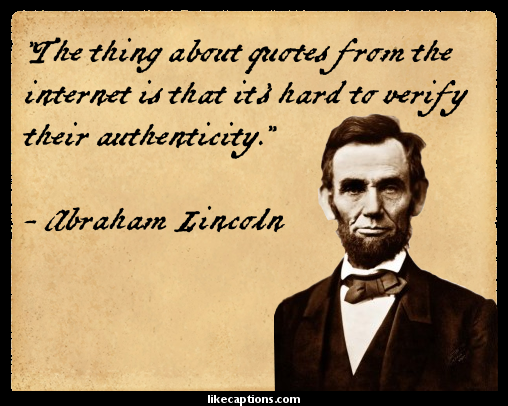
Albert Einstein quotes run rampant on the internet; without a reference book to know what he actually said, I feel that many of them fall into this category:

Having said that, sometimes you can gather the essence of what he probably said by reading “diagonally” through the supposed quotes, and one such sentiment is that Einstein said something like, “Imagination is more important that knowledge; knowledge is limited to all we know and understand, while imagination embraces the entire world.” Mark Twain once wrote*, “You can’t depend on your eyes when your imagination is out of focus.” [* Excerpt from his Complete Works] (By the by, if you’d like more Mark Twain wit, I wrote an article about his views on Switzerland, and the German language – just click here.)

So here’s something to exercise your imagination with:

You have the choice between flight and invisibility; which do you choose and why? What will you do with this superpower?

I’d love to hear your answers in the comments below!

13 Comments

Filed under Articles, Humor, Images, Musings, Quotes, Research, Writing Exercise, Writing Prompt

Psychology Undusted: Digital Dysmorphia

This topic is a bit of a rabbit hole, and longer than my usual article, but I feel that it’s an important issue to address.

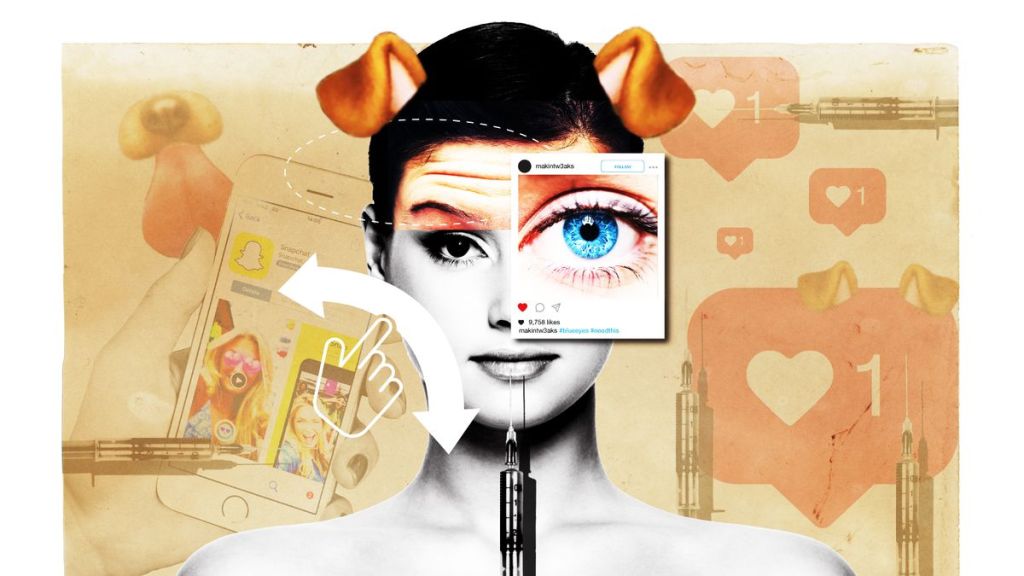
Image Credit: Spark.ac.in

On one hand, living in a digital age is a blessing: It allows us to reach out and stay in contact with distant friends, family and, in these months of lockdowns and home offices, our co-workers. It allows us to learn anything, with a world of libraries and teachers and experts at our fingertips, but on the other hand, this age has also brought with it a phenomenon known as Digital Dysmorphia, Zoom-, Instagram-, Snapchat-, Facebook-, or simply Body Dysmorphia.

When lockdowns started in 2020, it wasn’t only a personal challenge for many, but also a huge challenge for businesses of every branch. Suddenly their personnel could no longer travel to international, or even national, meetings; they couldn’t meet their co-workers face to face, or even go into the office. Home office became, for many that still had work, a dream come true: Businesses that for years had claimed that home office would be too impractical suddenly found ways to carry on using tools like Zoom and Skype to gather virtual groups together for meetings. It became a common joke that many would be dressed for success on the top half, while the unseen half was PJs or boxer shorts or tutus, like John Krasinski’s “Some Good News” YouTube channel.

So what is Digital Dysmorphia? It’s the separating of oneself from one’s own real image by the distortion brought about through filters, enhancers and additions of body parts (e.g. large eyes, or bunny ears), using apps such as Snapchat; it’s the altering of reality, modifying self-perceived flaws, and presenting an altered reality of not only one’s physical appearance, but even one’s lifestyle (Instagram). Its danger is the destruction of self-esteem, fear of getting “caught in the lie” by being seen face-to-face by someone who only knows your digitalized self-image, and therefore fear of seeing people in person. It’s a different phenomenon than, say, knowing you need to update your online profile picture that was taken a decade ago. This dysmorphia, also known as BDD (Body Dysmorphic Disorder), is an active destruction of self-esteem through choosing distortions over reality. When someone has BDD, they are focused on their supposed physical flaws for hours a day, and they may take drastic measures to hide or fix them. BDD is sometimes diagnostically confused with OCD, social anxiety disorders, social phobia or depression. BDD was first described around the turn of the 20th century, but has only been taken seriously as an illness in the past few decades. To find out more, here is an interesting YouTube video (~8 min.)

The reason visual apps such as Zoom have made a negative impact on people is because we often see the image of ourselves onscreen as unflattering, perhaps because the camera sits too low, but also because we are looking at our own face for an hour or more at a time (it’s natural to be curious about how others see us, and our eyes are drawn to our own image because of it); while you might not be a teenager glued to your phone, if you’ve used Zoom or Skype, you’ve seen yourself through digital eyes.

Women especially, but not exclusively, have an added challenge: Every magazine image, and many social media images, are all air-brushed, photo-shopped and tweaked beyond humanly-attainable standards. We can never live up to the standard of beauty that marketing companies press on us, and that can wear on someone’s self-esteem.

Another danger in the digital age is the addiction to selfies: Trying to capture the perfect shot, the perfect moment, keeps people so focused on themselves that they completely miss the actual moment they’re trying to capture themselves in. Once in Scotland, my husband and I were enjoying a window-side lunch in a small road-side restaurant on the Isle of Skye; a bus-load of Asian tourists pulled up, and they faced the restaurant to take selfies of themselves with the background (which was the majestic Cuillin mountain range); they did not once turn around to see the actual scenery, but took dozens of photos of themselves before loading back up into the bus and leaving. They could have just saved themselves the trip, stayed at home, and put up a green screen with an image in the background.

Although we may tend to think of girls when we think of selfie addiction, the first British documented case was in 2014, then-19-year-old Danny Bowman. To read a fascinating article, click here: “Faking it: How Selfie Dysmorphia is Driving People to Seek Surgery”. Danny got to the point that he tried to commit suicide but was found in time by his parents and rehabilitated. He now raises awareness about mental health issues.

Image Credit: Bored Panda, Byron Denton

A few years ago, plastic surgeons were being asked to make a person look like this or that celebrity. Then lockdowns came into our collective lives, and Zoom became a household name; but with the sudden increase in digital contact, another, darker phenomena also increased, dubbed by cosmetic surgeons as the “Zoom Boom” to describe the increase. Now to be fair, Zoom is by no means solely responsible; every social media platform has the same dangers. Today, cosmetic surgeons are getting requests to make a person look like their digitalized self; but the requests are often not only impossible (e.g. Anime eyes or removing skin pores to give a porcelain complexion), but would also damage the person’s self-image further. A psychological anorexia, of sorts, it’s addictive and destructive. Plastic surgeons that place the patient’s mental health above their dollar signs must draw moral lines of age limits (younger and younger people are trying to get “preventative Botox” or “corrective” surgeries) and psychological screening.

For more in-depth articles on the topic, just click on the images in this article.

So, how can we avoid falling into the BDD traps? There are a few things you can do:

  • TURN OFF THE CAMERA: Just because you have the ability to have a visual call does not mean you must. If the caller complains that they can’t see you, just tell them to use their imagination, but leave the camera off. This can also apply to phone cameras – if you’re tempted to take selfies, put a sticker over the camera [this is something I do anyway, over front and back cameras – not because I take selfies, but because apps such as Google can and do hijack your camera to see you and your environment, and listen in… so keep your cell phone on flight-mode whenever possible, and “blindfold” them!].
  • LEARN TO IDENTIFY NEGATIVE THOUGHT PATTERNS: Everyone has something about their physical appearance that they don’t like; but if you catch yourself dwelling on a particular feature, try to change your perspective about it – try to compliment yourself, and then move on… positively focus on someone or something else besides yourself.
  • APPRECIATE YOURSELF: Taking care of yourself, getting enough rest, eating wisely, and exercising will all go a long way to restoring your self-esteem. Set small goals for yourself each day, and celebrate those times your reach those goals, giving yourself a big dose of grace when you’ve not been able to reach them. Taking this attitude will alleviate stress, which goes a long way toward supporting mental health.
  • GIVE COMPLIMENTS: This not only takes the focus off of ourselves, but it may be that the other person is struggling in this area, and a timely compliment may be the thing that saves their lives, literally. It’s never wrong to compliment someone, friend or stranger.

I hope that this “undusts” this topic a bit for you; if you know anyone who’s struggling with their self-image, let them know that they’re not alone, and that they’re beautiful.

5 Comments

Filed under Articles, Links to External Articles, Lists, Psychology Undusted, Research, Science & Technology

History Undusted: Limbo

Over the past year and more, we’ve all experienced limbo in one form or another: Lock downs, restrictions, cancellations of events or flights or holidays or plans to meet up with friends, and the uncertainty of how long it will all last. Then there is the feeling of limbo that comes with my personal situation of waiting for the cascade of appointments for my husband’s chemo to begin; we had a set-back last week with a bacterial infection and a week’s hospitalization, so we’ll just have to wait and see if he can keep the appointments already made or not. Limbo. Waiting to find out if he can be brought home tomorrow. Limbo.

My writing, both in the forms of this blog and of my manuscript, have both been sucked into the state of limbo as well, as I’ve spent most of the past few weeks, and more intensively the past three days, on the phone with people who’ve asked how we’re doing, or answering messages on my phone or social media. Sometimes I feel like my manuscript is calling for me to work on it, and I’m trying to reach it while wading toward it waist-deep in a thick sludge of other priorities – it’s been just out of reach for days, because by the time I actually reach it, I have no energy left.

As I was thinking about those limbo moments, I actually started wondering just where the limbo dance comes from, historically; I remember doing it as a child – the local indoor skating rink played limbo every night. So, here’s a brief low-down on the low-down dance:

The origins are vague, as is the etymology of the name: Starting in late-1800s Trinidad, the name might have come from the Jamaican English “limba“, i.e. limber. Interestingly, the game is used in Africa as a funeral game, and there may be a connection between the two regions through the slave trade which brought Africans to the Jamaican islands, as it is also a popular “dance” for wakes in Trinidad. The rules are simple: a person passes under a bar, face-up, with the only body part allowed to touch the ground being the feet. The game is considered the unofficial national game of Trinidad and Tobago, it only began to gain popularity beyond the region in the 1950s; it was adopted in the mid-1950s as a form of physical exercise for American military troops. It was often attempted to a rhythmic song, and one of the most popular was the Limbo Rock, by Chubby Checker. Just listening to the song brings back the feeling of the cool breeze blowing around the skating rink as people sped to get in line for the limbo stick as soon as they heard the music start over the loudspeaker!

As we face our own times of limbo in this age of Corona, or in the circumstances we find ourselves in, perhaps it would perk up our spirits to hum the Limbo Rock and take it with a bow and a smile.

5 Comments

Filed under Articles, Etymology, History, History Undusted, Military History, Research, Snapshots in History

Virtual Tour: Odd Collections

Most people collect something as a hobby; I’ve collected various things over the years: Stamps, postcards, arrow heads, fossils and minerals or gemstones, and coins. All of those are fairly common. The oddest thing I used to collect, in middle school, was spiders: I had about 500 different species in test tubes, and I would use them with my science fair presentations that was, for several years in a row, a growing display of all things arachnid, including my pet tarantulas.
But there are folks out there who make that last collection of mine look normal: People who collect thousands of toothbrushes, or back scratchers, or “Do Not Disturb” signs, or erasers, or milk bottles. Where most of us have a collection that fits into a storage box, others have them the size of an entire room or two. OCD is probably also on the top of their profile descriptives, but then maybe they’re just passionate or fascinated about something most people would never think about collecting.

To have a look at 43 odd collections, just click HERE. Some of these are only odd in their amount collected, while others are just downright gross (think world’s largest chewed gum ball, or navel lint…). Perhaps “enjoy” is the wrong sentiment in those cases, but nevertheless, have a fascinating time vicariously checking out the odd quirks of others!

3 Comments

Filed under Links to External Articles, Lists, Obscurities, Research, Virtual Tours