The 3 Levels of Editing

EditingWriting is not just about stringing words together to express a coherent thought; at that level one might say it’s primary school basics.  The deeper I delve into the written world of words, the more I recognize the shades of colour, light and moods, and the fact that when I am telling a story, I am really painting a picture.  But to get to that depth, besides the fundamental skills of telling a good story, every writer needs to be familiar with what I consider to be three basic levels of editing; there’s a wide palette for discussion, and the order below is not chronological but often simultaneous phases of editing.  Here are a few points to keep in mind:

1:  The Matrix Level

I call this the “Matrix Level” because it really is the foundation – without it, don’t even think about giving up your day job.  This level includes things like spelling, vocabulary (choosing the best word or phrase in a given situation) and punctuation.  At this level you might also include things like formatting (being consistent in usage of fonts; spacing; size and heading styles; margins; indentations; double-or single-spacing after a full stop; capitalizations; abbreviations [e.g. Mr. or Mr {that choice depends on whether or not you’re using American Standard English, or British Standard English}]; and consistent use of italics, bolds and underlines).

2:  The 3-C Level

This is what I call the 3-C level because it’s just that:  Coherency, Consistency, Conciseness.  This is the level you work on things like clear expression; showing, not telling (re-writing those scenes that tell into a scene that shows the action or the purpose of that scene); assessing what your demographic target is (teenagers, women, men, children, intellectual readers, pulp-fiction readers, genre-specific groups, etc.) and writing with them in mind as you make choices of expression and complexity.

This level includes things like pacing/timing/rhythm of the overall script; logical connections, organic changes, filling in the “holes” in the plot, the building of action or tension (again, in an organic way to the story—don’t just slap in a sex scene or a car chase because you need to pick up the pace in a dragging scene!), and keeping an eye out for things like vocabulary repetition (if it’s there, it needs to be organic, e.g. perhaps a character likes to use a phrase as a “trademark”) or filler words (actually, really, etc.).

3:  The “Cutting Room Floor” Level

This is the level where tough decisions come in; here you need to ask yourself some basic questions:  Does scene XYZ support the plot in more than one way?  [Plot, by the way, applies whether you’re writing a novel, a business case plan, or a newspaper article.]  If not, can I glean the core sentiment or information that needs to be conveyed and splice it in somewhere else?  Does the purpose / goal come through or remain clear in this scene?  If not, how can I change it, trim it, or chop it?  Are paragraphs unified (i.e. one main goal / thought each)?  This process is very similar to film editing, and you can learn a lot from that process by listening to good film commentaries (the best I’ve come across are films with commentaries by Steven Spielberg – he’s a natural teacher in that respect!).

In the current novel I’m writing, a fantasy-history spanning from first century AD Scotland and Norway to modern-day Scotland, an earlier draft had too many characters; there are still enough to warrant a Cast of Characters section at the end (due to the complex structure that will be woven together in the next draft), but the general rule is to not tax the reader with more than four characters in any given scene.  So even though each character was well-developed and interesting, I had to let some heads roll.

The way I write works for me:  If I’ve written a scene that somehow doesn’t sit right with the tone/mood but I know it conveys something necessary to the construct as a whole, I will paste that scene to the end of the document and title it “Scene to Salvage: —” with a brief description.  Later I can go back to the core of that scene and salvage it, or decide that it no longer fits and delete it—it’s nonetheless served the purpose of helping me solidify the plot by hashing out certain elements.  I may really like one key sentence or idea, so I’ll cut it out and drop it in where it works well organically to the story.  I might also add that each of these levels is vital in this story as each section (Pictish; an otherworldly kingdom; Norse settlements; and modern archaeology) has its own colour palette:  Stone, rain and sea; mist, sky and whispers; leather, smoke and wood; and technology, pubs and peat mire.  Each sections’ dialogue and prose need to reflect those palettes, and that’s the secret of showing, not telling!

The more structured you work, and the more confident you become with each level, the better and faster the writing process will become.  I hope this inspires you, and spurs you on to greater writing!
Leave a comment

Filed under Articles, Lists, Nuts & Bolts, Publications

On the Art of Conversation

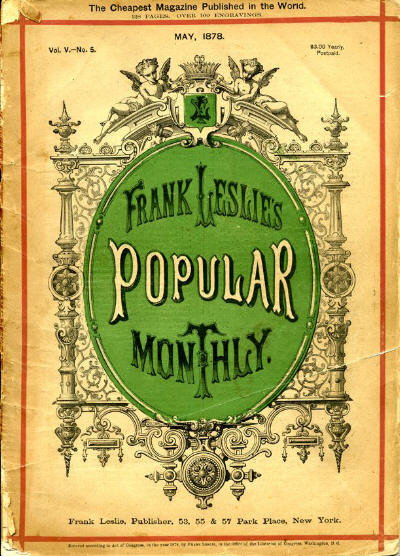
“Conversation is said to be a lost art… good talk presupposes leisure, both for preparation and enjoyment.  The age of leisure is dead, and the art of conversation is dying.” – Frank Leslie’s Popular Monthly, Volume 29, 1890

Frank Leslies Popular Monthly - 1878

Leave a comment

March 29, 2014 · 9:49 PM

Lost in Translation: Foreign Signs

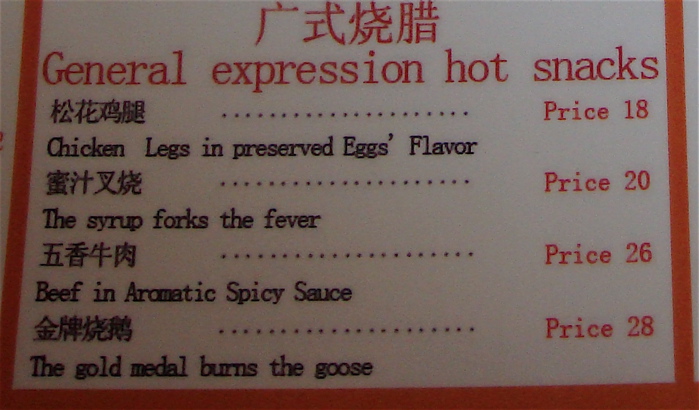
I love it when signs or notices are translated by non-mother tongue English speakers;it can be anything from cute to funny, misleading or just downright embarrassing.  I especially love Asian translations!  Here are a few examples.

Lost in Translation 1 Lost in Translation 2 Lost in Translation 9 Lost in Translation 11 Lost in Translation 23

Leave a comment

Filed under Images, Mistranslations, Nuts & Bolts, Quotes

Countdown Deal!

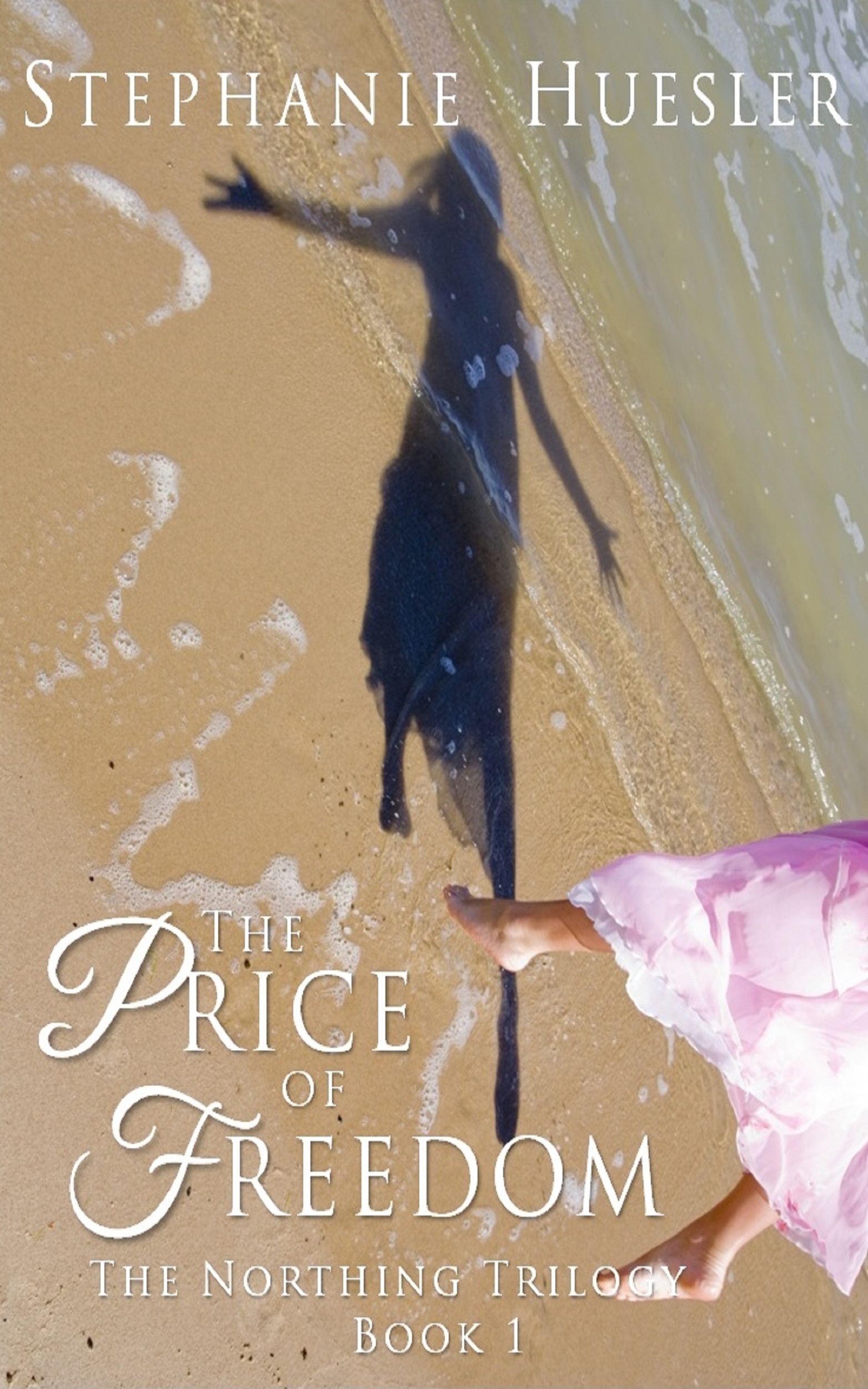
POF1 - Amazon Optimal PixelThis coming weekend, from Saturday 22 March, 6:00 a.m. (PST) through Sunday 23 March, 11:00 pm (PST) my first novel, “The Price of Freedom” will be available on Kindle for $3.99 instead of $6.99!  As of next week, the title will also be available in paperback!  I’m excited to finally have the paperback edition available to those of you who’ve been asking for it.  Please—pass the news on to your friends and contacts!  Share, link, and shout it from your rooftops (preferably without getting arrested)… you are my greatest asset when it comes to getting the word out, getting into the hands of people who enjoy reading, and enjoy the genre of the likes of Jane Austen and Georgette Heyer!

Leave a comment

Filed under Publications

Science-Fiction Made Real: The Origami Microscope

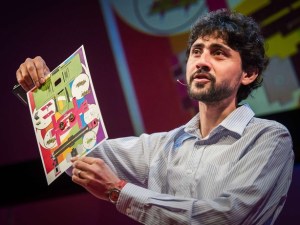
Recently I looked at past technologies; today I came across a TED video that is simply mind-boggling:  An Origami microscope that is cheap, powerful (magnifications up to 2,000x), waterproof, durable, and can be made available to anyone.  It sounds like science fiction, but it’s real, today; think of the possibilities for early diagnosis for the remote people of the earth who have all too often been neglected due to a lack of funds.  Click on the image below to see a 9-minute presentation by Stanford bioengineering professor Manu Prakash, PhD.

origami-microscope


2 Comments

Filed under Articles, How It's Made, Research, Videos

Fools & Madmen

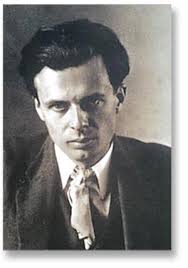
Aldous Leonard Huxley“The vast majority of human beings dislike and even dread all notions with which they are not familiar.  Hence it comes about, that at their first appearance, innovators have always been divided as fools and madmen. ”

Aldous Leonard Huxley, 1894-1963, British writer

Leave a comment

Filed under History, Quotes

The Future in the Past

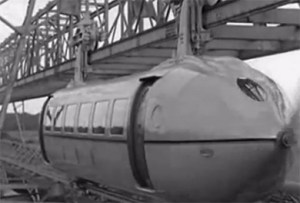
I love keeping up with the latest technologies, scientific developments, astronomical discoveries and the like; it informs my novel-writing and plot development.  But what did our present look like in the past (if one could say that)?  What did past generations look forward and envision for our time?  How much of it was humorously inaccurate, and how much of it could be inspiration still?  For a glimpse into the minds of the past, click on the photo below.

Future Guess, 1920s

Leave a comment

Filed under History, Research, Videos

The Svalbard Global Seed Vault

Like something out of a Science Fiction film, the Svalbard Global Seed Vault looks like a monolith rising out of the snowy mountains in Norway.  Its purpose could be out of the same film:  It’s a depository for seeds from around the world, to preserve plants in case of global disaster, whether fire, flood, ice or nuclear.  To read the whole story, check out the Wikipedia article by clicking on the image below.  If you write Science Fiction, be inspired!  If you are into gardening, global environmental issues, or simply worried about the direction society is heading, take comfort… there are people planning ahead.

Svalbard Seed Vault

Leave a comment

Filed under Articles

20 Common Grammar Errors

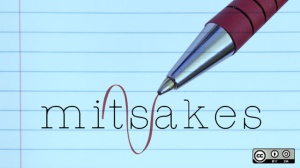
For writers and bloggers, being reminded of the basic grammar rules from time to time is a good thing; they can help to improve our communication and efficiency.  If you’re like me, you may be writing along when a question pops up like, “Does this sentence need a comma here or not?”  The more familiar we become with the rules (and keep in mind that there are some differences between nationally-accepted rules, e.g. between the British standard and the American standard), the faster such decisions will become and the less time will be lost on such mundanely important details.  Click on the image below for a link to the 20 most common grammar errors and how to solve them.

AA Mistakes

Leave a comment

Filed under Nuts & Bolts, Research, Writing Exercise

60 Uncommon Things Men Find Attractive About Women

Here’s a list that proves attraction is just weird, and that beauty really is in the eye of the beholder! I find this interesting especially because of the possibilities for finding that quirky element for building fictional characters. Enjoy, and be inspired to write depth and breadth!  Click on the image below to view the article:

Shutterstock

Leave a comment

Filed under Lists