Tag Archives: YouTube Link

History Undusted: Rabbit Holes & Licorice Candy

This week, I did a major shopping at a couple Asian food stores; I stocked up on the ingredients I know, and some I didn’t; I like to get things I’ve never heard of, and do a bit of research on how to use it in cooking; things I picked up in that category are Iranian Kashk, which is a tangy fermented, yoghurt used as a condiment; canned palm hearts, which make a nice topping on desserts; and fermented black beans, which can be used in a variety of Asian dishes, including in a black bean sauce. I also bought several fresh vegetables and herbs to dehydrate and turn into a greens powder for adding flavours to dishes (I have a more usual greens powder with standard greens, like cauliflower leaves, spinach, etc. that I use daily).

One of the herbs I used was acacia leaf: When I opened the package, a pungent, sulphur-like smell hit me, and I wasn’t sure I’d use it. But when I began de-leafing it (much like you would thyme, though carefully as it’s got some vicious thorns!), it began to smell like mint! As I added lemongrass, Thai water spinach and other herbs, you can imagine the cacophony of fragrances in my kitchen – which filled the house as they dehydrated.

So what does this have to do with licorice? Well, one of the fresh herbs I also processed was Thai basil; I’d never used it before, and when I opened the packaging, a wave of anise- or licorice aroma hit me. And as usual, that set my mind off, thinking about the history of licorice!

Licorice is a flowering plant native to parts of Asia and Europe; its scientific name, Glycyrrhiza, comes from Greek and means “sweet root” (the linguistic roots are related to words like glycerine and rhizome); it is the ingredient that gives the signature flavour to black licorice, though today anise oil is often used as a substitute because the Glycyrrhiza can have toxic effects if ingested too much.

In looking into the history of this flavour, I came across a fascinating documentary: Ostensibly, it covers the history of the Switzer Licorice candy company. But in truth, it’s a fascinating historical insight into the history of Irish immigration, social unrest, the Irish famine, Irish revolution and exile, union labour foundations, World War 1 through the eyes of a family, the economic upheavals of war, rations and the company’s creative solutions, the history of sugar, post-war recovery, the Great Depression, the American Dream, candy-making, the rise of a family from Kerry Patch (the Irish ghetto of St. Louis, Missouri) to the suburbs, the history and development of St. Louis, and the demise of a family company resurrected by later generations. All in a 55-minute video!

 To watch this fascinating slice of history, click here. To check out the company’s website, click here.

I hope you enjoy this short history, and while you’re at it, enjoy a piece of licorice!

Image Credit: Switzer website (see link above)

Leave a comment

Filed under Articles, Etymology, History, History Undusted, How It's Made, Links to External Articles, Military History, Science & Technology, Snapshots in History, Videos, YouTube Link

Just for Fun: Back to the Office

I don’t know what the current situation is like where you live, but here in Switzerland, Covid restrictions were officially lifted 17 February; that means that, if people want to, they can return to their desk jobs rather than working from home. My husband used to say that he’d never like working from home because he liked the stimulation of the office; but after working nearly 2 years from a cushy home office a few steps away from the kitchen and the coffee machine and home-cooked lunches, he’s decided to do half-weeks from home. Someone from work sent him a funny skit by Foil Arms & Hog, an Irish comedy group, about returning to the office. Just click on the image below! Enjoy!

3 Comments

Filed under Articles, Humor, YouTube Link

History Undusted: The History of Money in the American Colonies

Today we’ve got a variety of ways to make financial transactions: Online payment, cheques (checks), cash (coins or bills), debit cards, giros (UK), credit cards, bitcoins, Twint, and probably a dozen other ways. But when did it all get started? Why are there ridges or texts on the edges of coins? What did people use before coins were widely spread enough to be a viable means of transaction? I’ve written about the history of shillings before, and ancient payments using hack silver, but the complications that arose across the Atlantic between the British crown and the colonies of America, before they won their independence, is as fascinating as any thriller. It’s a tale of laws passed to stranglehold the colonies into submission or to stop an artery bleed of silver across the ocean, and loopholes and nooks and crannies found to carry on with business anyway.

For a fascinating video on the topic by Jon Townsend, an 18th-century reenactor and specialist with a great YouTube channel, just click on the image below. Enjoy travelling back in time!

Leave a comment

Filed under History, History Undusted, Military History, Snapshots in History, YouTube Link

History Undusted: Forgotten Battles of the Aleutian Islands

I might be odd for a woman, but I love history; in particular the history of World War 2. But as much as I’ve read about it, and as many documentaries and films as I’ve watched on the topic, I had never heard about this episode until I read a comment from a YouTube video which told about how that person’s grandfather had served in the only US territory to be occupied by the Japanese during the war: The Aleutian Islands.

Anyone who knows a bit about World War 2 probably knows about Midway – a pivotal point in the Pacific arena. But at the same time Japan was targeting that US island base in the middle of the Pacific, they also had their sites set on the Bering Strait; specifically, the six island groups of the Aleutian Islands. In June 1942, they attacked and occupied the US territory islands of Kiska and Attu. Anyone would be excused for thinking that these inhospitable, frozen, volcanic mountains rising out of the sea were insignificant, but they were a strategic launching point for keeping the Japanese at bay in the Pacific, and as a gateway for supplies to the Allied troops. If the Japanese managed to maintain their hold on those islands, it would strengthen the defence of their northern territories, and it was also feared that they would use the islands as springboards from which to attack the US West coast or invade through Alaska and into Canada and the northwestern mainland territory of the US. The battles there are considered the “forgotten battles” because, although there was public outrage in the US at the time, they were soon largely overshadowed in the press by Midway and by the Guadalcanal campaigns. But the number of casualties there was comparable to that of Pearl Harbor, and the Attu battle was better known in Japan than in America: It was a major propaganda coup for the Imperial Army.

To watch a 1943 documentary about the Aleutian Islands and their strategic significance, called “Forgotten Battle of the Aleutian Islands“, just click on the link (~45 min.). It not only gives a glimpse into the geography and military aspect, but the human aspect, showing the soldiers in their daily off-duty activities and their duties; it gives you a sense of what they were like, where they came from, and what they did. For a shorter summary (~12 min), click here.

The Aleutian Islands, showing Russia to the west and Alaska to the east.

1 Comment

Filed under History, History Undusted, Military History, Snapshots in History, Videos, YouTube Link

Virtual Tour: How Candy is Made

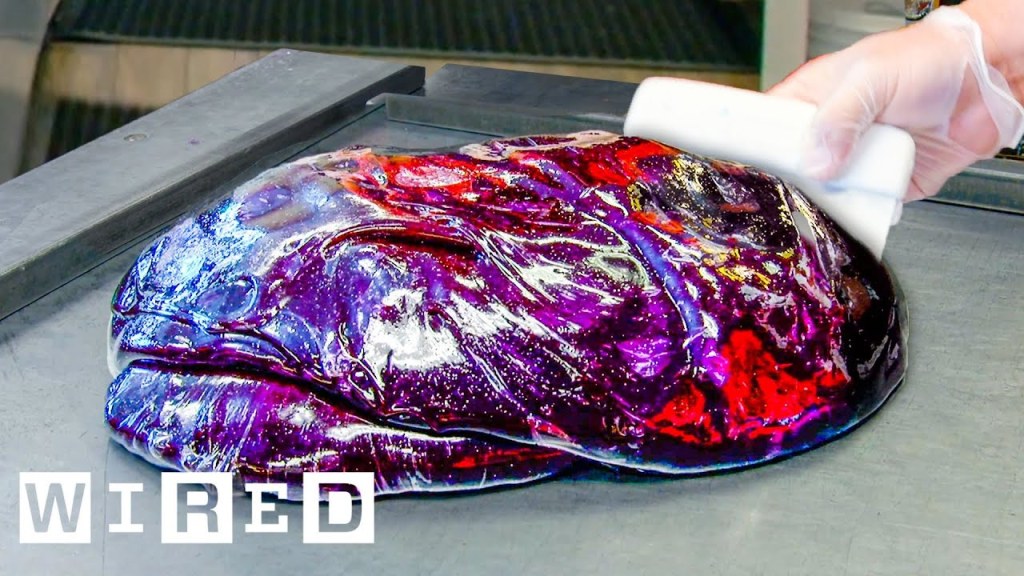
Way back when in grade school, we used to take tours of local factories; it was one of the highlights of the year for me, because I’ve always had a curious mind, wanting to know the hows and whys. Have you ever wondered how candy is made? Let’s go on a virtual factory tour today! Just click the image below to watch a fascinating guided tour as they make candy canes and other hard candies. What I especially enjoy about this tour is the obvious love of the craft and the philosophical perspective of the candymaker himself. Passion for what you do is an essential ingredient, no matter what your occupation is.

3 Comments

Filed under Articles, Virtual Tours, YouTube Link

The Nature of Time, or the Time of Nature

Did you know that, as animals get bigger, their pulse rates slow down and their lifetimes lengthen? This means that, from hamster to elephant, each gets around 1 billion heartbeats, though the hamster only lives around 3 years, while the elephant lives for 70; because the elephant’s mass is enormous, their pulse (30 beats per minute) is far lower than the hamster’s (450 bpm). For more information on this, please click here.

This phenomena makes for an interesting juxtaposition when other creatures cross our paths; because each creature has a different metabolic rate, time is relative: A mosquito has plenty of time to move out of our hand’s way because her faster metabolic rate makes our movements seem slow motion; by contrast, if a redwood tree or a yew tree, each of which can live hundreds or even thousands of years, could tell us how it perceives us, perhaps our lives would seem like a blip in time by comparison.

Slow motion filming is becoming not only more popular on platforms such as YouTube, with channels like The Slow Mo Guys, Smarter Every Day, and How Ridiculous, to name a few, but it’s also becoming more accessible as the cameras and their capabilities improve and they come down in price. Even more accessible is time-lapse photography, which has become so prevalent in our media that we might not even recognize that what we see in a few seconds took days of one shot per hour to set up.

Louie Schwartzberg is considered the pioneer in time-lapse cinematography, and you’ve seen his work, though you might not realize it: If you’ve ever watched, for example, the logo clip of Warner Brothers Studios at the beginning of a film, you’ve seen his time-lapse rolling clouds. At the moment, Netflix is showing “Fantastic Fungi”, a film about, well, Fungi, and Schwartzberg is the genius behind the film. It’s a fascinating look into the time of nature, as well as the nature of time.

To watch a fascinating behind-the-scenes video about Fantastic Fungi, with interviews from the cinematographer, please click here. Enjoy!

Photo Credit: IMDB, “Fantastic Fungi”

Leave a comment

Filed under Articles, Musings, Nature, Science & Technology

History Undusted: Limbo

Over the past year and more, we’ve all experienced limbo in one form or another: Lock downs, restrictions, cancellations of events or flights or holidays or plans to meet up with friends, and the uncertainty of how long it will all last. Then there is the feeling of limbo that comes with my personal situation of waiting for the cascade of appointments for my husband’s chemo to begin; we had a set-back last week with a bacterial infection and a week’s hospitalization, so we’ll just have to wait and see if he can keep the appointments already made or not. Limbo. Waiting to find out if he can be brought home tomorrow. Limbo.

My writing, both in the forms of this blog and of my manuscript, have both been sucked into the state of limbo as well, as I’ve spent most of the past few weeks, and more intensively the past three days, on the phone with people who’ve asked how we’re doing, or answering messages on my phone or social media. Sometimes I feel like my manuscript is calling for me to work on it, and I’m trying to reach it while wading toward it waist-deep in a thick sludge of other priorities – it’s been just out of reach for days, because by the time I actually reach it, I have no energy left.

As I was thinking about those limbo moments, I actually started wondering just where the limbo dance comes from, historically; I remember doing it as a child – the local indoor skating rink played limbo every night. So, here’s a brief low-down on the low-down dance:

The origins are vague, as is the etymology of the name: Starting in late-1800s Trinidad, the name might have come from the Jamaican English “limba“, i.e. limber. Interestingly, the game is used in Africa as a funeral game, and there may be a connection between the two regions through the slave trade which brought Africans to the Jamaican islands, as it is also a popular “dance” for wakes in Trinidad. The rules are simple: a person passes under a bar, face-up, with the only body part allowed to touch the ground being the feet. The game is considered the unofficial national game of Trinidad and Tobago, it only began to gain popularity beyond the region in the 1950s; it was adopted in the mid-1950s as a form of physical exercise for American military troops. It was often attempted to a rhythmic song, and one of the most popular was the Limbo Rock, by Chubby Checker. Just listening to the song brings back the feeling of the cool breeze blowing around the skating rink as people sped to get in line for the limbo stick as soon as they heard the music start over the loudspeaker!

As we face our own times of limbo in this age of Corona, or in the circumstances we find ourselves in, perhaps it would perk up our spirits to hum the Limbo Rock and take it with a bow and a smile.

5 Comments

Filed under Articles, Etymology, History, History Undusted, Military History, Research, Snapshots in History

Virtual Tour 5: Switzerland

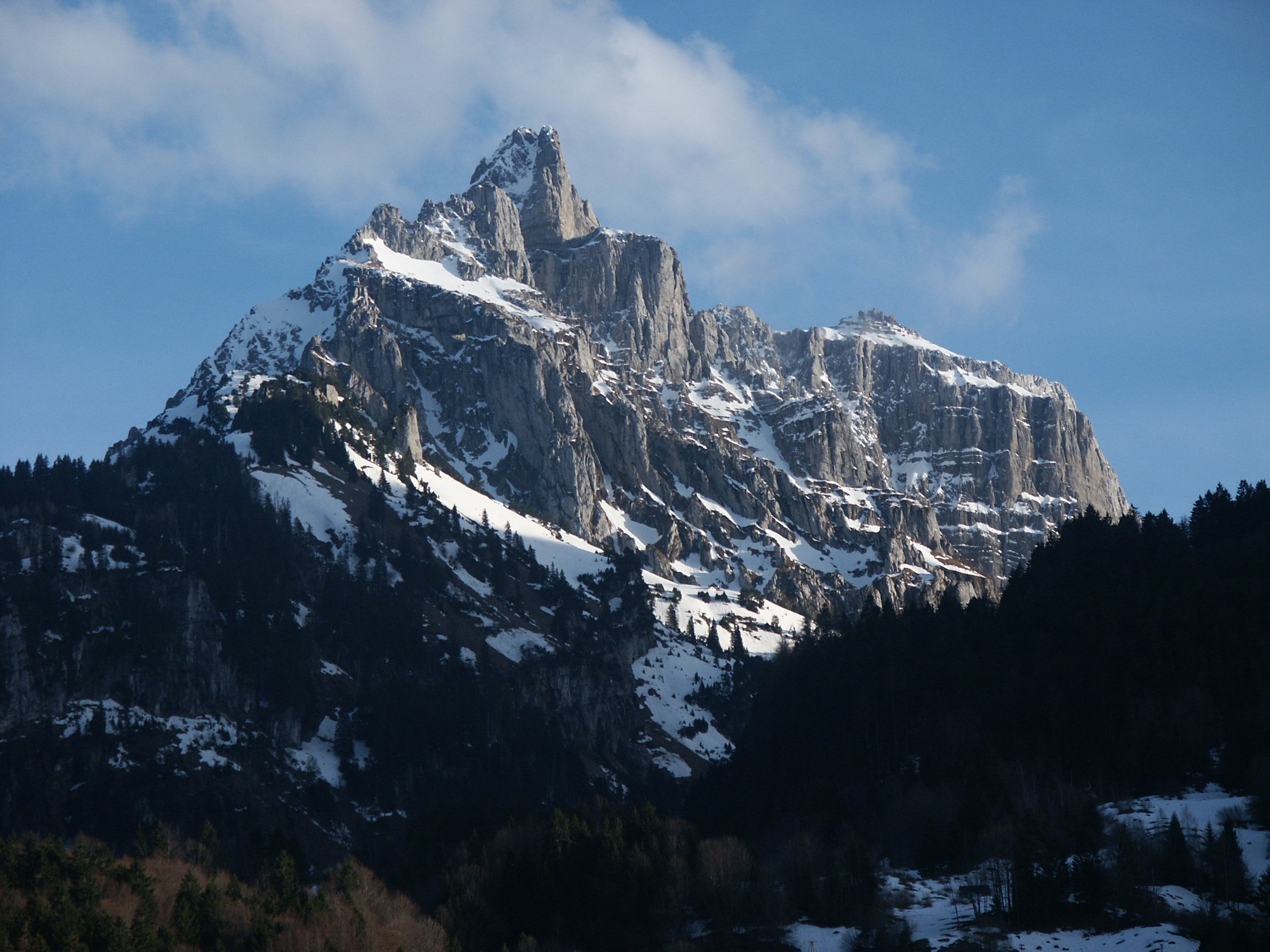
View from Lihn, Switzerland. Taken by Stefan Huesler in March 2005

Today’s tour brings you to my neck of the woods, so to speak: Switzerland. How many mountains we have here depends on who you ask; whatever the exact number, I can say that it’s hundreds. Even the Swiss Plateau, while technically lying between the Jura Mountains and the Alps, is mostly hilly. But perhaps what Swiss would consider a hill, others would view as a mountain. So what’s the actual difference between the two? That’s a grey area, at best: A hill is a landform that rises above the surrounding terrain and does not usually have a defined summit (peak); a mountain has a limited or defined summit area, and rises 300 metres or more above the surrounding landscape. While hills may be a result of glacial flow, erosion of surrounding regions, or faulting, mountains are formed through volcanic activity or faulting. But notice – both hills and mountains can be formed by faulting (the shifting of tectonic plates).

Whatever you call them, Switzerland is full of the beauties. They influence weather, sometimes dramatically, from one side to the other; while Lugano usually has Mediterranean weather, the northern side of the mountains has a cooler climate. Once, as we came over the Gotthard mountain pass from Lugano toward home on a warm, sunny day, we saw a wall of white cloud ahead, clearly defined on the road; when we drove into it, it was absolutely white, and we were unable to see much ahead. Not fog. A cloud. Where we live, our wet weather usually comes from the local mountain range; if the wind shifts from that direction during a grill dinner on our balcony, grab your plates and get inside before it hits.

Did you know that the term homesickness comes from the Swiss German word Heimweh (= home + ache)? It was exported in the 17th century by Swiss merchants and mercenaries working abroad, and refers not to family or house, but to the mountains and their longing for the sights of the Alps.

Below are a few links:

With the first, you can choose various panoramic starting points, exploring visually and/or with information about each point of interest.

Switzerland Virtual Tours

The second link takes you to live webcams in Switzerland, where you can see what’s going on. Keep in mind that if you’re looking at these webcams at the time of my uploading this blog (February 2021), we are currently in lockdown due to the second wave of COVID-19, so activity is far less than when shops are open (if you’re looking at town centres or skiing zones), though in town centres you’ll see kids riding bikes home from school in the afternoons, around 16:00 Swiss time (e.g. the town centre Appenzell webcam). Come back in a few weeks, and activity will have picked up once again. Hopefully!

Swiss Webcams

The third link takes you to a YouTube live webcam feed that switches locations occasionally, giving you an overview of several sites. The music they play over this live feed is a bit monotonous, so I’d suggest turning on your favourite musical alternative and muting the actual video.

24/7LIVEWebcams,Switzerland- YouTube

However you choose to enjoy this tour, welcome to Switzerland! Let me know what you viewed, and what you experienced, in the comments below!

2 Comments

Filed under Articles, Etymology, Links to External Articles, Nature, Virtual Tours

History Undusted: Makeup

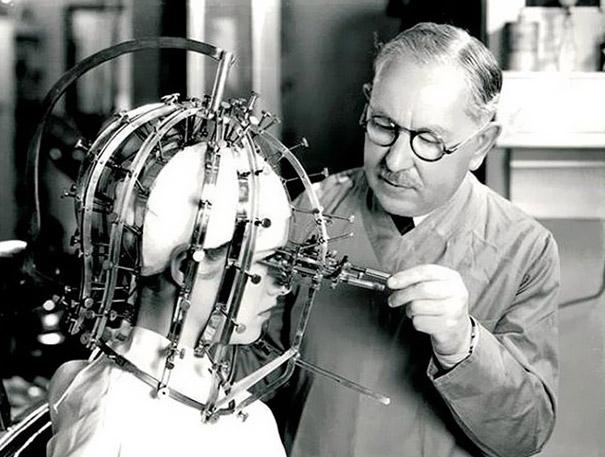
This device from 1930, invented by Max Factor (pictured), helps correct the application of makeup. Note: It’s only this complicated when a MAN does it…

Limbo-life goes on, but I thought I’d do a bit of dusting… of history, that is. I love historical images – they have a story that may have gotten lost over the years, or may document a significant achievement, such as the moon landings. Then there are those lovely photographs of bygone inventions: Some have succeeded into the modern era, while others were dumped somewhere along the wayside (and rightly so). Fortunately, the photo above falls into the latter category! As far as this topic goes, this is just a light dusting; there have been entire books and documentaries addressing this vast issue; if you’re interested in viewing a few documentaries on the topic, click here.

Makeup, as a topic of history, goes back thousands of years. Ancient Egypt is famous for their eyeliners and other cosmetic enhancements; lipstick may have been invented as far back as 5,000 years ago, by ancient Sumerians. The word “cosmetic” comes from Greek, and originally meant “technique of dress and ornament” or “skilled in ordering or arranging”. Natural ingredients used included charcoal, beeswax, crushed gemstones, castor oil, olive oil, milk (Cleopatra’s famous milk bath), rosewater, seaweed, fish scales (still used today), and seashells. In past ages, there were dubious forays into using tinctures of white lead, mercury, arsenic, quicklime, Belladonna, and even mouse fur eyebrows (for when the woman’s hair fell out due to using any of the above in combination…). A common insect still used in blushes and lipsticks is the cochineal, the Dactylopius coccus, a scale insect.

Probably as far back as the dawn of the Industrial Revolution in Europe, there has been a fascination with mechanics, even in the beauty industry (as illustrated by the image above). Though I have yet to find images that document the attempts at enhancing a man’s handsomeness, there are dozens, if not hundreds, of such inventions for women’s beauty. I think that fact simply reveals something about a deep-set, double-standard mindset that women need cosmetic improvement while men don’t *; that notion has been inescapably engrained into women for thousands of years (with the exception of the Egyptian culture, in which men used eyeliner just as much as the women). [*The two exceptions that I can find to this general trend is that men were berated in the mid-war years for being too scrawny, and they were encouraged to develop their physique; they were also ridiculed for baldness and were offered hair growth concoctions to counter the natural process.] While many of these gadgets and products have thankfully gone the way of the Dodo, some are still lurking around – and to them, I say, Shame on them for shaming natural features!

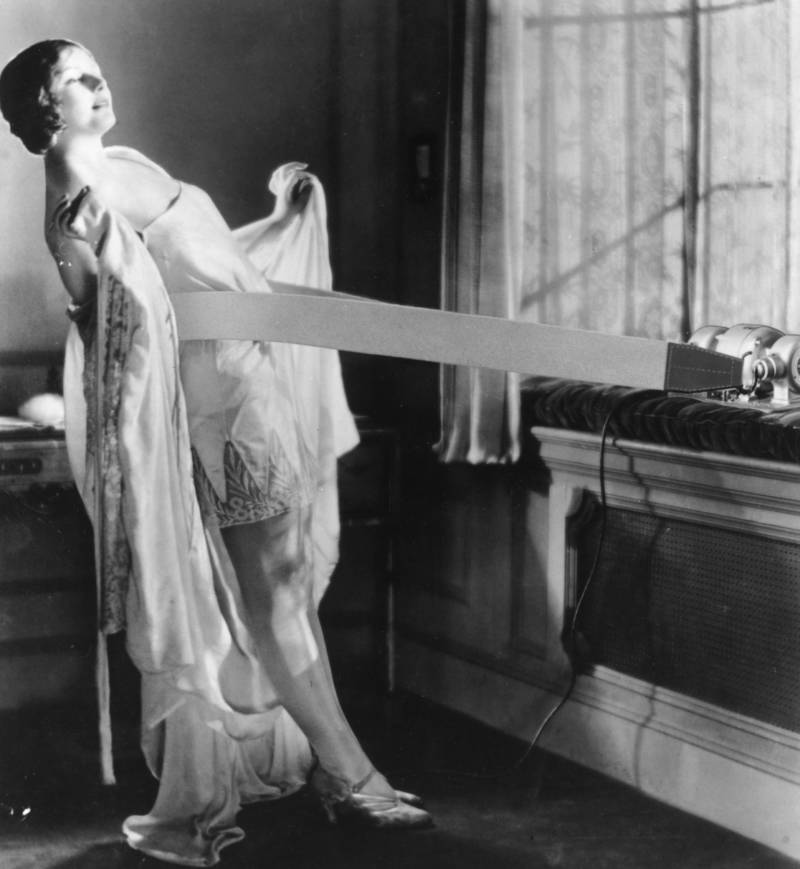
Here are a few other bygone mechanical attempts at enhancing the beauty of women:

1928 – A woman uses a vibrating weight loss tool. Credit: Getty Images
1940s: Slenderising salons devised all sorts of weight-loss treatments; this chair massaged clients’ legs with metal rollers. Credit: Getty Images
1958 – Invented by a South African doctor, this machine was supposed to massage away any unwanted bits using electric currents. Credit: Getty Images
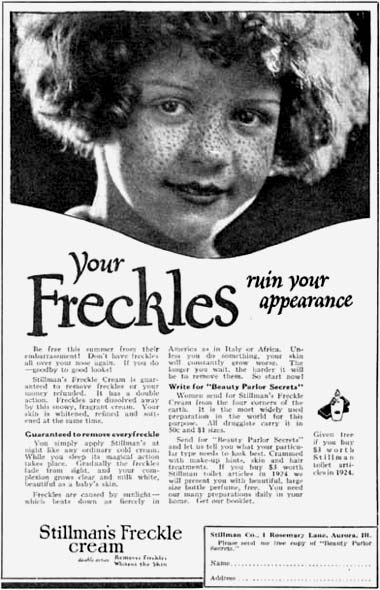
Stillman’s Freckle Cream, originally from Illinois, has been sold for over 120 years, and is still touted in cultures desiring paler skin, such as in Asian countries.
1960s – ice masks were used by Hollywood actresses to freshen their faces between takes without spoiling their makeup. Credit: Getty Images
1875 – A flexible mask intended to bleach the skin, removing blemishes.

10 Comments

Filed under Articles, Etymology, History, History Undusted, Images, Links to External Articles, Obscurities, Science & Technology, Snapshots in History

The Grassroots Italian Response to Anything: SING!

The Italians have continued singing, despite their quarantine in relatively small flats and closely-packed neighbourhoods. This is a great response to counter the feelings of isolation, breeding solidarity instead. At 12 pm and at 6 pm, people join forces to boost morale.

For a smile or two, click on the links below!

Flash Mob, Italian Style

Viva Italia!

One of the Italian flags flying on front of the Altare della Patria, in Rome - Dave Kellam, flickr

One of the Italian flags flying on front of the Altare della Patria, in Rome (Dave Kellam/flickr)

10 Comments

Filed under Articles, Snapshots in History