Category Archives: Articles

Odd Jobs #12: Rodeo Clowns to Soil Conservationists

Hi everyone!  I’m back with this week’s lineup of weird and wonderful jobs.  While each of these jobs is here for its own reasons, seamstress may seem like the least odd job – at least it’s one that we all know (if we are in the habit of wearing clothes) must exist out there in the world somewhere.  The last job on this list, soil conservationist, is actually quite important here in Switzerland; there are many villages in the Alps that owe their continued existence to being able to use the steep alpine pastures wisely.  Planting trees is integral to avoiding soil erosion, which helps prevent landslides, mudslides, and avalanches; another key component is placing barriers such as snow guards to help keep the soil, snow and debris where it should be.

Once again, I have personal experience with one of the jobs:  Silk tree designer.  If I had to find another job, that would be one I’d love to do again.  Enjoy perusing the list!

odd-job-silk-tree-designer

  • Rodeo Clown
  • Rubbish Detective
  • Safe Cracker: When combinations are lost or forgotten, safe crackers use their ears and fingers to open the safe.
  • Seamstress
  • Sewer Inspector
  • Silk Tree Designer: This is one I can give you the low-down on personally:  I was a tree designer back in the 80’s, making everything from bonsai trees for private homes to 30-foot trees for shopping malls.  Our storage warehouse had a few permanent silk trees, as birds had built nests in them, coming and going as if they owned the place… they’d found a sweet gig, with a weather-proof forest.  Tools of my trade were drill guns, glue guns, moss, paint, unformed branches of plastic-coated wire and silk leaves (which I had to shape into realistic branches), and the base:  A thick branch of a tree which had been treated and planted into a plaster-filled base pot.  I found out the hard way that Manzanita leaves can give off a narcotic-like aroma when heated, as with the friction caused by stripping off the leaves from a branch:  I was straddled atop a ladder working on stripping the leaves from a tall branch-base, when I got so dizzy that I had to grab hold of the ceiling’s piping and call for help.  My mother looked it up in her medical journals, and the result was that the leaves were in future removed by the plastering department.  It was one of my all-time favourite creative jobs, next to being a Pizza Hut lab assistant.
  • Snake Milkers: Extract venom from some of the world’s most dangerous snakes, like rattlesnakes and cobras. The extracted venom is often used to create anti-venom for hospital or laboratory use, and can be sold for up to $1,000 per gram.
  • Snowmaker
  • Snowmobile Guide
  • Soil Conservationist: Their main job is to come up with plans to prevent erosion and develop practices for sustainable land use, mostly by performing land-use surveys.

Save

Save

6 Comments

Filed under Articles, Lists, Research

Odd Jobs #11: Ethical Hackers to Candy Pullers

odd-job-raven-master-tower-of-london-spitalfieldslife-com

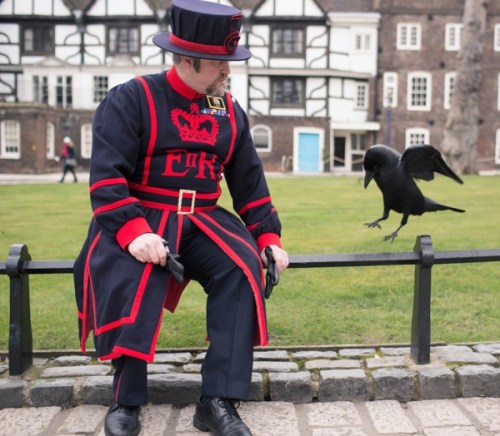
One of London’s Raven Masters.  Image Credit: Spitalfieldslife.com

This weekend’s lineup of weird jobs starts off with a bit of an oxymoron; how is hacking ethical?  Wearing a white hat only means they’re getting paid by someone to learn how to beat the system… I’m sure there’s more to it, but it’s a fine “ethical” line, isn’t it? The second job, hitchhiking, reminds me of James Corden’s car karaoke videos, though I doubt the Indonesian drivers are singing along with their passengers.

The job that captures my attention most in this list is that of the Raven Master; think about it:  Someone gets paid to pamper wild ravens to convince them to stay in the Tower of London because of a legend.  They’re not taking any chances with the future of England, are they?  That train of thought opens up all kinds of possibilities for a vivid imagination and science fiction, doesn’t it?

  • Professional Ethical Hacker
  • Professional Hitchhiker (Indonesia): The government has restricted some lanes of traffic to only cars with 3 or more people due to overcrowding. Poor people from the city outskirts take advantage of this by offering drivers to ride with them in the “fast lanes”.
  • Professional Line-Standers: Do one thing most of us have no patience for: waiting in line. These professionals are especially busy during big sales (think Black Friday) and product launches (new iPhone releases, for example). Rates vary, but one professional line-stander told Business Insider he earns up to $1,000 a week.
  • Professional Mourners (usually Asia and Africa):  Attend funerals and grieve for the deceased. A company in England called Rent A Mourner specializes in the industry, offering mourners for two hours for roughly $70.
  • Professional Sleeper
  • Professional Wingwalker: Those crazy people who walk on airplane wings for stunt shows.
  • Queen’s Piper
  • Raven Master (UK): Charged with caring for the ravens in the Tower of London; legend has it that if ravens abandon the site, the White Tower will crumble, and England will fall.
  • Ribbon Candy Puller

Save

Save

10 Comments

Filed under Articles, Lists, Research

The Thorny Issue of Horns

As an author and writer, I do a LOT of research.  I love history particularly, but then I could say the same thing about the topics of geology, astronomy, archaeology, science and technology, crafting, drawing, botany, and a dozen others.  As I apply my studies to my work, I am sometimes faced with the issue of horns – Viking helmet horns.

Real Viking Helmet


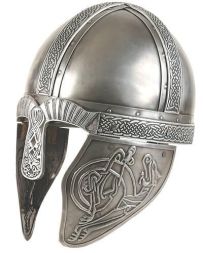
Accurate Viking helmet, reproduction.  Photo credit, Pinterest, unknown


While everyone seems to accept as a historically proven fact that Viking helmets had horns, the actual fact of the matter is that they didn’t.  While there were many horned helmets dating to before the rise of the Norse powers of Sweden, Norway and Denmark, most, if not all, were for religious or ceremonial purposes.  However, if I write a description of a Norse helmet and leave off the horns, someone will inevitably point it out.

Recently I spent a couple hours on Skype with one of my Beta readers for my current project, the third book in the Northing Trilogy (set in 18th century England).  Several of her comments were based on her knowledge of the 19th century as portrayed by Georgette Heyer, while others were based on her lack of historical knowledge that I, as the author, have amassed over time.  While some of that knowledge needs to seep into my writing to help the reader along, I have to continually remind myself (especially with this particular book in the trilogy, as it is centred around the Royal Navy) that I am not writing a history book but a novel, and anything I include needs to support the plot – the plot should never be forced to support a history lesson.  So it is that questions arose as to the behaviour and manners of the children of the time.

In any time period up until the mid-20th century, children in western societies matured far sooner than their modern counterparts, both out of necessity and out of cultural understanding of their roles in society.  Many families were dependent on the contribution made by the children in their household, whether it was housework, factory work, or working on the streets as beggars, shoe shiners, chimney sweeps, street sweepers, selling newspapers, or any other job they could earn money with (this is still true in many poorer countries of the world today).

If they came from a wealthy family, children were educated, but as to what extent and to which form it took very much depended on their particular circumstances:  They were educated either at home by tutors, or sent away to a boarding school.  Leaving school might be anywhere between ten and twenty; Jane Austen finished her formal education at the age of 10 or 11, whereas Charlotte Brontë’s character Jane Eyre left school at 18.  Boys who were second sons were often educated (after their basic education in either a college or at home) toward the military or toward a life as a minister (if their families held a high status in society, they might be trained toward politics; first-born sons, heirs, were rarely sent to the military due to the inherent dangers).

Midshipman Henry William Baynton, aged 13 -1780 - Wikipedia.jpg

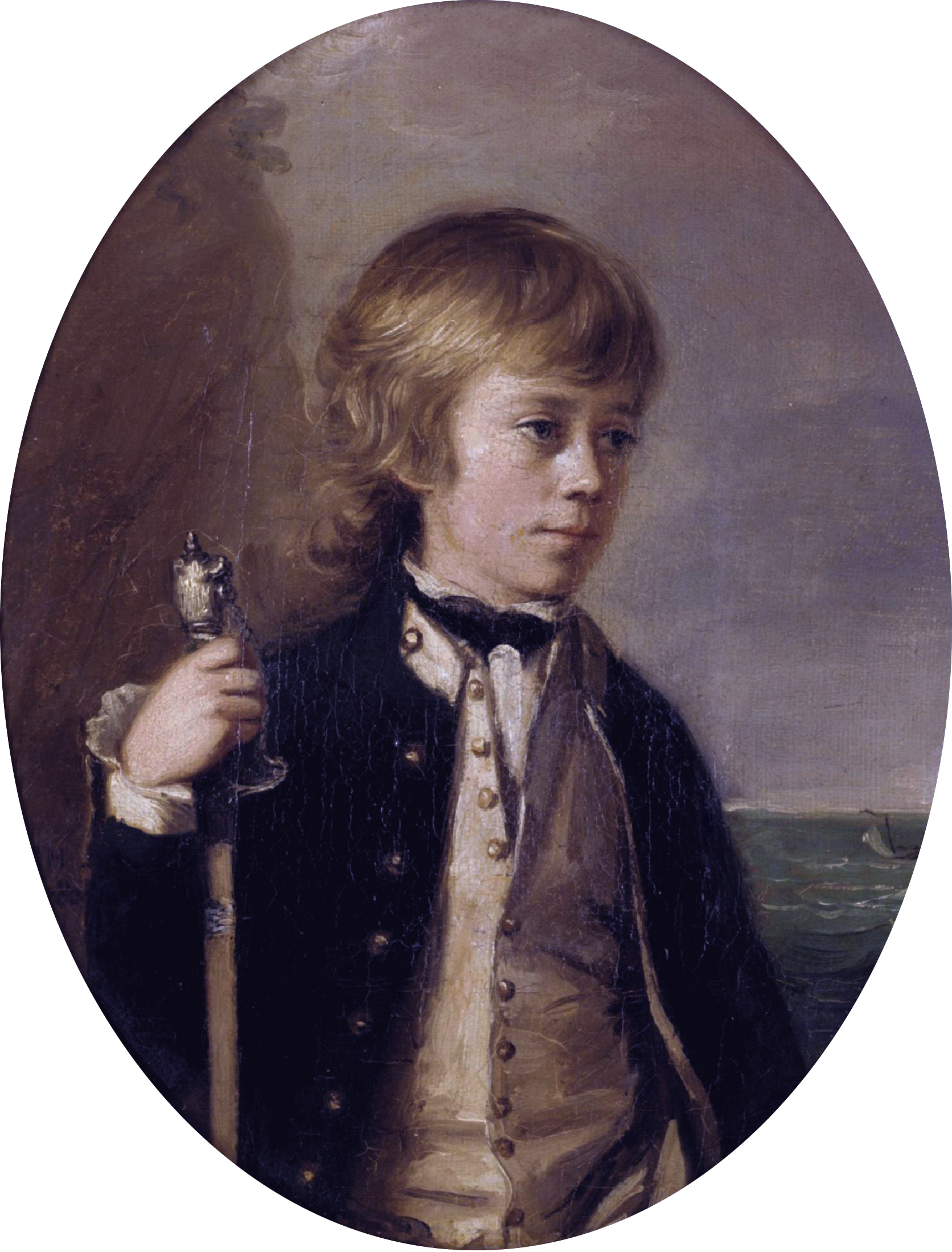
Henry William Baynton, aged 13 years, 6 months, midshipman on the Cleopatra.  Photo Credit, Wikipedia.

If their fathers could afford to do so, these younger sons were often bought commissions in the military so that they would start off their career with some smidgen of position, such as a midshipman in the Royal Navy; the younger they entered, the sooner they could rise through the ranks, and thus it was not uncommon for lads of 7 or 8 to enter the navy.  Aboard ship they were trained in various skills, which included not only practical skills to do with the day-to-day running of the ship, but how to read navigational charts and how to use instruments such as sextants. How fast or slow they rose to higher ranks thereafter depended on their skills, intelligence, connections, and luck.

If poor children were either abandoned or given to workhouse orphanages because their families could not afford to keep them alive, they were also trained:  The girls were trained toward becoming servants (paying back society for the privilege of being alive), and the boys were trained for a life in the military (ditto).  They were taught to read using the Bible, and were expected to live by its principles.  Unfortunately, religion was often used as a guise for abuse and heavy-handed tyranny, but as the characters in Jane Eyre portrayed, some were true Christians in their behaviour toward her, such as her friend Helen, or the kind apothecary.  If the girls were going to become governesses, they would also be trained in more refined accomplishments such as French, drawing, needlework, history, etc.

All of this is to say that, were I to include all of this kind of information in a novel (and believe me, there’s a lot more where that came from!), it would get boring rather quickly.  And so I need to pick and choose what is used in the organic flow of the plot and character development that both serves those elements and also helps inform the reader; sometimes it’s a tricky balance.  So when the 11-year-old boy acts far more mature than a modern boy, unless the reader is aware of the historical context, I will inevitably get feedback to that effect.  Sometimes I can help their understanding by including e.g. the subjects he might be learning with his tutor, such as French, sciences, or elocution, but more than that might drag the story into the realm of a history lesson.

There are many modern myths, like the Viking horns, that people have accepted as historically accurate, when in fact they’re not.  One of my pet peeves is Christmas films that inevitably portray three kings showing up at the manger along with the shepherds in Bethlehem.  I won’t go into that here – if you’re interested in the historical details, read my article on History Undusted, here.  Other urban legends include:  We only use 10% of our brains; the full moon affects our behaviour; lightning never strikes the same place twice; cracking your knuckles gives you arthritis, and antibiotics kill viruses.  If I rankled any feathers there, or you said to yourself, “But that one is actually true,” then I would suggest you do your own research on the issue… I’ve got my plate full at the moment with the 18th century.

Save

7 Comments

Filed under Articles, History, Musings, Nuts & Bolts, Plot Thots & Profiles, Research

Odd Jobs #10: Paint Drying Watchers to Professional Cuddlers

Betcha ya never thought ya’d see that kind of title one day…

watching paint dry

From beginning to end, this week’s line-up of weird jobs is filled with doozies; some of them are just downright bizarre, like watching paint dry.  Of all the odd job line-ups I’ve done so far however, this list is by far the most indicting against our modern culture:  The personal touch, the strong family ties and networks of close friends have, for many people, crumbled away, leaving a vacuum to be filled by others who:  Do the shopping for items as simple as groceries or as intimate as clothing or gifts for significant others; teach one how to communicate with others (granted, the pick-up artist – a narcissist at the core – obviously has ulterior motives); to apologize for others (rather than learning how to do so oneself; this is more common in Asian cultues, where saving face is essential, particularly in business sectors); to pose as a close friend (as bridesmaid); even to give someone the personal, physical touch they’re otherwise missing in their lives.  I wonder if our ancestors might just shake their heads in confusion, or roll in their graves…

  • Paint Drying Watcher (wherever paint is drying): Companies actually hire people to carefully observe the changing colors and particles of paint as it dries – both on walls as well as under a microscope. It ensures that the paints are durable and do not fall off at the slightest touch.
  • Paper Towel Sniffer
  • Personal Shopper
  • Pet Psychologist
  • Pick-up Artist Instructor: Single ladies, beware!
  • Porta-Potty Servicer: Like regular restrooms, portable toilets need maintenance, too. Once a week, service workers clean these single-stall facilities to achieve certain standards of sanitation.
  • Potato Chip Inspector: Search for over-cooked or clumped chips to discard as they come down the assembly line.
  • Professional Apologizer
  • Professional Bridesmaids: Hired to assist brides on their big day. Jen Glantz, the cofounder of Bridesmaid for Hire, a company that offers ‘undercover bridesmaid’ and personal assistant-type services to brides and their wedding parties, charges anywhere from $300 to $2,000 per wedding.
  • Professional Cuddlers: Charge up to $80 an hour to snuggle with strangers. The downside: This work comes with its share of emotional burdens, says Portland-based cuddler Samantha Hess.

Save

Save

Save

7 Comments

Filed under Articles, Lists, Research

Odd Jobs #9: Lego Model-Maker to Oshiya (passenger shovers)

Once again, this odd job lineup has some gems!  Would you rather be paid to stand perfectly still for hours on end, or literally shove other people around all day, every day?  Some of these might not be so bad, such as a master distiller, or someone paid to come up with catchy nail polish names, while other jobs might have a certain prejudice or stigma attached to them – after all, how many of us haven’t had luggage damaged in transit at airports, and chosen a few special words, at least in our minds, for the people paid good money to do so?  I was once treated like a piece of luggage, and I wouldn’t wish it on my favourite enemy; however, it did give me a personal taste of just how luggage frequently comes out missing wheels, handles, or zippers.


Odd Job - Oshiya - Train Passenger Stuffers

Credit:  YouTube


  • Lego Model-Maker
  • Live Mannequin / Human Statue
  • London Dungeon Actor
  • Luggage Handler
  • Mascot
  • Master Distiller (This link also includes the job descriptions of several other jobs involved in the distilling process.)
  • Nail Polish Namer: Sometimes it’s a person, such as Essie Weingarten, and other times it’s a marketing department, or a freelance writer.
  • Nude Model
  • Ocularist: In short, they paint artificial eyes. It sounds easier than it is, since as with real eyes, no two are exactly the same.
  • Oil & Gas Diver
  • Online Book Seller
  • Online Reviewer: Often hired by a company to review a product; but, I then wonder how they could be unbiased in that review.  Such services are also offered for sale on sites such as Fiver.com.  Finding an actual, legitimate, detailed job description for this one is nigh on impossible, as most jobs are offered online now, and the term “review” can be used by anyone with an opinion…
  • Orchestra Manager: While this link is for an orchestra managing director’s job description, an even more specialized niche within the “genre” is that of the orchestra event manager:  They are responsible for booking airline tickets, arranging luggage transport for all shapes and sizes of instruments, booking hotel rooms, organizing and the overseeing of the setting up of venues, and making certain that the even runs smoothly from venue to venue.  That may also include hiring the local sound, light, and stage hands, though these tasks may be handed on to someone else in the managing office.  A friend recently flew in the seat next to such a manager, and passed on the details to me for this odd list… it just proves that you never know where you’ll meet interesting people!
  • Oshiya (Japan): Paid to push people onto trains.

5 Comments

Filed under Articles, Lists, Nuts & Bolts, Research

On Summer Holidays

Have you ever felt that you needed a holiday from holidays?  We’ve crammed more activities into one week that we’d previously done all year!  Gondolas (cable cars), waterfalls, mountains, waterfalls inside mountains, overnight in a hotel at the top of a mountain, international guests for a few days in between (take a deep breath), scenery galore, giant outdoor museums, a glass-blowing facility & its hands-on museum, a Benedictine abbey with a cheese factory, medieval castles, restaurants, a mammoth museum, more gondolas, late nights to stay up with the telescope to see Mars, Saturn and the Moon, and to watch for the Perseid meteor showers, and a car that decided it needed to go overnight for repairs (so we travelled partly in an uncomfortable replacement car) – this also included passengers getting out and pushing the car to jump-start it while up in the mountains, and delays waiting for the touring club mechanic twice… and that’s not including the plans for the coming week (fortunately the car’s problem was easily repaired, and we’re all happy again now).  Even though we thoroughly enjoyed the time our international guest was here for a visit, and are enjoying more quality time with our exchange student, my body is tired and my mind is full; I need time to process all of the impressions and experiences.  I don’t know about you, but this introvert needs a break… as in, “Don’t talk to me for a week…”  Later on I’ll say it was worth it, but right now, all I can say, “Stop the holidays, I want to get off!”

Here’s some photographic evidence:

This slideshow requires JavaScript.

6 Comments

Filed under Articles, History, Images, Lists, Musings

Odd Jobs #6: Face Feelers to Fortune Cookie Writers

I can’t believe it’s Saturday again already!  Our exchange student teen is off to France for a fortnight, so we’re breathing the air of liberté!

Taking a break from the current daily post challenge, here’s the next lineup of odd jobs:  Some can earn good money, such as being a Foley Artist for Hollywood, while others are as obscure as you can get, like being a fish sampler.

In doing the research for this article, I was shocked to find out just how prevalent fake Facebook accounts are; it says a lot about the superficiality of modern culture, and how much need there is to have our feet firmly planted in reality.  It is a known phenomenon that Generation Z (Millennials – enjoy this song by Micah Taylor) seems to get their own sense of worth online; but the number of likes, follows and subscribers should never reflect how much someone is worth, or valued; they need more of us to value them in real face-to-face time, or to express it via the virtual world in uplifting words of encouragement.

So enjoy this list of oddball jobs, and click on their links to learn more.  Then help make the world a better place:  Think about how you can encourage someone today!

Odd Job - Fake Facebooker

  • Face Feelers, also known as ‘sensory scientists’: Trained to use their hands and judge the effectiveness of products like lotions, facial cleansers, and razors. 
  • “Fake” Facebooker (According to Wikipedia, 7% of Facebook users were not real in August 2012). As of October 2012, Facebook crossed the 1 billion user-mark, which means that no less that 87 million accounts are fake.  Their “job” is either to con someone out of personal information in order to steal identities, or to amass “likes” for a video or personality to help them go viral, reaching fame or notoriety.
  • Fireworks Salesman
  • Fish Sampler
  • Flatulence Smell Reduction Underwear Maker: Tasked with engineering underwear that reduces the typically unpleasant post-fart stink for people who suffer from gastrointestinal problems.
  • Flavorist
  • Floating Architects: Design amphibious houses, which can float on water. With waterfront real estate becoming a scarcity, their market niche may grow in the coming years.
  • Foley Artist: Use whatever they can find to create and record the noises used to make the sound effects in films, like heavy footsteps, rolling thunder or creaking doors.
  • Food Stylist
  • Fortune cookie writer: Hired as freelancers or in-house writers to come up with inspiring or witty fortunes. EHow.com estimates that these professionals earn around $40,000 a year.

2 Comments

Filed under Articles, Lists, Musings, Research, Videos

Postcard from Lugano III

2016-06-15 06.59.28 smallYou know how, when you send a postcard from holidays, you’re usually back before the recipient receives it?  Well, same here… I’m back from holidays, and so this postcard has just arrived.  We were away just a week (could always be a bit longer, right?), and enjoyed beautiful weather, storms, rain, sunshine, and time.  Time away from internet connections (there is no wi-fi in the flat there, so the temptation is eliminated!), time to read, to write, to be, to watch football matches of the European Football Championships (that’s soccer to Americans), and to cook good Italian food.

2016-06-13 12.57.10 small

We were in Lugano, Switzerland, otherwise known as the Riviera, or the Monte Carlo, of Switzerland; it’s in the Italian-speaking area, and is nestled along the shores of Lake Lugano.  The top image is the view from our (glass) balcony, unbroken from Castagnola to just beyond Caprino (check it out on Google Earth!), and the lower image is of a side street by the Church of Santa Maria degli Angioli, along the shoreline of Lugano.  Our family holiday flat is in Castagnola, along the flank of Monte Bre, and is our go-to place for a short get-away.

Whenever we’re down there, I switch from whatever manuscript I’m working on to a novel I’m writing that’s based on a house which our flat overlooks, and one that has captured our curiosity for decades:  Villa Helios sat vacant and decaying for over 30 years, and a few years ago began to be renovated.  This year was the first time we’ve seen life in the place.  From what I can tell, it has become either flats to rent, or buy.  There were only one or two flats occupied, as the rest of the windows were still either boarded over or shuttered; at night those windows were lit by small corner-lights to make it look occupied, but it was clear that they were vacant.  It was nice to get away for some quiet time together with my husband, but time there goes by very lazily, so even at a leisurely pace, I still managed over 10K on the novel!  It was especially relaxing to write on it because, just before going on holiday, I finished the manuscript for my 5th novel (the third book in the Northing Trilogy), and was able to send it off to my beta readers before leaving; I could work on the other novel with a “free conscience”.

Now back in the real world, I’m giving myself a short break from writing on my novels so that I can tackle the graphics of the cover, as well as all the bits and bobs that go along with marketing; once I get the beta feedback, it will be time to go through the manuscript again and make any changes necessary.

Here’s hoping you have a great week, and find inspiration for your own writing!

2016-06-16 21.53.24 small

Lugano by night.  Foreground:  The dome of Villa Helios

3 Comments

Filed under Articles, Images, Musings, Writing Exercise

Odd Jobs #4: Chicken Sexers to Cup Keepers

Civil War Re-Enactors - Newsobserver-com

Photo credit:  Newsobserver.com

The jobs in this week’s list range wide in their requirements; while some require only natural skills, such as the organisational skills needed to be a closet organiser, or the brawn needed to muss up someone trying to steal your client’s car in Brazil (or South Africa – check out the comments on last week’s post), others require proof of one’s trustworthiness, such as the Crown Jeweller or the Cup Keeper, and some require specific training such as the re-enactor (besides being knowledgeable about the era they portray and its clothing, etc., they need to be physically fit to wield a sword for hours on end – even minutes on end!).  To be a crime scene cleaner, at least for violent crimes, I think one would need nerves of steel and a good therapist…

Of all the jobs on this list, I think the only one I’d really like is being a closet organiser; I actually did that once:  A family hired me to help sort out their cupboards; they literally could not find anything, and no wonder… dishes were stuffed in with board games and bedding, towels were on the out-of-reach top shelf of a hall closet far from the bathrooms while the other shelves were stuffed with candles, plant pots and other bedding, and their bedroom closets held more dishes, crafts supplies, books and even clothing.  I’d never seen such chaos, and it was a good project to sink my organisational “teeth” into!

  • Chicken Sexer: Determines the sex of a chick, relying heavily on intuition. Usually hired by commercial hatcheries, these professionals (who are more common in the UK and Japan) make up to $60,000 a year.
  • Chief Listening Officer: Monitors a brand’s presence across social media platforms.
  • Civil War Battlefield Re-enactor : This category could be expanded to any kind of re-enactor – Viking, British, Renaissance, Medieval, etc.
  • Closet Organizer
  • Colour Expert / Wardrobe Stylist
  • Crack Filler: Using a silicone sealant, they repair the wear and tear inflicted on monumental structures, like Mount Rushmore. The job description also includes repairs to blacktop, asphalt driveways and sidewalks, etc.
  • Crime Scene Cleaner
  • Crown Jeweller
  • Cruise Ship Entertainer
  • Cuidacarros (Brazil): Hire these guys to watch your car when you’re gone and beat up anybody trying to steal it.
  • Cup Keeper: Paid to babysit expensive trophy cups, such as the Stanley Cup, as they travel.

3 Comments

Filed under Articles, Lists, Musings, Research

Odd Jobs #3: Bereavement Coordinator to Car Plate Blockers

JAPAN-ART-PAINTING

Body Painter.  Photo credit: YOSHIKAZU TSUNO/AFP/Getty Images

For most of the odd jobs in this week’s lineup, I was able to find a link with a description of some kind; but, not surprisingly, “one of these is not like the others” (a Sesame Street throwback…) – the only illegal job of them all; it seems to have found a niche market in a black market sense of the word.  In a weird way, it reminds me of “lines of desire” – where there’s a will, there’s a way.

I find it interesting to include “Blacksmith” in this list; what was once a trade found in any town worth its salt, and testified to by the number of people with the surname Smith, is now a rarity.

By the way, I’m running a similar series on my history blog under the heading “Odd Jobs of Bygone Days” in case you’re interested.

6 Comments

Filed under Articles, Images, Lists, Research