Category Archives: Articles

Writing Tip: “Sense” Your Scenes

I try to read a book a week; it’s usually on a Saturday, when I have time to sit down and read a good chunk at a time.  This past weekend I read a book which prompted thoughts around this concept of “sensing” a scene, and reading it aloud to hear any howlers that might have crept into the writing.  The author of that book obviously did neither, though her editor might have told her to beef up descriptives – so they were clumped all together, staggering me as a reader to a halt while I tried to figure out the context of the pages of descriptives before remembering what the characters were doing there in the first place, and often the dialogue sounded very stilted (e.g. using “vocalized” instead of “shouted” – the latter of the two would have fit into the character’s time and place far better) – a good reading-aloud editing session might have done wonders for the novel.
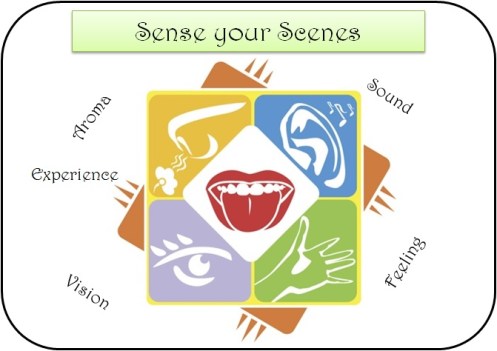
SensesThis image is one I have printed out on a card and hung near my desk when writing; it reminds me to apply all of my senses to a scene, to enrich the imagery and draw the reader in.  Describe the sights, smells, sounds, feelings and taste of a scene; make it a sensory experience and it will be far more memorable; this is done through sentence structure and the pacing of those elements, but sometimes also through “camera angle” – looking at the scene from a particular perspective.  How does your character feel in the moment?  What are their perceptions?  Does a smell remind them of something or someone?  Here are a few tips to achieving these goals:

  1. While adjectives are useful for adding colour or depth to a sentence, think of them as pepper; too much can spoil the scene.  If using more than one to describe a noun, familiarize yourself with the rule of order for adjectives.
  2. Use action verbs rather than passive/being verbs with adverbs.  E.g. “She stumbled down the hill” rather than “She went unsteadily down the hill”.
  3. Most importantly:  Read your sentences and scenes aloud!  I cannot stress this enough – if it sounds choppy or stilted to your ears, or doesn’t sound like something your character would say or do, then change it!

Writing is a dynamic process, and being a writer means constantly striving to improve oneself – building vocabulary and learning how to use words effectively, building your knowledge through research, studying, and reading, reading, reading!  Keep on writing!
2 Comments

Filed under Articles, Images, Nuts & Bolts, Plot Thots & Profiles, Writing Exercise

Writing Tip: Dealing with Boredom

boredomIf you’re bored with the subject you’re writing about, it won’t work to try and think your way out of it, or to convince yourself to write.  I know all too well that when that’s the case I can find a million things that are suddenly far more pressing, like cleaning out a (clean) cupboard or repairing a household appliance.  But often, boredom is an indication that we don’t know enough about our subject matter, and that our writing has simply subsided into going through the motions.

There’s a simple solution:  Find out more!  Read more on your topic; travel to the location; find maps from your time period; investigate the place with Google Earth Street View; go to a museum; ask questions; look for original documents; engage your senses to gain more knowledge and understanding about your theme.  As you find out more, write scenes to inform your work, or a dialogue between characters that will inform you about their situation, setting, personalities or role in the story as a whole.  Beware of your motives in extended periods of research, however:  Are you procrastinating, or percolating?

I look at it this way:  If I’m not getting anywhere with a manuscript, I can either give in and call it “writer’s block” and allow it to paralyze me, or I can proactively work against that block in what I call “percolating mode” – thinking around the problems that I’ve run into, and use the time to inform myself, learn about the time period, and investigate aspects of the story that I am interested in.  That block may be like a boulder in the stream’s path, but my writing, like water, will eventually find a way around it.

Let that boulder of a writer’s block make you stronger and more diversified – and keep on writing!

2 Comments

Filed under Articles, Research, Writing Exercise

Writing Tip: Layering

Lightning BugIf you’ve ever painted a picture more than a colouring book or a paint-by-number, chances are you’ve learned something along the way about layers.  Layering is also a digital graphics technique in programs such as Photoshop, and as each layer is made, the image changes, taking on the shapes or colours as you add the consecutive elements.

Besides being a writer, I am also a vocal coach.  I only take on students who are already in bands, or preparing for recordings or competitions, and one of the things I teach them is layering within a vocal performance:  The nuances of thoughts, the power of imagination, the colouring of the vocals through not only the physical placement of the tone within their instrument (their body), but the placement of their imagination.  One can communicate boredom or interest or empathy with the exact same wording by merely varying the intonation, and that comes through the layering of the performance.

Writing is much the same way:  It is through the employment of grammar, spelling and punctuation that we signal the reader to prepare for a particular experience; as Mark Twain said, “The difference between the right word and the almost right word is the difference between lightning and a lightning bug.”  

Oh, the difference between, “It was rainy last night,” and “It was a dark and stormy night”!

So the next time you feel like your manuscript or poem is falling flat, take a minute to think about the layers, and see what creative brush strokes you can give your work.

1 Comment

Filed under Articles, Nuts & Bolts, Plot Thots & Profiles, Writing Exercise

Never Give Up

I love this image; I used to have a tea mug with a similar image to the one below, and it made me smile every time I used it.  There are times in our lives when we might feel discouraged, or overwhelmed at what we have to do or to go through.  If you have a goal or a dream, just keep putting one foot in front of the other – do something each day, no matter how small or insignificant that action may seem, toward reaching that goal.  Eventually you’ll get there!never-give-up

“Don’t give up whatever you’re trying to do — especially if you’re convinced that you’re botching it up.  Giving up reinforces a sense of incompetence; going on gives you a commitment to success.”

George Weinberg, English writer, activist

1 Comment

Filed under Articles, Cartoon, Images

Novel Writing Pyramid

Novel Pyramid

When writing or drafting a new story, sometimes it’s easy to get lost in the forest due to the trees – in the myriad of ideas that flash up in a brainstorm.  The pyramid above helps remind me of the emphasis each area needs in the overall structure:

If a story is too complex, you’ll lose or confuse your readers; but if it’s too simple, it becomes predictable and therefore no challenge to the mind of the adventurer who’s picked up your book to get lost in another world.  Most of the best stories are, at their heart, quite simple – “boy meets girl”, or “person achieves goal”.

If you don’t know what your settings and themes are, how can you effectively work toward the final outcome?  If you don’t know who your character is, and what your basic plot (goal and how it’s achieved) is, how can you guide the reader through dialogue or prose toward the desired conclusion?  Diction is important because it is central to creating the voice of each character, and sticking to genre-specific vocabulary and expressions (i.e. no proverbial airplanes through the scenes of a historical novel).  As Mark Twain once wrote,

“The difference between the right word and the almost-right word is the difference between lightning and a lightning bug.”

And if you have the top four slices of the pyramid in place, but don’t have proper foundations – in other words, know your grammar, spelling, punctuation and syntax (sentence structures, tense usage, etc.) then no matter how brilliant your plot might be, or your character development, if readers can’t get past your bad diction and grammar, you’ve lost them as present and future readers!

I’d like to encourage you to know your weaknesses, and develop them into strengths!  If grammar or spelling is a weakness, work on it – invest time into reviewing the rules – Wikipedia is an excellent source for articles on how to use punctuation, etc.  Buy a good grammar book, or even a grammar practice book with an answer key at the back (The “English Grammar in Use” series is one I used for years with EFLA students).  If plot or character development is a weakness, then make a list of questions for each, and take the time to think about and answer them.

Good writing is about quality; it’s about solid foundations and constant development, the honing of your skills; it’s about research, thinking outside the box, and being able to convey in words the images born in your mind.  Just as sharpening a pencil makes it easier to write, so does sharpening your mind and skills.

1 Comment

Filed under Articles, Images, Nuts & Bolts, Plot Thots & Profiles, Research, Writing Exercise

Plot Thots: 14 Tips from Steven Spielberg

Steven SpielbergHappy New Year!  2015 has begun, and with it I’ve begun the research for my next novel; this one, 18th century historical fiction (rounding off the Northing Trilogy with the final book), is taking me back into the world of workhouse orphanages, royal naval vessels, and 1760s fashions and mores.  As I research, read, take notes and wiggle my way into a mental corset (to limit myself linguistically, morally, historically and socially to the times), I can still take advice from a more modern medium:  Films.

I like to listen to good film commentaries, and one of the best teachers in the field is Steven Spielberg; he not only discusses the filming process itself, but the thought processes and philosophy behind his decisions and choices.  Here are a few notes I’ve taken from his commentaries, and where I noted the particular film, I’ll let you know in case you want to hear it for yourself:

14 Tips from Steven Spielberg:

  • Give environments a “used” feel – gritty, creaky, broken-in.  Don’t explain every little detail, but take some things for “granted” to give an authentic feel. (Star Wars)
  • The subconscious mind doesn’t know the difference between dreams and films – emotions will be touched equally.
  • Running gags create humour (e.g. Indiana Jones hates snakes).
  • One problem solved leads to another.  One bad decision leads down – the main character must either decide to be redeemed by good actions, or be ruined (e.g. Darth Vader).
  • If you have point A & point B of your plot, don’t be afraid to explore, to fill in the blanks to get you from A to B!
  • The clothes have to match the characters to be believable.  (Can you imagine Indiana Jones without that iconic hat?)
  • If you edit cerebrally, you will lose feeling; rather, edit to “it feels right.”
  • Sometimes you need a pointer scene, though it needs to be subtle:  “This is where we are; this is where we need to be; this is how we get there.” (e.g. strategy scene before Luke destroys the Death Star)
  • If there’s no emotional connection, there’s no point in doing something for narrative clarity.
  • Contemplation time is essential in the creative process – don’t fill it with brain work that distracts.  Take a bath.  Do the laundry.  Draw; doodle; do a craft.
  • Get under the skin of a character, or culture, or landscape.
  • Every act has three events.
  • What is your main character’s “third place”?  The first place is home; the second place is work; the third place is a socializer.
  • Establish the mystery, and then begin peeling layers away.

[Plot Thots is my own shorthand for anything to do with mapping out a storyline.]

4 Comments

Filed under Articles, Nuts & Bolts, Plot Thots & Profiles, Quotes, Research

Just Around the Corner

Christmas is just around the corner, and I’m enjoying the different pace of life that comes with the season; my husband’s work is winding down toward the end of the year, which means he can come home earlier than usual (he works 10+ hours a day, so early is 7:30 pm!); and people seem to relax around this time of the year, too – they’re less stressed, more genial, and become more aware of their fellow man – which is as it should be all year round.

It’s cold outside but still no sign of snow, though the sun coming through the windows and threatening to melt our chocolate Christmas tree ornaments doesn’t deter me from listening to Christmas music!  My favourites this year are the new Pentatonix album,  “That’s Christmas to Me”, and Idina Menzel’s “Holiday Wishes”, both on Spotify.  I take more time to read, to watch films, to slow down, to do crafts, to simplify life.  One thing I simplified recently is our CD collection; I eliminated several hundred (!), because I found them on Spotify (if you don’t know it and love music, welcome to “life just got grand”!  Check it out on http://www.spotify.com); we have the premium version, which means no adverts, and the artists get paid for their work (which is important to us).

Being the crafter I am, I figured that that amount of CDs would come in handy for something; I’m using some to make coasters, but keep my eyes open for other up-cycling ideas.  I sleep very little (I jokingly refer to myself as “half-vampire” as I only need about 4-5 hours a day), so I have a lot of time on my hands, which I enjoy as fully as possible in all of the above!

Below is a panorama of where I now sit; my work space is at the top of a short flight of stairs, and just behind my computer is a round window that looks out over our town and toward the international airport at the other side of the valley.  Just behind the computer you’ll notice a cat hammock; it’s one of two on that railing, and it’s usually full… our cats enjoy watching the sunrise through the round window.  To the right of my desk is a set of drawers, atop of which is a cat bed; it’s also usually full, with Allegra.

Whatever your circumstances, whether you’re alone, or with family or friends, my wish for you this season is that you can find time to enjoy your own company.  If you’re alone I know it can be difficult at such times in the year; I’ve been there, and spent a fairly dismal Christmas alone in the middle of nowhere one year; but it can be a time of discovery, if you choose to let it be.  Go somewhere out of the ordinary, even if it’s just a new corner of your own town; shake things up, or come to rest – whichever you need most.  And whatever you do, wherever you are, remember the Reason for the Season.

Merry Christmas!

2014-01-16 Library Panorama

Our library, with my work space up in the “eagle’s nest”


Leave a comment

Filed under Articles

Back in the Land of the Living

Last week I took a much-needed break from the computer after launching my latest novel, The Cardinal (Parts One & Two)!  It is such a complex story with rich landscapes that it deserved the room to breathe and unfold, and so it became two novels, though that decision didn’t come until well into the second draft.  When it was all said and done, I had formatted two books, twice each (one format for Kindle, one for paperback), designed four covers, written countless versions of blurbs, etc., and gone through the publication process four times.  Trust me, I’d seen enough of my computer at that point to have a love-hate relationship with it for a while.  During that break I managed to read five books in a week, not a single one of them research-related for the next project!  I’ve since made peace with my computer, and I’m beginning work on the next novel – this time, back to the 18th century to complete the Northing Trilogy.  I’m looking forward to exploring this new aspect of characters I already know well from the previous two novels; it will take me through the grime of workhouse orphanages and the salty brine of the British navy in the mid-18th century, and already the research questions accumulating portend at least one trip to London, which is one of my favourite cities anyway, and I’m sure you’ll hear more about that in the months to come.

The Culprits

The Three Culprits: Gandria, Caprino and Allegra (top to bottom)

With all of the push and shove of getting the books ready to publish, Christmas has snuck up on me!  It hit home this weekend, literally, when we put up the Christmas decorations:  Here in Switzerland it’s usual to put the Christmas tree and decorations up on Christmas Eve, so we’ve struck a compromise between our varying cultures and aim for the first Advent; it’s also a pragmatic compromise as, if we’re going to go to all that effort, we might as well enjoy it a bit.  We went to the first Christmas market of the season, complete with hot wine punch, roasted chestnuts, and Christmas shopping.  If any of you have cats, you’ll empathize with me on one point:  As we walked through the market, again and again we saw things that we liked, “But…”  A nice wind chime made of drift wood, stones and feathers in perfect balance?  Cat toy.  Ditto for the man-sized candle holder made of stones & driftwood.  Scratching post.  Now mind you, our cats are well-behaved, and they only scratch on their scratching post; but there’s probably too little of a difference to their perspective between the allowed version and the decorative, expensive version…  Any cloth craft item is like catnip to our calico, Gandria – she carries off anything cloth she can get into her mouth (she’s even learned how to unzip my husband’s backpack; her favourite thing to steal is his tissue packs).

All of that just to say this:  I have now re-entered the land of the living after having been sequestered with my book manuscripts in the final polish and publish phases.  I’m more than ready for holidays, and blogging, writing, researching, plotting… in short, starting the next manuscript.

2 Comments

Filed under Articles, Humor, Publications

Euphemisms

Euphemism 1Language is a fluid concept, constantly changing, adapting, creating, compensating and inventing itself.  Euphemisms are a prime example of that fluctuation and adaptation; successive generations come to know only the euphemism which in turn ceases to be one by that very definition, and which means that new ones will be invented to skirt the issue once again. For instance, there are hundreds of words for smell or stink, yet only a handful of satisfactory synonyms for words like fragrance, simply because hiding the ugly requires far more creativity than hiding the lovely.  For that reason alone, writers who fall back on expletives like the highly offensive F-word (a euphemism for, well, you know) are simply lazy in my book; they’re missing a great opportunity for creativity!  Interestingly, that word’s meaning has never shifted over time – it’s been in the English language since before the fifteenth century, and even then it was only written in cipher because it was too offensive to record in ink.  In my opinion it still is, and one should consider very carefully before offending unknown numbers of readers from continuing to read your book or blog; more than once have I ended reading a book when they used the word several times in the course of the first few chapters, because honestly it says something about the extent of their language abilities and their spectrum (or lack thereof) of creativity.
As a society’s norms shift, so do the euphemisms that they use to communicate.  In the Renaissance, corpulent women were considered the height of beauty; curvy, curvaceous, and shapely were instances of positive euphemisms; today they might be used by some idiot in the media to insult a Hollywood starlet who (by any other standard would be considered normal if not a little thin) gained a pound or two. Now idiot might be too strong a word; I could say brain cell-deficient, or someone who has delusions of adequacy.  I would like to point out the obvious here:  If you’re going to insult someone, at least spell it right… more often than not, you see people calling someone “dumn” or “dumm”, which smacks of the pot calling the kettle black…

For an interesting TED Talk (13:00) on the topic of euphemisms, please click here.

4 Comments

Filed under Articles, Cartoon, Etymology, Grammar, Nuts & Bolts, Writing Exercise

Vague Exactitude

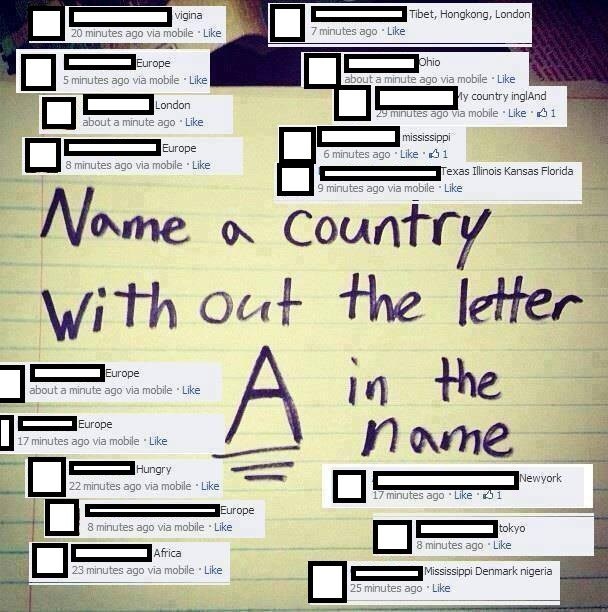
Grammer Flunkies 5Recently I asked my Facebook connections if they could help me with a Latin phrase; the phrase has to do with the computation of days in the Julian calendar (calends, ides, nones, etc.).  Here is my exact post:

“Calling all Romance Language speakers (French, Italian, Spanish, etc.): Does the following phrase (any of its words) render something similar in your language, and if so, what do those words mean? The phrase is in Latin, “Principium mensis cujusque vocato kalendas” I understand the first and last words, but am curious about the three middle words… Thanks for any help.”

Quite a discussion ensued; but I still don’t know if there is an etymological equivalent or relative to “cujusque.”  One person suggested the connection of mensis (month) with the medical term – which I should have thought of as the German slang term is “Mens” for women’s monthly cycle.  But all other entries tried to help me with the first and last word, and I spent more time explaining my request than I saved by asking in the first place.

This is a trend I’ve noticed on the rise on Facebook in particular, but I am aware that it’s also happening across Cyberland; too often people skim over a text and assume they’ve understood it well enough to make an informed contribution to a discussion.  It’s harmless when it only has to do with topics of grammar and language; but when it also enters the formation process of people’s opinions in the political or social arenas, society beware.  I usually ignore such discussions with a healthy dose of eye-rolling; but sometimes I have to intervene in the propagation of half-baked ignorance, or I won’t be able to sleep at night.

The illustration is a perfect example of this vague exactitude; people took the time to reply, but they did not take the time to properly read, to inform themselves of the actual task at hand.  I have only two words to add:  STOP IT!

4 Comments

Filed under Articles