Category Archives: Snapshots in History

Rabbit Holes

Have you ever started what seemed like a small project, only to realize that you’d fallen down Alice’s rabbit hole, ala Wonderland?

I was sitting in my library last weekend, and I glanced up at a few old photo albums on the top shelf of one of our bookcases. I’ve been meaning to photograph, restore and edit those pictures for years, so I finally pulled one down and began. It happened to be my family history album, with photographs as far back as 1890. And so it began.

The last time I wrote an article about family history, only a couple days later I was contacted by then-unknown branches of that family – distant relatives who’d been looking for that kind of missing-link information. That article was posted on a dormant blog of mine, so I’ll post it here this coming week – who knows, maybe more relatives will show up for the party!

I spread the album open on our dining table, and began taking pictures of pictures (if you’ve ever done this, you’ll know that glossy photos are the bane of restoration attempts!), then painstakingly took out each scratch and superficial film blemish caused by age and my two emigrations (first Scotland, then Switzerland). I cropped, turned, tweaked and focused until each photo was restored and properly labelled. Then I began feeding them into a digital album program – when it’s ready, I’ll be able to order a physical hardback book, and the project will be on my cloud account to avoid losing the whole project, as happened once before (I still have the photos, and the printed book, so I can re-create it, but it hurts to have lost all that work through a computer crash, pre-cloud…!).

That’s when the first rabbit hole opened. Being a writer, I’m curious by nature. Or maybe my curiosity led me into writing. Whatever. I’m curious, and I love research. I also have a lot of experience in tracking missing persons: About 12 years ago, I tracked down nearly all of my 35 former classmates from Hawaii, 1986, from Australia to Guam to Norway to Brazil to Seattle. Every evening, when my husband came home from work, he couldn’t wait to hear what I’d accomplished that day: I “bribed” a retired LAPD detective with a bar of Swiss chocolate to track down one friend who was a hermit in the Californian mountains with no phone, no internet, and no address. I had enough for him to go on, and he put legs to my work – within 24 hours, I had my man – he came down the mountain for a phone call with me. Another friend had moved out of state from the last known address, and his name was a common one – too common to find him through conventional ways. So, I put Google Earth, white pages and intuition together, with a dose of southern charm (I’m not from the south, but I can turn it on if need be!), and got the state he’d moved to from a former neighbour of his – all he knew was where he might be working. Another friend was off-grid for security reasons – and I still tracked her down (I told her, “I could tell you how I did it, but then I’d have to kill you!” 😉) Needless to say, almost every track was an adventure.

Which brings me to the present rabbit hole: I’ve begun work on my paternal family album; on the maternal side, I don’t have any information beyond my great-grandparents, but I can trace my paternal grandmother’s family back to the Danish village they came from, on the island west of Copenhagen – and once I’ve filled in as wide as I can from the emigrated side, I’ll contact the Danish records offices or cemetery of the Old Town and go back further still if I can – so far, I’m into the 1830s; hopefully, such European records survived World Wars 1 & 2.
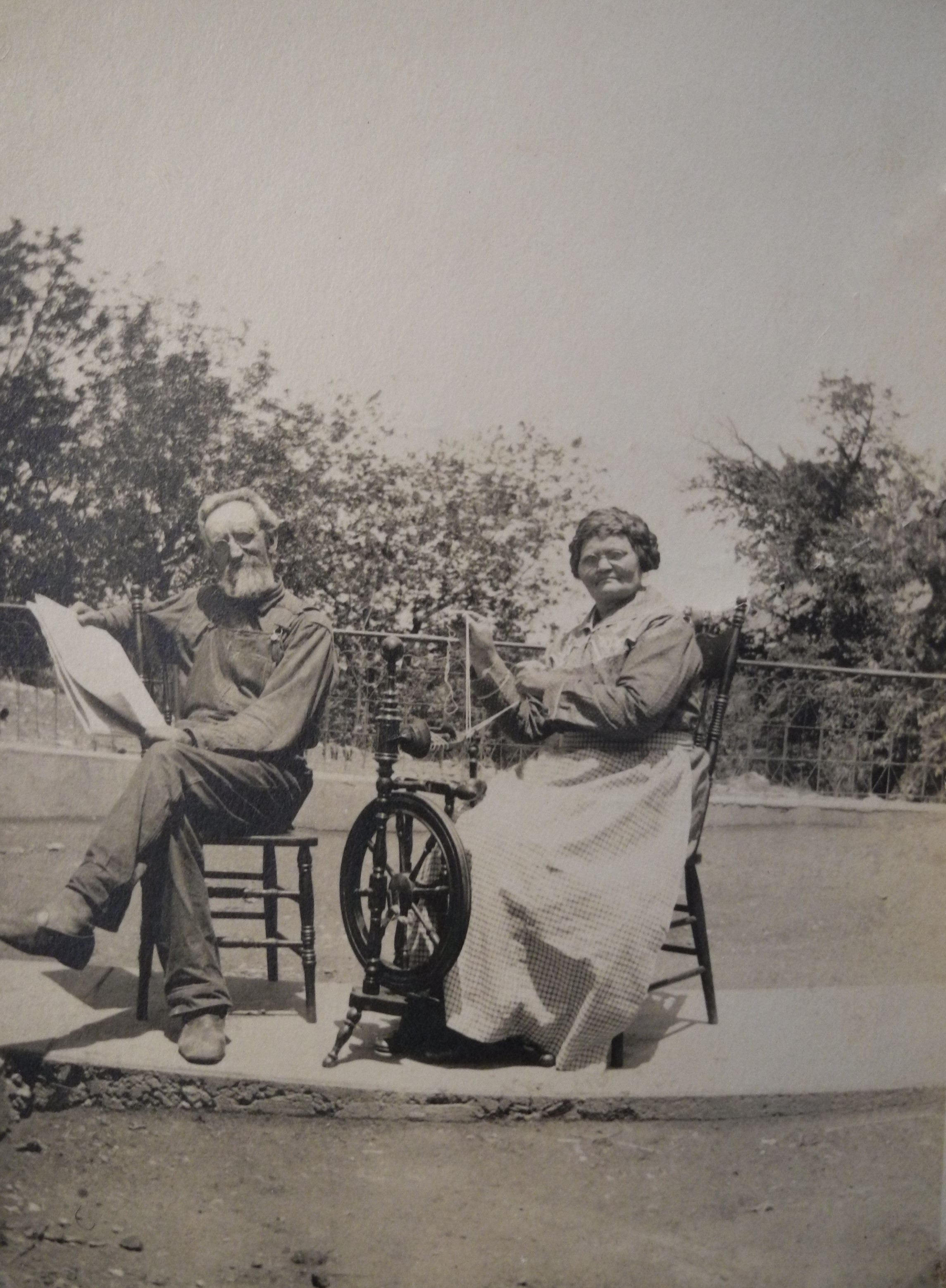
Nis & Maren “Mary” Aaroe, my great-great-grandparents, who immigrated with 2 small children to Kansas from Vonsild, Denmark in the 1880s. Here, in the late 1910’s.

There are a few websites that specialize in ancestry – but most of them want to charge you to see the information. I understand that a company needs to have a viable income to offset their costs, but such websites often rely on volunteer family members feeding in that information on their own dime, so I won’t support them. I have found two websites that have proven invaluable; if you want to do something similar, here they are:

www.findagrave.com is a website gathering of history and genealogy enthusiasts who photograph tombstones and gather personal information about the individual from official documents, obits, etc., with the purpose of honouring them and allowing others to find family members. It was the first time I’d seen my own father’s gravestone. I’ve been on there less than a week, and I’ve become the custodian of a dozen virtual family graves; it will be easier to add information as I come across it in research as the rabbit hole deepens. Through the efforts of complete strangers unrelated to my family, I’ve been able to fill in the blanks of missing birthdates and death-dates, as well as next of kin, and their next of kin, and so on. Another rabbit hole!

The second website is www.wikitree.com; it is a free website, like Wikipedia, but for genealogists to collaborate through, with forums and all kinds of helpful groups to get you started. So far, I haven’t needed any of the forums myself, but I’ve been busy building up the family tree and collecting pictures and information there. As I have my husband’s family tree already, it will be my next project on that website.

Keep in mind that I’m doing all of this in my spare time; I’m working on my 5th novel’s manuscript, and I have a husband in home office through the week, which means 2 meals a day instead of just 1 to plan ahead for and prepare. Someone does laundry, and cleans the house and goes grocery shopping – but since I haven’t been able to train our cats to do that, I guess it’s me, while my husband earns our keep. He earns, I spend – it works well for us. 😉

For the sake of potential relatives searching for family names online, my heritage is as follows:

Umbarger, Kuhns, Hüsler (Huesler), Aagaard (The anglicized Danish surname is sometimes misspelled as Agard or Aagard), Aaroe, Higbee, Herring. So glad I don’t have that string on my official documents! Two things can sometimes make tracking difficult is that firstly, maiden names are exchanged for the married surname, causing a break in the chain; secondly, the Ellis Island effect – officials didn’t know how to spell the name properly, so they recorded it phonetically, which makes unravelling the true path more of a challenge.

This week, the intrigue continues as I begin trying to track down the missing branches of my family. My goal is to make the album project available to even distant relatives who might be interested, although it will obviously have the emphasis of my personal perspective as far as photos go, the closer to my generation I get.

Have you done any family history research, or a family tree? Have you ever taken a DNA test? If so, what did it reveal about you and your ancestors? Please comment below!
6 Comments

Filed under Articles, Etymology, History, History Undusted, Military History, Mistranslations, Research, Snapshots in History

Virtual Tours 2: Electric Ladyland Fluorescent Museum, Amsterdam

Come along with me on this next tour, as we explore the world of florescence. Today’s featured museum is the only one of its kind in the world: The Electric Ladyland Fluorescent Museum, in Amsterdam, Netherlands, is an interactive “participatory art” museum; visitors can get creatively involved in the artwork, see fluorescent minerals light up, and can have their eyes opened to just how many common objects around us fluoresce. When was the last time you looked through your vegetable drawer with a UV light? Tomatoes, lettuce, cucumbers, bell peppers, coconuts… they all emit UV light waves.

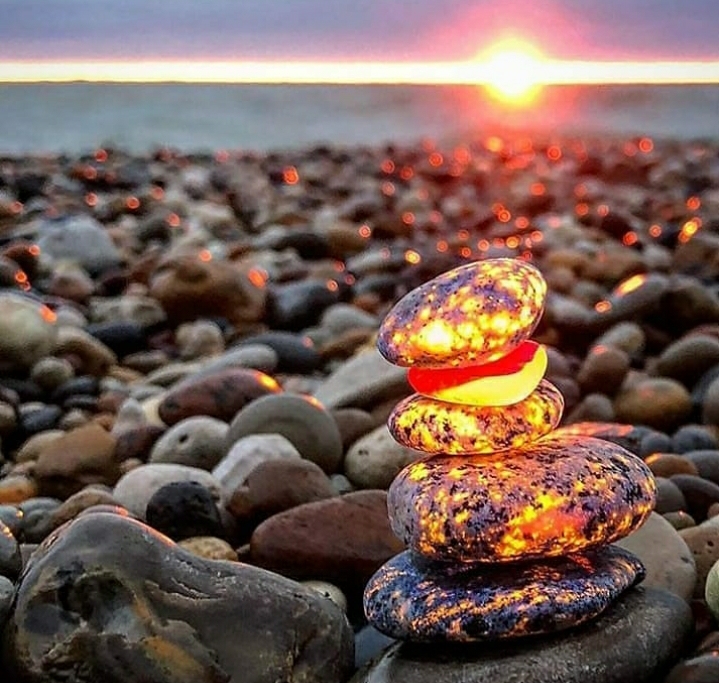
First, what is fluorescence? It is also known as “black-light” glow; in other words, it shows up under UV (ultraviolet) wavelengths. Man-made fluorescence differs from nature’s spectacles of bioluminescence in that the latter doesn’t require external light – it is generated by an internal chemical energy in the organism. There are also examples of fluorescence occurring in nature: Syenite, also known as yooperlite or sodalite-syenite, is not a common rock, but does appear all over the world in pockets; in fact, about 15% of all minerals fluoresce. Check out this link to see where syenite can be found near you. Take a UV torch (flash light), and hunt for them at night. They look like plain rocks under normal lighting conditions, but glow under UV. There are also animals that don’t have bioluminescence, but do glow under UV lights, such as scorpions. To watch a short video about hunting along Lake Michigan for yooperlites (these start at 8:00), and see a glowing spider (19:23), click here. At 18:43, you can also see an example of phosphorescence.

Yooperlite – Credit: Reddit, uRyunysus

Phosphorescence is what we also know as “glow-in-the-dark” when it comes in a paint form. The emission of visible light persists after this substance has been exposed to a light source; it fades over time, but the light “charges” the phosphorescent material, such as stars on a child’s ceiling, and glows for a time. This is the paint you also see marking airplane’s escape routes (I hope you never need them!).

Radioluminescence is, as its ominous name implies, a result of the decaying of radioactive isotopes; when mixed with a radioluminescent phosphorous chemical, the decaying radiation particles agitate the phosphor into emitting visible light. Believe it or not, Radium paint was used for over 40 years on the faces of watches, compasses, and aircraft instruments; if you are in possession of your great-grandfather’s or grandfather’s glowing watch, you might want to reconsider that. Radium emits gamma rays… think “Incredible Hulk”. Joking aside, the reality was far grimmer: The episode of history that became known as the “Radium Girls” and the impact it had on industrial safety standards deserves an article all of its own. Shockingly, radioluminescent paint may still be used in specialised applications, such as diving watches.

Radium clock. Credit: Wikimedia Commons

I hope you enjoyed this short tour through all things glowing. What do you have around your house that either glows in the dark, or emits light under a UV light? If you don’t already have a UV torch (flash light), you can buy one fairly easily online. If you’re brave enough, take a tour of your home in the dark – UV is known to show up things that have perhaps been missed in your cleaning routine; they will show you what foods you eat that fluoresce; and you’ll most likely learn a few things along the way! Have fun!

4 Comments

Filed under Links to External Articles, Nature, Science & Technology, Snapshots in History, Virtual Tours

Virtual Tours 1: The Titanic

Happy New Year, everyone!

With everything that hit the fan last year worldwide, I know that many of us have been missing the opportunities to go out and get some stimulation: Restaurants in many places are closed or reduced to take-away; concerts and theatre productions are cancelled until further notice; museums are closed; if shops are open, they may be closing earlier. For many of us, our “third place” has had to close its doors to us.

So I thought I’d take you along on virtual tours: Tours of factories to see how things are made, of museums, of beautiful places around the globe, of interesting architecture, of historical moments, or of quirky bits and bobs that make this world a colourful and interesting place.

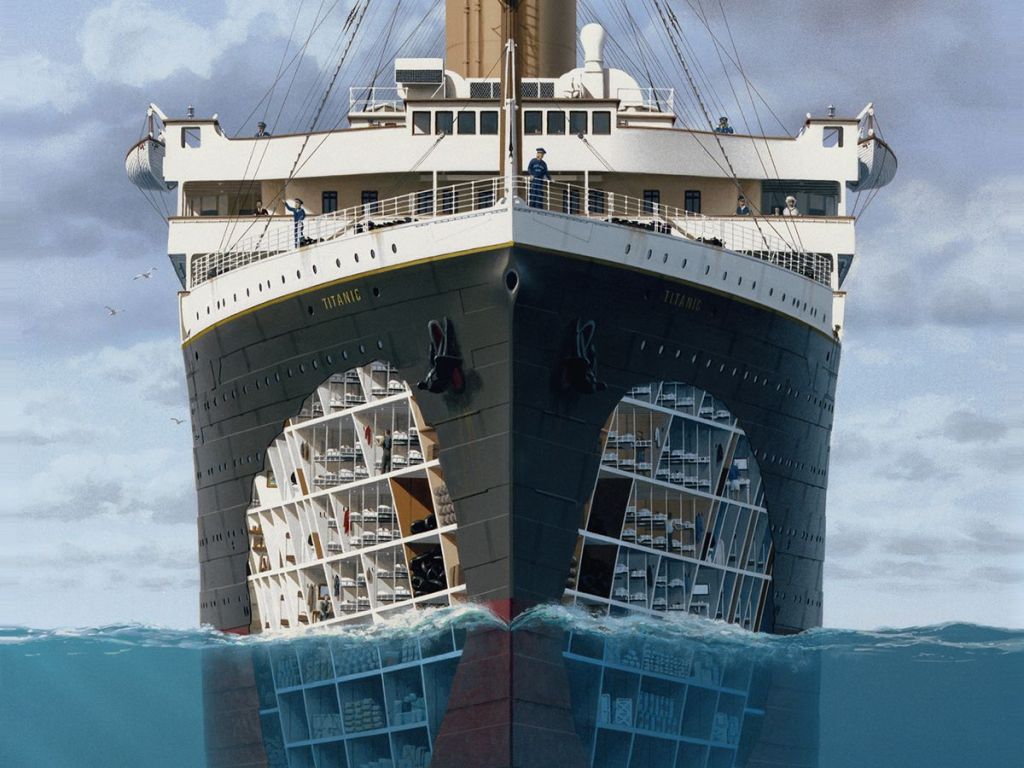
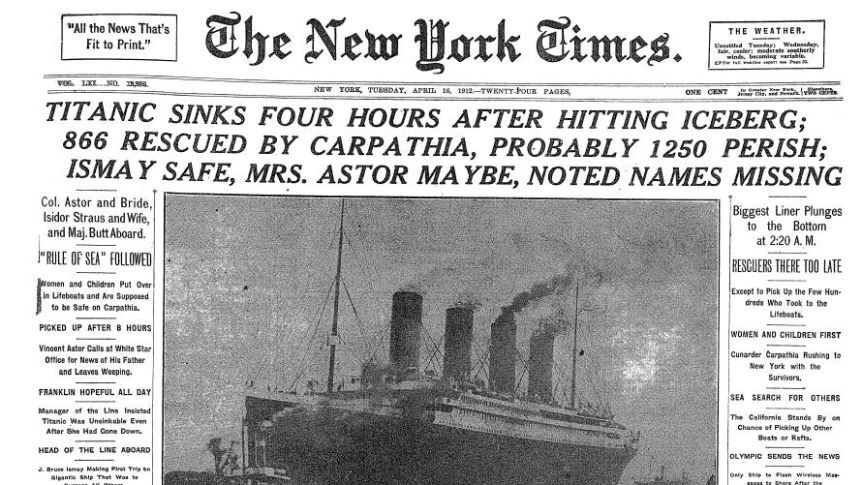
To start off our tours, let’s take a walk-through on the Titanic, as it was before it let in the passengers for its maiden voyage. It embarked on that voyage on 10 April 1912, hit an iceberg on 14 April at 23:40, and 2 hours and 40 minutes later, on 15 April, finally sank forever. The final survivor of the sinking, Millvina Dean, aged two months at the time, died in 2009 at the age of 97. What I find interesting about her story is that her parents, from Branscombe, England, were planning to settle in Wichita, Kansas – where I was born and raised. Her father had relatives there, whom they were planning to join. They weren’t supposed to be aboard the Titanic, but due to a coal strike, they were transferred to the ill-fated ship. To read more of her story, please follow her link.

If Covid’s limitations were lifted right now, and if you had a spare £86,000 ($ 105, 030) burning a hole in your pocket, you could take a real tour of the Titanic and take part in diving expeditions. But barring those two factors, I’ve found a few simpler (and FREE!) alternatives (Just click on the images below each description):

This first link is a 22-minute tour; if you are easily seasick, I’d recommend pausing it occasionally.

This second link is for a slower and smoother version, at 116 minutes (1:56).

This third link is a fascinating documentary following the lives of some of the passengers aboard the Titanic, focusing on 14 from the same Irish village. Three survived to tell the tale.

I hope you enjoyed it as much as I did; I don’t know if “enjoy” is the right word in such a situation, but I hope it was at least a satisfying, intriguing glimpse into history. I’ve got slews more tours on the agenda, so buckle up!

2 Comments

Filed under Articles, History, History Undusted, Links to External Articles, Snapshots in History, Virtual Tours

History Undusted: Makeup

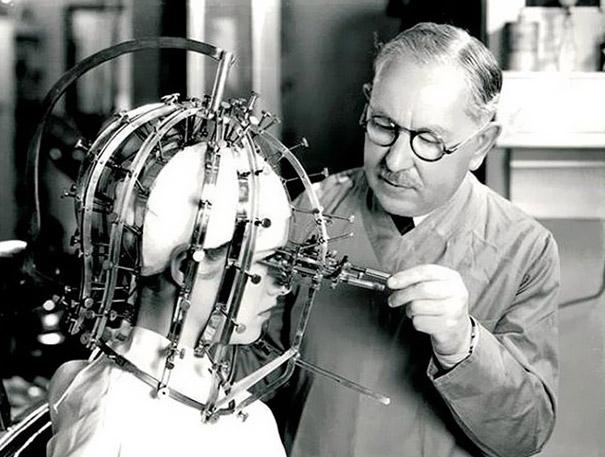
This device from 1930, invented by Max Factor (pictured), helps correct the application of makeup. Note: It’s only this complicated when a MAN does it…

Limbo-life goes on, but I thought I’d do a bit of dusting… of history, that is. I love historical images – they have a story that may have gotten lost over the years, or may document a significant achievement, such as the moon landings. Then there are those lovely photographs of bygone inventions: Some have succeeded into the modern era, while others were dumped somewhere along the wayside (and rightly so). Fortunately, the photo above falls into the latter category! As far as this topic goes, this is just a light dusting; there have been entire books and documentaries addressing this vast issue; if you’re interested in viewing a few documentaries on the topic, click here.

Makeup, as a topic of history, goes back thousands of years. Ancient Egypt is famous for their eyeliners and other cosmetic enhancements; lipstick may have been invented as far back as 5,000 years ago, by ancient Sumerians. The word “cosmetic” comes from Greek, and originally meant “technique of dress and ornament” or “skilled in ordering or arranging”. Natural ingredients used included charcoal, beeswax, crushed gemstones, castor oil, olive oil, milk (Cleopatra’s famous milk bath), rosewater, seaweed, fish scales (still used today), and seashells. In past ages, there were dubious forays into using tinctures of white lead, mercury, arsenic, quicklime, Belladonna, and even mouse fur eyebrows (for when the woman’s hair fell out due to using any of the above in combination…). A common insect still used in blushes and lipsticks is the cochineal, the Dactylopius coccus, a scale insect.

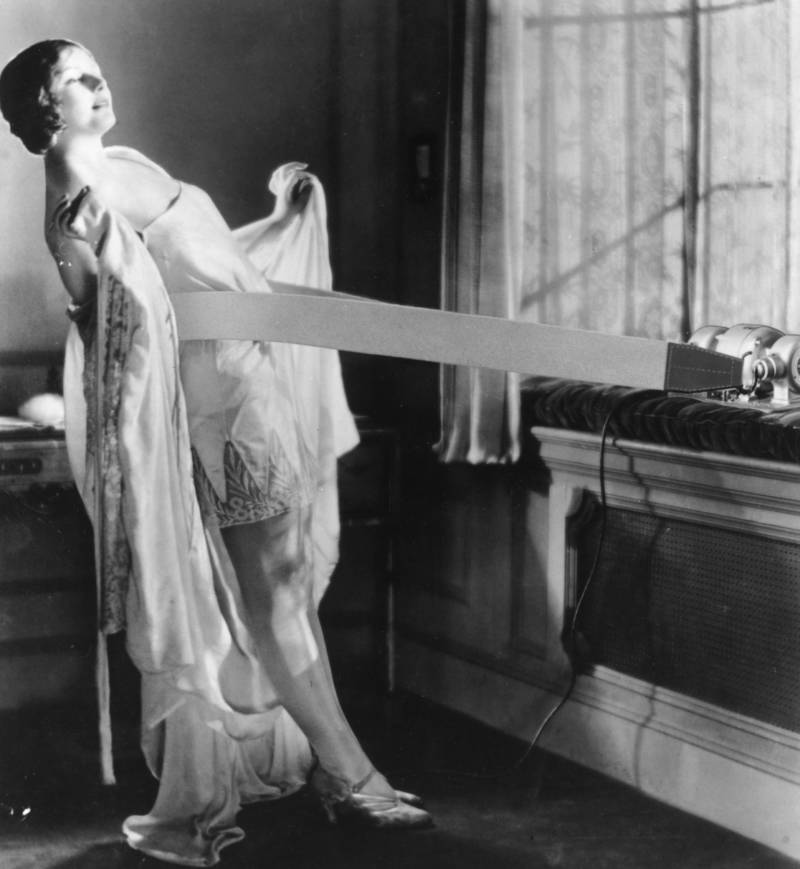
Probably as far back as the dawn of the Industrial Revolution in Europe, there has been a fascination with mechanics, even in the beauty industry (as illustrated by the image above). Though I have yet to find images that document the attempts at enhancing a man’s handsomeness, there are dozens, if not hundreds, of such inventions for women’s beauty. I think that fact simply reveals something about a deep-set, double-standard mindset that women need cosmetic improvement while men don’t *; that notion has been inescapably engrained into women for thousands of years (with the exception of the Egyptian culture, in which men used eyeliner just as much as the women). [*The two exceptions that I can find to this general trend is that men were berated in the mid-war years for being too scrawny, and they were encouraged to develop their physique; they were also ridiculed for baldness and were offered hair growth concoctions to counter the natural process.] While many of these gadgets and products have thankfully gone the way of the Dodo, some are still lurking around – and to them, I say, Shame on them for shaming natural features!

Here are a few other bygone mechanical attempts at enhancing the beauty of women:

1928 – A woman uses a vibrating weight loss tool. Credit: Getty Images
1940s: Slenderising salons devised all sorts of weight-loss treatments; this chair massaged clients’ legs with metal rollers. Credit: Getty Images
1958 – Invented by a South African doctor, this machine was supposed to massage away any unwanted bits using electric currents. Credit: Getty Images
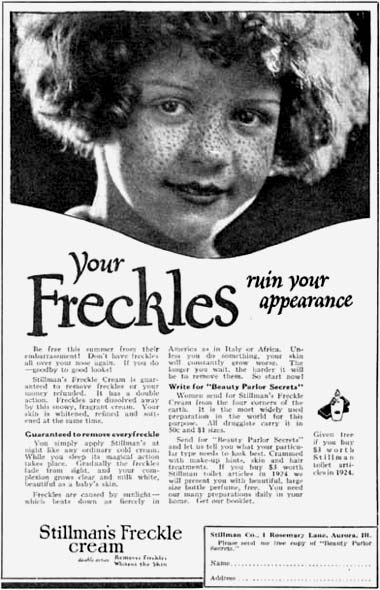
Stillman’s Freckle Cream, originally from Illinois, has been sold for over 120 years, and is still touted in cultures desiring paler skin, such as in Asian countries.
1960s – ice masks were used by Hollywood actresses to freshen their faces between takes without spoiling their makeup. Credit: Getty Images
1875 – A flexible mask intended to bleach the skin, removing blemishes.

10 Comments

Filed under Articles, Etymology, History, History Undusted, Images, Links to External Articles, Obscurities, Science & Technology, Snapshots in History

History Undusted: The Dying Art of Sailors’ Shanties

Because the days of Sail are mostly long gone except for re-enactment vessels and small private vessels such as yachts, a great tradition is being lost to the winds of time:  The Sea Shanty.  Shanties were songs sung by sailors; they were sung not only for the entertainment factor, but the rhythms kept the crews in time as they hauled in anchors, drew up sails, tightened ropes, scrubbed the deck, and any number of other duties aboard their ship.  Specific shanties were used for the short haul, the Halyard, Windlass, Capstan, or the Foresheet, because those shanties had the best rhythm to get a particular job done.  Musicians try to keep the songs alive today, but they are a ghost of what they once were, and what they once meant and represented; they were the life blood of any Ship of the Line.

For sheet music, check out The Shanty Book, Part I, Sailor Shanties, by Richard Runiciman Terry.

For an interesting article on shanties, including various video clips with live performances to hear the rhythms and flavour of the shanties, please click here.  Take a few moments to enjoy the songs!  Some of the videos are the songs sung to a series of historical images to do with sailing, so they’re a two fer!

Originally posted on History Undusted, 20 September 2015

14 Comments

Filed under Articles, Etymology, History, History Undusted, Links to External Articles, Military History, Snapshots in History

Wordless: Trending, 2020

6 Comments

August 5, 2020 · 4:57 PM

From Trash to Treasure

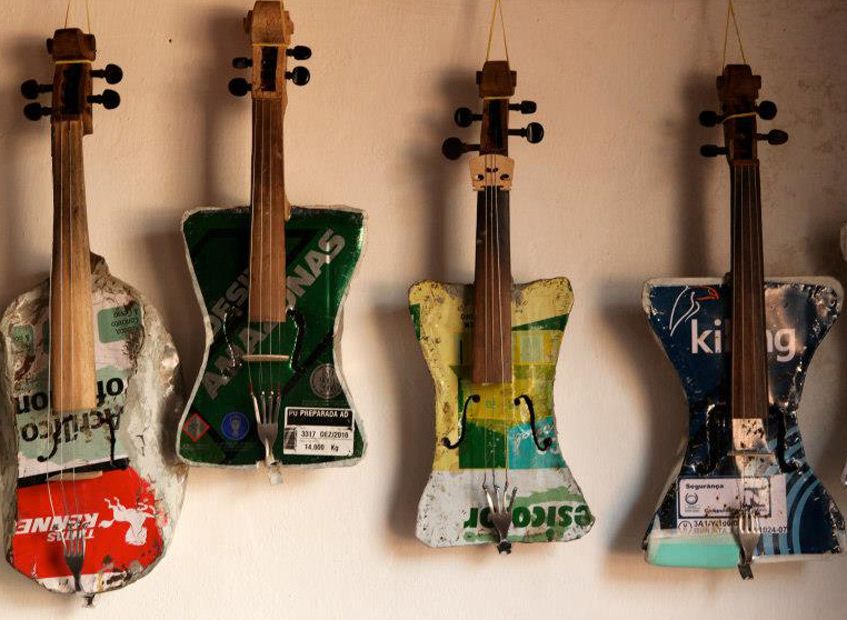
When I’m working on the computer, sometimes I like to have music playing in the background; YouTube has a good selection of long-play pieces. Recently, I was listening to Lindsey Stirling, one of our favourite artists, and she did a video with members of the Landfill Harmonic (you can watch that video by clicking here).

If you haven’t heard of the Landfill Harmonic, it is a group of teenagers living on a rubbish dump in Paraguay; they have been formed into an orchestra – but in a place where a violin would be more expensive than a house and would likely be stolen, their instruments are trash. Literally. Not only have they found new skills through mastering the quirks of their individual instruments, but the project has given them a purpose – a voice that they would otherwise never have had. It keeps them out of gangs, and transports them, even if for only a little while, to another place in their hearts. It has the potential to turn the tide for the rising generation in their area, and that should be enough to inspire all of us to find the hidden treasures in the things and in the people around us. Most of all, it encourages me to never underestimate the power of vision and purpose in and on the human spirit!

Just click on the image below to see a short but inspiring clip about the orchestra:

8 Comments

Filed under Articles, Links to External Articles, Snapshots in History, Videos

Food History Undusted: Mac & Cheese

As I recently mentioned, we had problems with kitchen moths; the source has been found (dates) – the jar which contained them also isolated them; I played the jar like a maraca and sang “La Cucaracha” as we put them in the compost. We are now moth-free! Woo-hoo!

We really appreciate the advantages of storing everything in glass jars: It looks pretty, we can see exactly how much we have, what we have, and it’s inviting to be creative in meal planning. One of the pasta jars we have contains mini “Hörnli / Hoernli” – the Swiss word for “little horns” and what the rest of the world probably refers to as macaroni. The topic came up as a meal idea, and of course, being us, we got into the historical aspect. Where did it originally come from? Did it arrive in America with Italian immigrants or is it a hybrid dish?

Mac & Cheese History

This image above is nearly sacrilege for many people, myself included – I cannot imagine eating pasta from a can! But just after World War 2, manufacturing of canned goods, frozen meals and the like were coming into their stride as families pieced their lives back together and got on with the business of rebuilding the country and economy; televisions entered the home mainstream in the early 1950s (think black and white, rabbit ear antennas, no remote and 2 channels) – but that’s another topic. Product placement during television programmes and news was a major factor in influencing the purchasing power of the average consumer (product placement may have begun as early as 1873, when Jules Verne’s fame led shipping companies to lobby being mentioned by name in his upcoming novel,  “Around the World in 80 Days”).*

The oldest known reference to a dish that may be recognizable as the ancestor to the modern concoction is from the 13th century, from someone in the court of Charles II of Anjou who was familiar with the Neapolitan court; the dish was basically prepared with sheets of lasagne sliced into small squares, cooked in water and tossed with Parmesan cheese. The American version some might be more familiar with has two claims to ancestry: Either it began as a Connecticut church supper dish known as Macaroni Pudding, or it was brought over from Italy in the form of a recipe by Thomas Jefferson, who also brought back a pasta machine.

So, where was the noodle dish invented that we know today as “Macaroni and Cheese”? Switzerland, of course!

The dish, known as “Älplermagronen” (=”Alpine herders’ macaroni“) in the German-speaking areas and “Macaroni du Chalet” in the French-speaking areas, is made with those Hörnli, also known as “Magronen”, which were dubbed for the horns of the cattle, sheep and goats which the herders tend. The cheese was often a local product from the milk of those very animals, and the dry pasta was easy to hike up to their summer chalets where they slept on the Alps during the summer grazing seasons.

For a good, long read about the history of the pasta, click here for a “BBC Travel” article on the topic – and get a good taste of the Swiss Alps in the meal! And be honest – how many of you have a hankering for Mac & cheese after reading this? Click on the image below for an authentic recipe.

Alplermagronen - Betty Bossi

Image credit: Betty Bossi (the Swiss version of Betty Crocker)


*Information source: Wikipedia, William Butcher (translation and introduction). Around the World in Eighty Days, Oxford Worlds Classics, 1995, Introduction.

3 Comments

Filed under Articles, Etymology, History, History Undusted, Images, Links to External Articles, Military History, Research, Science & Technology, Snapshots in History

The Grassroots Italian Response to Anything: SING!

The Italians have continued singing, despite their quarantine in relatively small flats and closely-packed neighbourhoods. This is a great response to counter the feelings of isolation, breeding solidarity instead. At 12 pm and at 6 pm, people join forces to boost morale.

For a smile or two, click on the links below!

Flash Mob, Italian Style

Viva Italia!

One of the Italian flags flying on front of the Altare della Patria, in Rome - Dave Kellam, flickr

One of the Italian flags flying on front of the Altare della Patria, in Rome (Dave Kellam/flickr)

10 Comments

Filed under Articles, Snapshots in History

History Undusted: Bubble Wrap

I do a lot of crafts. I mean, a lot variety-wise, and a lot quantity-wise. When I’m not writing, managing our household, planning meetings or teaching students (I’m a vocal coach and an English teacher for adults), I’m usually doing some kind of craft, and it more often than not involves some form of upcycling – turning “trash” into “treasures”. Recently, I’ve been making sheets of plastic-confetti-filled bubble wrap, ironed into what’s known as “ploth” (plastic cloth). These can then be sewn into bags, etc. It got me to thinking about just how bubble wrap came to be. I have tons of the stuff, stashed here and there in the craft room, for such projects – and I’m constantly on the lookout for creative uses for that poppable fun.

Did you know that originally it wasn’t intended as packing material but as wallpaper? In 1957, Swiss chemist Marc Chavannes and his business partner, Alfred Fielding, wanted to make a wallpaper that would appeal to the emerging Beat culture [for those of you unfamiliar with that term, it was a generation of post-war, anti-establishment rebels who were more or less the precursor to the 60’s hippie and counterculture movements]. What the partners did was simple enough: They put two layers of a plastic shower curtain through a heat-sealing machine. But it came out in what they first saw as a failure, with air bubbles trapped between the two layers. They figured they were onto something, failure or not, and so they got a patent and then began experimenting to find other uses. Wallpaper wasn’t popular; neither was their suggestion to use it as insulation for greenhouses (perhaps that was simply a matter of marketing to the wrong demographic). Then, around 1960, IBM began shipping their newly-designed 1410 computers and needed a way to protect the delicate dinosaurs – eh, I mean, computing mammoths. That’s a LOT of bubble wrap. The rest is, as they say, history. And in case you’re wondering, yes, people have been popping the bubbles from the beginning, just for fun. So much fun, in fact, that the last Monday of every January is officially “Bubble Wrap Appreciation Day”.

Click on the image below to watch an IBM recruiting film (1 minute), from 1960. You can also see one of IBM’s massive scientific mainframes being used by the original “computers” of NASA in the film “Hidden Figures“.

IBM 1401 unit - History of Computer Museum archive photo

IBM’s 1410 computer promotional photo, 1959. Credit, Computer History Museum archives


6 Comments

Filed under Articles, History, History Undusted, Research, Science & Technology, Snapshots in History, Space, Astronomy