The Handshake of Character Development

business.gov.au, the Australian Government's dedicated business website1Have you ever stopped to consider the handshake?  It is a non-verbal form of communication, and it can tell you volumes about a person.  It is usually the first contact in a face-to-face transaction, used not only as a greeting form, but as an aid in assessing the other person’s confidence, assertiveness, aggression, or social skills.  What if the handshake is weak or strong, clammy or crushing?  Is it too short (which sends the signal that the person who breaks off the touch either disdains or disrespects the partner), or too long (which is an invasion of private space, too intimate, or disconcerting – it can even interrupt verbal exchange if it’s too awkward)?  Is it a neutral-valued exchange, or does the touch signify some ulterior motive (power-play, intimidation, invasion of the partner’s intimate sphere, a sexual connotation, etc.)?  What difference does it make for any of the above factors to take place between partners of the same sex vs. the opposite sex?  In other words, if two men shake hands and one is crushing, what message comes across differently if the partner being crushed is a woman?  Different cultural interpretations enter into the equation as well, as touch signifies various things in various cultures.  What difference is there to a handshake with a superior or authority figure to that of a peer or inferior?  What if the superior is a woman shaking the hand of a man of lower rank?  Or a woman of lower rank?  Or a man from a culture that does not recognize women as authority figures?

When developing a character for a novel, the handshake can be a telling gesture.  Even if none of the above questions are answered explicitly in your manuscript, just answering the questions for yourself can go a long way to your own understanding of the character, and how you want to express them to your readership.  So the next time you shake someone’s hand, alert your writer’s mind to take notes – putting those feelings into words develops your senses far more than simply identifying those feelings.  There have been a lot of studies on body language, particularly in the field of international business.  For a humorous yet telling video of the “Top Ten Bad Business Handshakes”, click on the image above.
Leave a comment

Filed under Articles, Nuts & Bolts, Plot Thots & Profiles, Research, Videos

Politeness Cultures

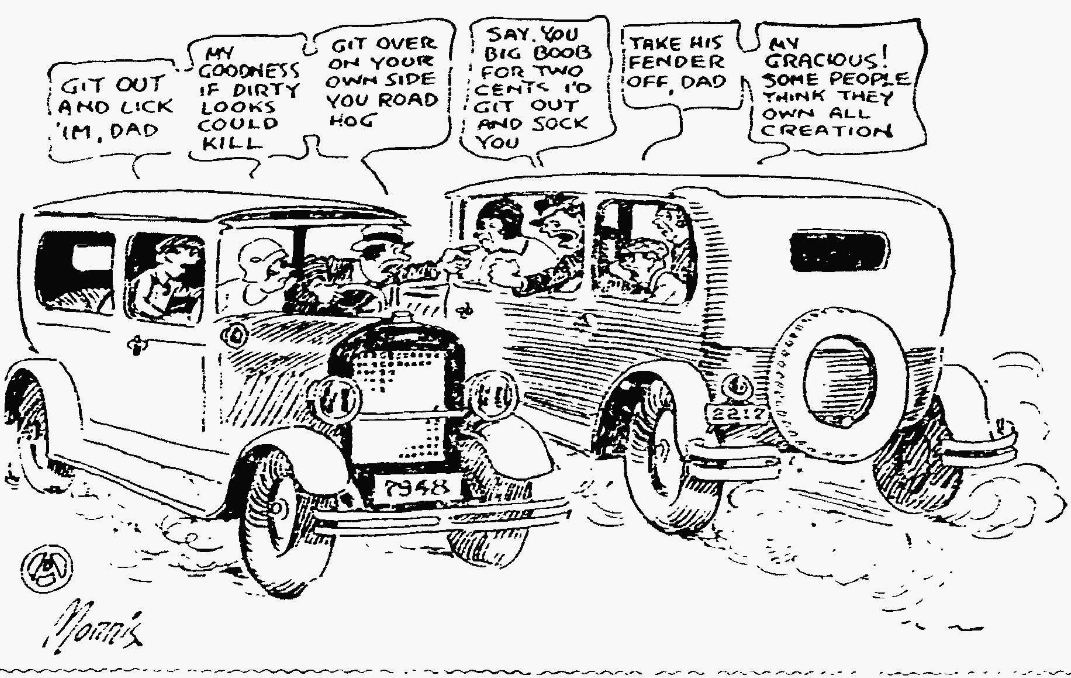
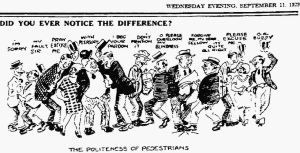
I recently came across a very interesting TED video addressing the differences between the American and British cultures on the specific aspect of politeness.  I grew up in the Midwest of America, emigrated to Scotland, lived in England for a while as well, and have friends scattered all over the “British Empire” & Commonwealth; I now live in Switzerland (adding several “Germanic” mentalities to my experience in that process!).  What the speaker (Lynne Murphy) observes makes a LOT of sense on both sides of the Puddle (Atlantic).  I share it with you because as a writer I know that those subtle, unspoken, unwritten differences in the ways people interact with each other and show their masks, or as Lynne calls them “faces”, make or break the authenticity in writing both prose and dialogue.  Click on the image below to watch the video; it’s 18 minutes long, so please watch it when you have time to focus! (By the way, the two cartoons below illustrate perfectly the difference between the “positive” face and the “negative” face.)

Politeness Politeness2

1 Comment

Filed under Articles, Cartoon, Images, Nuts & Bolts, Videos

The Vegetarian’s Nightmare

In 1987, Baxter Black recited “The Vegetarian’s Nightmare” on the Johnny Carson Show.  It’s a masterpiece of poetry and storytelling combined! Slapping words together and centering them down the center of a column is not poetry (just sayin’).  True, traditional poetry has rhyme, rhythm, and reason, and takes a true artist to master its intricacies.  Whether or not you are into country music or lifestyle, there is no denying his success; New York Times proclaimed him America’s most successful living poet.  Take a few minutes to experience a true poet at his craft by clicking on the image below.

Baxter Black, USA's most successful living poet

1 Comment

Filed under Videos

The Separate Language

Having lived on both sides of the Puddle (that’s the Atlantic, for you Americans), I can confirm that English truly is a language that separates the Old World from the New.  While the American language seems to be simplifying through the school system and mass media (and don’t even get me started on the spelling!), I doubt that will ever happen in the UK… the language is far too entertaining to let it get boring.  Click on the image below for a few gems like “Donkey’s Years”, “it’s monkeys”, “to have a butcher’s”, and “up the wooden hill to Bedfordshire”.

Anglophenia


Leave a comment

Filed under Translations, Videos

A Postcard from Lugano II

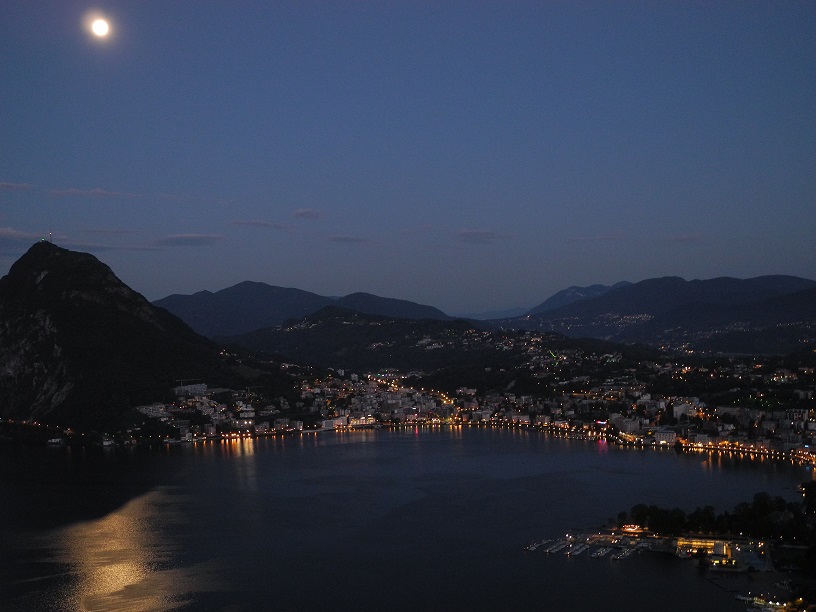
Lago di Lugano, Switzerland, with San Salvtore beneath the moon.

Lago di Lugano, Switzerland, with San Salvtore beneath the moon.

I’ve been absent from posting for a few weeks now, as I was away on holiday and I left most of my writing at home.  Most.  Last summer I wrote you the first Postcard from Lugano; and I will say that not much has changed.  It’s still beautiful, with lazy hot days with a cool breeze coming off the lake, and warm evenings with glistening stars  overhead and a glittering city below.  This first photo was taken at about 4 in the morning (I have no sleeping rhythm, which is handy when such scenes present themselves).


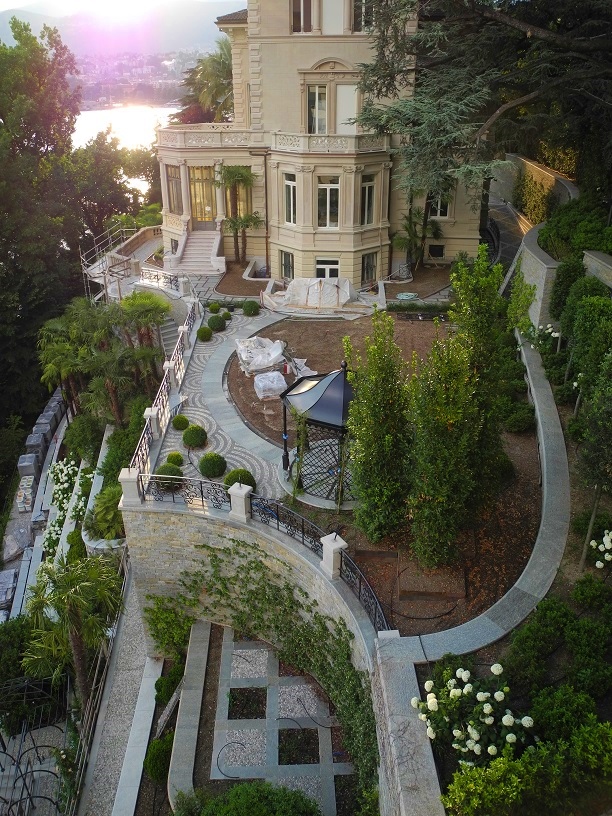
Villa Helios:  The back of the mansion with the terraced walk leading toward the lake.  Under renovation.

Villa Helios: The back of the mansion with the terraced walk leading toward the lake. Under renovation.

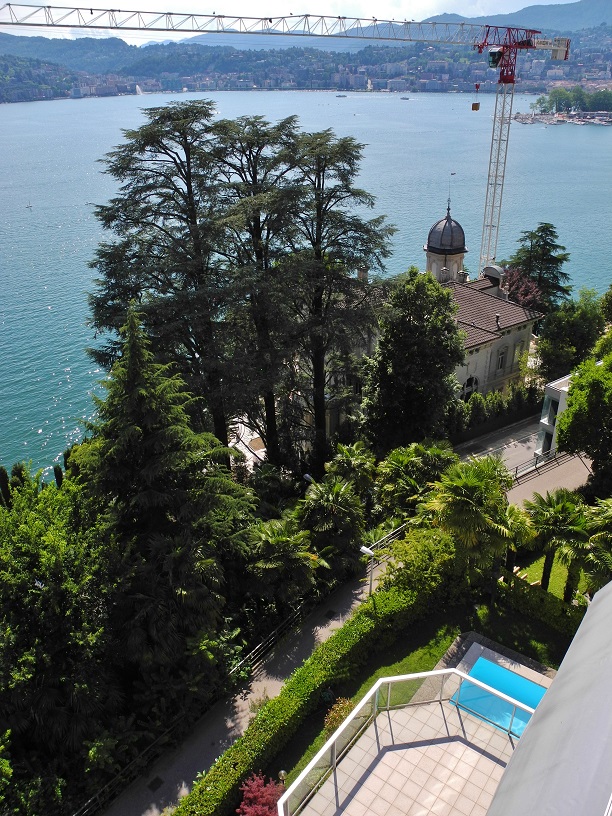
But as I told you, I left most of my writing at home – not all.  When in Lugano, I’ve been working on a novel the past few years; it started out as a fun idea to explore, and gradually developed into a  more serious endeavor.  I thought I’d share it with you as it may inspire you to take on such a writing project of your own on holidays (it may not classify as travel writing per se, though in some ways [like my postcards] it may at times take on those characteristics):  Our family flat overlooks a sprawling mansion that we have watched decay from neglect for over 20 years; it was most likely trapped in an inheritance dispute.  It had been boarded up, its windows bricked in, its magnificent garden going wild until it was an impassable jumble of green.  About three or four years ago suddenly a crane was set up, and renovations began!  Of course it sparked my writer’s brain – who had inherited it, or purchased it?  What was its history?  From the looks of it I will have several more years to ponder its end as the renovations continue; but by now the gardens and the terraced walls have been brought to life, a new drive laid with mosaic stones, and the house itself has been set free of its bricked-over, blinded windows, the roof replaced, and the beautiful stones (I would venture to guess Bath Freestone) sand-blasted and cleaned to their pristine beauty.

Villa Helios, as seen from our balcony.

Villa Helios, as seen from our balcony.

Called Villa Helios, it was designed by architect Otto Maraini, who was born in Lugano on 8 November 1863 and died there 16 January 1944. Villa Helios in Castagnola was built in 1901-1902, including a series of walls and terraces that formed part of the lake shore.  I came across a few historical photos at arteeidee – thank you to them for sharing the old magazine photos (“The Modern Building” monthly magazine of architecture and construction practice, August 1904)!  Check out that blog post for the older photos (click on them to enlarge); The photos I’ve added here are current shots.  I’ll just say two things about the crane:  Note the box hanging from it, near the vertical shaft – that is the tool crate, hung up at the end of work days to deter construction site thieves.  Also, though the crane interrupts our view of Lugano at times (it shifts freely with the wind when not in use, so sometimes we barely see it), it gives us a brilliant view of birds that take over when the workers are gone – there’s a constant conversation between the seagulls and the Hooded crows.  I’d love to do more research on this building, but most of the information is in Italian, which I can fight my way through only passably, but as I said I still have plenty of time.  That’s the beauty of holidays.

To you writers out there:  Find an interesting old building in your own area, research into its history, and create a story with the building as one of the characters and not merely a location.

Leave a comment

Filed under Articles, History

War Zones Then and Now

The UK’s Huff Post ran a series of impressive photos superimposing the “now” scenes on the site of photographs from 1944 in the war zones of Europe; the juxtaposition of the two together give pause for thought:  How much we take for granted now; how much was sacrificed then; the freedom we across Europe and the Americas enjoy now was bought at a great price.  Never forget.  Click on the photo below to see the entire series of photographs, and the photos of veteran’s ceremonies in France.  If you’d like to learn about a few famous deceptions in World War 2, click here.

DDAY/


Leave a comment

Filed under History

Illiterate? Read These Ads…

Once in a while I come across ads that hit my funny bone; Some are simply not thought through as far as double meanings are concerned, while others are just downright bizarre.  My all-time favourite is the used tombstone:  Just the fact of it begs questions, but the name nearly pulled a muscle in my side from my laughing so hard…

Classified Ads classified-new class-new

Leave a comment

Filed under Images

Thrice Ensconced Swines

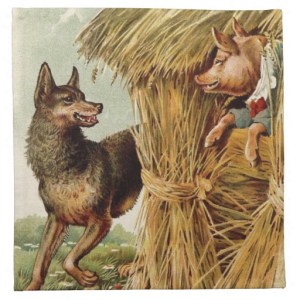
Just for fun, here’s a Shakespearean rendering of “The Three Little Pigs”.  Click on the image below and enjoy!

vintage_three_little_pigs

Leave a comment

May 27, 2014 · 11:30 PM

Simply English, not Simple English

No VowelsThe following poem has been floating around for years; it’s so popular because it’s a great encapsulated example of the weirdness of English as a language!  It’s also a great exercise in stretching your vocabulary, being more aware of how to say words that are often only seen written and never heard pronounced.  And if you come across a word you don’t know, or could swear it’s pronounced differently than the rhyme of the poem indicates, I challenge you to look it up (Wiktionary is an example of a good source which shows how various dialects of English pronounce words if there is more than one option); and if you feel completely overwhelmed, click on the cartoon above to watch someone else chew their way through it!

Simply English

Dearest creature in creation,

Study English pronunciation.

I will teach you in my verse

Sounds like corpse, corps, horse, and worse.

I will keep you, Suzy, busy,

Make your head with heat grow dizzy.

Tear in eye, your dress will tear.

So shall I! Oh hear my prayer.

Just compare heart, beard, and heard,

Dies and diet, lord and word,

Sword and sward, retain and Britain.

(Mind the latter, how it’s written.)

Now I surely will not plague you

With such words as plaque and ague.

But be careful how you speak:

Say break and steak, but bleak and streak;

Cloven, oven, how and low,

Script, receipt, show, poem, and toe.

Hear me say, devoid of trickery,

Daughter, laughter, and Terpsichore,

Typhoid, measles, topsails, aisles,

Exiles, similes, and reviles;

Scholar, vicar, and cigar,

Solar, mica, war and far;

One, anemone, Balmoral,

Kitchen, lichen, laundry, laurel;

Gertrude, German, wind and mind,

Scene, Melpomene, mankind.

Billet does not rhyme with ballet,

Bouquet, wallet, mallet, chalet.

Blood and flood are not like food,

Nor is mould like should and would.

Viscous, viscount, load and broad,

Toward, to forward, to reward.

And your pronunciation’s OK

When you correctly say croquet,

Rounded, wounded, grieve and sieve,

Friend and fiend, alive and live.

Ivy, privy, famous; clamour

And enamour rhymes with hammer.

River, rival, tomb, bomb, comb,

Doll and roll and some and home.

Stranger does not rhyme with anger,

Neither does devour with clangour.

Souls but foul, haunt but aunt,

Font, front, wont, want, grand, and grant,

Shoes, goes, does. Now first say finger,

And then singer, ginger, linger,

Real, zeal, mauve, gauze, gouge and gauge,

Marriage, foliage, mirage, and age.

Query does not rhyme with very,

Nor does fury sound like bury.

Dost, lost, post and doth, cloth, loth.

Job, nob, bosom, transom, oath.

Though the differences seem little,

We say actual but victual.

Refer does not rhyme with deafer.

Foeffer does, and zephyr, heifer.

Mint, pint, senate and sedate;

Dull, bull, and George ate late.

Scenic, Arabic, Pacific,

Science, conscience, scientific.

Liberty, library, heave and heaven,

Rachel, ache, moustache, eleven.

We say hallowed, but allowed,

People, leopard, towed, but vowed.

Mark the differences, moreover,

Between mover, cover, clover;

Leeches, breeches, wise, precise,

Chalice, but police and lice;

Camel, constable, unstable,

Principle, disciple, label.

Petal, panel, and canal,

Wait, surprise, plait, promise, pal.

Worm and storm, chaise, chaos, chair,

Senator, spectator, mayor.

Tour, but our and succour, four.

Gas, alas, and Arkansas.

Sea, idea, Korea, area,

Psalm, Maria, but malaria.

Youth, south, southern, cleanse and clean.

Doctrine, turpentine, marine.

Compare alien with Italian,

Dandelion and battalion.

Sally with ally, yea, ye,

Eye, I, ay, aye, whey, and key.

Say aver, but ever, fever,

Neither, leisure, skein, deceiver.

Heron, granary, canary.

Crevice and device and aerie.

Face, but preface, not efface.

Phlegm, phlegmatic, ass, glass, bass.

Large, but target, gin, give, verging,

Ought, out, joust and scour, scourging.

Ear, but earn and wear and tear

Do not rhyme with here but ere.

Seven is right, but so is even,

Hyphen, roughen, nephew Stephen,

Monkey, donkey, Turk and jerk,

Ask, grasp, wasp, and cork and work.

Pronunciation — think of Psyche!

Is a paling stout and spikey?

Won’t it make you lose your wits,

Writing groats and saying grits?

It’s a dark abyss or tunnel:

Strewn with stones, stowed, solace, gunwale,

Islington and Isle of Wight,

Housewife, verdict and indict.

Finally, which rhymes with enough?

Though, through, plough, or dough, or cough?

Hiccough has the sound of cup.

My advice is give it up!


Leave a comment

Filed under Cartoon, Mistranslations, Nuts & Bolts, Quotes, Videos, Writing Exercise

One-Sentence Stories

One of the most challenging things as a writer is to remain succinct; “every word counts” needs to be printed on the back of my hands whether I’m working on a book manuscript, writing to a friend, or answering grammar questions on a forum I lead.  Occasional ramblings are far more acceptable than chronic ones; everyone has a friend, acquaintance or family member who rambles (or – you know who you are!):  I have a neighbour near our building who can turn the reply to a simple, “How are you?” into a 45-minute explanation of how her cousin’s frog’s nephew’s classmate’s teacher’s son’s uncle came by with a blue – or was it green?  You know the kind of green that looks like wilting grass, no, that’s too yellow… by the time she takes a breath she’s gone down so many detours I have NO idea what she’s talking about, or even what the original question was.  Needless to say, when I’m on a deadline I politely avoid that side of the house.

I’ve come across a website that would be a literal impossibility for that neighbour, and would even be a challenge for many of us who consider ourselves to personify the phrase, “brevity is the soul of wit”:  Click on the image below to see “One Sentence – True Stories Told in One Sentence”.  Take the challenge – can you write a story in one sentence?  And take inspiration from the site as well; there are some great starter-sentences there that could be expanded upon to make a short story, or even a novel.

Note:  Since this was originally posted, the site at the link below has gone offline.  Instead, just go to Google and search for “one-sentence stories“, and you’ll come across several great options.

That One Sentence

Leave a comment

Filed under Links to External Articles, Nuts & Bolts, Research, Writing Exercise