Tag Archives: Grammar

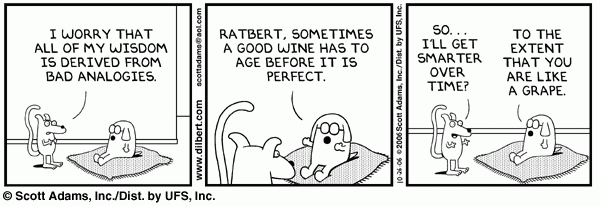
The Pitfalls of Analogies

These are priceless examples of creativity gone awry.  I don’t know who originally wrote these gems or compiled them; if you know, please tell me so that I can give credit where credit is due!

21 Analogies Used by High School Students in English Essays

  1. “When she tried to sing, it sounded like a walrus giving birth to farm equipment.”
  2. “Her eyes twinkled, like the moustache of a man with a cold.”
  3. “She was like a magnet: Attractive from the back, repulsive from the front.”
  4. “The ballerina rose gracefully en pointe and extended one long slender leg behind her, like at dog at a fire hydrant.”
  5. “She grew on him like she was a colony of E. Coli and he was a room temperature Canadian beef.”
  6. “She had him like a toenail stuck in a shag carpet.”
  7. “The lamp just sat there, like an inanimate object.”
  8. “Her face was a perfect oval, like a circle that had two sides gently compressed by a Thigh Master.”
  9. “Her eyes were like the stars, not because they twinkle, but because they were so far apart.”
  10. “His career was blowing up like a man with a broken metal detector walking through an active minefield.”
  11. “The sun was below the watery horizon, like a diabetic grandma easing into a warm salt bath.”
  12. “From the attic came an unearthly howl. The whole scene had an eerie, surreal quality, like when you’re on vacation in another city and Jeopardy comes at 7:00 p.m. instead of 7:30.”
  13. “It was as easy as taking candy from a diabetic man who no longer wishes to eat candy.”
  14. “She had a deep, throaty, genuine laugh, like that sound a dog makes before it throws up.”
  15. “Their love burned with the fiery intensity of a urinary tract infection.”
  16. “It’s basically an illusion and no different than if I were to imagine something else, like Batman riding a flying toaster.”
  17. “If it was any colder, it would be like being in a place that’s a little colder than it is here.”
  18. “Joy fills her heart like a silent but deadly fart fills a room with no windows.”
  19. “The bird flew gracefully into the air like a man stepping on a landmine in zero gravity.”
  20. “He felt confused. As confused as a homeless man on house arrest.”
  21. “The revelation that his marriage of 30 years had disintegrated because of his wife’s infidelity came as a rude shock, like a surcharge at a formerly surcharge-free ATM.”
dilbert-bad-analogies

4 Comments

Filed under Cartoon, Grammar, Humor, Lists, Nuts & Bolts, Writing Exercise, Writing Prompt

Just for Fun #1: Two Letters

Ah, the fun of leaving out two letters…

funny-signs6_1

Leave a comment

Filed under Humor, Signs

Details, details

commas 2

Leave a comment

March 21, 2015 · 10:08 AM

Writing Tip: Layering

Lightning BugIf you’ve ever painted a picture more than a colouring book or a paint-by-number, chances are you’ve learned something along the way about layers.  Layering is also a digital graphics technique in programs such as Photoshop, and as each layer is made, the image changes, taking on the shapes or colours as you add the consecutive elements.

Besides being a writer, I am also a vocal coach.  I only take on students who are already in bands, or preparing for recordings or competitions, and one of the things I teach them is layering within a vocal performance:  The nuances of thoughts, the power of imagination, the colouring of the vocals through not only the physical placement of the tone within their instrument (their body), but the placement of their imagination.  One can communicate boredom or interest or empathy with the exact same wording by merely varying the intonation, and that comes through the layering of the performance.

Writing is much the same way:  It is through the employment of grammar, spelling and punctuation that we signal the reader to prepare for a particular experience; as Mark Twain said, “The difference between the right word and the almost right word is the difference between lightning and a lightning bug.”  

Oh, the difference between, “It was rainy last night,” and “It was a dark and stormy night”!

So the next time you feel like your manuscript or poem is falling flat, take a minute to think about the layers, and see what creative brush strokes you can give your work.

1 Comment

Filed under Articles, Nuts & Bolts, Plot Thots & Profiles, Writing Exercise

Novel Writing Pyramid

Novel Pyramid

When writing or drafting a new story, sometimes it’s easy to get lost in the forest due to the trees – in the myriad of ideas that flash up in a brainstorm.  The pyramid above helps remind me of the emphasis each area needs in the overall structure:

If a story is too complex, you’ll lose or confuse your readers; but if it’s too simple, it becomes predictable and therefore no challenge to the mind of the adventurer who’s picked up your book to get lost in another world.  Most of the best stories are, at their heart, quite simple – “boy meets girl”, or “person achieves goal”.

If you don’t know what your settings and themes are, how can you effectively work toward the final outcome?  If you don’t know who your character is, and what your basic plot (goal and how it’s achieved) is, how can you guide the reader through dialogue or prose toward the desired conclusion?  Diction is important because it is central to creating the voice of each character, and sticking to genre-specific vocabulary and expressions (i.e. no proverbial airplanes through the scenes of a historical novel).  As Mark Twain once wrote,

“The difference between the right word and the almost-right word is the difference between lightning and a lightning bug.”

And if you have the top four slices of the pyramid in place, but don’t have proper foundations – in other words, know your grammar, spelling, punctuation and syntax (sentence structures, tense usage, etc.) then no matter how brilliant your plot might be, or your character development, if readers can’t get past your bad diction and grammar, you’ve lost them as present and future readers!

I’d like to encourage you to know your weaknesses, and develop them into strengths!  If grammar or spelling is a weakness, work on it – invest time into reviewing the rules – Wikipedia is an excellent source for articles on how to use punctuation, etc.  Buy a good grammar book, or even a grammar practice book with an answer key at the back (The “English Grammar in Use” series is one I used for years with EFLA students).  If plot or character development is a weakness, then make a list of questions for each, and take the time to think about and answer them.

Good writing is about quality; it’s about solid foundations and constant development, the honing of your skills; it’s about research, thinking outside the box, and being able to convey in words the images born in your mind.  Just as sharpening a pencil makes it easier to write, so does sharpening your mind and skills.

1 Comment

Filed under Articles, Images, Nuts & Bolts, Plot Thots & Profiles, Research, Writing Exercise

Ye Olde Spelling Laziness

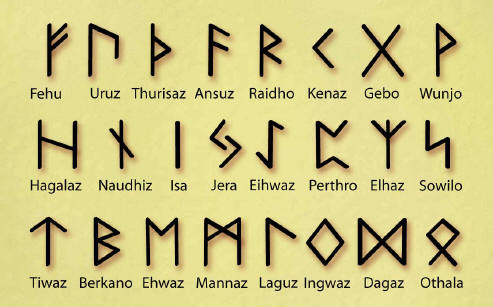
runesymbols

Have you ever wondered about the old-fashioned “ye” in shop signs?  It was a lazy printer’s solution to saving space for “th”, and should be pronounced as “the”, not “yee”!  The Old English character “y” was a graphic alteration of the Germanic rune “Þ” (which came over with the Viking raiders and the Norman King Canute and his rabble, but that’s another story).  When English printing typefaces couldn’t supply the right kind of “P” they substituted the “Y” (close enough, right?).  That practice continued into the 18th century, when it dropped out of use.  By the 19th century it was revived as a deliberate antiquarianism – to give a shop a pedigree, so to speak (read “marketing scam”), and soon came to be mocked because of it.  And now we think of it as the quaint way they used to write…

For a short, fun video on the topic, click on Ye Olde Web link, below.

ye-olde-web-link

7 Comments

Filed under History, Humor, Mistranslations, Nuts & Bolts, Translations

Anonymously Bad Grammar

The following sentences are taken verbatim from comments on unwitting websites; I’ve collected them as I’ve come across them since Autumn of 2013.  Sometimes I couldn’t help myself and put my comments in parentheses; other comments there are simply reference to the context.  I have dozens more, but certain things in life are better in small doses… Crap

  • “Don’t look like you like didn’t eat it all” (man, late-50s)
  • “I just havta buy some…” (woman, 18)
  • (Headline): “Welfare Check Leads to Homicide Investigation” (Referring to a response of officers to check on a suspicious situation, and not a monetary cheque…)
  • “I love London. Especially the countryside.” (face palm…not strictly bad grammar; just ignorance…)
  • “Now this statement I like – we are Ameica and our language is English – you want6 to live hear learn our language. And go by our rules.” (Concerning a sign that said, “Welcome to America. Press 1 for English; Press 2 to disconnect until you learn English.”  Clearly they missed grammar and spelling lessons.)
  • “Lively up yourself.”
  • “Who’s agree with us?”
  • “Sorry hand finger bad cut bleeding after topaz scared and did it. sorry it not up in the morning. Sorry sorting it I hope” (Whaaat??)
  • “I think it gonna b 2 these 4 me 2nite.” (Clearly.)
  • “That is the days I go shopping even if I don’t buy nothing hoping the family left at home do something.” (Hopefully the family is learning better grammar than this mother did…)

2 Comments

Filed under Humor, Lists, Nuts & Bolts, Quotes

Euphemisms

Euphemism 1Language is a fluid concept, constantly changing, adapting, creating, compensating and inventing itself.  Euphemisms are a prime example of that fluctuation and adaptation; successive generations come to know only the euphemism which in turn ceases to be one by that very definition, and which means that new ones will be invented to skirt the issue once again. For instance, there are hundreds of words for smell or stink, yet only a handful of satisfactory synonyms for words like fragrance, simply because hiding the ugly requires far more creativity than hiding the lovely.  For that reason alone, writers who fall back on expletives like the highly offensive F-word (a euphemism for, well, you know) are simply lazy in my book; they’re missing a great opportunity for creativity!  Interestingly, that word’s meaning has never shifted over time – it’s been in the English language since before the fifteenth century, and even then it was only written in cipher because it was too offensive to record in ink.  In my opinion it still is, and one should consider very carefully before offending unknown numbers of readers from continuing to read your book or blog; more than once have I ended reading a book when they used the word several times in the course of the first few chapters, because honestly it says something about the extent of their language abilities and their spectrum (or lack thereof) of creativity.
As a society’s norms shift, so do the euphemisms that they use to communicate.  In the Renaissance, corpulent women were considered the height of beauty; curvy, curvaceous, and shapely were instances of positive euphemisms; today they might be used by some idiot in the media to insult a Hollywood starlet who (by any other standard would be considered normal if not a little thin) gained a pound or two. Now idiot might be too strong a word; I could say brain cell-deficient, or someone who has delusions of adequacy.  I would like to point out the obvious here:  If you’re going to insult someone, at least spell it right… more often than not, you see people calling someone “dumn” or “dumm”, which smacks of the pot calling the kettle black…

For an interesting TED Talk (13:00) on the topic of euphemisms, please click here.

4 Comments

Filed under Articles, Cartoon, Etymology, Grammar, Nuts & Bolts, Writing Exercise

Vague Exactitude

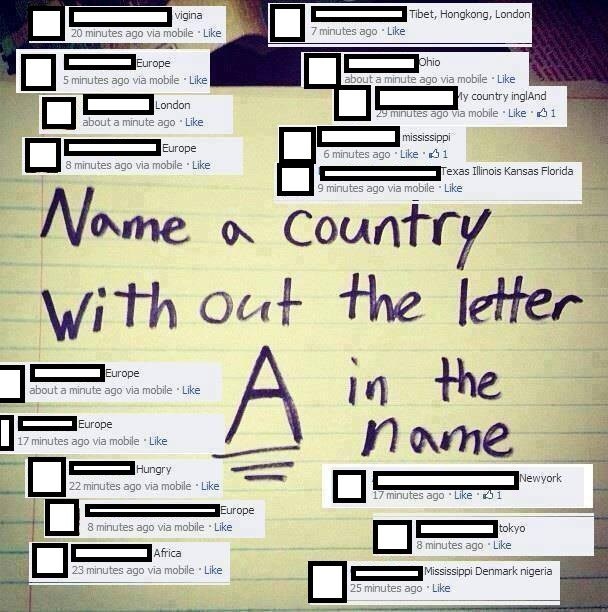
Grammer Flunkies 5Recently I asked my Facebook connections if they could help me with a Latin phrase; the phrase has to do with the computation of days in the Julian calendar (calends, ides, nones, etc.).  Here is my exact post:

“Calling all Romance Language speakers (French, Italian, Spanish, etc.): Does the following phrase (any of its words) render something similar in your language, and if so, what do those words mean? The phrase is in Latin, “Principium mensis cujusque vocato kalendas” I understand the first and last words, but am curious about the three middle words… Thanks for any help.”

Quite a discussion ensued; but I still don’t know if there is an etymological equivalent or relative to “cujusque.”  One person suggested the connection of mensis (month) with the medical term – which I should have thought of as the German slang term is “Mens” for women’s monthly cycle.  But all other entries tried to help me with the first and last word, and I spent more time explaining my request than I saved by asking in the first place.

This is a trend I’ve noticed on the rise on Facebook in particular, but I am aware that it’s also happening across Cyberland; too often people skim over a text and assume they’ve understood it well enough to make an informed contribution to a discussion.  It’s harmless when it only has to do with topics of grammar and language; but when it also enters the formation process of people’s opinions in the political or social arenas, society beware.  I usually ignore such discussions with a healthy dose of eye-rolling; but sometimes I have to intervene in the propagation of half-baked ignorance, or I won’t be able to sleep at night.

The illustration is a perfect example of this vague exactitude; people took the time to reply, but they did not take the time to properly read, to inform themselves of the actual task at hand.  I have only two words to add:  STOP IT!

4 Comments

Filed under Articles

Toe the Line vs. Tow the Line

Toe the LineRecently I used the title’s idiom, and to be honest I don’t know if I’d ever used it before in writing; I’ve heard it said onk-times, but never had much use for it so far in written form.  Then came the question, is it “toe” or “tow”?  Actually the original phrase is nautical; but that could still be either spelling.  I did a bit of research, in both etymology dictionaries and a book of naval slang, online and in my library.  The consensus, I present here.

“Toe the line,”  according to Naval History & Heritage, comes from the practice of waterproofing between deck boards with a layer of oakum, pitch and tar, thus creating a striped deck; when the crew was ordered to fall in at quarters they would line up at their designated area of the deck, toes to the line to ensure a neat line for inspection.  Toeing the line was also used as a form of punishment for lighter misdemeanours aboard a ship, such as younger crew members talking at the wrong time; they were made to stand at the line for a specified amount of time to remind them to behave.  A logical leap later and we have our idiom, because the young lads were warned to “toe the line” – they were to mentally toe the line to avoid getting in trouble.

Tow the LineHowever, “Tow the line” could be seen as a malapropism, a mondegreen, or an eggcorn.  A malapropism (also called Dogberryism) is the substitution of an inappropriate word or expression in place of the correct and similarly-sounding word.  Example:  “Officer Dogberry said, “Our watch, sir, have indeed comprehended two auspicious persons” (apprehended two suspicious persons).  A mondegreen is an error arising from  understanding a spoken word or song text incorrectly.  Example:  “The ants are my friends, blowin’ in the wind” (the answer my friends) – Bob Dylan.  An eggcorn is an idiosyncratic (but semantically motivated) substitution of a word or phrase for a word or phrase that sound identical, or nearly so, at least in the dialect the speaker uses.  Example:  “for all intensive purposes” instead of “for all intents and purposes”.  Depending on your view of things, “tow the line could fall into any of those categories.  But it has so often been misused that it has begun to develop its own connotation independent of the original idiom:  While “toe the line” indicates a passive agreement or adherence to a particular regulation or ideology, “tow the line” implies more of an active participation in the enforcement or propagation of that “line” whether political, social, or business policy, as towing an object is not passive, but participative.

10 Comments

Filed under Articles, History, Mistranslations, Nuts & Bolts, Research