Category Archives: Articles

So Many Projects, So Little Time…

I feel like I’ve been gone for ages – and I guess I have! With the world on hold through lockdown, more than just our social calendar seems to have been turned topsy-turvy. I’m sure I’m not alone in that, but it seems like a lot of routines, such as writing weekly blogs, went on hold as we tried to get our lives back on track through the time of lockdown, of switching to home-office and the changed schedules that brought with it. On one hand, I seemed to have more time on my hands (what with our social agendas being cancelled wholesale), but on the other hand, projects that had been put off wanted tackling. Lockdown is the perfect time to do things like clean out the cellar or deal with household repairs.

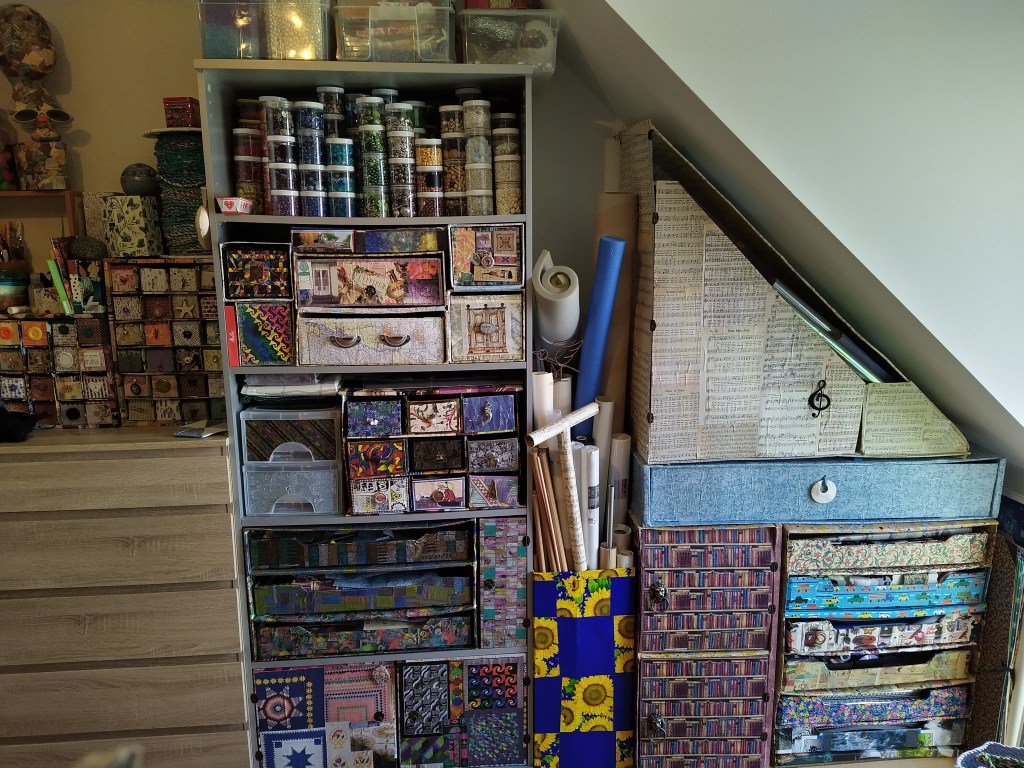
One thing I tackled was my craft room: I do a lot of crafts, and I also help people do crafts for projects – whether it’s a personal gift they want to make but don’t know how, or stage props, or repairs to jewellery or baby albums, or making the table settings for celebration dinner parties or anything in between. Because of that, I have a good supply of most supplies I might need. I also do a lot of upcycling crafts – aka tons of plastics, metals, etc. All of that requires space. It went from this

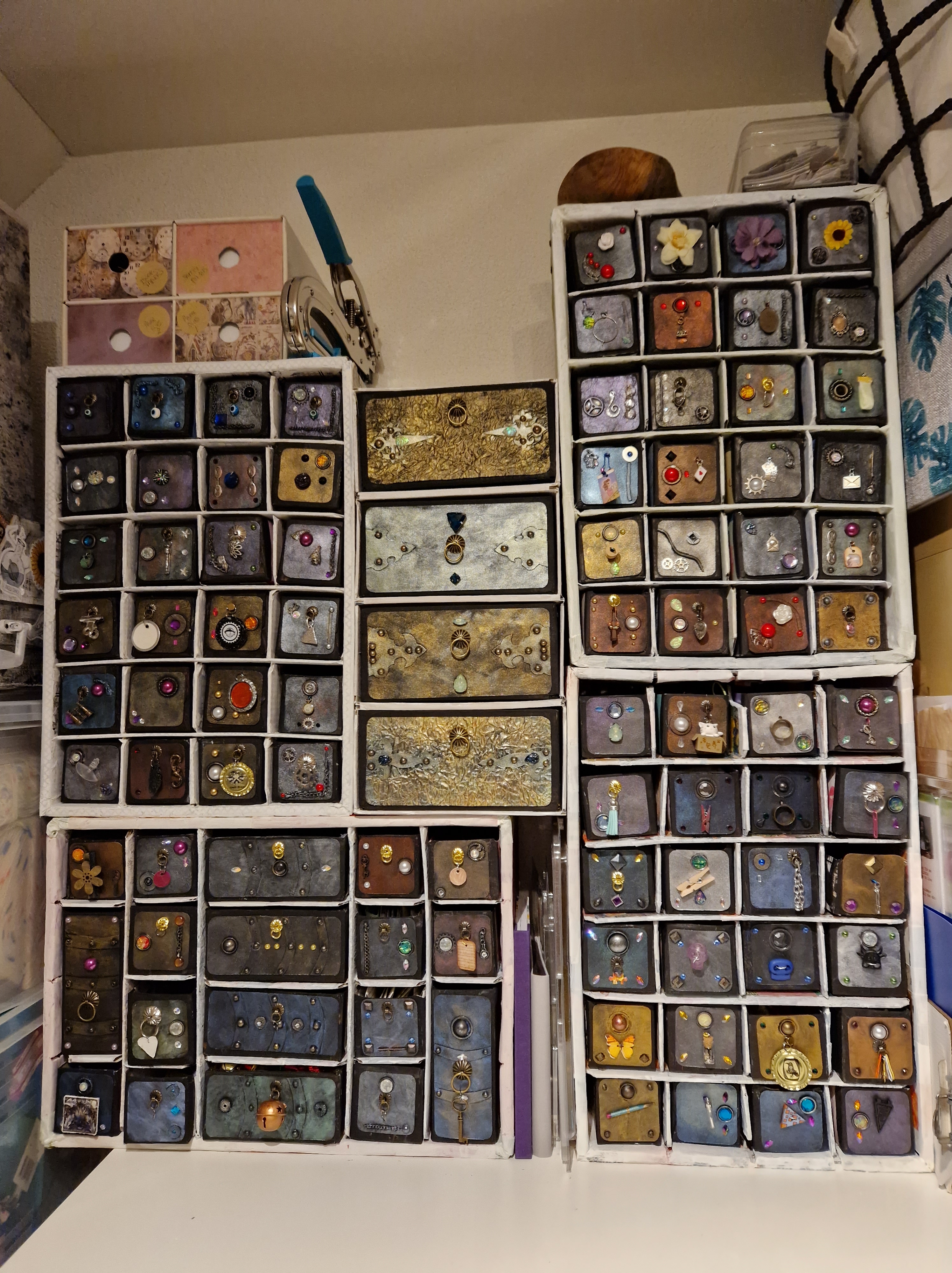
to this:

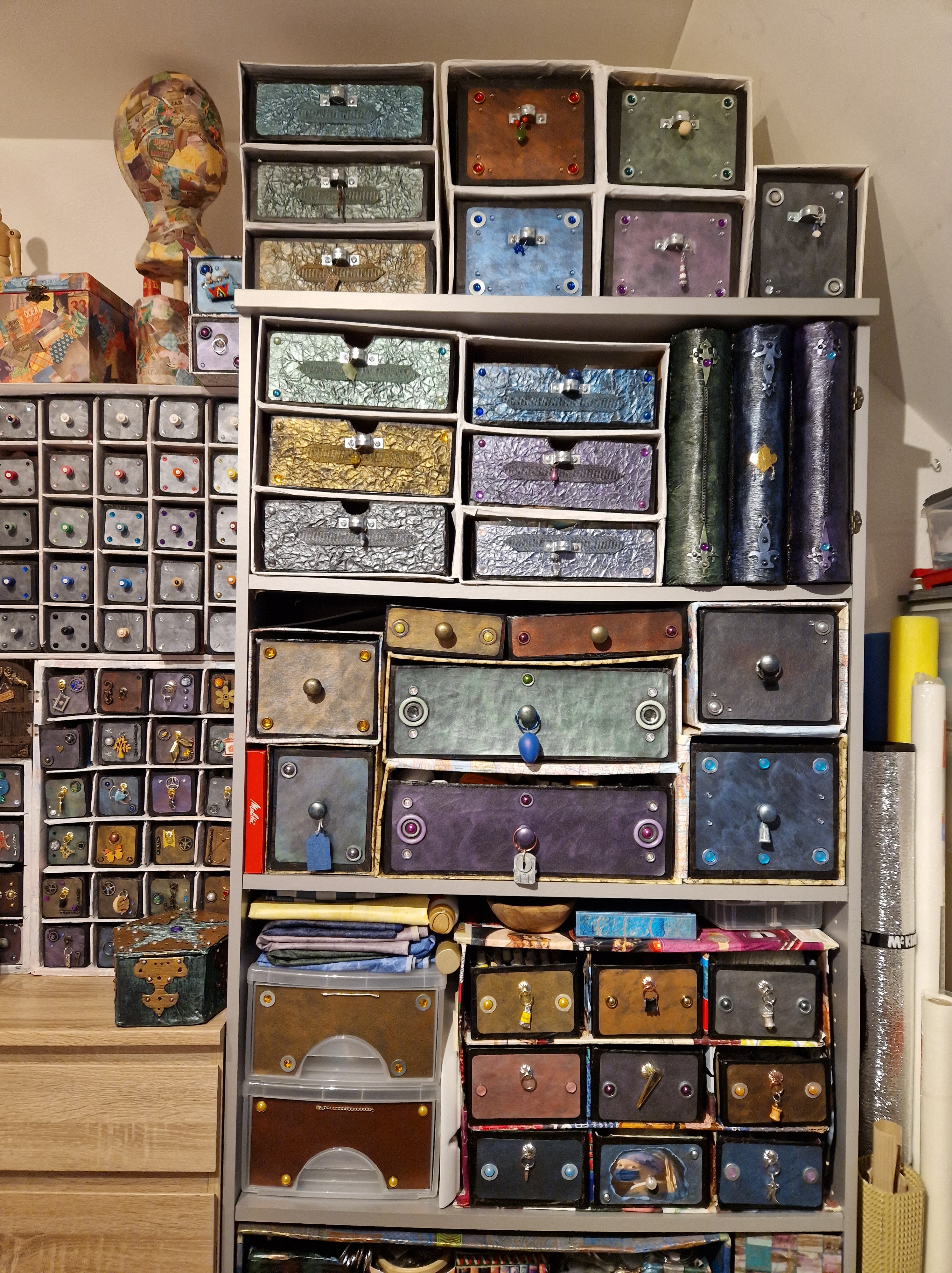
Everything in the cupboard and to the right of it was made in the past 3 weeks. The employees at our local grocery store got used to me raiding their cardboard stacks on my weekly shopping trips! All of the material used was free; to decorate, I used old wrapping papers, magazine pages, old craft book pages, outdated maps, brochures and old music sheets. Handles were made out of everything from old jewellery to cardboard to bottle caps. The boxes atop the dresser (below) were made previously, using beer advent calendar boxes (my husband got the beer, I got the boxes – win-win!).

Now that that sizeable project is done, I’m looking forward to getting back into a full writing rhythm, including blogs! I apologize for my long silence, but as you can see, it wasn’t idle time. While working on paper maché, I was percolating ideas for both my novel and for interesting topics to investigate for this blog – so keep your eyes on this space – there will be more to come soon! 😉

Update: Here are a few updated images of my craft room, which had a facelift in Autumn 2023:
4 Comments

Filed under Articles, Images

Scandinavian ‘magic sticks’ – yeast logs & yeast rings

Here’s a great little piece of history “undusted”: Have you ever wondered what came before sourdough bread, or why it works? Yeast. And the history behind the symbiotic relationship between humans and that little single-celled microorganism is fascinating.

Susan Verberg's avatarMedieval Mead and Beer

Likely one of the first organisms domesticated by man, yeast was kept at the ready using many different storage techniques throughout history. One of the oldest such known practices are the Ancient Egyptian yeast breads: delicately baked little loaves of yeasty goodness which, when crumbled into sweet liquid, would create a new yeast starter – for beer, or to leaven bread. For most of man & yeast’s history, bread yeast and beer yeast were the same. The user often had a clear preference, either for keeping the top yeast (barm) or the bottom yeast (lees). But this preference seems more random than geographic, as one farmer would prefer the top, his neighbor the bottom and some would save both – and the yeast would be used for anything that needed fermentation.

two unusual yeast wreaths

A yeast ring made out of sheep vertebrae, Gjærkrans HF-00244 (left photo: Hadeland Folkemuseum) and a teethy straw…

View original post 2,487 more words

6 Comments

Filed under Articles, History, History Undusted, Links to External Articles

Food History Undusted: Mac & Cheese

As I recently mentioned, we had problems with kitchen moths; the source has been found (dates) – the jar which contained them also isolated them; I played the jar like a maraca and sang “La Cucaracha” as we put them in the compost. We are now moth-free! Woo-hoo!

We really appreciate the advantages of storing everything in glass jars: It looks pretty, we can see exactly how much we have, what we have, and it’s inviting to be creative in meal planning. One of the pasta jars we have contains mini “Hörnli / Hoernli” – the Swiss word for “little horns” and what the rest of the world probably refers to as macaroni. The topic came up as a meal idea, and of course, being us, we got into the historical aspect. Where did it originally come from? Did it arrive in America with Italian immigrants or is it a hybrid dish?

Mac & Cheese History

This image above is nearly sacrilege for many people, myself included – I cannot imagine eating pasta from a can! But just after World War 2, manufacturing of canned goods, frozen meals and the like were coming into their stride as families pieced their lives back together and got on with the business of rebuilding the country and economy; televisions entered the home mainstream in the early 1950s (think black and white, rabbit ear antennas, no remote and 2 channels) – but that’s another topic. Product placement during television programmes and news was a major factor in influencing the purchasing power of the average consumer (product placement may have begun as early as 1873, when Jules Verne’s fame led shipping companies to lobby being mentioned by name in his upcoming novel,  “Around the World in 80 Days”).*

The oldest known reference to a dish that may be recognizable as the ancestor to the modern concoction is from the 13th century, from someone in the court of Charles II of Anjou who was familiar with the Neapolitan court; the dish was basically prepared with sheets of lasagne sliced into small squares, cooked in water and tossed with Parmesan cheese. The American version some might be more familiar with has two claims to ancestry: Either it began as a Connecticut church supper dish known as Macaroni Pudding, or it was brought over from Italy in the form of a recipe by Thomas Jefferson, who also brought back a pasta machine.

So, where was the noodle dish invented that we know today as “Macaroni and Cheese”? Switzerland, of course!

The dish, known as “Älplermagronen” (=”Alpine herders’ macaroni“) in the German-speaking areas and “Macaroni du Chalet” in the French-speaking areas, is made with those Hörnli, also known as “Magronen”, which were dubbed for the horns of the cattle, sheep and goats which the herders tend. The cheese was often a local product from the milk of those very animals, and the dry pasta was easy to hike up to their summer chalets where they slept on the Alps during the summer grazing seasons.

For a good, long read about the history of the pasta, click here for a “BBC Travel” article on the topic – and get a good taste of the Swiss Alps in the meal! And be honest – how many of you have a hankering for Mac & cheese after reading this? Click on the image below for an authentic recipe.

Alplermagronen - Betty Bossi

Image credit: Betty Bossi (the Swiss version of Betty Crocker)


*Information source: Wikipedia, William Butcher (translation and introduction). Around the World in Eighty Days, Oxford Worlds Classics, 1995, Introduction.

3 Comments

Filed under Articles, Etymology, History, History Undusted, Images, Links to External Articles, Military History, Research, Science & Technology, Snapshots in History

Life in the Slow Lane: Spring Cleaning, Glass Jars and Lockdown

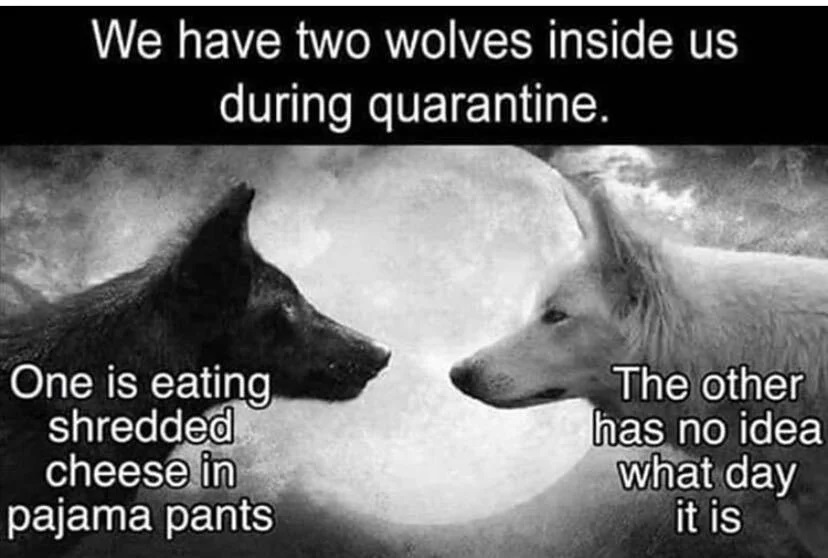
Two Wolves, QuarantineIt’s been nearly a month since I’ve posted a blog – my deepest apologies! It doesn’t happen often, but sometimes life takes over a bit too much to think straight. Just like for everyone else on the planet, life as we knew it has come to a grinding halt, and that’s not necessarily a bad thing – it’s just different, and it takes some adjusting time. For me, that’s meant recovering energy from a mild case of Covid-19 – it mainly just wiped out our energy for about a month, giving me achy joints; in the meantime, I’ve been getting used to having my husband at home 24/7 as he works from home. It means we get to have lunch together, but it also means that I’ve spent more time in the kitchen than usual. Even with all the adjustments, I could get used to it all and enjoy it! The introvert in me is fine not having a loaded agenda; I’ve had more time to write, to do a bit of “urban” (read “indoor potted plants“) gardening (mainly kitchen herbs), and tackle a bit of spring cleaning.

When you slow down, you tend to notice things in more detail; you might think of old friends that you haven’t contacted in a while, and you pick up the phone to call, Skype, Zoom or message. You notice things around your own home that, as busy as life usually is, you’ve overlooked or ignored as a non-priority.

But now there’s time. Time to look around, time to observe, time to do something that hasn’t been a priority before. You know what I mean… you’ve walked past something in your home that’s out of its place a dozen times or a dozen weeks without putting it where it goes. Those little nick-nacks and thingamabobs that go somewhere else; a book that you’ve been intending to read and have dusted off a time or two in the meantime; that glass jar that came out of the dishwasher a week or two ago that you’ve intended to use… you get the gist.

Spring Cleaning

Speaking of glass jars, I’ve always held on to large ones or unusual ones, thinking I’d put them to use someday. Well, that day has arrived: About a month ago, I started battling those horrid little kitchen moths; likely arriving in a package of dates or a package of Asian noodles (where they’ve been found thus far), they kept appearing every time I thought I’d finally dealt with them. So I did a bit of research, and ended up emptying and taking the cupboards apart! Every glass jar I could find now has something in it – dried beans, rice, spices, flour, grated coconut, etc. Any other time, I would be able to go out and buy large jars; but in this time of lockdown, the only source I’ve had is our local grocery store – and even they have such shelves cordoned off… only things that are necessary have been for sale (so I’ve bought them anyway – yes, I ignored the restriction, which was there to keep one from buying things at a grocery store that other shops, forcibly closed, might sell you – but I would have bought them in the same store, anyway). Maybe they took the hint, because last week, they started selling 2-5 litre Fido canning jars, and I’ve stocked up “legally” now! It’s been good – I now know what I’ve got in the pantry. I have TONS of spices (which I use), at least 7 varieties of rice (yes, they are all necessary!), and a good collection of dehydrated foods (all homemade). My husband’s a happy camper, as I’ve made our kitchen decorative shelves into a veritable candy store, with snacks galore: dehydrated snacks like watermelon, bananas and candied ginger; dates, figs, nuts. The glass jars look nice, and you can see how much you have, take what you want without leaving an open package (a neon sign for crawlies), and have something healthy within sight when you get a snack craving. Yes, it took moths to get my kitchen more decorative.

I’m curious: What have you been doing around your house during lockdown that you might not otherwise have undertaken? Please comment below!

12 Comments

Filed under Articles, Musings

DIY Face Masks & Hand Sanitizer

Corona Jokes 16

Official Disclaimer…

I hope you’re all staying in, and staying safe! Once in a while, however, you may find that you need to go out for groceries and supplies. Studies have shown that a person touches their face 16 times per hour on average; so if you go out for an hour’s worth of shopping, you’ve probably touched your face several times; in the best of times, this is no big deal and we don’t even think about it (ask Mark Rober, below); right now, however, it could be lethal.

A great video that illustrates how germs spread in a fun, vivid way is by Mark Rober (NASA engineer involved in designing hardware on the Mars Rover) – check it out here.

With facemasks in short supply, and hand sanitizer as rare as hen’s teeth, we need to find solutions we can make at home.

Hand sanitizer is simple enough: Mix rubbing alcohol (or something with at least 60-70% vol. alcohol content) and a bit of aloe vera gel with a few drops of essential oil for scent. Make sure to keep your hands moisturized, too – washing your hands more than usual, and using alcohol-based products when out and about, will dry your skin out – and cracked skin will give another opening for germs to get in. The best way, as I’m sure you’ve all heard, is to wash your hands for 20 seconds; please turn OFF the water while you’re lathering up – don’t waste water! And since you’re soapy anyway, lather down the faucet before rinsing off your hands… cleaning two birds with one bath, so to speak.

Face masks can be a bit trickier, especially if you don’t sew. So I’ve rounded up a few simple ideas for DIY facemasks; some are with sewing, and some without; some with cloth and some are simply paper towels and a minute of folding. Keep in mind that these will not stop bacteria from getting through; they will simply keep you from touching your face while out in public, which will be better protection than nothing. Always remove face masks by the ear straps, not by the “muzzle”.

Just click on the images below to watch the link’s tutorial:

This is a simple 2-layered cotton mask, of which I’ve made a few already, with elastic earloops and a metal wire across the nose bridge; the wire can be a pipe cleaner, a bread wrap wire, or a thin piece of florist’s wire (a paperclip would also work in a pinch, though it will be less pliant):

Facemasks 2

This is a straight-edged, no-pleat, simple sewn mask with one tie at the back of the head, nose bridge wire, as well as an inner pocket to insert disposable filters; I made one today – it’s fast and simple:

Facemasks 3

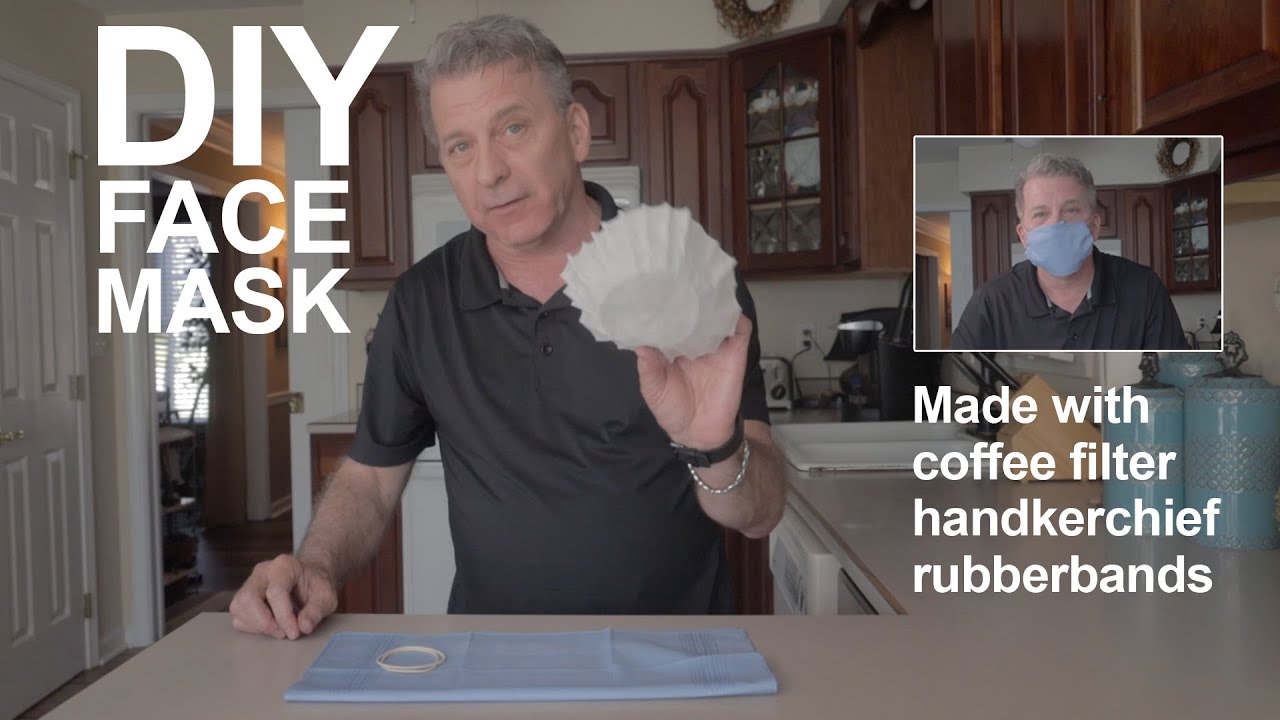
This next mask is a no-sew solution using things you likely already have in your home, using a piece of cloth (T-shirt scrap, bandana, scarf or piece of cotton material of any kind), 2 rubber bands (either the office variety or a hair elastic band); as an added layer of protection, you could use a coffee filter tucked into the layers, too:

Facemasks 4

Facemasks 5

This last mask is the simplest – a one-use, cheap alternative – you could even draw a smiley face on the outside! All you need is a paper towel or two, a paperclip, tape, a stapler, and 2 rubber bands:

Facemasks - Easy No-Sew Shop Towel Mask - shortened edit

Stay safe, everyone! Look for the creative, the beautiful, the cheerful and the interesting in each day!

5 Comments

Filed under Articles, Humor, Images, Science & Technology, Videos

The Grassroots Italian Response to Anything: SING!

The Italians have continued singing, despite their quarantine in relatively small flats and closely-packed neighbourhoods. This is a great response to counter the feelings of isolation, breeding solidarity instead. At 12 pm and at 6 pm, people join forces to boost morale.

For a smile or two, click on the links below!

Flash Mob, Italian Style

Viva Italia!

One of the Italian flags flying on front of the Altare della Patria, in Rome - Dave Kellam, flickr

One of the Italian flags flying on front of the Altare della Patria, in Rome (Dave Kellam/flickr)

10 Comments

Filed under Articles, Snapshots in History

The Quandry of Quarantine

T Rex Wahing Hands

There’s been a lot of talk about the Corona Virus; in fact, that seems to be the only topic in the news right now; and while I rarely go onto social media sites, I was curious about what’s circulating there, and so I went on yesterday. While I agree that misinformation and scare-mongering are never helpful (and those both seem to abound in social media, like a wildfire virus) I disagree with people’s faulty conclusion that there must, therefore, be no danger of coming into contact with the disease or with the disease itself.

My husband and I have been cautious, we’ve been washing our hands and keeping a distance between ourselves and others, but the fact is, we all come in contact with things that have been in contact with others every day: The coins you use, the door handles you turn, the shopping cart you push, the food packages stocked onto the shelves in the store by someone else. And despite all our precautions, we have been infected. We are now under self-imposed quarantine for two weeks.

Quarantine will be a topic for a lot of people; in Italy currently, that “lot” is 16 million or more. So what do you do with two weeks within your own walls? Nowadays, I can shop online – I can order groceries delivered to our door from local shops (if they’re not under lock-down, too); I can have electronics delivered overnight – faster than if I had to go to a shop (if the postman can still get out). But I think the most deciding factor in making it through quarantine well is on the level of mental health; however, some people are better-equipped for isolation than others. Indoor hobbies play a huge role in helping people pass the time. Those who have no hobbies, perhaps because they think they have no time for such things, will suddenly find themselves with LOTS of time on their hands. People like my husband, who have to move and exercise or they go a bit stir-crazy, will need to figure out creative ways of doing so within the confines placed on them. Even if you aren’t there yet, it may be helpful to figure out ways to make time pass meaningfully, because like it or not, Corona is in our lives for a while yet, and it will shape our societies, economics and personal constructs for some time to come.

So to help, I thought I’d give a few suggestions of what to do on a rainy day, or as in our case, quarantine:

  • Learn something. YouTube abounds with interesting videos on every topic under the sun. Here are a few of my favourite channels:
  • For entertainment, YouTube offers films, comedy (try “Dry Bar Comedy“), talk shows (e.g. Good Mythical Morning)
  • Do a puzzle. Either a physical one or a virtual puzzle.
  • Play an instrument – you might have enough time to polish your abilities.
  • Learn a new craft, or dust off one you already know how to do. Find an outlet for your results – often, a goal will help focus your efforts… either as a gift for a friend, or as a donation to a charity or cause (e.g. hats for cancer patients, or toys for animal shelters). I have an endless supply of ideas for crafts, so I’m all set. 😉
  • Read a good book. If you need ideas, check out this link! 🙂 Books that I like to read depend on my mood; I like anything by Georgette Heyer, Jane Austen and Stephenie Meyer; the Descended series by Dana Pratola, and anything by C.S. Lewis or J.R.R Tolkien.
  • Watch a good film. Whether a DVD or something through an online source, there are hundreds of good possibilities out there.
  • Connect with people. That may sound odd as a suggestion for time spent in quarantine, but people are a phone number away. We have one friend here who is also in isolation, and she knows no one else in Switzerland yet; so we are on the phone daily right now, as a way for her to connect with someone outside of her four walls. We’ve called friends to make sure they’re okay (if need be, I can go out, as I have a supply of face masks). If you have other people in your home, play a game together.

I hope you never face quarantine, but if it happens, decide ahead of time to view it as an opportunity dropped into your lap; you’ll be better able to cope with it if you have a positive outlook on it, and you’ll be more equipped to take the bull by the horns and find a way to come out the other side a better person!

14 Comments

Filed under Articles, Cartoon, Humor, Links to External Articles, Musings

Greetings from the Global Village

Depending on where you are in the world, right now you’re feeling the effects of our global village more or less than others. Here in Switzerland, the Corona Virus is headline news. We’ve had a few cases here – 43; the government has issued instructions on how to sneeze properly (into your sleeve “elbow” or into a tissue), to stay home when sick, and to cease greeting rituals (here, that would involve either hand-shaking, three kisses on the cheeks, or hugs). Gatherings of over 1,000 people have been banned – goodbye, sports fan sections and exhibitions. Below that number, lists of participants must still be kept to trace any spread to a patient zero. This includes our church; it was strange not to hug people, and to checklist who attended. It might be just a matter of time before facemasks are commonly worn in public (they’re sold out here, but I’ve yet to see someone wearing them in public).

The global village is also felt in the breakdown of the chain of supplies for goods; many shelves in our supermarkets are empty. If tin cans are made in some outback area of China that has now been quarantined by the Chinese government, then companies canning foods in Europe don’t get the wares they need to keep their factories running – as soon as one interruption happens, it breaks the steady flow. If enough shelves empty, people begin to panic and hamster supplies. Remember Y2K? The panic induced by the media, in the end, came to nothing. Yet the media are once again being panic mongers by continually focusing on this issue. What else is happening in the world? I have no idea, because the Corona Virus has taken over the world press. What I do know is that this is now the new reality; we’ll just have to get used to it and get on with our lives.

Flu girl-blowing-nose-illustration - Mayo Clinic, credit

Illustration credit: Mayo Clinic website

While I take all of this as seriously as it needs to be taken and find some of these measures sensible in any case of sickness, even the common cold, I am also a lover of history – so let me put the present crisis into a larger context:

  • The World Health Organization (based here in Switzerland, by the way) estimates that worldwide, annual influenza epidemics result in about 3-5 million cases of severe illness and about 291,000 to 646,000 deaths. That’s the old, run-of-the-mill flu, something that most of us, if not all, have had once (or even multiple times) in our lives.
  • The Covid-19 flu strain (known as the Corona Virus) is 10x likelier to be fatal.
  • The Spanish flu, which struck just after WW1 (and which is related to the Swine flu of 2009), killed an estimated 40-50 million (but could have been as high as 100 million). The common name is a misnomer: The reporting of the flu in Allied countries and in Germany was suppressed by wartime censors to avoid damaging already-low morale, but the newspapers were allowed to report cases in other countries, such as Spain. As a result, people thought the flu was heaviest there or had even begun there; thus, the common name. To put that in perspective of the Great War, the total number of military and civilian casualties in World War I is estimated to be about 40 million.
  • Going further back, the Black Death killed 50 million people in the 14th century (1346-53) – that was roughly 60% of Europe’s entire population at the time. It reset the economic and social structures, ending centuries of feudalism with its systems of lords, vassals and fiefdoms; it also killed off a disproportionate number of priests as they were infected while helping the sick (as well as the fact that they lived in closed communities). This necessitated a restructuring even of the church in some countries, opening the way for lay preachers and access to the Bible for common people (that’s a whole other topic).

These statistics shouldn’t induce panic; on the contrary: It shows us that life goes on. We should take precautions and practice sensible hygiene – washing hands when we come home from shopping or work, using hand disinfectant* when out, keeping distance as much as possible between ourselves and strangers when out in public, avoiding crowds of people, and avoiding physical contact with people outside the immediate family. But in the end, it is what it is; we can do what we can do, and no more. [* In case hand disinfectant is sold out in your area, you can make your own: Proportion into a pump or squeeze bottle 1/3-1/2 aloe vera gel (as close to 100% aloe vera as you can get), 2/3 rubbing alcohol or any alcohol with 60% vol. or more, and a few drops of essential oils for scent.]

How we respond to the present crisis will show our mettle; there’s no need to panic, to hoard, or to isolate ourselves behind closed doors. Hopefully, the current climate of raised awareness will linger; that it will teach people to consider others (I’ve lost count of the times I’ve been greeted with three kisses, only to be told after the fact that the other person is sick! I’d rather be warned and be able to have a choice in exposing myself or not, thank you very little…) and to generally adopt more hygienic practices even when sick with a common cold.

For me, far more important than the outward circumstances is the heart of a community that manifests itself in times of crisis. If we could look into individual communities in those past ages, we would almost certainly see people supporting others; groups who united to help the families affected. The human stories would most certainly be inspirational. There are numerous contemporary examples of natural disasters in which people have pulled together, whether locally or internationally, and helped the helpless. I can think of a dozen people in our church who would cook meals or run errands for those who are sick, and I’m sure there are far more people out there willing to step out of their own isolated, daily bubbles – and that’s where such a crisis becomes a blessing to communities, in the long run.


6 Comments

Filed under Articles, History, Military History, Science & Technology

History Undusted: Bubble Wrap

I do a lot of crafts. I mean, a lot variety-wise, and a lot quantity-wise. When I’m not writing, managing our household, planning meetings or teaching students (I’m a vocal coach and an English teacher for adults), I’m usually doing some kind of craft, and it more often than not involves some form of upcycling – turning “trash” into “treasures”. Recently, I’ve been making sheets of plastic-confetti-filled bubble wrap, ironed into what’s known as “ploth” (plastic cloth). These can then be sewn into bags, etc. It got me to thinking about just how bubble wrap came to be. I have tons of the stuff, stashed here and there in the craft room, for such projects – and I’m constantly on the lookout for creative uses for that poppable fun.

Did you know that originally it wasn’t intended as packing material but as wallpaper? In 1957, Swiss chemist Marc Chavannes and his business partner, Alfred Fielding, wanted to make a wallpaper that would appeal to the emerging Beat culture [for those of you unfamiliar with that term, it was a generation of post-war, anti-establishment rebels who were more or less the precursor to the 60’s hippie and counterculture movements]. What the partners did was simple enough: They put two layers of a plastic shower curtain through a heat-sealing machine. But it came out in what they first saw as a failure, with air bubbles trapped between the two layers. They figured they were onto something, failure or not, and so they got a patent and then began experimenting to find other uses. Wallpaper wasn’t popular; neither was their suggestion to use it as insulation for greenhouses (perhaps that was simply a matter of marketing to the wrong demographic). Then, around 1960, IBM began shipping their newly-designed 1410 computers and needed a way to protect the delicate dinosaurs – eh, I mean, computing mammoths. That’s a LOT of bubble wrap. The rest is, as they say, history. And in case you’re wondering, yes, people have been popping the bubbles from the beginning, just for fun. So much fun, in fact, that the last Monday of every January is officially “Bubble Wrap Appreciation Day”.

Click on the image below to watch an IBM recruiting film (1 minute), from 1960. You can also see one of IBM’s massive scientific mainframes being used by the original “computers” of NASA in the film “Hidden Figures“.

IBM 1401 unit - History of Computer Museum archive photo

IBM’s 1410 computer promotional photo, 1959. Credit, Computer History Museum archives


6 Comments

Filed under Articles, History, History Undusted, Research, Science & Technology, Snapshots in History, Space, Astronomy

History Undusted: Human Alarm Clocks

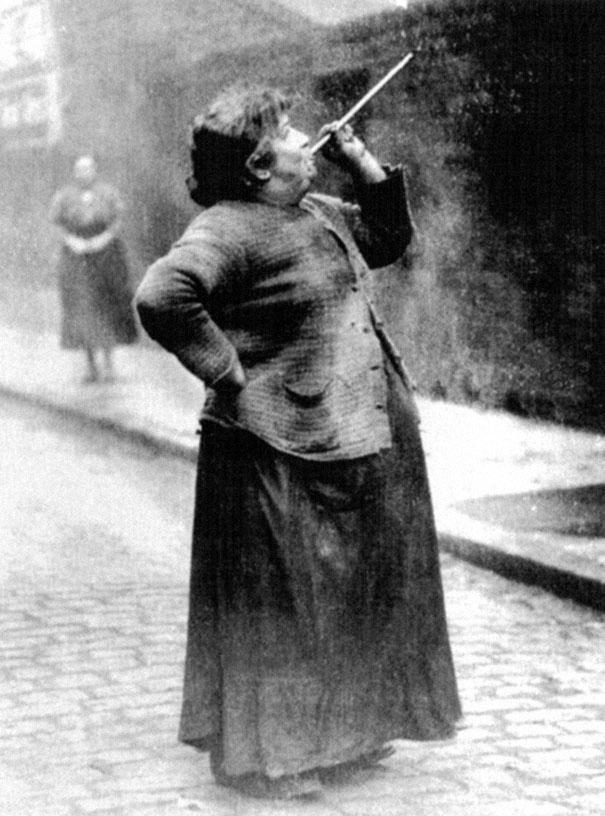
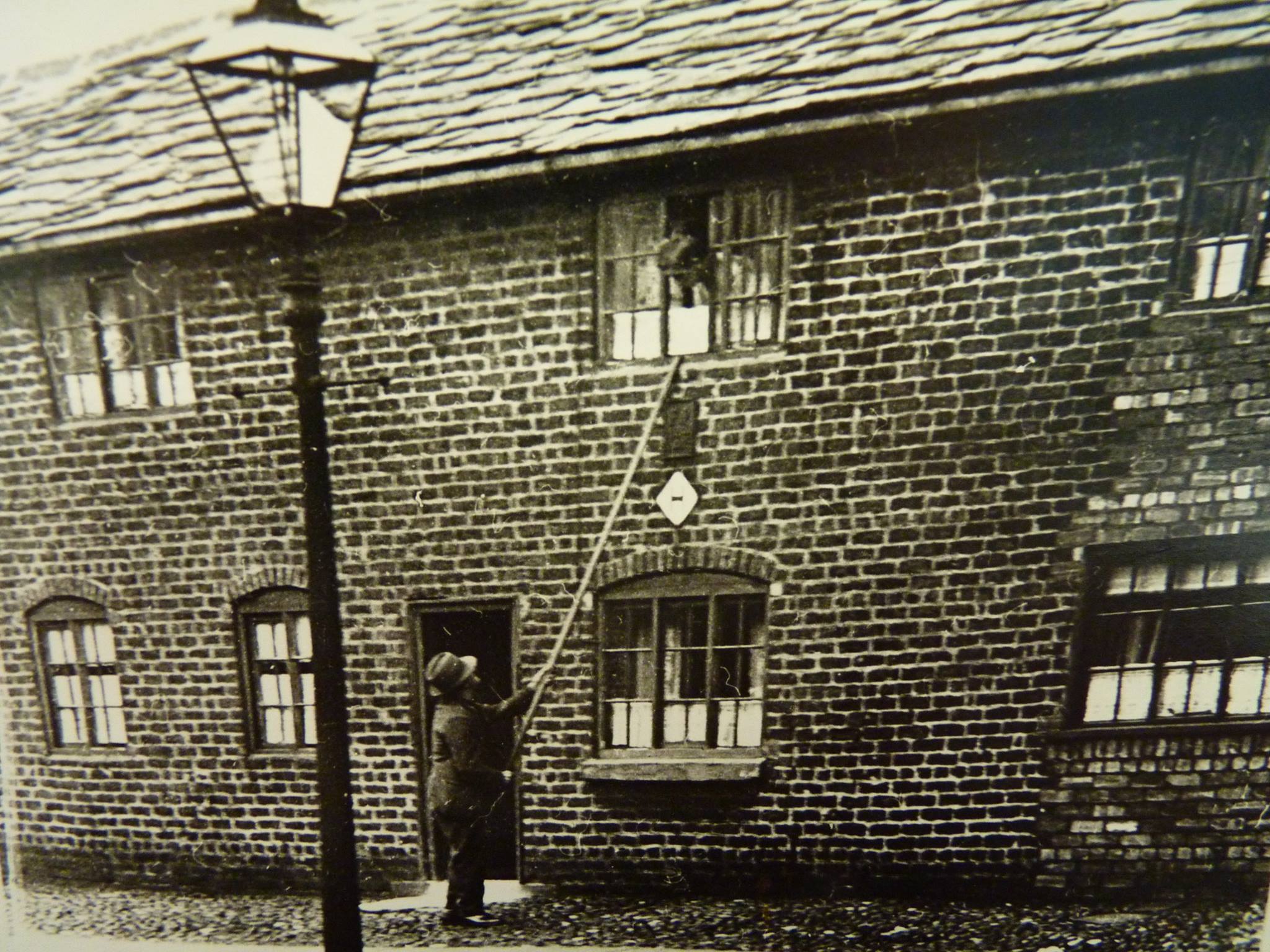
If you were living in the 19th century, before the age of reliable and affordable mechanical alarm clocks, how could you be ensured of getting up on time to get to work? Hire a knocker-up, of course. That’s if you lived in Britain or Ireland. Knockers-up were employed from the time of the Industrial Revolution; the last one retired in Bolton (a former mill town in Greater Manchester) in 1973. Also known as “human alarm clocks” they would use sticks, clubs, pebbles or pea shooters to knock on clients’ door and windows; some would move on after a few taps, while others wouldn’t move on until they were sure the client was up. I wonder who woke them up?

According to the Lancashire Mining Museum, there was a conundrum from the times that went like this:

We had a knocker-up, and our knocker-up had a knocker-up

And our knocker-up’s knocker-up didn’t knock our knocker up, up

So our knocker-up didn’t knock us up ‘Cos he’s not up.

The original problem employed knockers-up faced was how not to wake up their paying clients and several of their neighbours on either side for free; they hit upon (no pun intended) the idea of long poles or pea shooters to tap on the upper windows; clients obviously couldn’t sleep in a back room, or they’d never hear the knock. The fees charged depended on how far the knocker had to travel to reach the house and how early said knock needed to be.

In 1878, a Canadian reporter was told by Mrs Waters, of northern England, that she charged eighteenpence a week for those who needed waking before 4 a.m., and for those after 4 a.m., it was a shilling (twelvepence) a week. Those who had to be aroused from five to six o’clock paid from sixpence to threepence.

The miners of County Durham, Ireland, refined the requirements a bit: Built into the outer wall of their houses was a slate board, on which they would write their shift times in the mine; the company-hired knockers-up would then know when and when not to wake them up. These boards were known as wake-up slates or (far better, in my opinion), knocky-up boards.

Here are a few rare photographs of knockers-up knocking up:

HUMANA~3

Human Alarm Clock 2Human Alarm Clock

Knocker-up - old-leigh-marshs-row-twist-lane

And just so we’re clear, the American English phrase “to be knocked up” (pregnant) has nothing to do etymologically with the British occupation or the sundry adjectives that derived from it. The knockers-up were usually elderly men or women, or even policemen who supplemented their incomes by taking on the task of waking their clients. In fact, one policeman (as told during the inquest) saw no reason to abandon his post as a knocker-up when a man found him on his route and told him that he’d found a dead woman; she turned out to be Mary Nichols, the first victim of Jack the Ripper.

Original post, September 2015

5 Comments

Filed under Articles, Etymology, History, History Undusted, Images, Links to External Articles, Snapshots in History