Category Archives: Grammar

Style Sheets, and the Recipe of Writing for Recipes

The Nitty Gritty

I have hundreds of recipes pinned to dozens of Pinterest boards, so I come across a wide range of offerings.  Nowadays, the images have to be perfectly lit and photoshopped to make them look appealing; it’s like sugar in pre-packaged foods… we’ve gotten so used to the artificial visual flavour that if a photo were undoctored in some way, it would be glaringly out of place.  But what is often missing is the same attention to detail in the writing.  I’ve seen “tablespoon” misspelt a few ways, or the abbreviations as Tbs., tb, tbs, tbsp, T., etc. So which one is correct?  And do the forms or the etiquette of choices differ between print and online versions?

I pulled out a cross-section of cookbooks in my library and thumbed through them; I took older, newer, American and British, and I scoured online recipe sites like Betty Crocker; here’s what I discovered:

  • When writing a cookbook for a printed version, editors/publishers tend to write out the entire word [tablespoon, teaspoon, cup, pound, ounce, etc.].
  • The two most standard contractions for tablespoon are Tbs. and tbsp.  They can be ended with a period or not; I would tend to do it so that the contraction looks intentional and not a typo!  I grew up learning Tbs. for tablespoon and tsp. for teaspoon.  To each his own.
  • Blogs that are a collection of recipes, or allow contribution from subscribers, will have a hodgepodge of abbreviations and contractions because it’s simply too difficult to keep on top of such issues.  Even professional sites such as Betty Crocker have gotten sloppy about it; for example, they often (but not always) spell out words like tablespoon, and then suddenly revert to contractions for pounds and ounce within the same recipe.  Consistency should be the golden standard if nothing else is.
  • Recipe instructions are written in the imperitive mood (bake this, stir that, knead this, eat with that, etc.).  You’ll never find 1st, 2nd or 3rd person pronouns within the instructions of a recipe; at most, you’ll find them in the short intro before a recipe begins.
  • In a printed book, NEVER does a recipe instruction include the ramblings about the cat in the kitchen, or what you changed about the recipe, or what you’re doing that’s unrelated to the topic at hand.  If you’re writing a personal blog, that’s a matter of personal preference; I tend to want the recipe itself streamlined to make it easier to read on the fly in the kitchen, but maybe that’s just pragmatic ol’ me.  If there are additional notes or something I’ve changed about a recipe for my own blog, I tend to put that in the introduction and not in the actual recipe, but there’s not a set rule – it depends on where it’s warranted or relevant.

As with any kind of writing, some things are a matter of personal preference; at that point, where there is no one grammar rule to apply, the most important thing is to be consistent throughout the manuscript.

Style Sheets

If you’re thinking of writing a cookbook (or any other manuscript for that matter!), I would recommend keeping what is called a style sheet; this is used in publishing houses where several people will have the manuscript in hand at some point; this sheet prevents someone else from undoing choices – they can look at the style sheet and know that it was an intentional decision, and leave it; otherwise the risk is that one man’s capital is another man’s lower case, and so on.

As an author, the style sheet is my running list of decisions to keep me on track as I  write; it can include sections for punctuation (have I decided to go with British or American English punctuation for things like Mr / Mr.?), unusual capitalisations (for me, one issue was when to capitalise “sir” as a substitute for a proper name – I could always refer to my sheet when in doubt), abbrevitation/contraction choices, etc.  It could also include a record of my choice of fonts, spacing between sections, indentations, and so on.  I have a section for my “cast of characters” – to remember how I’ve spelled a name, or what I’ve named an infrequent cast member. I might include an abbreviated description of a character so that I don’t give them green eyes in chapter one, and blue eyes in chapter ten.  What you can include in your style sheet is endless… foreign terms/spellings, reminders to check validity of hyperlinks, punctuations such as en- and em-dashes, how you’ve written specific gadgets (capitalised or not, hyphened or not, etc.).  Below is a basic style sheet template to get you started.

No matter what you’re working on, hone your craft, and keep writing!

Copy-Editing - Style Sheet

2 Comments

Filed under Articles, Grammar, Nuts & Bolts

Similes Galore

Have you ever wanted to compare two people, places or things in a pithy way, but couldn’t remember a particular saying, or think of a way to put it?  For starters, what you’re looking for is called a “simile”, and they abound in English!   A simile is a figure of speech used to compare one thing to another, usually using “like” or “as”.  Some are obvious, some are quirky, and some must have a fascinating history.  Here is a small selection using “as…as”; if you know of any others, please add them in the comments below!  Have a great weekend, and keep writing!

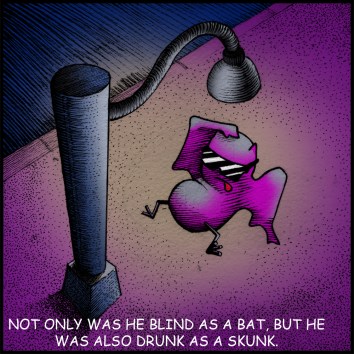
blind as a bat & drunk as a skunk - by jellogiant, Deviantart

As likely as not

As long as your arm

As loud as thunder

As mad as a hatter / a March hare

As mad as a wet hen / a hornet

As mean as a snake

As meek as a lamb

As merry as a cricket

As mild as a dove / a lamb / milk / May

As much use as a handbrake on a canoe

As mute as a fish / an oyster / a statue / a stone

As naked as a jaybird / the day they were born

As nervous as a cat (in a room full of rocking chairs) / pig in a packing plant

As nutty as a fruitcake

As obstinate as a mule

As often as not

As old as the hills / Adam / Methuselah

As pale as a ghost / death / ashes

As patient as Job / an ox

As plain as a pikestaff / day / the sun / the nose on your face

As playful as a kitten

As pleased as punch / a dog with two tails

As plump as a partridge

As poor as a church mouse / a rat / Job / Lazarus / dirt

As pretty as a picture

As proud as Lucifer

As proud / pleased as punch

As proud / vain as a peacock

As pure as a lily / (the driven) snow

As quick as a dog can lick a dish / a wink / lightning / a flash

As quiet / still as a mouse / whisper

As red as a rose / a cherry / beetroot / a lobster / a turkey-cock / blood / fire

As regular as clockwork

As rich as Crassus / a Jew

As right as rain / nails / a trivet

As round as a barrel / a ball / an apple / a globe

As safe as houses / the Bank of England

As scarce as hen’s teeth / ice water in hell

As scared as a rabbit

As sharp as a tack / a needle / a razor

As sick as a dog / a parrot

As silent as the dead / the grave / the stars

As silly as a goose / a sheep

As slim as a willow

As slippery as an eel / ice

As slow as a snail / a wet week / molasses in winter / molasses in January

As sly as a fox

As smooth as butter / oil / silk / glass

As snug as a bug in a rug

As sober as a judge

As soft as butter / down / silk / velvet / clay / wax

As sound as a bell

As sour as vinegar

As straight as an arrow / a ramrod

As steady as a rock / the Rock of Gibraltar

As sticky as jam

As stiff as a poker / a ramrod / a board / pikestaff

As still as a mouse / death / the grave

As straight as a die / an arrow / a poker / a ramrod

As strong as an ox / a horse / a bull

As stubborn as a mule / a goat

As sure as death and taxes / death / taxes / a gun / eggs are eggs

As sweet as honey / sugar

As tall as a steeple / maypole / a skyscraper

As thick as thieves / blackberries / pea soup

As thick as two (short) planks

As thin as a rail / paper / thread / a stick

As timid as a deer / hare / rabbit / mouse

As tired as a dog

As tough as old boots / nails / leather

As tricky as a monkey

As true as steel / flint

As ugly as sin / a scarecrow / a toad

As useful as a chocolate teapot

As vain / proud as a peacock

As warm as toast

As watchful as a hawk

As weak as a kitten / a baby / water

As wet as a drowned rat

As white as a ghost / a sheet

As white as snow / chalk / milk

As wide as the poles are apart

As wise as Solomon / an owl

As yielding as wax

9 Comments

May 27, 2017 · 12:23 PM

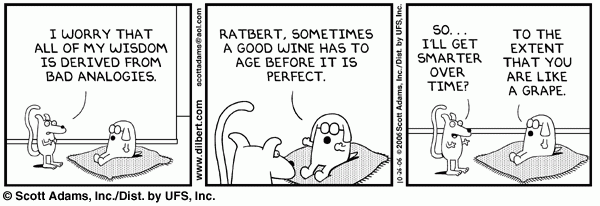
The Pitfalls of Analogies

These are priceless examples of creativity gone awry.  I don’t know who originally wrote these gems or compiled them; if you know, please tell me so that I can give credit where credit is due!

21 Analogies Used by High School Students in English Essays

  1. “When she tried to sing, it sounded like a walrus giving birth to farm equipment.”
  2. “Her eyes twinkled, like the moustache of a man with a cold.”
  3. “She was like a magnet: Attractive from the back, repulsive from the front.”
  4. “The ballerina rose gracefully en pointe and extended one long slender leg behind her, like at dog at a fire hydrant.”
  5. “She grew on him like she was a colony of E. Coli and he was a room temperature Canadian beef.”
  6. “She had him like a toenail stuck in a shag carpet.”
  7. “The lamp just sat there, like an inanimate object.”
  8. “Her face was a perfect oval, like a circle that had two sides gently compressed by a Thigh Master.”
  9. “Her eyes were like the stars, not because they twinkle, but because they were so far apart.”
  10. “His career was blowing up like a man with a broken metal detector walking through an active minefield.”
  11. “The sun was below the watery horizon, like a diabetic grandma easing into a warm salt bath.”
  12. “From the attic came an unearthly howl. The whole scene had an eerie, surreal quality, like when you’re on vacation in another city and Jeopardy comes at 7:00 p.m. instead of 7:30.”
  13. “It was as easy as taking candy from a diabetic man who no longer wishes to eat candy.”
  14. “She had a deep, throaty, genuine laugh, like that sound a dog makes before it throws up.”
  15. “Their love burned with the fiery intensity of a urinary tract infection.”
  16. “It’s basically an illusion and no different than if I were to imagine something else, like Batman riding a flying toaster.”
  17. “If it was any colder, it would be like being in a place that’s a little colder than it is here.”
  18. “Joy fills her heart like a silent but deadly fart fills a room with no windows.”
  19. “The bird flew gracefully into the air like a man stepping on a landmine in zero gravity.”
  20. “He felt confused. As confused as a homeless man on house arrest.”
  21. “The revelation that his marriage of 30 years had disintegrated because of his wife’s infidelity came as a rude shock, like a surcharge at a formerly surcharge-free ATM.”

dilbert-bad-analogies

4 Comments

Filed under Cartoon, Grammar, Humor, Lists, Nuts & Bolts, Writing Exercise, Writing Prompt

The Glorious Chaos of English

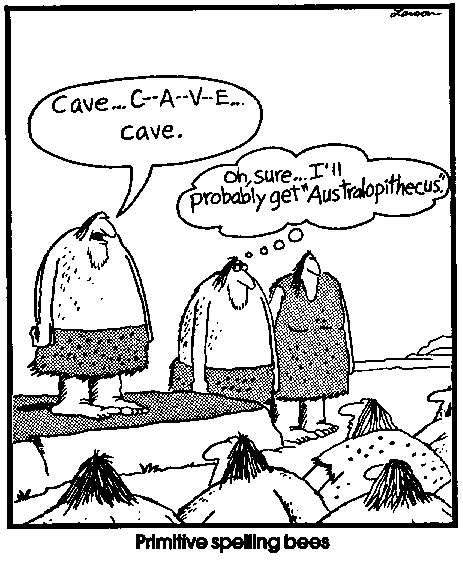
Primative Spelling BeesEnglish, in many ways, is one of the simplest languages to learn quickly and in which to converse fluently; but scratching below the surface one rapidly finds incongruities.  As a teacher for English as a foreign language for adults (TEFLA), I was frequently confronted with the challenges of teaching students to spell and pronounce words correctly, but I was also comforted by the fact that English nouns only come with four possible preceding cases, or articles (a, an, the, and none), rather than, say, German, in which each noun has a nominative, genative, dative or accusative, singular or plural form of their case; or Finnish, which has a whopping 15 cases.

The Chaos, a poem written by the Dutch traveller & teacher,  Gerard Nolst Trenité (1870–1946), gives ~800 examples of irregular spelling.  In general one can say that there are spelling “rules”, but English, in all its historic complexities of absorbing, digesting and recycling influences from conquerors, enemies, travelling companions and allies, seems designed to say “rules can and will be broken”.  I would never give his last advice to anyone – but after reading this poem, you’ll understand that English needs tenacity and constant practice to use well!

The Chaos

by G. Nolst Trenite’ a.k.a. “Charivarius” 1870 – 1946

Dearest creature in creation

Studying English pronunciation,

I will teach you in my verse

Sounds like corpse, corps, horse and worse

I will keep you, Susy, busy,

Make your head with heat grow dizzy.

Tear in eye your dress you’ll tear,

So shall I! Oh, hear my prayer,

Pray, console your loving poet,

Make my coat look new, dear, sew it!

Just compare heart, beard and heard,

Dies and diet, lord and word,

Sword and sward, retain and Britain.

(Mind the latter, how it’s written).

Made has not the sound of bade,

Say said, pay-paid, laid, but plaid.

Now I surely will not plague you

With such words as vague and ague,

But be careful how you speak,

Say break, steak, but bleak and streak.

Previous, precious, fuchsia, via,

Pipe, snipe, recipe and choir,

Cloven, oven, how and low,

Script, receipt, shoe, poem, toe.

Hear me say, devoid of trickery:

Daughter, laughter and Terpsichore,

Typhoid, measles, topsails, aisles.

Exiles, similes, reviles.

Wholly, holly, signal, signing.

Thames, examining, combining

Scholar, vicar, and cigar,

Solar, mica, war, and far.

From “desire”: desirable–admirable from “admire.”

Lumber, plumber, bier, but brier.

Chatham, brougham, renown, but known.

Knowledge, done, but gone and tone,

One, anemone. Balmoral.

Kitchen, lichen, laundry, laurel,

Gertrude, German, wind, and mind.

Scene, Melpomene, mankind,

Tortoise, turquoise, chamois-leather,

Reading, reading, heathen, heather.

This phonetic labyrinth

Gives moss, gross, brook, brooch, ninth, plinth.

Billet does not end like ballet;

Bouquet, wallet, mallet, chalet;

Blood and flood are not like food,

Nor is mould like should and would.

Banquet is not nearly parquet,

Which is said to rime with “darky.”

Viscous, Viscount, load, and broad.

Toward, to forward, to reward.

And your pronunciation’s O.K.,

When you say correctly: croquet.

Rounded, wounded, grieve, and sieve,

Friend and fiend, alive, and live,

Liberty, library, heave, and heaven,

Rachel, ache, moustache, eleven,

We say hallowed, but allowed,

People, leopard, towed, but vowed.

Mark the difference, moreover,

Between mover, plover, Dover,

Leeches, breeches, wise, precise,

Chalice, but police, and lice.

Camel, constable, unstable,

Principle, disciple, label,

Petal, penal, and canal,

Wait, surmise, plait, promise, pal.

Suit, suite, ruin, circuit, conduit,

Rime with “shirk it” and “beyond it.”

But it is not hard to tell,

Why it’s pall, mall, but Pall Mall.

Muscle, muscular, gaol, iron,

Timber, climber, bullion, lion,

Worm and storm, chaise, chaos, and chair,

Senator, spectator, mayor,

Ivy, privy, famous, clamour

And enamour rime with hammer.

Pussy, hussy, and possess,

Desert, but dessert, address.

Golf, wolf, countenance, lieutenants.

Hoist, in lieu of flags, left pennants.

River, rival, tomb, bomb, comb,

Doll and roll and some and home.

Stranger does not rime with anger.

Neither does devour with clangour.

Soul, but foul and gaunt but aunt.

Font, front, won’t, want, grand, and grant.

Shoes, goes, does. Now first say: finger.

And then: singer, ginger, linger,

Real, zeal, mauve, gauze, and gauge,

Marriage, foliage, mirage, age.

Query does not rime with very,

Nor does fury sound like bury.

Dost, lost, post; and doth, cloth, loth;

Job, Job; blossom, bosom, oath.

Though the difference seems little,

We say actual, but victual.

Seat, sweat; chaste, caste.; Leigh, eight, height;

Put, nut; granite, and unite.

Reefer does not rime with deafer,

Feoffer does, and zephyr, heifer.

Dull, bull, Geoffrey, George, ate, late,

Hint, pint, Senate, but sedate.

Scenic, Arabic, Pacific,

Science, conscience, scientific,

Tour, but our and succour, four,

Gas, alas, and Arkansas.

Sea, idea, guinea, area,

Psalm, Maria, but malaria,

Youth, south, southern, cleanse and clean,

Doctrine, turpentine, marine.

Compare alien with Italian,

Dandelion with battalion.

Sally with ally, yea, ye,

Eye, I, ay, aye, whey, key, quay.

Say aver, but ever, fever.

Neither, leisure, skein, receiver.

Never guess–it is not safe:

We say calves, valves, half, but Ralph.

Heron, granary, canary,

Crevice and device, and eyrie,

Face but preface, but efface,

Phlegm, phlegmatic, ass, glass, bass.

Large, but target, gin, give, verging,

Ought, out, joust, and scour, but scourging,

Ear but earn, and wear and bear

Do not rime with here, but ere.

Seven is right, but so is even,

Hyphen, roughen, nephew, Stephen,

Monkey, donkey, clerk, and jerk,

Asp, grasp, wasp, and cork and work.

Pronunciation–think of psyche–!

Is a paling, stout and spikey,

Won’t it make you lose your wits,

Writing “groats” and saying “grits”?

It’s a dark abyss or tunnel,

Strewn with stones, like rowlock, gunwale,

Islington and Isle of Wight,

Housewife, verdict, and indict!

Don’t you think so, reader, rather,

Saying lather, bather, father?

Finally: which rimes with “enough”

Though, through, plough, cough, hough, or tough?

Hiccough has the sound of “cup.”

My advice is–give it up!

1 Comment

Filed under Articles, Cartoon, Grammar, Nuts & Bolts, Quotes, Writing Exercise

Euphemisms

Euphemism 1Language is a fluid concept, constantly changing, adapting, creating, compensating and inventing itself.  Euphemisms are a prime example of that fluctuation and adaptation; successive generations come to know only the euphemism which in turn ceases to be one by that very definition, and which means that new ones will be invented to skirt the issue once again. For instance, there are hundreds of words for smell or stink, yet only a handful of satisfactory synonyms for words like fragrance, simply because hiding the ugly requires far more creativity than hiding the lovely.  For that reason alone, writers who fall back on expletives like the highly offensive F-word (a euphemism for, well, you know) are simply lazy in my book; they’re missing a great opportunity for creativity!  Interestingly, that word’s meaning has never shifted over time – it’s been in the English language since before the fifteenth century, and even then it was only written in cipher because it was too offensive to record in ink.  In my opinion it still is, and one should consider very carefully before offending unknown numbers of readers from continuing to read your book or blog; more than once have I ended reading a book when they used the word several times in the course of the first few chapters, because honestly it says something about the extent of their language abilities and their spectrum (or lack thereof) of creativity.
As a society’s norms shift, so do the euphemisms that they use to communicate.  In the Renaissance, corpulent women were considered the height of beauty; curvy, curvaceous, and shapely were instances of positive euphemisms; today they might be used by some idiot in the media to insult a Hollywood starlet who (by any other standard would be considered normal if not a little thin) gained a pound or two. Now idiot might be too strong a word; I could say brain cell-deficient, or someone who has delusions of adequacy.  I would like to point out the obvious here:  If you’re going to insult someone, at least spell it right… more often than not, you see people calling someone “dumn” or “dumm”, which smacks of the pot calling the kettle black…

For an interesting TED Talk (13:00) on the topic of euphemisms, please click here.

4 Comments

Filed under Articles, Cartoon, Etymology, Grammar, Nuts & Bolts, Writing Exercise

Merisms

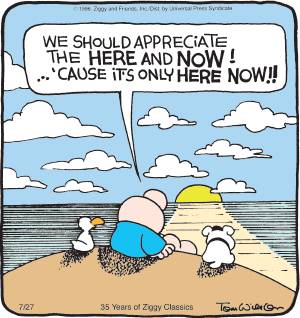
Here and NowMerisms are figures of speech in which a single thing is implied by stating several elements of it, usually contrasting concepts or parts, used to refer to an entirety; the elements can be literal or metaphorical.  They are striking features in ancient Biblical poetry, such as “The God of heaven and earth” meaning of everything (the universe).  Here are a few more:

here and there

here and now

life and death

body and soul

the length and breadth

high and low

ladies and gentlemen

young and old

rich and poor

kind and cruel

smart and stupid

from A to Z

Alpha and Omega

The beginning and the end

lock, stock and barrel

day and night

left and right

bag and baggage

the whole kit and caboodle


Can you think of any others?

Leave a comment

Filed under Cartoon, Grammar, Nuts & Bolts, Writing Exercise

Paraprosdokians. Parawhat?

Paraprosdokian is not a word I would readily remember.  I can even admit freely I’d never heard of it until recently.  Maybe I’m just weird, but I can remember a word much better if I know where it came from; this one actually makes sense: (Greek) para– meaning “against”, and prosdokaō meaning “I expect.”  Against expectations.  It’s not actually that old, and is thought of by some linguists as a bogus term; but there are a lot of words that have crept into the English language on just such a pretext, and have hung around for centuries (thereby gaining loyalty from linguists).  I’d say that sounds like a bit of cosmic humour.

A Paraprosdokian is a phrase or sentence that ends with an unexpected twist.  Now it may be as common as rain where you live, but not here.  I tend to think of these sentences as one-liners, and with good reason – this figure of speech is popular with comedians as it’s short and ends on a punch.  Some Paraprosdokians use a familiar phrase and twist the ending such as the first sentence (“Where there’s a will, there’s a way”).  So I say, call them what you will – just use them well!

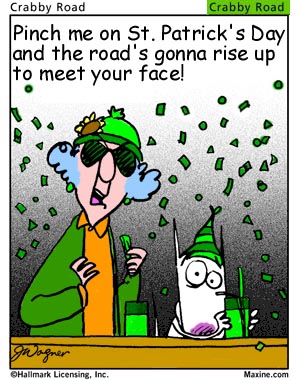
Crabby Road

Where there’s a will, I want to be in it.

I sleep eight hours a day and at least ten at night. (Bill Hicks)

The last thing I want to do is hurt you, but it’s still on my list.

Since light travels faster than sound, some people appear bright until you hear them speak.

You can always count on the Americans to do the right thing – after they have tried everything else. (Winston Churchill)

If I agreed with you, we’d both be wrong.

I don’t belong to an organized political party. I’m a Democrat. (Will Rogers)

We never really grow up, we only learn how to act in public.

War does not determine who is right – only who is left.

This is not a novel to be tossed aside lightly.  It should be thrown with great force.

Knowledge is knowing a tomato is a fruit. Wisdom is not putting it in a fruit salad.

They begin the evening news with Good Evening, then proceed to tell you why it isn’t.

He Ain’t Heavy, He’s My Brother. (Variations on this phrase are attested as early as 1884.)

There’s a fine line between cuddling and holding someone down so they can’t get away.

To steal ideas from one person is plagiarism. To steal from many is research.

If I am reading this graph correctly… I’d be very surprised. (Stephen Colbert)

I haven’t slept for ten days, because that would be too long. (Mitch Hedberg)

Money can’t buy happiness, but it sure makes misery easier to live with.

Buses stop in bus stations. Trains stop in train stations. On my desk is a work station.

I thought I wanted a career. Turns out I just wanted paychecks.

In filling out an application, where it says, ‘In case of emergency, notify, I put DOCTOR.

I like going to the park and watching the children run around because they don’t know I’m using blanks. (Emo Philips)

I didn’t say it was your fault, I said I was blaming you.

Women will never be equal to men until they can walk down the street with a bald head and a beer gut, and still think they are sexy.

Behind every successful man is his woman. Behind the fall of a successful man is usually another woman.

A clear conscience is the sign of a fuzzy memory.

You do not need a parachute to skydive. You only need a parachute to skydive twice.

I used to be indecisive. Now I’m not so sure.

He was at his best when the going was good. (Alistair Cooke on the Duke of Windsor)

You’re never too old to learn something stupid.

To be sure of hitting the target, shoot first and call whatever you hit, the target.

Nostalgia isn’t what it used to be.

Change is inevitable, except from a vending machine.

I’ve had a perfectly wonderful evening, but this wasn’t it. (Groucho Marx)

A modest man, who has much to be modest about. (Winston Churchill, about Clement Attlee)

If I could just say a few words… I’d be a better public speaker.

She was good as cooks go, and as cooks go she went.

Leave a comment

Filed under Articles, Cartoon, Grammar, Humor, Nuts & Bolts

Stop Apostrophe Abuse

Okay, grammar pet peeve time:  Apostrophe abuse.  It needs to stop.  Now.apostrophe Puppy

There are only two instances in the English language in which apostrophes are used:

1) Contractions, as in:  you are = you’re, or have not = haven’t, or I am = I’m.  Just keep in mind that the apostrophe takes the place of the missing letter(s); if you take a letter out to combine (contract) two words together, place the apostrophe where the missing letter would have been written.

2) Possessives, as in:  Steve’s hat (the hat belongs to Steve), or today’s specials (specials on for today)

Apostrophe Tombstone

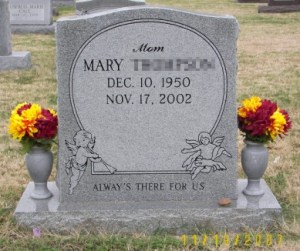
Alway’s there for us. Who is Alway?

Never, I repeat NEVER should an apostrophe be used to indicate a plural!!  Never, EVER.  If you see it used as a plural, it’s wrong – even if it’s on a tombstone (see the image below). Apostrophe Tombstone 2

In the illustration on the right, “Alway’s there for us,” it obviously means “Alway is there for us.”  But who is Alway?  I thought Mary was trying to rest in peace here…  It’s just wrong on so many levels, because it’s not even a plural (which they were aiming for), but an adverb.

Let’s (as in “let us”) look at another very common mistake:  1) it vs. 2) it’s vs. 3) its:

1) “It” is fairly straightforward; it is the third person singular pronoun (used in place of a noun) for objects or gender-neutral references; e.g. The chair is red = It is red.

2) “It’s” is the contracted form of “it is”, as in It’s raining or “it has”, as in It’s been a long time since we saw each other last.

3) “Its” is the possessive form of the third person singular pronoun:  “the dog’s paws” = “its paws”  REMEMBER:  You would never spell “his shirt” as “hi’s shirt”, or “her skirt” as “he’r skirt”; in the same way you should never use the contracted form as the possessive form of it.

It’s not “CD’s” or “DVD’s” as the plural form; this is actually the possessive (which therefore requires an object for that subject’s possessive form, as in the CD’s case), and I find myself asking, “CD’s what?”

If you want more examples, from tombstones to shop signs to tattoos that are embarrassingly wrong, take a look at  www.apostropheabuse.com.  Okay, pet peeve appeased.  Glad to get that off my chest.

5 Comments

Filed under Articles, Cartoon, Grammar, Nuts & Bolts, Writing Exercise

Animal Idioms

Raining cats and dogs, 1817 caricatureI love idioms; they bring abstract concepts to life with vivid imagery, and range from the practical to the hilarious.  If I said someone was clumsy, that’s all clear and well enough; but if I said they were as clumsy as a cow on rollerskates?  I think you know where that one’s going…  Here are a just few of my favourite animal idioms:

“to be as nervous as a cat in a room full of rocking chairs” – very nervous

“to bark up the wrong tree” – to be mistaken in one’s goals or focus

“to be bright-eyed and bushy-tailed” – to be eager, lively (especially at unexpected times, e.g. morning)

“to have ants in the pants” – to be jittery, excited, animated, hyper

“to cry wolf” – to rouse others to action when it is not necessary

“to be raining cats and dogs” – to be raining hard

“in two shakes of a lamb’s tail” – very quickly

“to look a gift horse in the mouth” – to scrutinize or criticize a gift or an offer to help, etc.

“to look like something the cat dragged in” – to be very ill, to look ill

“not enough room to swing a cat” – a tight space, a small room

“to buy a pig in a poke” – to buy something without having seen its quality first (German:  “die Katze im Sack kaufen”, or “to buy a cat in a sack”)

“to cast pearls before swines” – to waste one’s efforts or investments on worthless schemes or people

“to fight like cats and dogs” – to fight with someone (regularly, or vehemently)

Leave a comment

Filed under Grammar, Images, Nuts & Bolts, Research, Writing Exercise

Common “Spell-Offs”

FunnyYes, Spell-offs. Not as in, “let’s have a spelling bee,” but as in “the spellings that throw people off” – and yes, the latter is my own definition. But what better describes the mistakes that so often throw people off? As a teacher of English, and as a writer and editor, I see common problems pop up again and again in people’s written communication. I’ve put together the following list to help you sort out problems you might share with others. It’s all about choices between two or more spellings, and understanding what those spellings represent. Remember to pay special attention to which version of the word you’re using; learning the definitions of each spelling goes a long way in guarding against these mistakes.

NOTE: Apostrophes are NEVER, EVER used to create plurals of words. They are strictly for denoting possession (Sarah’s shoes) or contraction (That’s the point.).

If there are any other words you struggle with, please add in a comment below, with either a mnemonic of how to remember something easier, or a question that I’ll try to answer.

  • Affect and Effect: “Affect” is a verb meaning “to influence” (She was affected by the film.). “Effect” refers to a result (noun) (The effect on the carpet is apparent.)REMEMBER: Try what I call the “replacement principle”: If you can replace another word which you know to be the same part of speech as the one in question, then it is the correct form: E.g.: “The stain on the carpet is apparent.” (Stain is a noun, so effect would be used.) “She was moved by the film.” (Moved is a verb, so affect would be correct.)
  • A lot: A lot is two words. Every time. “There’s a lot of space between ‘a’ and ‘lot’.” REMEMBER: You would never write “abedroom”, “abunch” or “acat”.
  • All ready and Already: “All ready” means “prepared” (The cookie dough was all ready to make cookies the following morning.). “Already” is an adverb meaning “prior to a specified or implied time” (I can’t believe you already ate the cookie dough!).
  • All right and Alright: These two forms are controversial: Some grammar nerds will swear that “alright” is never all right. But the two forms have emerged with distinct definitions, and I’ll give a sentence example where the choice makes all the difference in understanding the sentence correctly: “The figures are all right” means that the figures are all accurate. But when you write “The figures are alright,” it means that the figures are acceptable, or satisfactory (they may also be accurate, but that is not the emphasis of this sentence and therefore a moot point). Language is constantly expanding, and though “alright” is considered wrong by many linguists and grammarians, it is gaining foothold with the nuance of difference in definition to its more formidable partner.
  • All together and Altogether: “All together”means “collectively”, and can be separated in a sentence (Let’s sing the song all together at the count of three. We all sang the song together.). “Altogether” means “entirely” (We were altogether too tired to go dancing this evening.). If you’re uncertain which one to use, replace the word in your sentence with the definition word given here; the one that makes sense is the one you want to use.  
  • Altar and Alter: “Altar” is a noun meaning “a special table in religious ceremonies” (The wedding was performed at the altar.), while “Alter” is a verb meaning “to change, to make something or someone different” (Jane had to have her wedding dress altered before she could wear it.).
  • Assure, Insure and Ensure: “Assure” is a verb meaning “to make a promise / commitment, or inform with certainty” (The politician assured his voters that he wouldn’t raise their taxes; he lied.). Insure is a verb meaning “to take out insurance for something” (I’m glad I insured my car; a tree was blown down on it in the storm.). Ensure is verb meaning “to make certain that something happens or is done” (I want to ensure that I’ve packed everything – I’ll check one more time.). REMEMBER: Insure is insurance; Ensure is making sure the “end” result happens.  NOTE: “Sure” is closely related to ensure; the sentence structure would be slightly different: I want to make sure I’ve packed everything…
  • Breath and Breathe: “Breath” is the noun meaning “the inhalation and exhaling of air” (She took a deep breath before diving.), while “Breathe” is the verb meaning “to inhale and exhale, or to impart as if by breathing” (My breath is short; I need to breathe in my asthma medication. The new coat of paint breathed life into the old house.).
  • Complement and Compliment:“Complement” is a verb meaning “to combine well with something, often something that has different qualities” (The colour of her dress complemented her eyes.). “Compliment” is a verb meaning “to say something nice to or about someone”(I complimented her on her good choice of colours.). REMEMBER: Compl-E-ment makes something more Elegant; Compl-I-ment means that I say something nice.
  • Counsel and Council: “Counsel” is a verb meaning “to give someone advice about what to do in a particular situation” or a noun referring to such a person (I counselled my friend to wait.). “Council” is a noun meaning “an official group of people who have been chosen to make decisions or provide advice.” (The council met to discuss the items from their last meeting.)
  • Dryer and Drier: “Dryer” (noun) is a machine that dries things like clothes or hair. (As soon as the dryer is finished I can switch loads of laundry.) “Drier” is the comparative form of the adjective “dry” (dry, drier, driest/dryest). (It’s drier now – shall we go for a walk?)
  • Emigrate and Immigrate:Emigrate” is a verb meaning “to Exit your country in order to live in another country” (I emigrated from America to live in Scotland.), while Immigrate is just the opposite – a verb meaning “to come Into a country because you want to live there” (He immigrated to France from England, and now lives in Paris.).
  • Except and Accept: “Except” means “to exclude” (verb) (Too many cooks spoil the broth – present company excepted, of course.); or “with the exception of, but” (preposition) (Everyone except Edward went to the beach.); or “with the exception that” (conjunction) (You look like my brother, except you have shorter hair.). “Accept” means to receive an offer, an idea, a person’s suggestion, etc. (I accepted his advice / invitation / proposal.).
  • Here and Hear: “Here” refers to place. “Hear” refers to the act of listening (ears) (Even from here, behind a closed door on the fifth floor, I can hear the music.).
  • Its and It’s: “Its” is a possessive pronoun. (The cat licks its fur to clean itself.) “It’s” is a contraction of it and is, or it and has. (It’s going to be a beautiful day. It’s been a long time since I saw him.) REMEMBER: You would never write “hi’s shirt” or “he’r jeans”, so it should NEVER be “it’s shirt”, but rather “its shirt”. If you’re not sure which one to use, use the replacement principle: Try using “it is” or “it has” in the sentence, and if it makes sense it’s “it’s”; if not, it is “its”. And keep the note about apostrophes above in mind!
  • Lead and Led: “Lead” is both verb and noun: (V): “to guide or conduct in a certain course” (He leads the choir on Thursday evenings.); (N): “A heavy, pliable, inelastic metal element” (The lead pencil left a mark on the wooden table.). “Led” is the simple past tense and past participle (always comes with have or has) of the verb lead. (Clifton led the choir on Thursdays until his wife had a baby. Since then, James has led the choir.)
  • Lose and Loose: “Lose” is a verb. “Loose” is an adjective. (You’ll lose your keys if you try to hold up your loose trousers.)
  • Moot and Mute: “Moot” is an adjective meaning “no longer important because a particular situation has changed or no longer exists” (Now that the train has left the station without us, it’s a moot point as to whether or not we’ll arrive on time.). “Mute” is a verb meaning “to make something less strong or extreme” or a noun meaning “not willing (or able) to speak” (Could you please mute the volume – I’m on the phone and I can’t hear the other person speaking. The deaf man was also mute.)
  • Past and Passed: “Past” is an adverb or proposition meaning “going near someone or something while you are on your way to another place” or “after a particular time” (I drove past his house on my way to work. We used to fight as kids, but that’s all in the past; we’re friends now.). “Passed” is the simple past tense and past participle (always with either have or has) of the verb “pass” (I passed his house on my way to work. I have passed the exams, and now I can go on holidays.)
  • Principal and Principle: “Principal” is an adjective meaning “primary; most important,” (The principal cause of failure was poor management.); a noun meaning “money initially invested,” (A portion of your mortgage payment goes to reduce the principal); or “head administrator of a school” (The principal of our school is retiring next year.) “Principle” is a noun meaning “a fundamental assumption or moral rule” (Principles are the basis of sound reason. She would not work on Sunday because of her personal principles.) REMEMBER: The principal alphabetic principle places A before E.
  • Rain, Reign, Rein: “Rain” is a noun referring to atmospheric moisture that falls (It’s raining.); Reign is both noun and verb, meaning “the exercise of sovereign power” or “to rule as a monarch” (Queen Elizabeth has reigned for sixty years. Her reign has been a long and peaceful one.). “Rein” is a noun referring to the strap or rope attached to the bridle bit of an animal, and also a verb referring to the action of using the reins to stop or direct the action of said animal. (He reined the horse to a stop with a tight grip on the reins.)
  • Shudder and Shutter: “Shudder” is a noun, “shivering tremor”, or verb, “to shake nervously” as from fear (There was a shudder in the ground as the nearby building was detonated. She shuddered at the thought.). “Shutter” is a noun, “protective panels placed over windows to block out the light” or verb referring to those panels. (I pulled the shutters closed to take a nap. Shutter the windows – a storm is coming.)
  • Then and Than: “Then” is used to show the order of events. (We went to lunch, then to the library.) “Than” is used to show comparison. (In the northern hemisphere, the summer is warmer than the winter.)
  • There, Their and They’re: “There” refers to a place or idea. “Their” is the possessive of “they.” “They’re” is a contraction of “they” and “are.” (There are seven apartments in our building; their doors all open onto the same entrance hall, and we all get along well; they’re friendly and helpful.)
  • Too, To and Two: “Too” means in addition / as well. “To” is a preposition that indicates motion in the direction of a place or thing. “Two” is the written version of the number 2. (I’m going to the cinema; Jim is coming too as I was able to buy two tickets.)
  • Weather and Whether: “Weather” is a noun to do with sunshine, wind, etc. (The weather is forecasted to become drier this week.). “Whether” is a conjunction expressing a doubt or a choice between alternatives (I haven’t decided whether I should go or not.).
  • Your and You’re: “Your” is a possessive preposition. “You’re” is a contraction of “you” and “are”: (You’re going to remember to bring your coat, aren’t you? It’s cold outside.)

Feel free to use this, but please give credit where credit is due for the work involved.  Text credit: Stephanie Huesler, © May 2013

1 Comment

Filed under Cartoon, Grammar, Nuts & Bolts, Writing Exercise