I might be odd for a woman, but I love history; in particular the history of World War 2. But as much as I’ve read about it, and as many documentaries and films as I’ve watched on the topic, I had never heard about this episode until I read a comment from a YouTube video which told about how that person’s grandfather had served in the only US territory to be occupied by the Japanese during the war: The Aleutian Islands.
Anyone who knows a bit about World War 2 probably knows about Midway– a pivotal point in the Pacific arena. But at the same time Japan was targeting that US island base in the middle of the Pacific, they also had their sites set on the Bering Strait; specifically, the six island groups of the Aleutian Islands. In June 1942, they attacked and occupied the US territory islands of Kiska and Attu. Anyone would be excused for thinking that these inhospitable, frozen, volcanic mountains rising out of the sea were insignificant, but they were a strategic launching point for keeping the Japanese at bay in the Pacific, and as a gateway for supplies to the Allied troops. If the Japanese managed to maintain their hold on those islands, it would strengthen the defence of their northern territories, and it was also feared that they would use the islands as springboards from which to attack the US West coast or invade through Alaska and into Canada and the northwestern mainland territory of the US. The battles there are considered the “forgotten battles” because, although there was public outrage in the US at the time, they were soon largely overshadowed in the press by Midway and by the Guadalcanalcampaigns. But the number of casualties there was comparable to that of Pearl Harbor, and the Attu battle was better known in Japan than in America: It was a major propaganda coup for the Imperial Army.
To watch a 1943 documentary about the Aleutian Islands and their strategic significance, called “Forgotten Battle of the Aleutian Islands“, just click on the link (~45 min.). It not only gives a glimpse into the geography and military aspect, but the human aspect, showing the soldiers in their daily off-duty activities and their duties; it gives you a sense of what they were like, where they came from, and what they did. For a shorter summary (~12 min), click here.
The Aleutian Islands, showing Russia to the west and Alaska to the east.
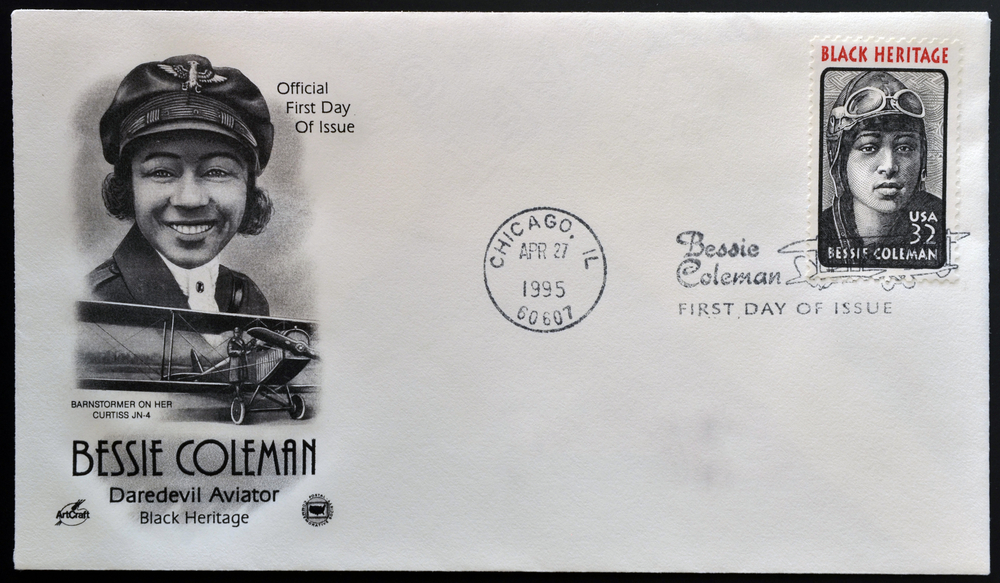
I like to highlight, or “undust” figures or circumstances from history that few may have ever heard about, but that deserve to be remembered. Bessie Coleman is one such figure from history: In her life that was cut short, she made a difference by going against the norms and following her dreams, regardless of the limitations put on her by society because of her race and gender.
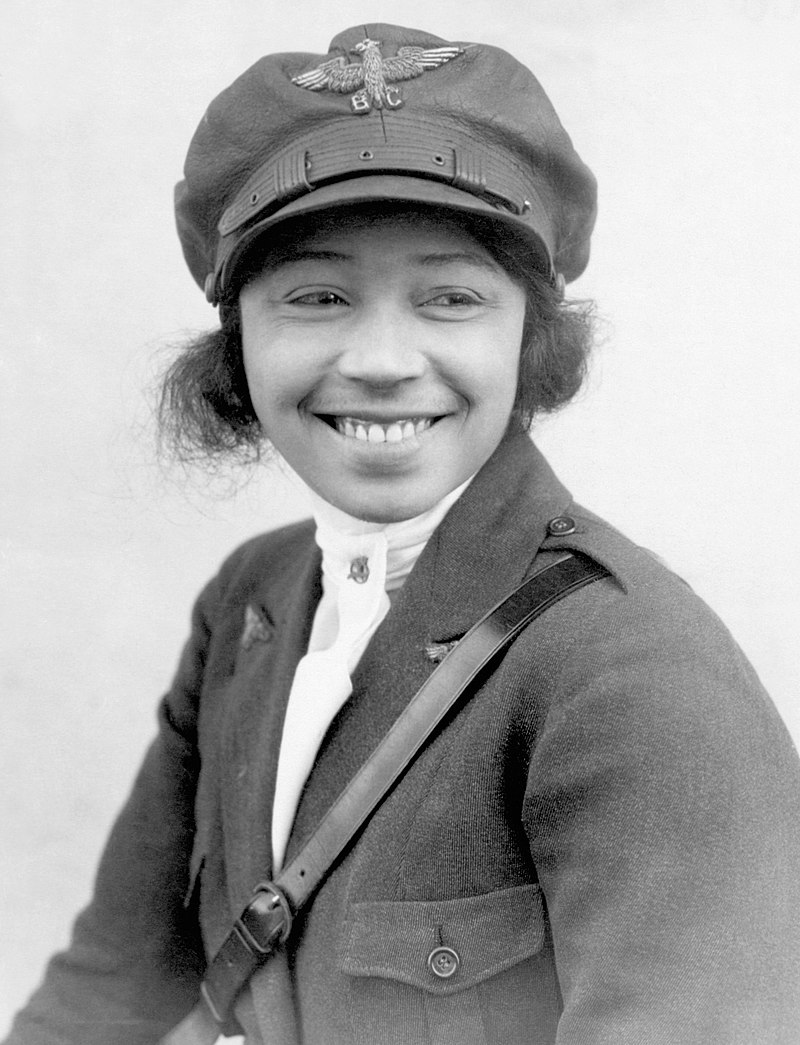
Bessie Coleman, 1923 – Photo Credit: George Rinhart, Corbis via Getty Images
Born in January 1892 in Atlanta, Texas, as the tenth of thirteen children in a sharecropper family, she worked in the cotton fields and attended a small, segregated school. She was not only African American but also had Cherokee heritage through her mixed-race father. Despite her humble beginnings, by 18 she’d managed to save enough money to attend one term of college at Oklahoma Colored Agricultural and Normal University (now Langston University) in Oklahoma, which was probably the closest university that would take a young black woman in the early 1900s. With no funds left, she moved back home, working and saving her money. At 23, she moved in with her brothers in Chicago, Illinois, and worked as a manicurist in a barbershop; there, she heard the tales of World War I pilots, and her dream was born.
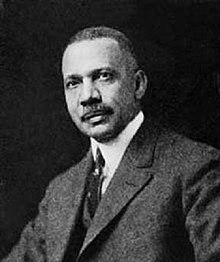
Robert Sengstacke Abbot, Photo, Chicago Literary Hall of Fame
At the time, American aviation schools had no place for either African Americans or for women, but she was encouraged by Robert S. Abbott, founder and publisher of the Chicago Defender, to study abroad. He publicized her story in his newspaper, and she received the financial support to pursue her dream from a prominent African American banker, Jesse Binga, and from the Defender.
Jesse Binga, Credit: Wikipedia, John Schmidt
She took a French language course in Chicago, and in November 1920, she travelled to Paris to earn her pilot licence. On June 15, 1921, Coleman became the first African American woman as well as the first Native American to earn a pilot license and an international aviation license from the Fédération Aéronautique Internationale. She then spent the next two months learning more from a French veteran pilot near Paris. In September 1921, she sailed back to America and became a media sensation.
With civilian commercial flights still a thing of the future, she would have to earn her money as a “barnstorming” stunt pilot. The skills needed to fly dangerous stunts were beyond her scope, and still out of her reach in America, so she again returned to Europe, where she trained in France. From there she went to the Netherlands to meet Anthony Fokker, one of the world’s most distinguished aircraft designers. At his company in Germany, she received further training from one of the company’s chief pilots. Returning once again to the US, she finally launched her career in exhibition flying.
“Queen Bess” was a popular draw for the next five years. She used public attention to engage audiences in promoting aviation and battling racism; she refused to take part in any aviation exhibitions that barred African Americans from attending. At one point, she was offered a role in a film, “Shadow and Sunshine.” She accepted, hoping that it would help her raise enough money to open her own aviation school. But when she learned that the first scene would portray her in ragged clothes, she walked off the set – her principles would not allow her to spread the disparaging image most whites had of most blacks.
Her goal was not just flying, but to make a difference in history; unfortunately, she did not live long enough to see just what a great influence she would have: On 30 April 1926, a faulty plane went into a dive and spin at 3,000 feet above ground; on the way down, Bess was thrown from the plane and killed on impact. Later, it was found that a wrench used to service the plane had been forgotten inside and had jammed the controls.
Posthumously, her name is honoured through the renaming of streets (including three in France), of roads near airports (including one at Frankfurt Germany’s international airport), a public library in Chicago, schools, aviation-related companies and wings of airports, scholarships, a US postage stamp (in 1995), a cartoon character, and she has been inducted into several halls of fame for both women as well as aviation; and last but certainly not least, she has a geological feature on the southern hemisphere of Pluto named in her honour, Coleman Mons.
William J. Powell, Pioneer aviator and civil rights activist
Lieutenant William J. Powell dedicated his book, Black Wings, to her. His sentiment is summed up well in a quote: “We have overcome that which was worse than racial barriers. We have overcome the barriers within ourselves and dared to dream.” Powell founded the Bessie Coleman Aero Club in 1929. Mae Jemison, the first African-American female astronaut in space, carried a photo of Bessie Coleman with her on her first mission.
Mae Jemison, Photo credit: The Museum of Fine Arts, Houston
What I find most inspiring about her story is not only her unwavering determination to reach her goals, but that throughout her life, she found people willing and able to support her in accomplishing it: Without the idea encouraged by a publisher to look beyond the borders of America and promoted in his newspaper to raise support, without the teachers in Europe investing in her skills (how many inter-war pilots could say they’d been trained by top war ace pilots?), and without the financial support given at a time she needed it, her dreams might have remained unfulfilled, or too long in the making – those parameters needed to make her into a pilot who inspired future generations shifted drastically with the outbreak of the Second World War.
In Esther 4:14, Mordecai, the uncle of Queen Esther, tells her, “Who knows but that you have come to your royal position for such a time as this?” In the brief window of time that Bessie reached for the heavens, she may not have lived to see her legacy, but her life and death were not in vain.
Let’s go on a virtual outing! This time, to a Swiss museum located on my doorstep, in Zürich. I can’t imagine a better place to have a museum on that topic.
Have you ever wondered where coins started, or what the history of money is? Look no further. Have you ever wondered what blockchain technology is, or what cryptocurrencies are (and there are over 8 thousand so far!)?
Included in the tour are 5-minute podcasts exploring the topic of money, as well as visual tours of coins throughout time and regions.
Besides the online presence, this museum is also a library and a forum, where people can gather for lectures and discussion groups around the topic of money, finances, markets, etc.
Coins are just one form of payment, but throughout the centuries, different people have put a value on different objects, and trading them became a type of currency: When the Russian currency nosedived in value, vodka became a currency because, in that culture, vodka was the most stable commodity! In other cultures, beads, shells, water gourds, and many other objects have been currency; in another article, I’ve talked about hack silver – jewellery worn with scoring to allow easy division into pieces to trade for goods.
Here’s a quick question for you: Do you know what your money really looks like? We may have handled it dozens of times in a week, but have we ever really stopped to examine it? I remember back when shillings were still valid coinage in Britain – they were used in lieu of 5p pieces; when the new coins came into circulation, I would have been hard-pressed to tell you what they’d looked like before! The same goes for banknotes here in Switzerland, which changed to the current design back in 1995. Once a new coin or banknote comes into use, it’s hard to remember what the old ones looked like. Interestingly, some Swiss coins have not changed; I once found a 10-rappen coin in my purse from 1899! It went straight into my coin collection. Since then, I always check my loose change. As a matter of fact, the 10-rappen coin holds the Guinness World Record for the oldest original currency in circulation.
The history and scope of money is a fascinating one, once you scratch below the surface. Click hereto take the virtual tour through the world of money, and enjoy!
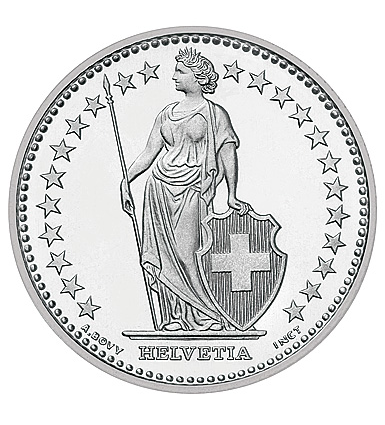
The Swiss 10-rappen coin, the oldest original currency in circulation today.
This month has flown by! Last weekend was our church’s annual advent market, and I was present with tables full of crafts, as well as marble-iced cookies, Spitzbuben, cheese cookies & apple chips (dehydrated). Before it took off, I was preparing, baking, labelling, and doing all the little bits and bobs to get ready; it went off well, considering the limitations of Covid. I also got our own Advent calendar completed – I talk about that more in a previous post. But the whole topic of the market got me wondering where Advent calendars started, so I thought I’d share with you what I’ve discovered:
As you probably know, advent calendars today can take any form you choose; the only common factor is that they usually cover 24 days and begin on 1 December (as opposed to following the 4 Advent Sundays – this year, the first Sunday fell on 28 November).
The first calendars weren’t: In the early 1800s, German protestants began marking chalk lines on a wall or lighting a candle each day of the Advent season; they sometimes accompanied the act with a devotional reading or with an image centered around the advent, or coming, of Jesus (traditionally celebrated on 25 December, though that was hardly his birthday – but that’s another topic). The first actual calendars were made of cardboard in Germany, and appeared in the early 1900s; they often had either a poem or a picture behind each door, and were produced until World War 2, when the Nazis banned their use on the excuse that cardboard was scarce – and then, in 1943, they promptly sent out advent booklets to every mother in the land – but they seem to have missed the point: their versions had images of German soldiers blowing up Russian tanks and sinking allied ships!
The Nazi’s idea of Advent celebrations… the less said, the better!
After the war, Richard Sellmer, of Stuttgart, was able to get permission from the allied officials to begin printing cardboard Advent calendars once again, and his company still produces them today – click here to visit their website. After the war was over, the American soldiers took the idea back to the States; their popularity took off in the 1950s after a photo appeared in a newspaper of President Eisenhower’s grandchildren with a Sellmer calendar.
Image from the Sellmer website, showing President Eisenhower’s grandchildren opening a Sellmer calendar
I guess you could say that the rest is history! With Advent beginning, I hope yours is ready for Wednesday!
And Christmas is coming soon! If you’re interested in knowing the history behind Santa’s red suit, just click here!
Aprons have probably been around since the dawn of clothing; up until the Industrial Revolution, most people only had the clothes on their backs, or at most one additional change of clothing – in which case they were considered either very well off or thieves; a large number of the thefts reported in the 17th and 18th centuries had to do with clothing articles; the clothes made the man or woman, and if they could upgrade their wardrobe through “five-finger discounting,” they might have a better chance at finding a good job with better wages. The style of aprons has changed through the years, and while sometimes their function was little more than a fashion statement, such as in the painting below, their main purpose has never become obsolete: To carry out every imaginable chore in and around the home.
Dancing Girl, Levitsky Dmitry, 1735-1822
My paternal grandparents, the Herrings, were Kansas pioneer farmers; my grandmother (Mary Mae) headed west from Indiana in a covered wagon with her parents (James Allen and Carrie Christine Higbee nee Aaroe) as a baby; she grew up on the prairies of Kansas, met my grandfather, and the rest is history.
Nis and Maren Kirstine Aaroe-Aagaard, immigrants from Vonsild, Nørre Tyrstrup, Vejle, Denmark, who settled in Kansas; taken ca 1890. My great-great grandmother is in her daily apron at the spinning wheel.
Most of my childhood memories are of my paternal grandparents’ farm; we spent many weekends there helping out, and I spent a week or two every summer with them. My grandmother was always in an apron, except for Sunday mornings and special events – and those are the times when photographs were taken, so unfortunately I don’t have a photo of her in an apron. But I have something much better: A hand-sewn quilt, made lovingly by her from around 1920 to the late 1970s. The materials used for that quilt are her old aprons, Sunday dress scraps and other spare cloths; I remember seeing her in several of them.
Apron Quilt, Grandma Herring, sewn between 1920s and late 1970s
Apron – 1950s Vintage Fashionable Aprons
Being a farmer’s wife, my grandmother’s aprons weren’t as fancy as these vintage patterns shown above; they were plain, simple and hand-made; they did what they were needed for, and no more, no less. But as simple as they might have been, those aprons were worth their weight in gold on a farm: They protected her scanty wardrobe – she didn’t need much, didn’t want much, and was satisfied to take care of what she’d been blessed with. Those aprons carried baby chicks, kittens, flowers, herbs, chicken eggs, apples, firewood and wood chips, baby birds fallen from nests in a wind storm, and the occasional sugar cube for the horses. They wiped away tears, cleaned dirty faces, dusted furniture if guests were walking up the path, took delicious things from the oven, cold things from the freezer, and helped open canning jars. They shaded a cold pie on her lap in the old Chevy truck while we bounced across the fields to bring my grandfather a picnic for lunch break in the summer heat (she could have used an old quilt for the pie, but that was often used to cradle a large mason jar full of ice cold water, the best thirst-quencher I know). Those aprons helped gather grains, and stones to move either from the garden or to the flower bed. They carried chicken feed and broken eggs shells to feed the chickens to make their eggs stronger; they held potatoes, carrots, green beans, corn, sweet peas, strawberries and squash. They were the perfect cradle for a garden watermelon, rolling it into the refrigerator to get it nice and cold on a hot day. They warmed her hands on a cold day as she dug for the last of the potatoes before winter’s freeze, and hid her dirty hands when guests arrived unannounced. They polished cutlery, fanned her face to cool her down on a sweltering hot day, and were the perfect place to hide for shy children. One never knew what that apron would do next.
Little could my paternal grandmother have guessed that the quilt she made from so many scraps of memories would eventually accompany her granddaughter back over the ocean her mother had traversed as a newborn baby from Denmark, and end up within 20 km from where my maternal ancestors have been traced: Zofingen, Aargau, Switzerland. I can’t imagine any other piece of cloth carrying so much history, authority, importance, practicality, humility, common sense and love.
Adapted from an article originally posted on History Undusted, 5 Oct. 2015
Have you ever felt guilty for taking a shortcut across a grassy patch rather than following the official concrete path? Or have you ever noticed a bare strip through grass? These are known as desire paths, or lines of desire (the latter term comes from the French phrase, “lignes de désir”, from the French philosopher Gaston Bachelard’s 1958 book, “The Poetics of Space”).
Architects would be well advised to pay attention to these worn paths when planning official paths through public parks or around businesses, because no matter how neat their officially-laid paths look, those lines of desire will continue to be followed and worn into the earth. Perhaps it’s a manifestation of democracy triumphing when a desire path gets paved over after the fact.
So why do they happen? Sometimes it’s a question of taking a shortcut from one building to the next, or from one corner to the next. Sometimes they are made out of consideration for others: During the pandemic, new lines of desires began appearing, but rather than being shortcuts, they simply ran parallel to existing paths – these were likely an attempt at avoiding proximity with others when passing on a side walk. Desire paths can be seen as the paths of least resistance, or as a silent protest against being told where to walk or how to get from points A to B. These paths have been seen as symbols of rebellion, anarchism, individual creativity, intuitive design, opportunities to take fate into one’s own hands even if treading the expected nine-to-five otherwise, or even as a passive aggressive reaction against authority.
Many languages have their own terms for desire paths or lines of desire: In Dutch, they’re known as “elephant paths”, and in French, they’re known as donkey paths, while the Germans, pragmatically, call them “trample paths” (so unimaginative!) But the diversity proves that desire paths are a universal human tendency.
Some businesses or schools, such as the University of Michigan, waited until students and staff showed them where paths would be most appreciated before paving them in; the aerial view (Google Earth) over the campus shows the intricate weave of the lines of desire that would likely not have occurred to the landscape architects:
I’d encourage you to take a walk, keeping an eye out for those lines of desire near you; if you’d prefer not to go out, then take a virtual walk – google the term “desire paths” in the image mode, and see just what pops up! Enjoy!
Personal update:
For those of you following our situation, I will say that the day after my last update everything got turned on its head once again! Chemo has been delayed another 3-4 weeks, as my husband ended up in emergency again, and they finally decided to rebuild his stoma before starting chemo. He’s now back home after over a week in the hospital, and is gaining appetite, and hopefully gaining weight again now! He’ll have a couple weeks to recover before the next phase of his treatment takes off… that’s as of THIS moment. Planning further ahead than a day is a bit pointless right now, so it’s a wait-and-see game…
Over the past year and more, we’ve all experienced limbo in one form or another: Lock downs, restrictions, cancellations of events or flights or holidays or plans to meet up with friends, and the uncertainty of how long it will all last. Then there is the feeling of limbo that comes with my personal situation of waiting for the cascade of appointments for my husband’s chemo to begin; we had a set-back last week with a bacterial infection and a week’s hospitalization, so we’ll just have to wait and see if he can keep the appointments already made or not. Limbo. Waiting to find out if he can be brought home tomorrow. Limbo.
My writing, both in the forms of this blog and of my manuscript, have both been sucked into the state of limbo as well, as I’ve spent most of the past few weeks, and more intensively the past three days, on the phone with people who’ve asked how we’re doing, or answering messages on my phone or social media. Sometimes I feel like my manuscript is calling for me to work on it, and I’m trying to reach it while wading toward it waist-deep in a thick sludge of other priorities – it’s been just out of reach for days, because by the time I actually reach it, I have no energy left.
As I was thinking about those limbo moments, I actually started wondering just where the limbo dance comes from, historically; I remember doing it as a child – the local indoor skating rink played limbo every night. So, here’s a brief low-down on the low-down dance:
The origins are vague, as is the etymology of the name: Starting in late-1800s Trinidad, the name might have come from the Jamaican English “limba“, i.e. limber. Interestingly, the game is used in Africa as a funeral game, and there may be a connection between the two regions through the slave trade which brought Africans to the Jamaican islands, as it is also a popular “dance” for wakes in Trinidad. The rules are simple: a person passes under a bar, face-up, with the only body part allowed to touch the ground being the feet. The game is considered the unofficial national game of Trinidad and Tobago, it only began to gain popularity beyond the region in the 1950s; it was adopted in the mid-1950s as a form of physical exercise for American military troops. It was often attempted to a rhythmic song, and one of the most popular was the Limbo Rock, by Chubby Checker. Just listening to the song brings back the feeling of the cool breeze blowing around the skating rink as people sped to get in line for the limbo stick as soon as they heard the music start over the loudspeaker!
As we face our own times of limbo in this age of Corona, or in the circumstances we find ourselves in, perhaps it would perk up our spirits to hum the Limbo Rock and take it with a bow and a smile.
I recently heard of an unusual historical connection between a tribe of survivors from the Trail of Tears, and those struggling with survival half a world away during the Irish Potato Famine, 1845-1852.
The Choctaws were one of the Native American nations who were forcibly displaced between 1830 and 1850, along with Cherokee, Creek (Muscogee), Seminole and the Chickasaw nations. Basically, any land the white insurgents wanted, they took, driving out tribes from their ancestral homes; thousands died of exposure, starvation and disease on the road to their designated reserves.
But in the midst of their own sorrows, the Choctaw people heard about the plight of the Irish famine, and they responded with generosity. They collected $170 (which would be around $5,200 today) and sent it to the Irish in 1847. While gifts flowed to Ireland from various sources, the gift of this native tribe touched the Irish deeply; despite their own tragedies, they reached out and gave the Irish people hope – hope that they weren’t alone and that others cared.
Fast-forward to the Covid-19 challenges facing many Indian reservations: Many people are unemployed and barely scraping by; a lack of running water or electricity is common, so you can imagine how challenging it is for them to keep their hands clean and to be able to meet hygiene requirements – as a result, the Corona Virus has swept through these impoverished communities. A Navajo woman, Ethel Branch, started a GoFundMe, hoping to raise money to help support reservation families; she set the goal at $50,000, thinking it was far too ambitious and expecting only about a thousand dollars to come in. But the Irish heard about it, and they’ve been paying it forward, back to the people they never forgot and who they teach about in their history lessons; so far, over $5 million has been raised.
One tweetmade all the difference in this new chapter of an intercontinental friendship. This story reminds me that when we respond with empathy and generosity, even the smallest acts of kindness can encourage others, and, as the saying goes, what goes around comes around.
Stay safe, stay healthy, and keep an eye out for those who need an encouraging word or deed – you may change a life.
Alex Pentek’s “Kindred Spirits” sculpture, County Cork, Ireland
I don’t know about you, but I love going to museums; I’ve been in huge museums such as the British Museum, Victoria & Albert Museum, and the Maritime Museum, all in London, or the Swiss National Museum in Zurich, or the Guggenheim Museum in Bilbao, Spain; but some of the best museums I’ve seen have also been smaller. The mega-museums usually have so much to see that you can really only cover a wing or two in a day; but I’m the kind of visitor who likes to sit and contemplate the exhibit a while before moving on, which means I can cover even less ground. I’ll often absorb the information and history by creating a calligram or two (such as this ammonite). Pocket-sized museums, however, can offer a lot for their size; they often tell the story of the region, or of one family that made a difference in their worlds.
Today’s tour takes us the the latter kind of museum: The Warther Museum, in Dover, Ohio, tells the story of a man and his wife, Ernest & Frieda Warther, who had passion for what they did and for their community. The museum houses the collections of buttons and arrowheads the couple collected, which Frieda mounted and arranged into designs. Ernest “Mooney” Warther was a master wood carver, and his finest work, a locomotive engine car with moving parts throughout, was deemed by the Smithsonian as a masterpiece.
To see the collections for yourself and read the story of this little gem, just click here. Enjoy learning about a fascinating little piece of history!