Category Archives: History

Singularity vs. Anomaly

On our recent holiday in Scotland, my husband and I discussed the difference between singularity and anomaly; specifically, we were trying to decide whether we would call the Corryvreckan one or the other (as one does).

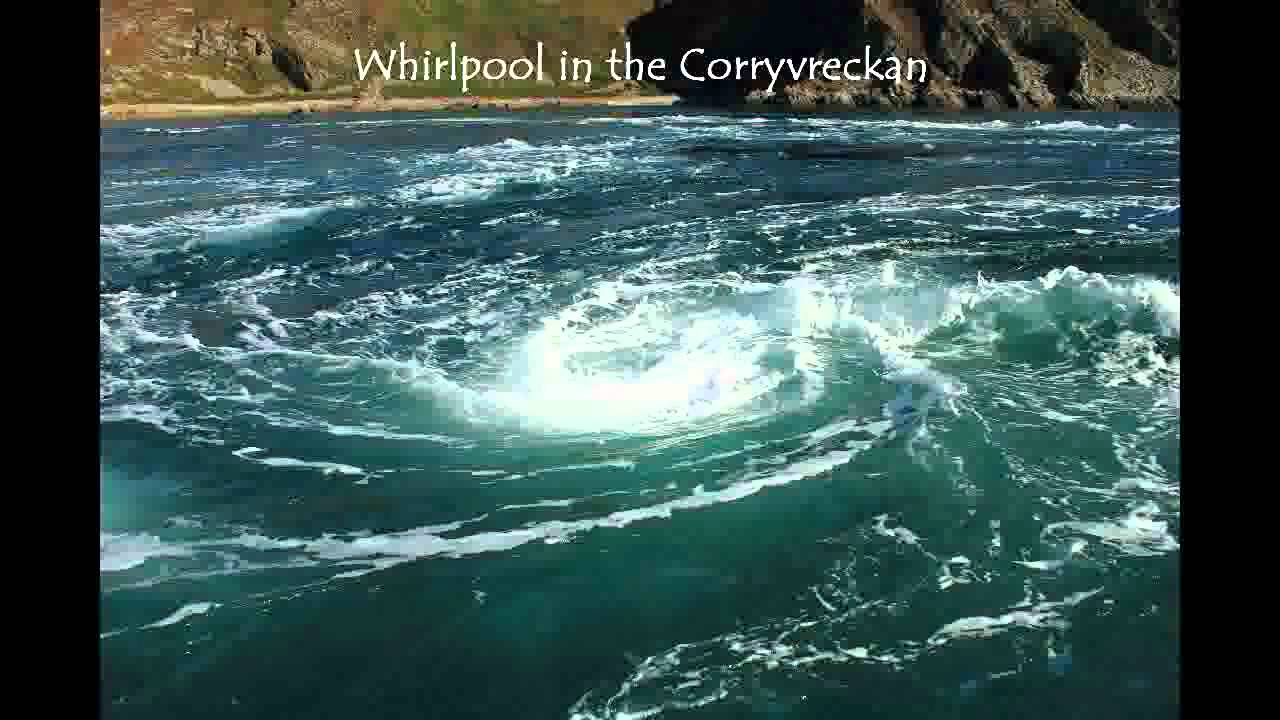
Corryvreckan WhirlpoolThe Corryvreckan, which is the strait between the isles of Jura and Scarba off the West Coast of Scotland, contains the world’s third largest whirlpool (following the Saltstraumen off of Norway, and the Moskstraumen, also off Norway), and is considered by many as the most dangerous scuba dive in the UK (there’s only a few minutes’ safe diving time there; when your bubbles start to go down, not up, you’ve overstayed your welcome).  Planted underwater in the middle of the strait is a giant pinnacle of basalt (the same rock that created the Scottish Isle of Staffa, and the Giant’s Causeway in Ireland); its position means that when tides flow in or out, they end up being churned into a broiling mass of suck-ships-under sea.

The name of Corryvreckan comes from the Gaelic Coire Bhreacain – “Cauldron of the Plaid”, and is connected with a myth of Cailleach Bheur, an old hag who was said to stir the waters of the strait in order to wash her plaid.  The English word whirlpool comes from Old English wirfelmere; in German this word paints the image of rolling dice (Würfel) on the ocean (Meer).  Harmlessly small swirling vortices of water are known as whirlpools, and you can see them when you drain a sink or flush a loo. But the more appropriate word for the ship-eating monster-vortices is the Norwegian word Maelstrom; since they have several of the largest, most dangerous ones, I think it’s only fair that they get to name them.

Now, is it a singularity or an anomaly?

Singularity:  “Anything singular, rare, or curious; the state of being singular, distinct, peculiar, uncommon or unusual.”

Anomaly:  “Something or someone that is strange or unusual; any event or measurement that is out of the ordinary regardless of whether it is exceptional or not.”

Our debate on which word to apply to the Corryvreckan is a tie, I think.  While it’s not singular as far as being the only maelstrom in the world, it is distinct, unusual and extraordinary; it’s an anomaly in the geological and topographical sense, which gives it its power and dangerous currents.  If you ever decide to check it out, don’t do it without a local guide unless you’re insane; if you are insane, enjoy washing your clothes with Cailleach Bheur.

6 Comments

Filed under Articles, History, Research

Thoughts From Gibraltar and London

I just returned from a research trip a week ago; after the dust of “coming home” has settled, it’s time to sit down and get to work in earnest on my next novel.  I’m working on the third book in my 18th century historical trilogy, and to be honest, up until this trip I would have rather been working on a different manuscript!  My time away was research into the major section of the book which takes place in the Royal Navy aboard a ship of the line.  Part of the reason I think I’ve had “writer’s block” on this manuscript is that the military aspect of the plot is not my favourite topic to delve into from a writing aspect – I love reading about it, but condensing that down into dialogue and prose is not my forté.  But I know myself:  As with anything, if it’s not my strength I’ll work at it and hone it until it is.

The Cutty Sark 1

The Cutty Sark

A very important thing for me to remember in the midst of the research is that I’m not writing a maritime history book, but a novel; I’ve got to take the research, sift it for the elements that support my plot and leave the rest of the information aside as “nice to know”.  I’ve bought, read and taken notes on dozens of history books focused on the Royal Navy; I spent a day taking in impressions aboard the Cutty Sark (one of the fastest clippers from the days of Sail, on the right), and talking to curators both there and in the Maritime Museum, as well as the British Museum; I spent time on a clipper on the Thames, taking in the sights, sounds, smells, salt spray and tastes of the river.   My hotel was literally just round the corner from the largest used book shop in London (Skoob Books)… a very dangerous thing.  Trust me.  I found some great gems, from a history book on the Seven Years War (exactly in my time period), to a portrait collection of 18th century fashions – invaluable visual aids, with explanations of things like mob caps, waistcoats, etc.  If I’d had more time (and more room in my carry-on-sized luggage), I still would have had to leave hundreds of great books behind…!

Gibraltar - Barbary macaque 2

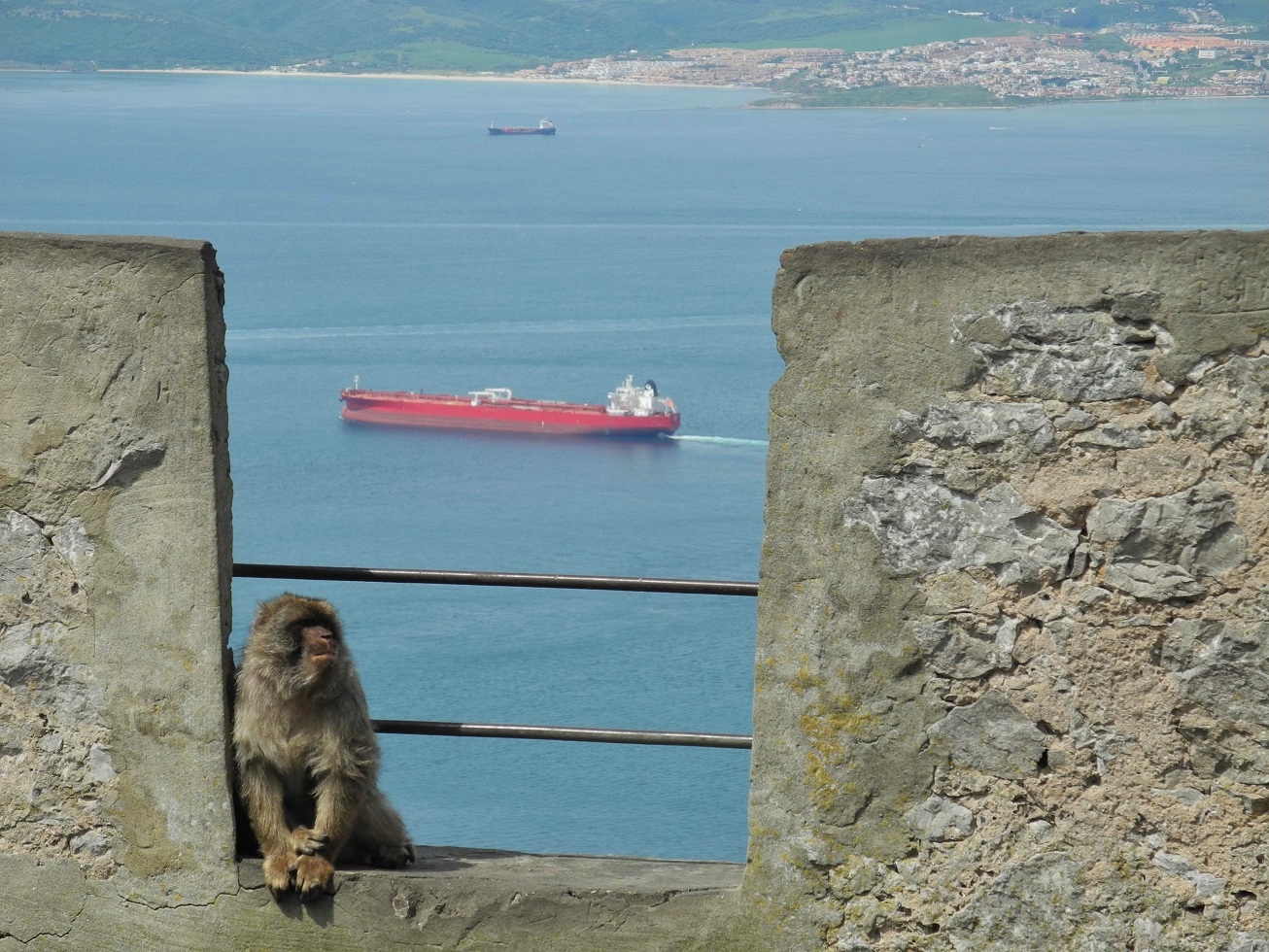
A Barbary Ape, with Spain in the distance.

Gibraltar itself was a special time:  I was there with my husband, who then took off for a 10-day bike ride toward Madrid on the day I flew to London.  Gibraltar was vitally important as a British Naval base for centuries, and you literally cannot walk down any street without being reminded of its military past:  Atop the Rock are the ruins of fortifications; St Michael’s cave was a strategic hideout; in the town are cannons everywhere; ramparts are now part of walled parks, and everywhere there are military street names, town square names, and military ships in the harbour; Spain is a spit away, and Morocco is visible even on a foggy day; it is literally the gateway to the Mediterranean.  Taking a cable car to the top of the Rock you’ll find Barbary Macaque (aka Barbary Apes, though they are tailless monkeys) everywhere; they were originally brought from Africa in the 18th century by British sailors.  A few of them escaped and set up house on the rocky slopes above the town, and now they run the show; tourists are lower down in the pecking order than they are, and if they get half a blink they’ll steal your food if you’re silly enough to take it outside.  They usually stay up on the Rock, but it’s still not wise to leave your hotel window open…

Gibraltar: The War Memorial with a Russian cannon in the foreground.

Gibraltar: The War Memorial with a Russian cannon in the foreground.

So now that I’m back, I’m looking forward to sinking my teeth into this new manuscript!  Sometimes it just helps to get away, get new impressions, percolate ideas, and become inspired.  If you’re stuck on something you’re writing, get out!  Go on a research trip, or if you can’t afford it time- or money-wise, then get out to a park, or somewhere different for a change; take your notebook, and let your mind wander.  You’ll find a way through the block!

Leave a comment

Filed under Articles, History, Research, Writing Exercise

Ye Olde Spelling Laziness

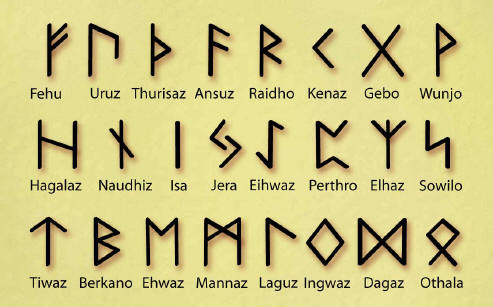
runesymbols

Have you ever wondered about the old-fashioned “ye” in shop signs?  It was a lazy printer’s solution to saving space for “th”, and should be pronounced as “the”, not “yee”!  The Old English character “y” was a graphic alteration of the Germanic rune “Þ” (which came over with the Viking raiders and the Norman King Canute and his rabble, but that’s another story).  When English printing typefaces couldn’t supply the right kind of “P” they substituted the “Y” (close enough, right?).  That practice continued into the 18th century, when it dropped out of use.  By the 19th century it was revived as a deliberate antiquarianism – to give a shop a pedigree, so to speak (read “marketing scam”), and soon came to be mocked because of it.  And now we think of it as the quaint way they used to write…

For a short, fun video on the topic, click on Ye Olde Web link, below.

ye-olde-web-link

7 Comments

Filed under History, Humor, Mistranslations, Nuts & Bolts, Translations

Toe the Line vs. Tow the Line

Toe the LineRecently I used the title’s idiom, and to be honest I don’t know if I’d ever used it before in writing; I’ve heard it said onk-times, but never had much use for it so far in written form.  Then came the question, is it “toe” or “tow”?  Actually the original phrase is nautical; but that could still be either spelling.  I did a bit of research, in both etymology dictionaries and a book of naval slang, online and in my library.  The consensus, I present here.

“Toe the line,”  according to Naval History & Heritage, comes from the practice of waterproofing between deck boards with a layer of oakum, pitch and tar, thus creating a striped deck; when the crew was ordered to fall in at quarters they would line up at their designated area of the deck, toes to the line to ensure a neat line for inspection.  Toeing the line was also used as a form of punishment for lighter misdemeanours aboard a ship, such as younger crew members talking at the wrong time; they were made to stand at the line for a specified amount of time to remind them to behave.  A logical leap later and we have our idiom, because the young lads were warned to “toe the line” – they were to mentally toe the line to avoid getting in trouble.

Tow the LineHowever, “Tow the line” could be seen as a malapropism, a mondegreen, or an eggcorn.  A malapropism (also called Dogberryism) is the substitution of an inappropriate word or expression in place of the correct and similarly-sounding word.  Example:  “Officer Dogberry said, “Our watch, sir, have indeed comprehended two auspicious persons” (apprehended two suspicious persons).  A mondegreen is an error arising from  understanding a spoken word or song text incorrectly.  Example:  “The ants are my friends, blowin’ in the wind” (the answer my friends) – Bob Dylan.  An eggcorn is an idiosyncratic (but semantically motivated) substitution of a word or phrase for a word or phrase that sound identical, or nearly so, at least in the dialect the speaker uses.  Example:  “for all intensive purposes” instead of “for all intents and purposes”.  Depending on your view of things, “tow the line could fall into any of those categories.  But it has so often been misused that it has begun to develop its own connotation independent of the original idiom:  While “toe the line” indicates a passive agreement or adherence to a particular regulation or ideology, “tow the line” implies more of an active participation in the enforcement or propagation of that “line” whether political, social, or business policy, as towing an object is not passive, but participative.

10 Comments

Filed under Articles, History, Mistranslations, Nuts & Bolts, Research

The Eddic Poems (Poetic Edda)

Poetic EddaIn the course of research for the novel I’m currently polishing, I developed a taste for obscure literature; among other manuscripts I’ve read is the Poetic Edda, or Eddic Poems.  What I find fascinating in the poems is not just the language itself, but encapsulated within the language is always a glimpse into the mentality, humour, and mindset of a people.

The Poetic Edda is a collection of Norse poems and mythology, mainly preserved in the medieval manuscript Codex Regius which was written in the 13th century, though the poems and tales are centuries older, having been oral history passed on by the skalds for generations before they were written down.  The poems were originally composed in alliterative verse (the alliteration may have changed from line to line, such as “Over beer the bird of forgetfulness broods / and steals the minds of men”), and kennings were often used (a compound noun used instead of a straight-forward noun, e.g. “wound-hoe” for “sword”), though they were not as complex as many skaldic poems were.  For a far more detailed history on the collection, click here.

I’d like to share a few gems with you; the reference “EP#” is the page number embedded in the Kindle manuscript.  These gems are either sayings, kennings, customs, or historical trivia.  Enjoy!

EP17:  “The wolf that lies idle shall win little meat, or the sleeping man success.”

EP20:  “Hard is it on earth / With mighty whoredom; axe-time, sword-time / shields are sundered, wind-time, wolf-time / Ere the world falls; Nor ever shall men each other spare.”

EP30:  “A faster friend one never finds / Than wisdom tried and true.”

EP31:  “Less good there lies / than most believe In ale for mortal men; / For the more he drinks / the less does man / Of his mind the mastery hold.”

EP35:  “To mankind a bane must it ever be / When guests together strive.”

EP36:  “Love becomes loathing if one long sits by the hearth in another’s home.”

EP36:  “Away from his arms in the open field a man should fare not a foot / For never he knows when the need for a spear / Shall arise on the distant road.”

EP39:  “No great thing needs a man to give / Oft little will purchase praise. / With half a loaf and a half-filled cup / A friend full fast I made.”

EP41:  “To question and answer must all ready be / Who wish to be known as wise. / Tell one they thoughts, but beware of two / – All know what is known by three.”

EP44:  “Wealth is as swift / As a winking eye, / Of friends the falsest it is.”

EP45:  “Give praise to the day at evening, to a woman on her pyre, to a weapon which is tried, to a maid at wedlock, to ice when it is crossed, to ale that is drunk.”

EP45:  “From the ship seek swiftness, from the shield protection, cuts from the sword, from the maiden kisses.”

EP48:  “Wise men oft / Into witless fools / Are made by mighty love.”

EP71:  “If a poor man reaches / The home of the rich, / Let him speak wisely or be still; / For to him who speaks / With the hard of heart / Will chattering ever work ill.”

EP167:  “Drink beyond measure / will lead all men / No thought of their tongues to take.”

EP250:  “On the gallows high / shall hungry ravens / Soon thine eyes pluck out, / If thou liest…”

“Welcome thou art, / for long have I waited; / The welcoming kiss shalt thou win! / For two who love / is the longed-for meeting / The greatest gladness of all.”

EP277:  “In the hilt is fame, / in the haft is courage, / In the point is fear, / for its owner’s foes; / On the blade there lies / a blood-flecked snake, / And a serpent’s tail / round the flat is twisted.” (Runes carved on a sword)

EP296:  A “breaker of rings” was a generous prince, because the breaking of rings was the customary form of distributing gold.

EP299: “There was beat of oars / and clash of iron, Shield smote shield / as the ships’-folk rowed; Swiftly went / the warrior-laden Fleet of the ruler / forth from the land.”

EP300:  Raising a red shield was a signal for war.

EP304:  “Helgi spake: “Better, Sinfjotli, / thee ‘twould beseem Battle to give / and eagles to gladden, Than vain and empty / words to utter, Though ring-breakers oft / in speech do wrangle.”

“…For heroes ’tis seemly / the truth to speak.”

EP305:  “Swift keels lie hard by the land, mast-ring harts* and mighty wards, wealth of shields and well-planed oars.” (*the ring attaching the yard to the ship’s mast.)

“Fire-Beasts” = Dragons = Ships:  Norse ships of war, as distinguished from merchant vessels, were often called Dragons because of their shape and the carving of their stems.

EP349:  “The word “Goth” was applied in the North without much discrimination to the southern Germanic peoples.”  “The North was very much in the dark as to the differences between Germans, Burgundians, Franks, Goths, and Huns, and used the words without much discrimination.”

EP368:  “Combed and washed / shall the wise man go, And a meal at morn shall take; For unknown it is / where at eve he may be; It is ill thy luck to lose.”

EP369:  the “Bloody Eagle” was an execution for a captured enemy, by cleaving the back bone from the ribs and pulling out the lungs.

EP373:  “Few are keen when old age comes / Who timid in boyhood be.”

EP374:  “When one rounds the first headland” means, “at the beginning of life’s voyage, in youth”.

EP378:  “Unknown it is, / when all are together, / Who bravest born shall seem; / Some are valiant / who redden no sword / In the blood of a foeman’s breast.”

EP379:  “”Better is heart / than a mighty blade For him who shall fiercely fight; The brave man well / shall fight and win, Though dull his blade may be.”

“Brave men better / than cowards be, When the clash of battle comes; And better the glad / than the gloomy man Shall face what before him lies.”

EP382:  “There is ever a wolf / where his ears I spy.”  This is an Old Norse proverb that basically means, “Where there’s smoke, there’s fire”.

EP398:  “I rede thee, / if men shall wrangle, And ale-talk rise to wrath, No words with a drunken / warrior have, For wine steals many men’s wits.”

EP399: “I rede thee, / if battle thou seekest With a foe that is full of might; It is better to fight / than to burn alive In the hall of the hero rich.”  “The meaning is that it is better to go forth to battle than to stay at home and be burned to death. Many a Norse warrior met his death in this latter way; the burning of the house in the Njalssaga is the most famous instance.”

EP400:  “I rede thee, / that never thou trust The word of the race of wolves, (If his brother thou broughtest to death, Or his father thou didst fell;) Often a wolf / in a son there is, Though gold he gladly takes.”

“Battle and hate / and harm, methinks, / Full seldom fall asleep; / Wits and weapons / the warrior needs / If boldest of men he would be.”

EP405:  Eating snakes and the flesh of beasts of prey was commonly supposed to induce ferocity.

EP409:  The actual mingling of blood in one another’s footprints was a part of the ceremony of swearing blood-brother hood.

EP418:  “Borne thou art on an evil wave” i.e. “every wave of ill-doing drives thee”.  A proverb.

“Flame of the snake’s bed” = Gold, so called because serpents and dragons were the’ traditional guardians of treasure, on which they lay.

EP452:  “As the leek grows green / above the grass, / Or the stag o’er all / the beasts doth stand, / Or as glow-red gold / above silver gray.”

EP455:  “On the tapestry wove we / warrior’s deeds, And the hero’s thanes / on our handiwork; (Flashing shields / and fighters armed, Sword-throng, helm-throng, / the host of the king).”

EP457:  “In like princes / came they all, The long-beard men, / with mantles red, Short their mail-coats, / mighty their helms, Swords at their belts, / and brown their hair.”

EP458: “Heather-fish” = snake

EP468:  The punishment of casting a culprit into a bog to be drowned was particularly reserved for women, and is not infrequently mentioned in the sagas.

EP513:  “Thou hast prepared this feast in kingly fashion, and with little grudging toward eagle and wolf.”  = “You’ve been generous in the men you give to die in battle today.”

EP524:  “Full heedless the warrior / was that he trusted her, So clear was her guile / if on guard he had been; But crafty was Guthrun, / with cunning she spake, Her glance she made pleasant, / with two shields she played.”  In other words, Guthrun concealed her hostility (symbolized by a red shield) by a show of friendliness (a white shield).

EP546:  “The dawning sad / of the sorrow of elves” (i.e., sunrise – the Old Norse belief was that sun killed elves).


Notes from The Poetic Edda (Snorri Sturluson), translated by Henry Adams Bellows. Kindle Edition.


2 Comments

Filed under Articles, History, Research, Translations

The Jabberwocky and the Totemügerli

Unless you’ve been living under a rock, chances are you’ve heard of Alice in Wonderland; at the least your curiosity might have been piqued enough to read it after seeing The Matrix, or be mistaken in thinking that you don’t need to read the book if you saw Tim Burton’s film with Johnnie Depp.  The sequel to Lewis Carroll’s most famous work (mentioned above), called “Through the Looking-Glass, and What Alice Found There“, written in 1871, contains the famous nonsensical poem called the Jabberwocky, which I present here:

“Jabberwocky”

‘Twas brillig, and the slithy toves

Did gyre and gimble in the wabe;

All mimsy were the borogoves,

And the mome raths outgrabe.

“Beware the Jabberwock, my son!

The jaws that bite, the claws that catch!

Beware the Jubjub bird, and shun

The frumious Bandersnatch!”

He took his vorpal sword in hand:

Long time the manxome foe he sought—

So rested he by the Tumtum tree,

And stood awhile in thought.

And as in uffish thought he stood,

The Jabberwock, with eyes of flame,

Came whiffling through the tulgey wood,

And burbled as it came!

One, two! One, two! and through and through

The vorpal blade went snicker-snack!

He left it dead, and with its head

He went galumphing back.

“And hast thou slain the Jabberwock?

Come to my arms, my beamish boy!

O frabjous day! Callooh! Callay!”

He chortled in his joy.

‘Twas brillig, and the slithy toves

Did gyre and gimble in the wabe;

All mimsy were the borogoves,

And the mome raths outgrabe.

Many of the nonsensical words are what Lewis Carroll (aka Charles Lutwidge Dodgson) coined Jabberwockyas “portmanteau words” meaning the combination of both sound and meaning of two words into one; e.g. frumious being “fuming” and “furious”.  Some of the words have since made it into the English language, such as galumph or chortle, while some were words he revived, such as gyre and beamish.  And personally I think some of his words deserve wider use, such as brilling, slithy, snicker-snack and Bandersnatch!  Click on the photo to the right to hear the poem read.
Now… “what is the Totemügerli,” I hear you ask?  It is the Swiss-German version – not a translation, but an original story by Franz Hohler, a Swiss cabaret performer; Bernese German, to be more precise.  Bern is the political capital of Switzerland, and historically has one of the richest, most colourful dialects of all the Swiss German dialects; I am fluent in the Zürich dialect, and can understand all the other Swiss-German dialects, including Walliserdïïtsch, which is the oldest of all Swiss dialects; and I can guarantee you that the Totemügerli story is 90% nonsense, and yet tells a clear tale!  For those of you interested in the text, here it is:

Ds Totemügerli

von Franz Hohler

Gäuit, wemer da grad eso schön binanger sitze, hani däicht, chönntech

vilicht es bärndütsches Gschichtli erzelle. Es isch zwar es bsungers

uganteligs Gschichtli, wo aber no gar nid eso lang im Mittlere

Schattegibeleggtäli passiert isch:

Der Schöppelimunggi u der Houderebäseler si einischt schpät am Abe,

wo scho der Schibützu durs Gochlimoos pfoderet het, über s Batzmättere

Heigisch im Erpfetli zueglüffe u hei nang na gschtigelet u gschigöggelet,

das me z Gotts Bäri hätt chönne meine, si sige nanger scheich.

«Na ei so schlöözige Blotzbänggu am Fläre, u i verminggle der s Bätzi,

dass d Oschterpföteler ghörsch zawanggle!»

«Drby wärsch froh, hättsch en einzige nuesige Schiggeler uf em Lugipfupf!»

U so isch das hin u härgange wie nes Färegschäderli amene Milchgröözi,

da seit plötzlech Houderebäseler zu Schöppelimunggi:

«Schtill! Was ziberlet dert näbem Tobelöhli z grachtige n uuf u aab?»

Schöppelimunggi het gschläfzet wie ne Gitzeler u hets du o gseh. Es

Totemügerli! U nid numen eis, nei, zwöi, drü, vier, füüf, es ganzes

Schoossinjong voll si da desumegschläberlet u hei zäng pinggerlet u

globofzgerlet u gschanghangizigerlifisionööggelet, das es eim richtig agschnäggelet het.

Schöppelimunggi u Houderebäseler hei nang nume zuegmutzet u hei ganz

hingerbyggelig wöllen abschöberle. Aber chuum hei si der Awang ytröölet,

gröözet es Totemügerli:

«Heee, dir zweee!»

U denen isch i d Chnöde glöötet wie bschüttigs Chrüzimääl dure Chätschäbertrog.

Düpfelig u gnütelig si si blybe schtah wie zwöi gripseti Mischtschwibeli,

u scho isch das Totemügerli was tschigerlisch was

pfigerlisch binene zueche gsi. Äs het se zersch es Rüngli chyblig u

gschiferlig aagnöttelet u het se de möögglige gfraget:

«Chöit dir is hälfe, ds Blindeli der Schtotzgrotzen ueche z graagge?»

Wo der Schöppelimunggi das Wort «Blindeli» ghört het, het em fasch

wölle ds Härzgätterli zum Hosegschingg uspföderle,

aber der Houderebäseler het em zueggaschplet:

«Du weisch doch, das men imene Totemügerli nid darf nei säge!»

U du si si halt mitgschnarpflet.

«Sooo, dir zweee!» het ds Totemügerli gseit, wo si zum Blindeli cho si,

u die angere Totemügerli si ganz rüeiig daaggalzlet u hei numen ugschynig ychegschwärzelet.

Da hei die beide gwüsst, was es Scheieli Gschlychets ds Gloubige

choschtet u hei das Blindeli aagroupet, der eint am schörpfu, der anger a de Gängertalpli.

Uuuh, isch das e botterepfloorigi Schtrüpfete gsi!

Die zwee hei gschwouderet u ghetzpacheret, das si z näbis meh gwüsst hei,

wo se der Gürchu zwurglet.

Daa, z eis Dapf, wo si scho halber der Schtotzgrotzen

uecheghaschpaaperet si, faht sech das Blindeli afah ziirgge u bäärgglet mit

schychem Schtimmli:

«Ooh, wie buuchet mi der Glutz!»

Jetz hets aber im Schöppelimunggi böös im Schyssächerli gguugget.

Är het das Blindeli la glootsche u isch der Schtotzgrotz abdotzeret,

wie wenn em der Hurligwaagg mit em Flarzyse der Schtirps vermöcklet hätt.

«Häb dure, Münggu!» het em der Houderebäseler na naagräätschet;

u de het er nüt meh gwüsst.

Am angere Morge het ne ds Schtötzgrötzeler Eisi gfunge, chäfu u tunggig

wien en Öiu, u es isch meh weder e Monet gange,

bis er wider het chönne s Gräppli im Hotschmägeli bleike.

Totemügerli u Blindeli het er keis meh gseh sis Läbe lang, aber o der

Schöppelimunggi isch vo da a verschwunde gsi.

S git Lüt, wo säge, dass sider am Schtotzgrotzen es Totemügerli meh desumeschirggelet.

If you’d like to hear it read out by Franz Hohler himself, in a cabaret show recorded during the ’80s, just click on the image below.

Totemürgeli, by Willy Vogelsang

6 Comments

Filed under Articles, History, Quotes, Videos

A Postcard from Lugano II

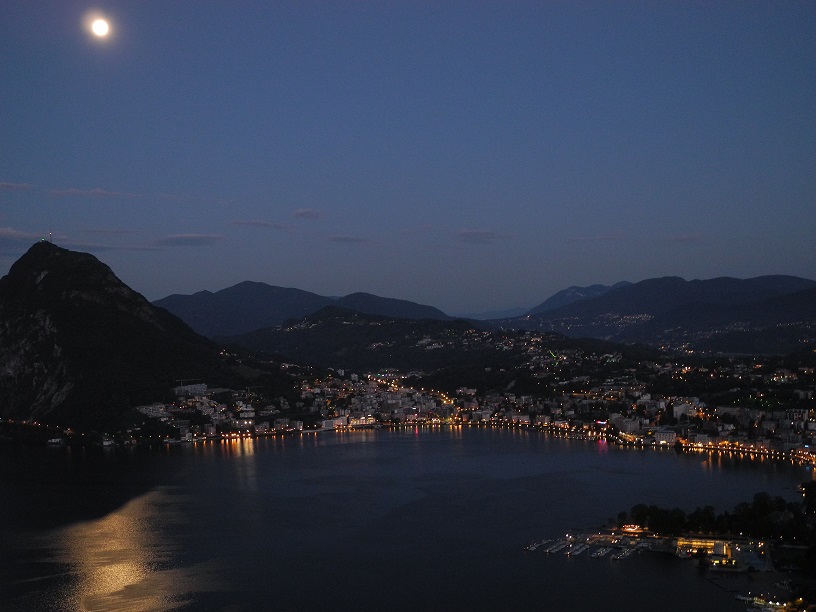
Lago di Lugano, Switzerland, with San Salvtore beneath the moon.

Lago di Lugano, Switzerland, with San Salvtore beneath the moon.

I’ve been absent from posting for a few weeks now, as I was away on holiday and I left most of my writing at home.  Most.  Last summer I wrote you the first Postcard from Lugano; and I will say that not much has changed.  It’s still beautiful, with lazy hot days with a cool breeze coming off the lake, and warm evenings with glistening stars  overhead and a glittering city below.  This first photo was taken at about 4 in the morning (I have no sleeping rhythm, which is handy when such scenes present themselves).


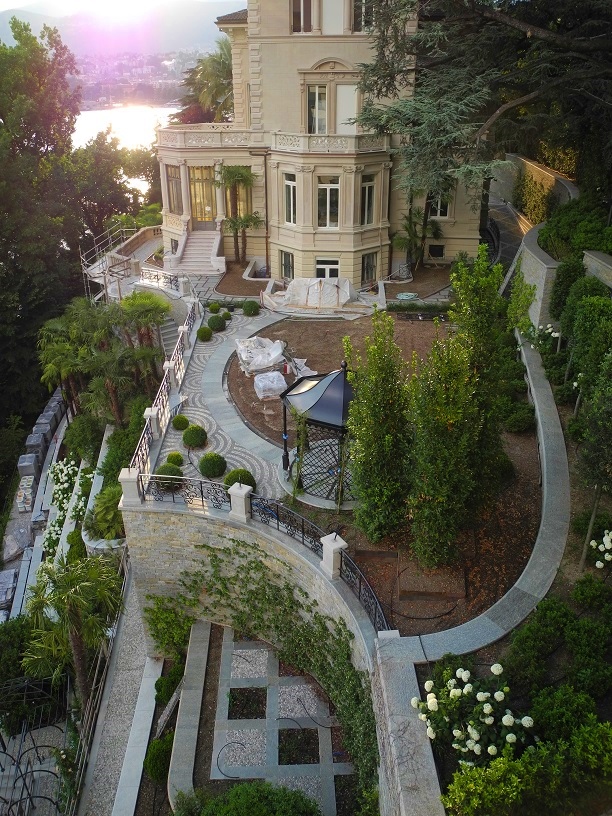
Villa Helios:  The back of the mansion with the terraced walk leading toward the lake.  Under renovation.

Villa Helios: The back of the mansion with the terraced walk leading toward the lake. Under renovation.

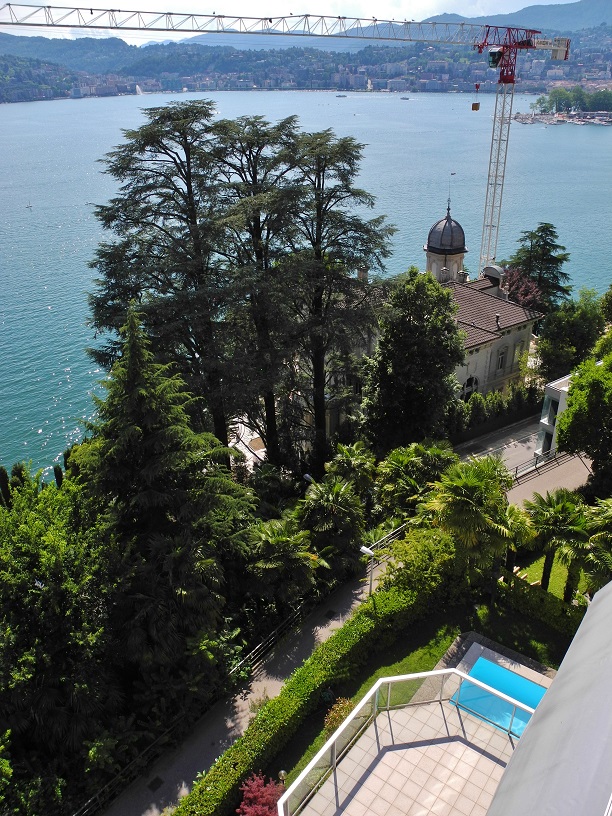
But as I told you, I left most of my writing at home – not all.  When in Lugano, I’ve been working on a novel the past few years; it started out as a fun idea to explore, and gradually developed into a  more serious endeavor.  I thought I’d share it with you as it may inspire you to take on such a writing project of your own on holidays (it may not classify as travel writing per se, though in some ways [like my postcards] it may at times take on those characteristics):  Our family flat overlooks a sprawling mansion that we have watched decay from neglect for over 20 years; it was most likely trapped in an inheritance dispute.  It had been boarded up, its windows bricked in, its magnificent garden going wild until it was an impassable jumble of green.  About three or four years ago suddenly a crane was set up, and renovations began!  Of course it sparked my writer’s brain – who had inherited it, or purchased it?  What was its history?  From the looks of it I will have several more years to ponder its end as the renovations continue; but by now the gardens and the terraced walls have been brought to life, a new drive laid with mosaic stones, and the house itself has been set free of its bricked-over, blinded windows, the roof replaced, and the beautiful stones (I would venture to guess Bath Freestone) sand-blasted and cleaned to their pristine beauty.

Villa Helios, as seen from our balcony.

Villa Helios, as seen from our balcony.

Called Villa Helios, it was designed by architect Otto Maraini, who was born in Lugano on 8 November 1863 and died there 16 January 1944. Villa Helios in Castagnola was built in 1901-1902, including a series of walls and terraces that formed part of the lake shore.  I came across a few historical photos at arteeidee – thank you to them for sharing the old magazine photos (“The Modern Building” monthly magazine of architecture and construction practice, August 1904)!  Check out that blog post for the older photos (click on them to enlarge); The photos I’ve added here are current shots.  I’ll just say two things about the crane:  Note the box hanging from it, near the vertical shaft – that is the tool crate, hung up at the end of work days to deter construction site thieves.  Also, though the crane interrupts our view of Lugano at times (it shifts freely with the wind when not in use, so sometimes we barely see it), it gives us a brilliant view of birds that take over when the workers are gone – there’s a constant conversation between the seagulls and the Hooded crows.  I’d love to do more research on this building, but most of the information is in Italian, which I can fight my way through only passably, but as I said I still have plenty of time.  That’s the beauty of holidays.

To you writers out there:  Find an interesting old building in your own area, research into its history, and create a story with the building as one of the characters and not merely a location.

Leave a comment

Filed under Articles, History

War Zones Then and Now

The UK’s Huff Post ran a series of impressive photos superimposing the “now” scenes on the site of photographs from 1944 in the war zones of Europe; the juxtaposition of the two together give pause for thought:  How much we take for granted now; how much was sacrificed then; the freedom we across Europe and the Americas enjoy now was bought at a great price.  Never forget.  Click on the photo below to see the entire series of photographs, and the photos of veteran’s ceremonies in France.  If you’d like to learn about a few famous deceptions in World War 2, click here.

DDAY/


Leave a comment

Filed under History

Airchaeology – If you Speak Scots

The internet is amazing.  You can find everything useful, useless, educational and brain-cell poisoning, all just a click away.  Just for the fun of it, when you really want to find out something about another culture’s mentality and way of looking at things, try Wikipedia in another language!  Click on the photo below to try it out in modern Scots.  And if you’re having trouble reading it, trying reading it aloud.

archaeology_header_img

Leave a comment

Filed under History, Nuts & Bolts, Research

On the Art of Conversation

“Conversation is said to be a lost art… good talk presupposes leisure, both for preparation and enjoyment.  The age of leisure is dead, and the art of conversation is dying.” – Frank Leslie’s Popular Monthly, Volume 29, 1890

Frank Leslies Popular Monthly - 1878

Leave a comment

March 29, 2014 · 9:49 PM