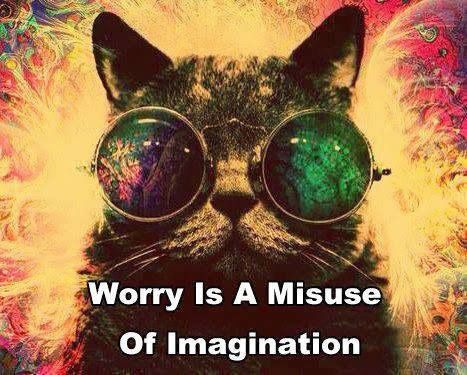
 Use your imagination for creating exciting new possibilities! And just to get you started, here’s a writing prompt:
Use your imagination for creating exciting new possibilities! And just to get you started, here’s a writing prompt:
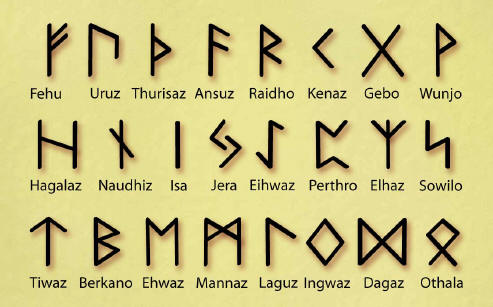
Have you ever wondered about the old-fashioned “ye” in shop signs? It was a lazy printer’s solution to saving space for “th”, and should be pronounced as “the”, not “yee”! The Old English character “y” was a graphic alteration of the Germanic rune “Þ” (which came over with the Viking raiders and the Norman King Canute and his rabble, but that’s another story). When English printing typefaces couldn’t supply the right kind of “P” they substituted the “Y” (close enough, right?). That practice continued into the 18th century, when it dropped out of use. By the 19th century it was revived as a deliberate antiquarianism – to give a shop a pedigree, so to speak (read “marketing scam”), and soon came to be mocked because of it. And now we think of it as the quaint way they used to write…
For a short, fun video on the topic, click on Ye Olde Web link, below.
Filed under History, Humor, Mistranslations, Nuts & Bolts, Translations
The following sentences are taken verbatim from comments on unwitting websites; I’ve collected them as I’ve come across them since Autumn of 2013. Sometimes I couldn’t help myself and put my comments in parentheses; other comments there are simply reference to the context. I have dozens more, but certain things in life are better in small doses… 
Filed under Humor, Lists, Nuts & Bolts, Quotes
“Fairy tales do not tell children that dragons exist. Fairy tales tell children that dragons can be defeated.”
― G.K. Chesterton

Filed under Quotes
 Language is a fluid concept, constantly changing, adapting, creating, compensating and inventing itself. Euphemisms are a prime example of that fluctuation and adaptation; successive generations come to know only the euphemism which in turn ceases to be one by that very definition, and which means that new ones will be invented to skirt the issue once again. For instance, there are hundreds of words for smell or stink, yet only a handful of satisfactory synonyms for words like fragrance, simply because hiding the ugly requires far more creativity than hiding the lovely. For that reason alone, writers who fall back on expletives like the highly offensive F-word (a euphemism for, well, you know) are simply lazy in my book; they’re missing a great opportunity for creativity! Interestingly, that word’s meaning has never shifted over time – it’s been in the English language since before the fifteenth century, and even then it was only written in cipher because it was too offensive to record in ink. In my opinion it still is, and one should consider very carefully before offending unknown numbers of readers from continuing to read your book or blog; more than once have I ended reading a book when they used the word several times in the course of the first few chapters, because honestly it says something about the extent of their language abilities and their spectrum (or lack thereof) of creativity.
As a society’s norms shift, so do the euphemisms that they use to communicate. In the Renaissance, corpulent women were considered the height of beauty; curvy, curvaceous, and shapely were instances of positive euphemisms; today they might be used by some idiot in the media to insult a Hollywood starlet who (by any other standard would be considered normal if not a little thin) gained a pound or two. Now idiot might be too strong a word; I could say brain cell-deficient, or someone who has delusions of adequacy. I would like to point out the obvious here: If you’re going to insult someone, at least spell it right… more often than not, you see people calling someone “dumn” or “dumm”, which smacks of the pot calling the kettle black…
For an interesting TED Talk (13:00) on the topic of euphemisms, please click here.
Filed under Articles, Cartoon, Etymology, Grammar, Nuts & Bolts, Writing Exercise
If you’re like me, writing can be addicting; I’m in the final phase of two book manuscripts, and when I’m on a roll I can write 10+ hours in a day. When I have such long work days, it’s important to change gears, change pace, and get away from my desk. Here’s a great list of ideas to shake things up! I’ve done quite a few things on this list already (albeit not in the same weekend!), so I can testify to the fact that they refresh tired brains, eyes and hands; they can give a burst of creative energy the next time I sit down to work. Whatever you do in life, remember to take some time out once in a while; God told us to take one day a week to rest, because I think he understands our tendencies toward burnout, workaholism and burning the candle at both ends…


Welcome to another Friday. If you are one of those people who has every minute of your weekend planned then this post isn’t for you. However, if you get half way through your weekend and think “I should really do something this weekend.” This post if for you. Part of living a full life is taking the time to engage yourself in new and exciting things. Enjoy these 26 things to do this weekend.
Attend a life theater performance. Beach weather will be gone before you know it. Head to the beach.
Clean out your garage, closet or desk.
Dine at a restaurant you have never tried before.
Entertain a family you have been meaning to get to know better.
Farmers Markets are great places to get fresh vegetables and plants.
Gym is usually empty on weekends. Have a great extra workout.
H
View original post 215 more words
Filed under Plot Thots & Profiles
 Recently I asked my Facebook connections if they could help me with a Latin phrase; the phrase has to do with the computation of days in the Julian calendar (calends, ides, nones, etc.). Here is my exact post:
“Calling all Romance Language speakers (French, Italian, Spanish, etc.): Does the following phrase (any of its words) render something similar in your language, and if so, what do those words mean? The phrase is in Latin, “Principium mensis cujusque vocato kalendas” I understand the first and last words, but am curious about the three middle words… Thanks for any help.”
Quite a discussion ensued; but I still don’t know if there is an etymological equivalent or relative to “cujusque.” One person suggested the connection of mensis (month) with the medical term – which I should have thought of as the German slang term is “Mens” for women’s monthly cycle. But all other entries tried to help me with the first and last word, and I spent more time explaining my request than I saved by asking in the first place.
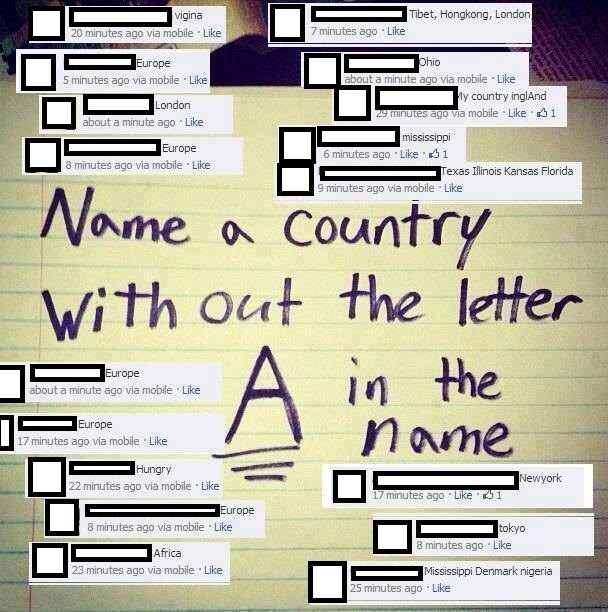
This is a trend I’ve noticed on the rise on Facebook in particular, but I am aware that it’s also happening across Cyberland; too often people skim over a text and assume they’ve understood it well enough to make an informed contribution to a discussion. It’s harmless when it only has to do with topics of grammar and language; but when it also enters the formation process of people’s opinions in the political or social arenas, society beware. I usually ignore such discussions with a healthy dose of eye-rolling; but sometimes I have to intervene in the propagation of half-baked ignorance, or I won’t be able to sleep at night.
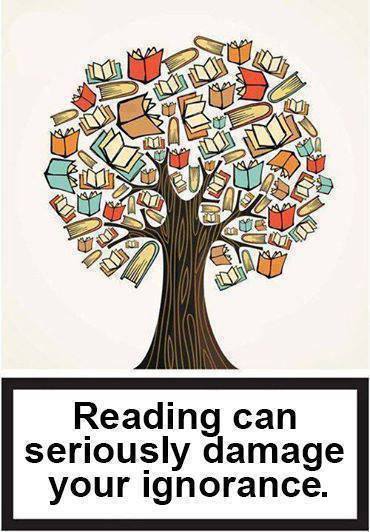
The illustration is a perfect example of this vague exactitude; people took the time to reply, but they did not take the time to properly read, to inform themselves of the actual task at hand. I have only two words to add: STOP IT!
Filed under Articles
 “If you invent two or three people and turn them loose in your manuscript, something is bound to happen to them – you can’t help it; and then it will take you the rest of the book to get them out of the natural consequences of that occurrence, and so first thing you know, there’s your book all finished up and never cost you an idea.” Mark Twain
Filed under Quotes