Tag Archives: Linguistics

History Undusted: The CB Radio

You know how your brain fires off random thoughts as you fall to sleep, or combines odds-bods into dreams forgotten as soon as you wake up? For some reason, 10-4 popped into my head in those moments last night. It sent me down the rabbit hole I now present: The history of the CB radio.

The often-forgotten or overlooked inventor of the Citizen’s Band (CB) radio system, along with inventions such as a patented version of the walkie-talkie (originally invented by the Englishman Donald Hings), the telephone pager, and the cordless telephone – all precursors to today’s cell phones, was Al Gross (1918-2000): Born in Toronto, Canada, he grew up in Cleveland, Ohio. The son of Romanian-Jewish immigrants, his love for electronics was sparked when, at the age of nine, he was travelling by steamboat on Lake Erie; he explored the ship and ended up in the radio transmissions room, where the operator let him listen in. Eventually, he turned the family’s basement into a radio station built from scraps. During his higher studies, he experimented with ways to use radio frequencies.

During World War 2, he had some involvement with developing a two-way VHF air-to-ground communications system for the U.S. Office of Strategic Services, known as the Joan-Eleanor system, and after the war, the Federal Communications Commission (FCC) allocated a few frequencies for the Citizens’ Radio Service Frequency Band, in 1946. Gross saw the potential and founded the Gross Electronics Co. to produce two-way communications systems to make use of these frequencies; his firm was the first to receive FCC approval in 1948. For more about his other inventions, just follow the link on his name above. For now, let’s focus on the CB:

The CB radio became an international hit back before cell phones and computers became a thing (despite the prevalence of cell phones, CBs are still around; truckers still communicate about road conditions, etc. Its usage was also revived by the Covid lockdown, when people began reaching out to meet and talk to others outside of their own four walls). It was, and is, a way to communicate with others long-distance from home or on the go.

My dad was always interested in the latest technological gadgets; in the mid-70s, we got a laserdisc player, the precursor of CDs, and DVD/Blu-Ray players. I remember watching films like Logan’s Run and Heaven Can Wait on that format. Laserdiscs never really took off, and only about 2% of US households had one (it became more popular in Japan at the time). Around that time, we also got a CB radio in our VW van. My dad had a chart with all of the CB slang words and codes, and I memorised it, fascinated by the lingo. On long road trips, I would get on the CB and chat with truck drivers. My handle (nickname) was Spider-Fingers, as I liked spiders and had long fingers (long fingers has the connotation of thief, so I didn’t want to use that!). Here is just the tip of the iceberg, a smattering of the codes and slangs used by CB radio enthusiasts, truckers and handymen:

There were dozens of slang terms for law enforcement officers: Bear (police officer); bear trap (speed trap, radar trap) taking pictures, also called a Kojak With A Kodak; bear bait (an erratic or speeding driver); bear with ears (listening to CB traffic); bear in the air/flying doughnut/Spy in the sky (helicopter radar traps), baby bear (rookie), fox in the henhouse/Smokey in a plain wrapper (policemen in unmarked vehicles); honey bear, mamma bear or Miss Piggy (slangs for female police officers); Brush Your Teeth And Comb Your Hair (a law enforcement vehicle is radaring vehicles – as if preparing for an official photo). A Driving Award was a speeding ticket. To wish someone Shiny side up meant that you wished them safe travels (keeping the vehicle upright).

There were slang terms for objects or events, such as Bambi, meaning that there was wildlife near the road and to take precautions; a crotch rocket was a fast motorcycle; double-nickels was a 55-mph speed limit area; a fighter pilot was an erratic driver who switched lanes frequently, while a gear jammer was someone who sped up and slowed down frequently; Alabama chrome was duct tape; an alligator/gator was a piece of blown tire on the highway, as it looked in the distance like a gator sunbathing. Convoys had front doors and back doors – the front or back truck in the group that would keep an eye open for bear traps. Motion lotion was fuel; the hammer lane was the fast lane (hammer was the gas pedal, and to hammer down was to drive full-speed). Break/breaker: Informing other CB users that one wanted to start transmission on a channel; a handle might be introduced, or requested if someone was looking for a CB friend. “Breaker, this is Spider-Fingers, over.” Asking for a comeback meant that you couldn’t hear the last transmission or wanted the other driver to talk. Break check meant traffic congestion ahead, slow down. A Bumper Sticker/hitchhiker is a vehicle that is tailgating another vehicle.

Aside from hundreds of slang terms, there was a whole list of codes (I guess you could say that the codes were the precursors of emojis!):

10-4: Agreed, understood, acknowledged

4-10: The opposite – asking for agreement or if a transmission was received.

10-6: Busy, stand by

10-7: Signing off

10-10: Transmission completed, standing by (you’ll be listening)

10-20: Location – What’s your (10-)20? Home-20 was asking for a driver’s home location/base.

10-33: Emergency traffic, clear the channel. CB code for Mayday for trucks and police cars.

10-42: Accident on the road

3s and 8s: Well wishes to a fellow driver. Borrowed from amateur ham radio codes “73” (best regards) and “88” (hugs and kisses).

The lists go on and on! I love the dry sense of humour reflected in the slang, and I think our everyday language could be a bit livelier if we included a few phrases that looked at things from a different perspective. Everyone could do with more 3s and 8s, 4-10?

1 Comment

Filed under Articles, Etymology, Family History, History, History Undusted, Humanity Highlights, Humor, Liguistics, Linguistics, Links to External Articles, Military History, Science & Technology

Obsoletusvocabularium…  Up with Archaism!

English is relatively young, as languages go. Like a sponge, it absorbs words and meanings from other languages, then squeezes them out in a similar (or widely different) form.  In other words, English is a survivor; it has survived the attempts to destroy it by the Danish Vikings, the French (Normans, aka Vikings disguised as French), and the Germans. These historical encounters give me high hopes that it will survive the age of the Cell Phone.  With each skirmish, it has come out stronger, more versatile and more flexible.  When the Pilgrims packed up English and crated it off to the New World, it was locked, as it were, in a time capsule. British English absorbed a few bad habits from the French before they thought better of it and distanced themselves during the French Revolution, but in the meantime, contentious pronunciation differences to that time-capsule relative over the Pond had crept in and persist to this day. One example: The American pronunciation of schedule (/skedju(e)l/) is from the original Greek pronunciation, which was used in Britain for onk-years until they took on the fancier French-ified pronunciation of /shedju(e)l/.  For a fascinating glimpse into how Modern English was formed, William Caxton (~1422-~1491) is your man.

While English pilled through the pockets of invaders stealing loose grammar, we also lost a few words along the way:  Some words are known to us in one form but not the other, while other words have been lost altogether due to a more convenient absorption or form arising.  You know of disgruntled (adj.), but what about gruntle (v.) or disgruntle (v.)?  And dis– in this particular case is not used to form the antonym of gruntle, but means exceedingly gruntled.  And I don’t know about you, but conject as a verb makes more sense than “conjecture” to me.  And shall we vote to bring back “Oliphant,” as J.R.R. Tolkien saved it from extinction through his use of it in Lord of the Rings?  What about pash (n.), contex (v.), or spelunk (n.)?  We know of fiddle-faddle, but what about plain ol’ “faddle” (to trifle)?  Some, admittedly, are not missed; toforan is better served with heretofore, in my humble opinion (IMHO).  Needsways is a Scottish word, obsolete in England and America perhaps, but alive and well north of the Border.  There are some deliciously eccentric words which deserve resuscitation, such as loblolly, bric-a-brac, sulter, pill (v., to plunder, pillage – ought to come in handy, that), quib, bugbear, uptake (as a verb), wist (intent), or sluggy.  If Sir Walter Scott can save words such as doff and don from extinction, so can we.

Oh, and if you’re wondering about the word archaism, it means “retention of what is old and obsolete.”  So twinge your language to include these mobile words and their meanings, and revelate your intelligence! And if you’re curious, yes, Grammarly and spellcheck were going batship crazy with this post!😎

(Comic from xkcd used under a Creative Commons license)

1 Comment

Filed under Cartoon, Etymology, Grammar, History, History Undusted, Humanity Highlights, Liguistics, Linguistics, Snapshots in History

History Undusted: Engadin Sgraffito

I know that, for most of you, neither Engadin nor Sgraffito have made you any wiser as to what this blog is about, so first, I’ll start off by explaining where and what they are, respectively.

Engadin (pronounced En-Ga-Deen) is a long, towering Alpine valley in the Romansh-speaking canton of Graubünden in southeast Switzerland. The first mention of this valley was in Latin as vallis Eniatina in AD 930; in the Romansh language (one of the four national languages of Switzerland), it is Engiadina. The river running through the valley is called the En or Inn, and it is the only river in Switzerland that runs (via Austria) into the Black Sea. The region is usually divided into lower and upper Engadin, and it is connected to the surrounding regions by several mountain passes.

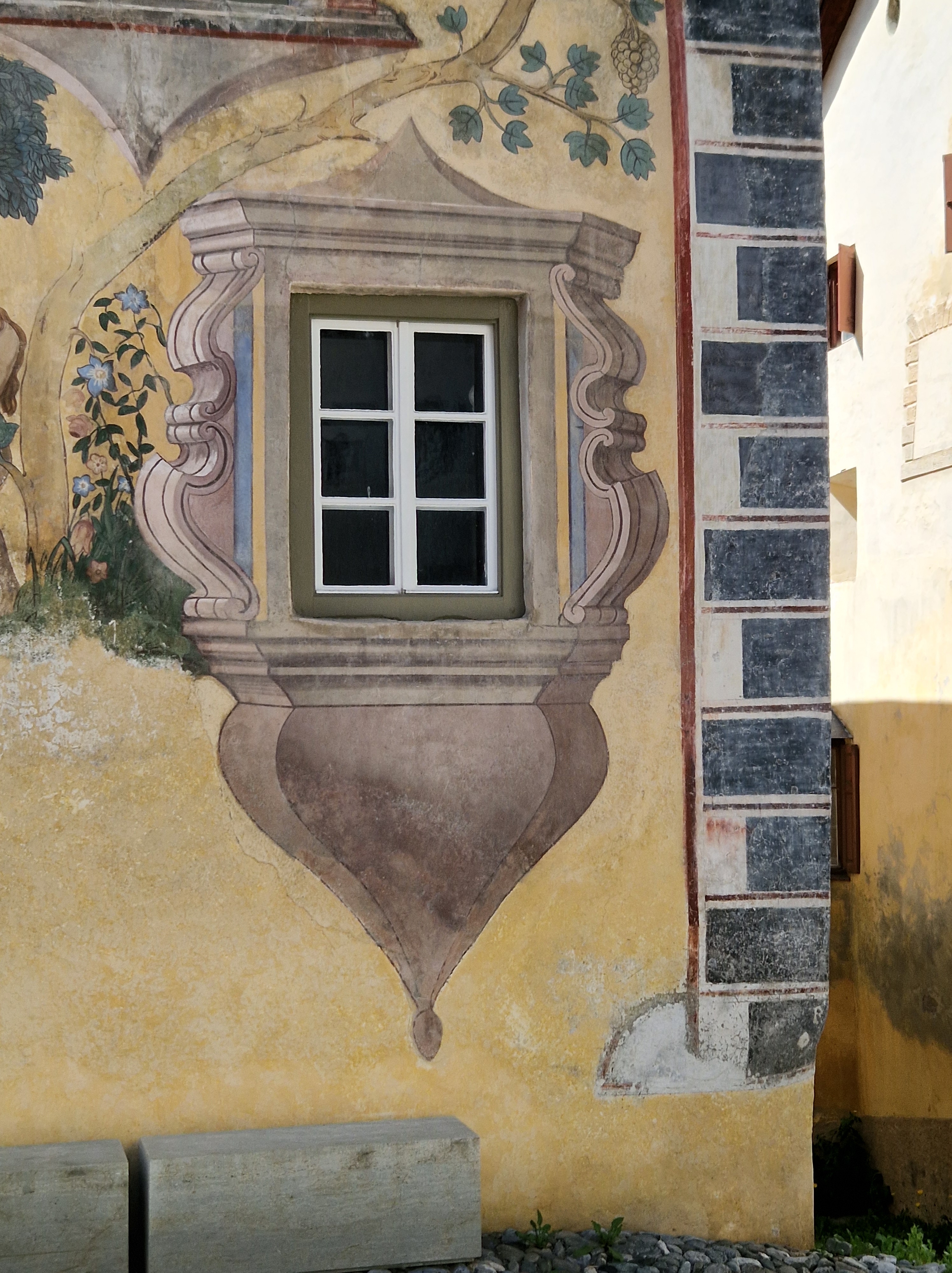
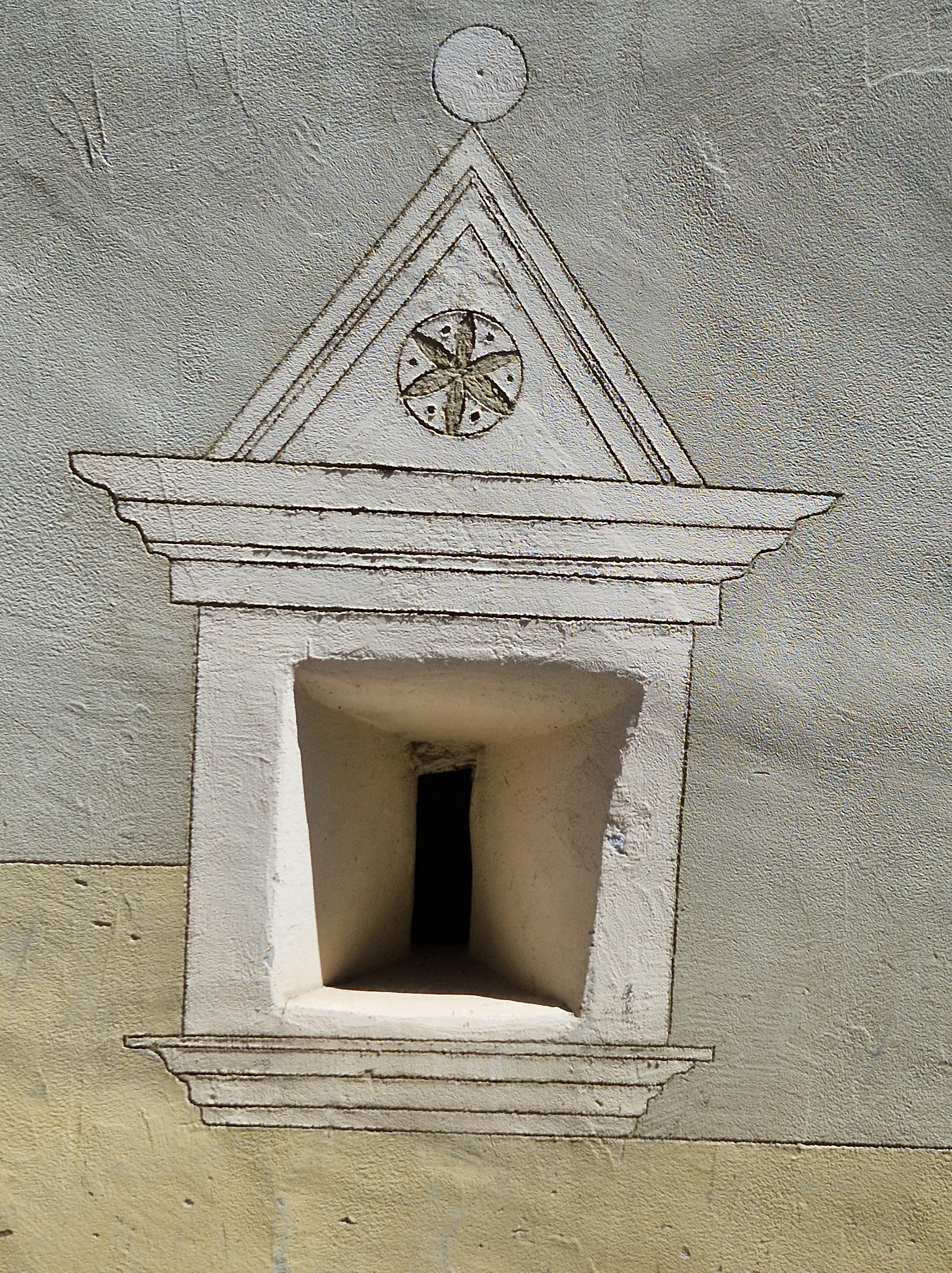
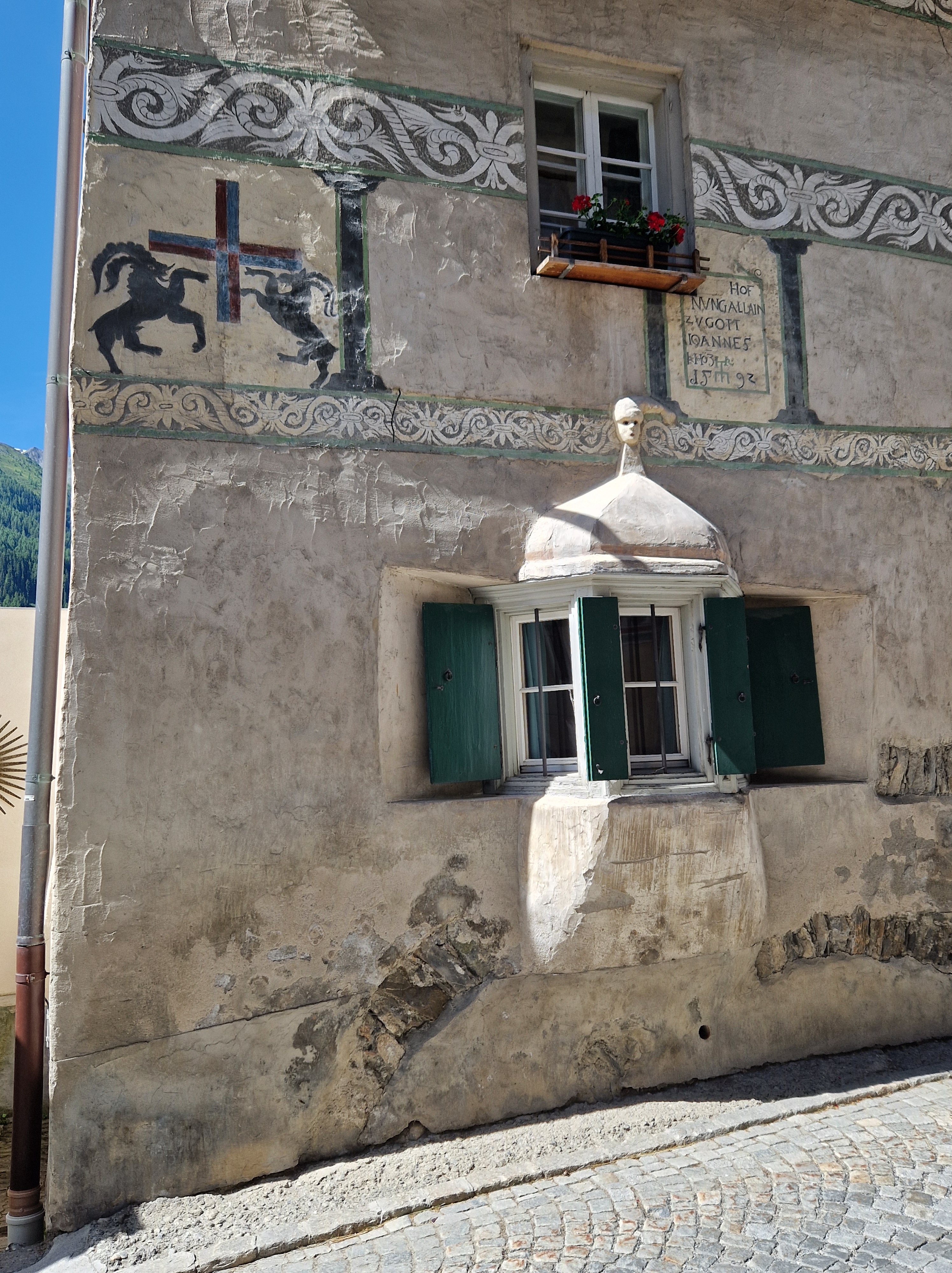
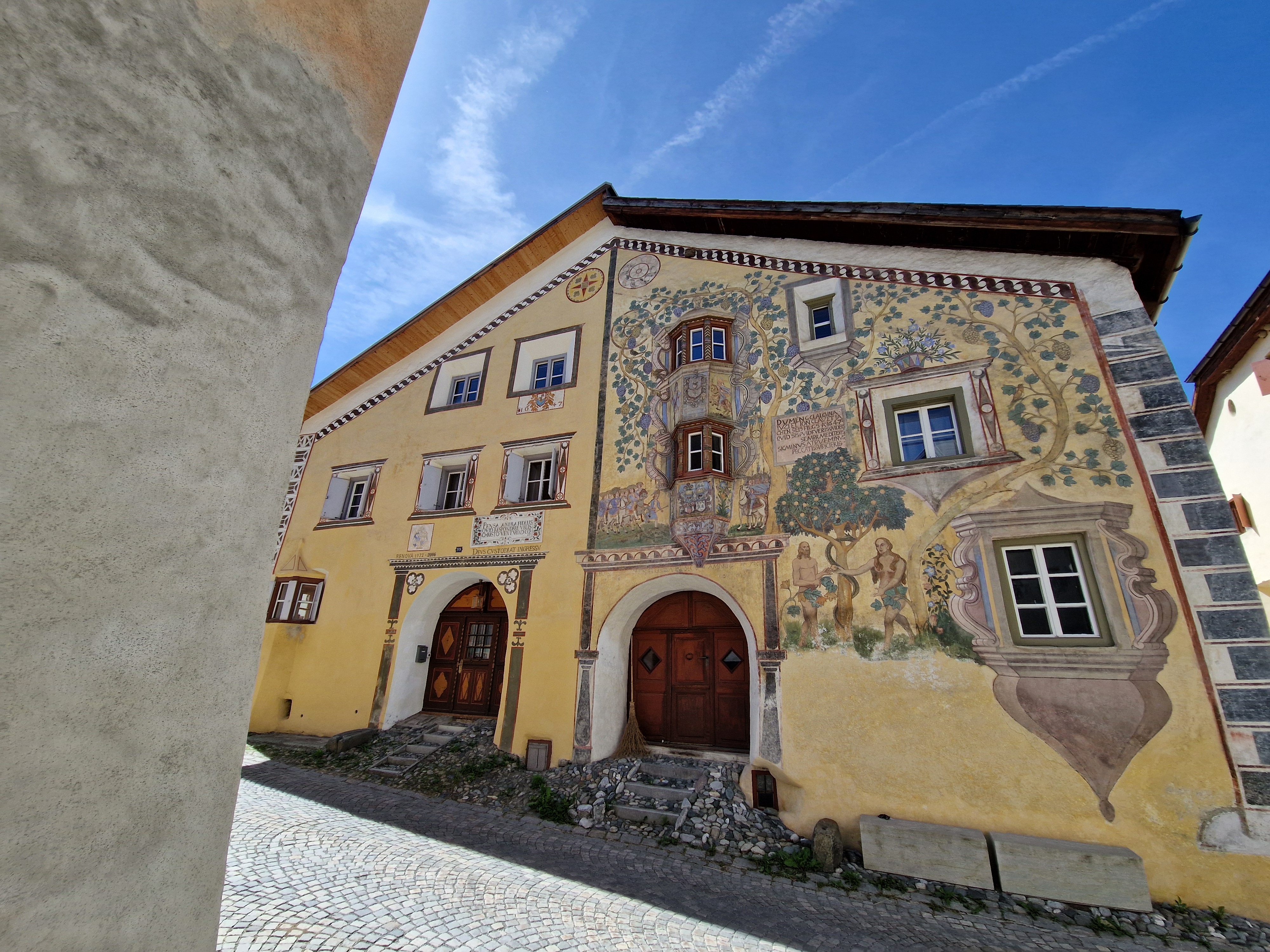
The second word, Sgraffito, describes a plaster technique that is traditional throughout Engadin: Layers of plaster of contrasting colours are scratched through, creating intricate designs on the facades of buildings (many of the buildings in Engadin towns were built (or rebuilt) in the late 1500s to early 1600s). The word comes from the Italian graffiare, which means to scratch; it can be traced back to the Greek word graphein, meaning to write (from which we also get any words containing the prefix, suffix, or derivative of graph (graphite, typography, graptolite, parallelogram, holograph, etc.). Sgraffito is not only used on buildings to make them look decorative, but it also serves the purpose of making a small feature look larger; on one building, the same floor had different-sized windows, likely installed over generations; the sgraffito was used to give a more uniform look to the façade. The decorations also make a plain building look grander, giving a more opulent impression. One building, pictured below, obviously had two occupants with very different characters back when they were originally decorated…

The basic technique for architectural features is to plaster the façade with the base colour; once that has set, it is then plastered with a contrasting colour; once that has set just enough, the scratching, or carving, begins. This is also a technique used in pottery and in creating stained glass effects (just click on the links if you’d like to see how these crafts are made).

One thing to note is that many old buildings here in Switzerland have dates listed on them: Of when they were originally built, and when they’ve been renovated. Part of the history of such renovations may include fires that swept through villages, or avalanches that buried a layer, or wars, such as the Swabian War and war against the Habsburgs, and the subsequent renovation or rebuilding of the towns or individual homes. Sometimes, along with the dates, a list of past and present occupants will also be displayed, preserving their names and memories within the history and changes of the building itself.

Below are a few pictures taken in Engadin during our recent summer holidays. Enjoy! Feel free to zoom in on the pictures to see the details.

5 Comments

Filed under Articles, Etymology, History, History Undusted, How It's Made, Liguistics, Links to External Articles, Military History, Snapshots in History, YouTube Link

Idioms Undusted: When Too Many is Too Much

I know that most of you can relate to the occasional feeling of having too many things going on at once; juggling jobs, family, civic responsibilities and household management can bring on the feeling of a hamster in a wheel, moving, moving, but not really getting anywhere!

That feeling began creeping up again for me last week, and a few idioms came to mind related to that feeling – which tells me that the condition of being overwhelmed or over-busy is an age-old challenge.

You can’t dance at two weddings

This idiom means that you can’t do two things simultaneously – you have to decide for one or the other. Sometimes that’s a tough choice – both things would be great to be involved in but, unless you’ve learned how to clone yourself, a choice must be made.

The phrase’s etymology leads us to the Yiddish language: Historically Judeo-German, Yiddish is a West Germanic language historically spoken by Ashkenazi Jews and originated in the 9th century. What I find interesting is that, about 25 years ago, when I was still learning High German alongside Swiss German (Zurich dialect), my husband was invited to perform some of his troubadour songs in a concert with several other artists; one of the groups performed in Yiddish. I could understand and follow the story of their song, while my husband and other Swiss around me couldn’t. I think it was a combination of me being a fresh learner of the two languages simultaneously, having a musical ear and, perhaps more importantly, having a Scottish accent still in my ear and a bit in my Swiss German – for me, it sounded a bit like a combination of the two! My brain combined it all, and I could follow the story – my explanation to my husband was then confirmed by their translation given after the song was over.

The idiom is likely derived from the Hebrew translation of the story in 1 Kings 18:21; the English NIV says “How long will you waver between two opinions?” but the Tanach could be read as, “How long will you hop between two platforms?”

Spread butter too thin (over too much toast)

This idiom, with a similar connotation, implies that one overcommits to too many things, leading to unsuccessful results, or leading to exhaustion or poor performance.

A good example of this idiom is happening right now in our flat: Of all the companies we’ve had to work with on the various issues of resolving water damage (the entire process began in April 2024, and no, it’s not over yet!), one company has teams in several functions – floor renovation, plastering, painting… and probably others, of which I hope I never have experience. Every single repair they’ve undertaken has been shoddy, and they’ve had to repeat the exercise – meaning we have had to move half of our flat away from floors, walls and pathways several times already as they have to re-do badly-done work! I’ve put my foot down and insisted that project managers show up and check the work before the workers are done, from now until I never have to see the company again!

The companies that concentrate their expertise on one area, such as plumbing, balcony renovation, façade renovation, or electrical repairs, have all done great work, done and dusted.

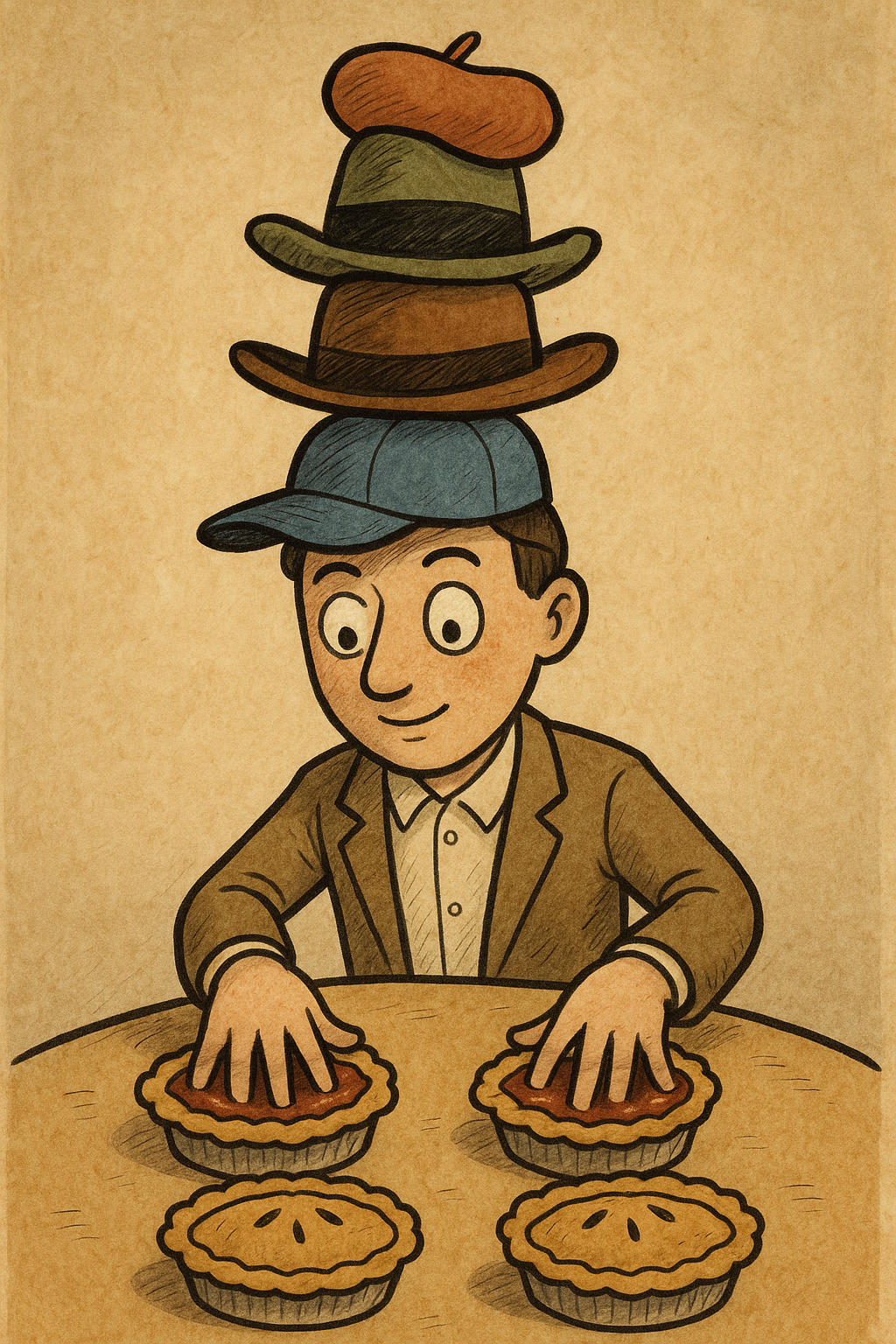
Have one’s fingers in too many pies

This idiom is similar to the butter metaphor, and it means to be involved in many different activities or projects at once, often to the point of being overstretched; It suggests a lack of focus or a tendency to dabble in various things without fully committing to any. 

Shakespeare used this imagery in Henry VIII, in which the Duke of Buckingham refers to Cardinal Wolsey: “The devil speed him! no man’s pie is freed from this ambitious finger“.

In Italian, the phrase “avere le mani in pasta” means to have one’s hand in the pies, or pasta, or simply being hands-on.

This idiom is so visual that it is difficult to trace its origins, as it likely had many concurrent origins throughout history. Shakespeare most likely wasn’t the first to use it, though he no doubt popularized it, like so many things he’s “credited” with.

Wearing too many hats

This idiom, also as “man of many hats” stems from a recent past when people wore hats on a daily basis.

Men had hats, usually bowlers, to wear in the city during the day, while they wore a different hat on the hunting field, another when riding horses, and another for evening parties. Cricketers, cowboys, players of various sports (baseball, American football, etc.), military ranks with casual uniforms or dress uniforms or combat uniforms all wear different hats.

To wear too many hats implies that a person is trying to perform too many different roles or jobs than is realistically feasible, implying that they may struggle to fulfil responsibilities effectively.

Have you had times in your lives when too many is too much? If so, let’s all learn to slow dance, eat less butter, bake fewer pies, and choose one hat at a time!

1 Comment

Filed under Etymology, History, History Undusted, Linguistics, Military History

The Fascinating History Behind the Fraktur Typeface

Last Sunday at church, a friend filled an entire room with her late father’s books, setting up an impromptu book shop. I chose several books, most of which are in Fraktur typeface, known to some people as “Gothic” or “Old German”. I enjoy reading such books because they offer a snapshot of a cultural way of thinking. The books I chose were printed between 1877 and 1940. The latter date is significant, as you’ll soon see.

First of all, let’s clarify a few terms: Though many people think of font and typeface as interchangeable, in fact, they refer to two different aspects of a writing style. Typeface refers to a particular style of lettering (e.g. Times New Roman), while font refers to the variations within that style, such as size and weight (CAPS, bold, italic, etc.). Another term we know but may not fully understand is Serif: This refers to the small stroke or line attached to the larger stroke of a letter; an example would be an A with “feet” at the bottom of each down-stroke. Sans Serif simply means “without Serif”.

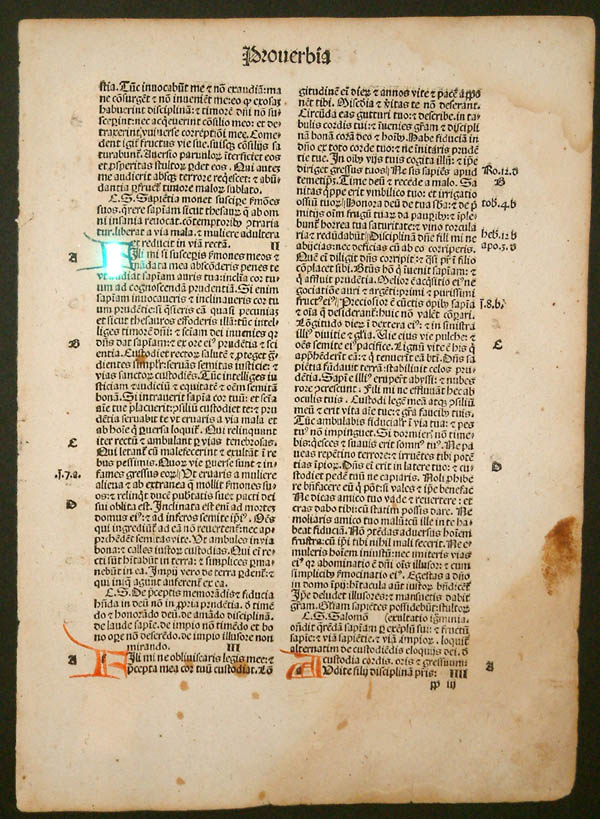
The first moveable-type printing press, designed by Johannes Gutenberg in Germany around 1440, was based on the ancient Roman design of a screw press used to press wine or oil, which in turn went on to be used to press designs into cloths. He was likely familiar with intaglio printing and may have done some work himself in copper engraving.  These designs and uses likely fermented in his inventor’s mind into what became the revolutionary turning point of literacy. Gutenberg’s original typeface was called Donatus-Kalender; the metal type design was itself a form of Textura (more on that in a moment).

Donatus Kalender
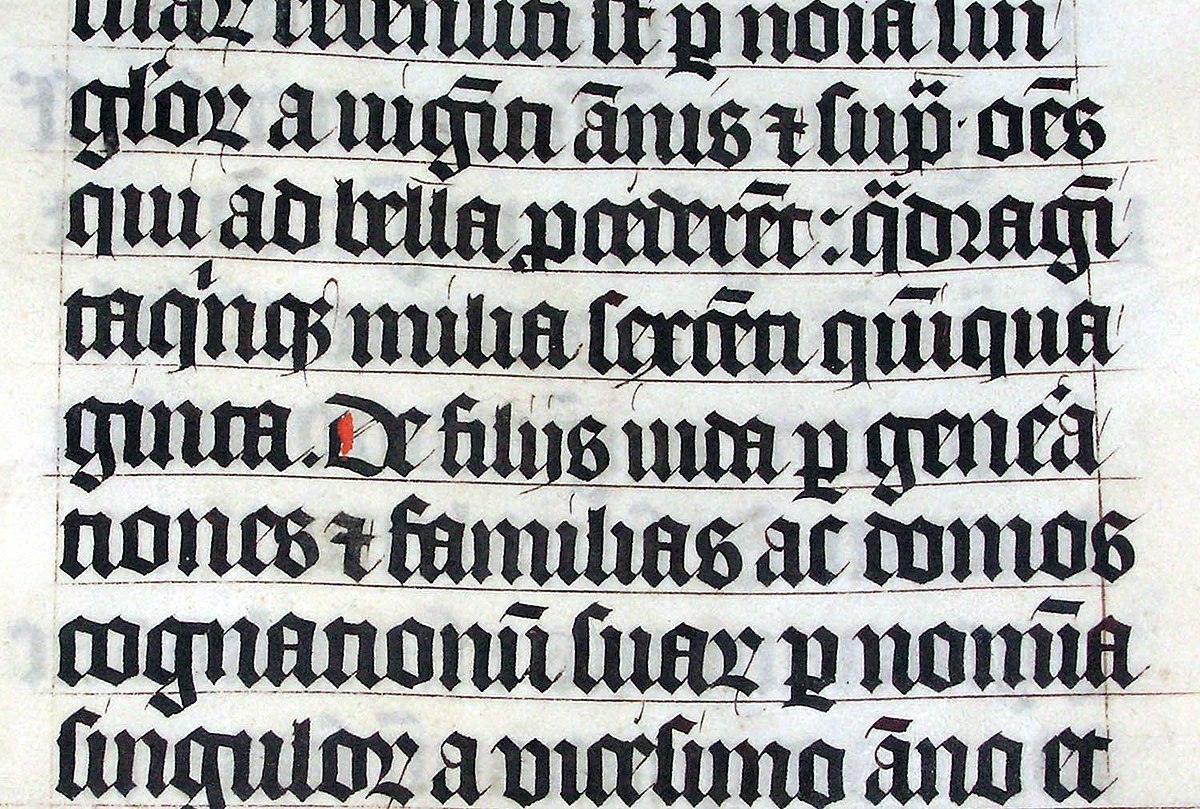
Example of Blackletter (Source: Wikipedia)

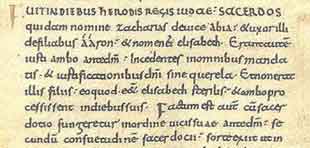
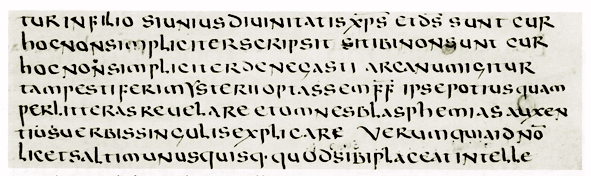
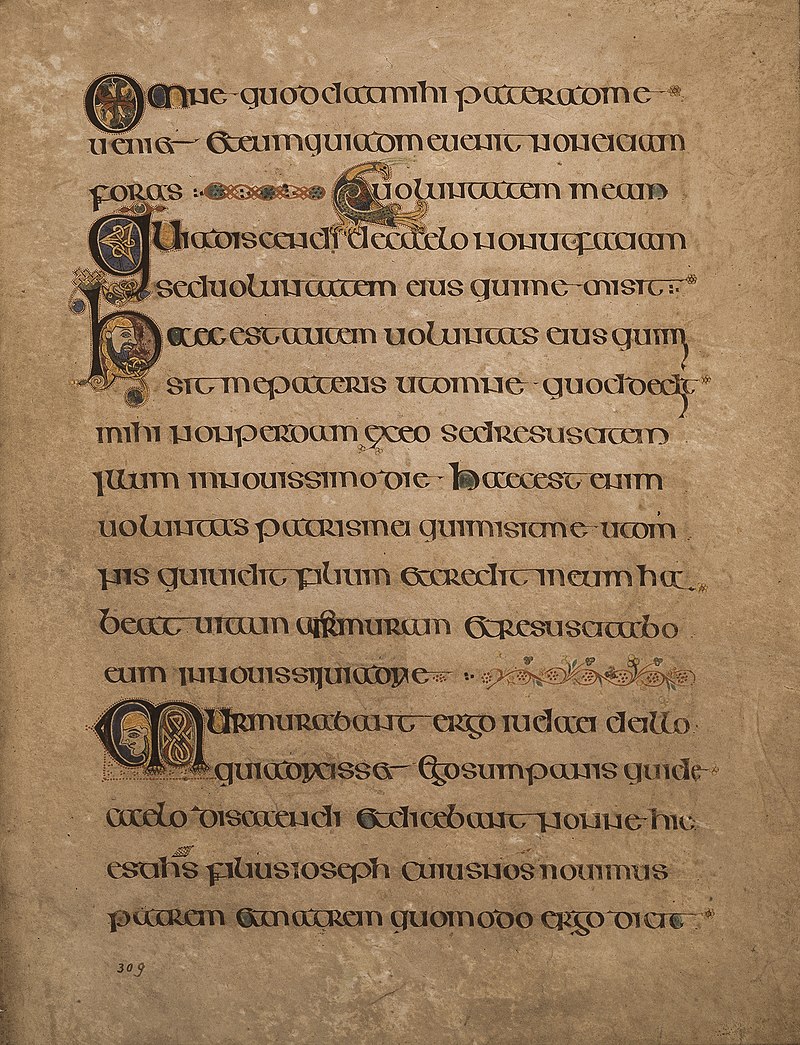
This original family of typefaces was known as “Blackletter”, aka “Gothic scripts”, with the height of popularity peaking around the 14th to 15th centuries. The ancestor of the Blackletter was called the Carolingian minuscule, a calligraphic standard of handwriting widely used in the medieval period, when literacy began increasing and a need for books in a wide range of subjects began to be in demand. It is thought to have been developed in the mid-770s by Benedictine monks north of Paris in the Corbie Abbey, famous for its scriptorium and library. The minuscule itself was derived from Roman Uncial as well as Irish Insular script, which was developed in Irish monasteries and spread throughout Europe.

Carolingian Minuscule
Roman Uncial
From the Book of Kells, an example of the Irish Insular script

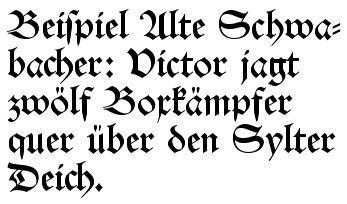
The family of Blackletter typefaces included Early Gothic, which was a transitional script between the Carolingian miniscule and Textura (the most calligraphic form of Blackletter); Schwabacher was a form popular in early German print typefaces (it became widely known with the spread of Luther Bibles from 1522), in use from the 15th century until it was eventually replaced by Fraktur around 1530, though it was still used alongside Fraktur for emphasis, much like we use bold or italic today.

Schwabacher Typeface
Textura Typeface

Another blackletter typeface developed between 1470 and 1600: Antiqua. This typeface’s letters were designed to look like the handwriting of ancient Roman documents, with the letters flowing together, strokes connecting them in a continuous line, whereas Fraktur was distinguished by having letters “fractured” – separate from one another. The Antiqua-Fraktur Dispute deserves its own article, so stay tuned!

Antiqua Typeface (Source: Wikipedia)
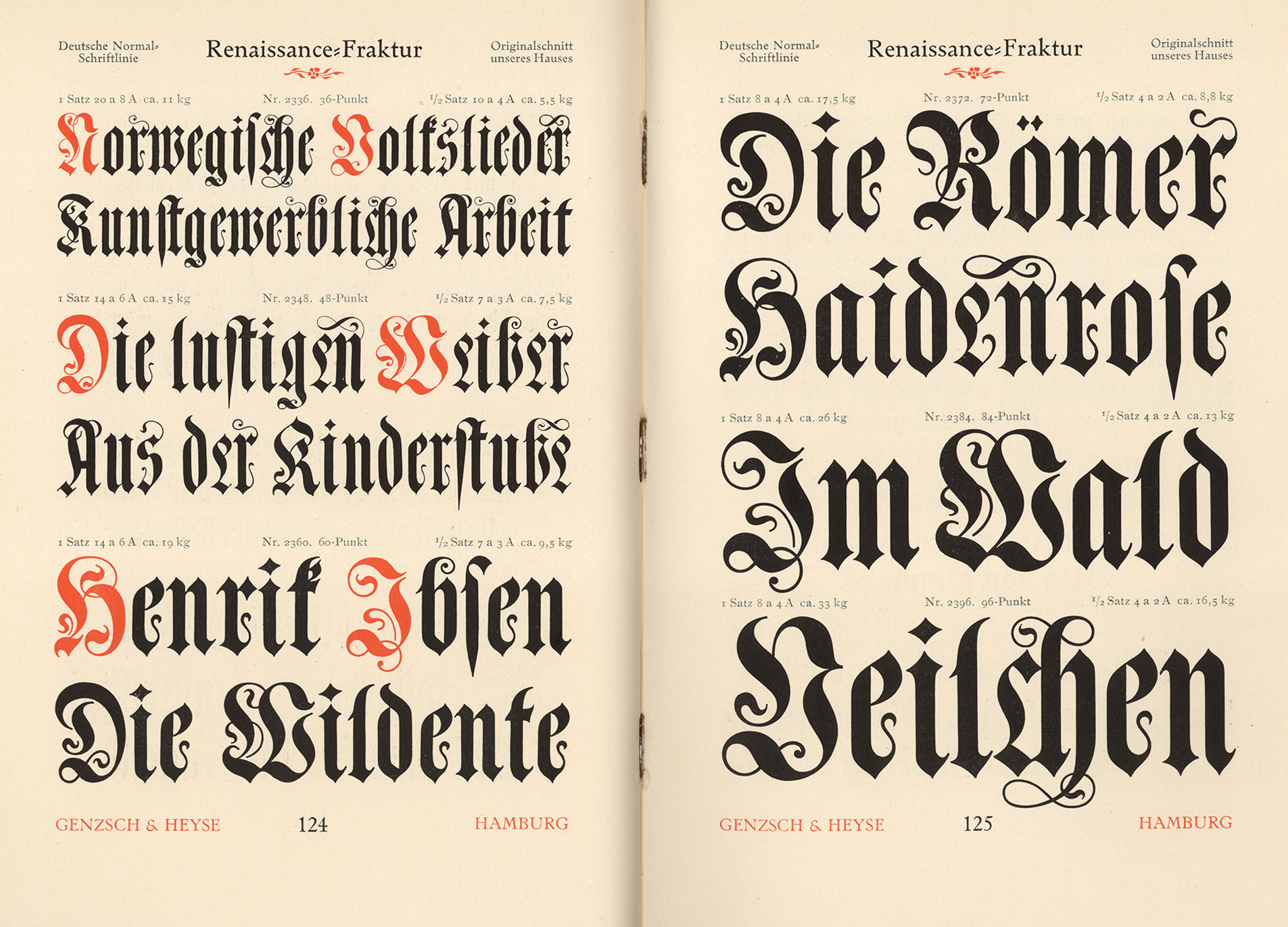
Fraktur Typeface (Source: Fonts in Use)

The Habsburg Emperor Maximillian I (1459-1519) was King of the Romans* from 1486 to 1519 [the title of king was used by the kings of East Francia, the territory later referred to as the Kingdom of Germany, from the time of Henry II (1002) to Joseph II (1764)]. The king commissioned the artist Albrecht Dürer to create a series of woodcut engravings of the Triumphal Arch [Though many are familiar with the Arc de Triomphe in Paris, it is only one example of this ancient Roman architectural feature used as a free-standing structure (rather than the Greek version, which was used within a structure such as a temple).]. These engravings would be used to create what we would recognize today as essentially wallpaper, though its purpose was more of a statement of power or propaganda (read personal marketing) commemorating his nobility, generosity, and military conquests – an incongruous combination, if you ask those conquered… The final composite of printed papers stood nearly 3 metres (12 feet) high and was only one part of a series of three enormous prints commissioned by the king.

Albrecht Dürer’s The Triumphal Arch, for Maximilian I

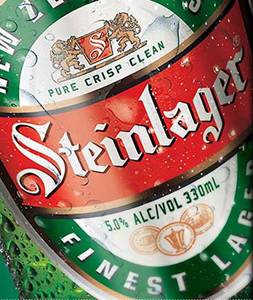
 The Fraktur typeface was designed in the 1530s by Hieronymus Andreae, a German woodblock cutter, printer, publisher, and typographer closely connected to Albrecht Dürer. The typeface was made to decorate the arch, telling the stories of the figures depicted throughout. The typeface became popular in Europe and was in use in the German-speaking world, as well as areas under its influence (Scandinavia, Central Europe, and some eastern European regions), into the 20th century. Specifically, Fraktur was in use in German until 1941, when it was actually banned (which places one of the books I purchased on Sunday within one year of the end of the era of Fraktur!). The atmosphere that led to that ban arose from the dispute mentioned above. Once the Nazis were defeated, the ban was lifted, but Fraktur never regained its widespread popularity after that, though you can still see it occasionally in pub signs or various forms of ads, like beer brands.

I just pulled two books from my library shelves: One is an English book originally printed in 1895, with my book being printed in 1915; the other is a German book printed in 1892. The typefaces are widely different: The English text likely used the French Oldstyle, while the German book uses Renaissance Fraktur for the text body, while the end pages act as indexes and use a variety of blackletter typefaces, such as Muenchner Fraktur, Antike Kanzlei, and Enge verzierte Altdeutsch. To see examples of the typefaces mentioned here, please click on the link for Fonts In Use.

I hope you enjoyed this jaunt through history! Nearly every name mentioned, every typeface, and every event deserves its own undusting. Next time, we’ll deep-dive into the dispute that lasted well over a century!

3 Comments

Filed under Articles, Etymology, History, History Undusted, Humanity Highlights, Images, Liguistics, Linguistics, Links to External Articles, Military History, Signs, Snapshots in History

History Undusted – The Tactile Language of the Quipu

Throughout history, languages have come and gone; an estimated 30,000 have existed at some point in time, though currently, there are roughly 6,000 to 7,000 languages in use – and most are threatened with extinction. Think about that. The impact on the loss of cultural history, connection to ways of thinking, ways of communicating, and ways of processing information; senses of humour, and national heritages will be lost.

An example of a language nearly lost, but which is now familiar to most of us by sight, is the logogram language of Egyptian hieroglyphs. The knowledge of how to interpret the symbols had been lost for centuries, until 1799, when a stone was found near Rosetta, along the Nile Delta in Egypt; the stone was a stele with a decree issued in 196 BC; the texts carved into the stone were Ancient Egyptian (“demotic” text), hieroglyphs, and Ancient Greek. Because Greek was a known language, they could use the Rosetta stone to decipher the forgotten languages.

When we think of writing, we may think of various alphabets: Greek, Roman (of which English makes use), Norse Runes, or the logographic or ideographic languages of Asia, such as Chinese or Japanese, or the cuneiform writing of the Ancient Near East. But did you know that there have been languages based on string?

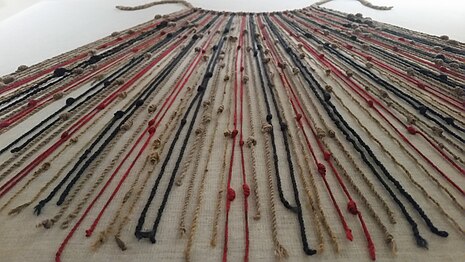
Quipu in the Museo Machu Picchu, Casa Concha, Cusco. Source: Wikipedia

The Inca people, in the region of modern Peru and Chile, used knots on an elaborate system of connected strings or cords for collecting data, keeping records, recording taxes or census records, making calendars, or for military organisation. When the Spanish Conquistadors swept through, they found numerous bundles of strings, but had no idea of their significance; they destroyed many of the quipu*, not realizing that they might have held in their hands a record of an individual’s wealth in animals or crops. [*Quipu is the Spanish spelling used in English; it is also spelled khipu or kipu.] Other cultures have also used similar concepts with knotted strings to record information, unrelated to South America; these include China, Japan, Taiwan New Zealand, Hawaii, and other parts of Polynesia.

As with most textiles, they unfortunately didn’t stand the test of time very well, and only a fraction remains today. The ancient world may have taken the concept of the quipu one step further in creating the more flexible abacus, though the latter was (and is still) used for temporary calculations, while the former was rather for recording information. Whether or not there is a historical link, both are visual tools that can be used for similar functions to a certain extent.

Even with such widespread use of these knotting records, their meaning was nearly lost, until a Harvard student, Manny Madrano, had time on his hands one summer and solved a centuries-old mystery!

For an interesting video on this topic, please click here. I hope you’ve learned something! Keep being curious about our fascinating world!

6 Comments

Filed under Etymology, History, History Undusted, Liguistics, Science & Technology, YouTube Link

Euphemisms: Stupidity

Euphemisms… we use them daily, whether we realize it or not. They abound in English, multiplying like rabbits in every dark corner of life. In fact, they hardly ever multiply in the sunny spots, because we don’t require them there. The very definition of the word confirms that notion: “The use of a word or phrase to replace another with one that is considered less offensive, blunt or vulgar than the word or phrase which it replaces.”

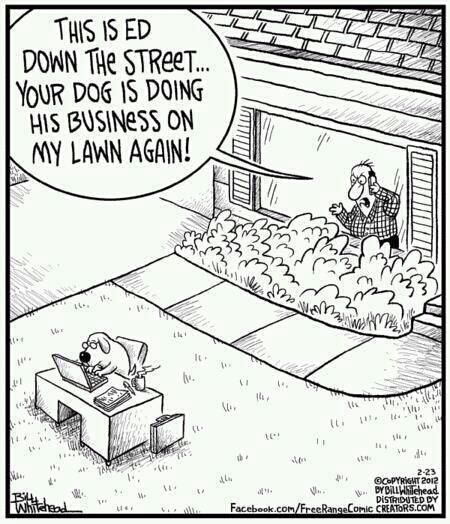
euphemism - Dog, Doing BusinessEvery generation creates new ones, because a parent’s euphemism becomes the general term which is then too close to the original meaning, and so the children get creative with words, and so on. There are a few euphemisms that have remained unchanged over centuries, such as passed away, which came into English from the French “passer” (to pass) in the 10th century; others shift gradually, such as the word “nice”: When it first entered English from the French in the 13th century, it meant foolish, ignorant, frivolous or senseless. It graduated to mean precise or careful [in Jane Austen’s “Persuasion”, Anne Elliot is speaking with her cousin about good society; Mr Elliot reponds, “Good company requires only birth, education, and manners, and with regard to education is not very nice.”  Austen also reflects the next semantic change in meaning (which began to develop in the late 1760s): Within “Persuasion”, there are several instances of “nice” also meaning agreeable or delightful (as in the nice pavement of Bath).]. As with nice, the side-stepping manoeuvres of polite society’s language shift over time, giving us a wide variety of colourful options to choose from.
Recently, my husband and I were talking about the topic, and the specifics of the word stupid came up; so without further ado, here’s a round-up of ways of getting around describing someone as stupid, dumb, or, well, an ass:

  • Thick as a post
  • Doesn’t have both oars in the water
  • Two sandwiches shy of a picnic
  • A beer short of a six-pack
  • A brick short of a load
  • A pickle short of a barrel
  • Has delusions of adequacy
  • Has a leak in their think-tank
  • Not the sharpest knife in the drawer
  • Not the sharpest tack in the box
  • Not the sharpest pencil in the box
  • Not the sharpest tool in the shed
  • His belt doesn’t go through all the loops
  • His cheese has slipped off his cracker
  • The light’s on but nobody’s home
  • If you stand close enough to them, you’d hear the ocean
  • Mind like a rubber bear trap
  • Would be out of their depth in a mud puddle
  • Their elevator is stuck between two floors
  • They’re not tied to the pier
  • One prop short of a plane
  • Off his rocker
  • Not the brightest light in the harbour
  • Not the brightest bulb in the pack
  • Has a few loose screws
  • So dense, light bends around them
  • Their elevator/lift doesn’t reach the top floor
  • Dumber than a bag of rocks
  • Dumber than a hammer
  • Fell out of the family tree
  • Doesn’t have all the dots on his dice
  • As slow as molasses in winter
  • As smart as bait
  • Has an intellect only rivalled by garden tools
  • A few clowns short of a circus
  • Silly as a goose
  • Addlepated
  • Dunderheaded
  • A few peas short of a casserole
  • Isn’t playing with a full deck of cards
  • Has lost his marbles / isn’t playing with all his marbles
  • Has bats in his belfry
  • A dim bulb
  • He’s got cobwebs in his attic
  • Couldn’t think his way out of a paper bag
  • Fell out of the Stupid Tree and hit every branch on the way down
  • If brains were dynamite, he couldn’t blow his nose

I’m sure there are dozens more! If you know of any that haven’t made this list, please put them in a comment below!

20 Comments

Filed under Articles, Etymology, Grammar, History, History Undusted, Humor, Lists, Musings, Quotes, Translations

Basque Musings

This slideshow requires JavaScript.

I just returned from a long weekend away with my husband in Bilbao, Spain.  I say that with trepidation, as, according to many Basque people, it is not Spain, but Basque Country.  There are some who are content to remain part of Spain and France, and others who want independence, so when in Basque Country, say it the Basque way.

As a lover of history, linguistics and just about everything else except strenuous exercise, I can say that it was a great weekend (even though a lot of exercise snuck in)!  Great weather, great food, great architecture, confusing languages, and interesting sites all round.  Here are some highlights:

Guggenheim Museum:  The building itself is well worth the visit!  The architect, Frank Gehry, literally designed the building on one of his free-form doodles. With only one straight wall that I could see, I can imagine that he was doodling when the phone rang and made his hand jerk, causing the straight line…  it’s an engineering feat, to say the least.  Just outside the Guggenheim are several sculptures, notably a giant dog made of flowering plants; it was intended to be a temporary display, but the people of Bilbao fell in love with it, and it’s now a permanent landmark.  There’s also one for us odd arachnophiles out there, a giant spider.  Two sculptures look like they’d float away, even though they weigh tons:  “Tulips”, and a tower of balls.

The weather was perfect, so we took a “Bilboat” tour down the waterway; it gave us the chance to see areas of the city which are usually far from the tourist route; areas that are in the throes of rejuvenation and restoration.

Pintxos:  You can’t go to Basque Country and eat in a usual restaurant!  You need to go (what my husband and I dubbed) “Pintxopping” – like pub crawling but for a Pintxos (“Pinchos”) dinner.  They are similar to Spanish tapas but far more elaborate; 5-6 will make a meal.  12 Euro will get you 6 Pintxos and a pint of beer.  Any Pintxos bar worth their salt will spread out a wide variety of the treats along the length of their bar, and diners choose a selection of hot and cold delicacies.  Bars pride themselves on signature creations; one bar we ate at had a mound of crab meat baked under a layer of squid-ink-tinted cheese, in the shape of a regional mountain.  Most are served atop toasted slices of Baguettes, though there are also many on skewers, or served as spring rolls.  If you’re now hungry, sorry about that – but you can find recipes all over Pinterest.

Language:  The Basque language (Euskara) is a language isolate – in other words, it is unrelated to any other known language. Within language families, one could interpret this or that word based on a known relative language, e.g. between English street and German strasse.  But looking at a road sign in Bilbao, you would have NO clue as to which word is the street name, and which is the word for street, road or path.  Unless you know Basque, you would have no chance of interpreting anything – even if the context is known. An example sentence from the article on Wikipedia illustrates that point:  “Martinek egunkariak erosten dizkit” means “Martin buys the newspapers for me”.  It is the last remaining descendant of one of the pre-Indo-European languages of Western Europe,  with every other language that might have existed in relation to it having gone extinct, so there’s no way to decipher it based on a comparative method, linguistically.  It may have been related to the Aquitanian language, which was spoken in the region before the Roman Republic’s conquest in the Pyrenees region, but the exact origins are unknown.  It’s a fascinating study, if you’re interested!

One of the images above was taken on my flight home; the Alps were in fine form, and the weather great for flying; Matterhorn can be seen in the centre. I hope you enjoyed my mini-tour, and I would recommend that you get yourself a pintxo or two to tide you over until your next meal…


12 Comments

Filed under Articles, Etymology, History, Images, Musings, Research

Singularity vs. Anomaly

On our recent holiday in Scotland, my husband and I discussed the difference between singularity and anomaly; specifically, we were trying to decide whether we would call the Corryvreckan one or the other (as one does).

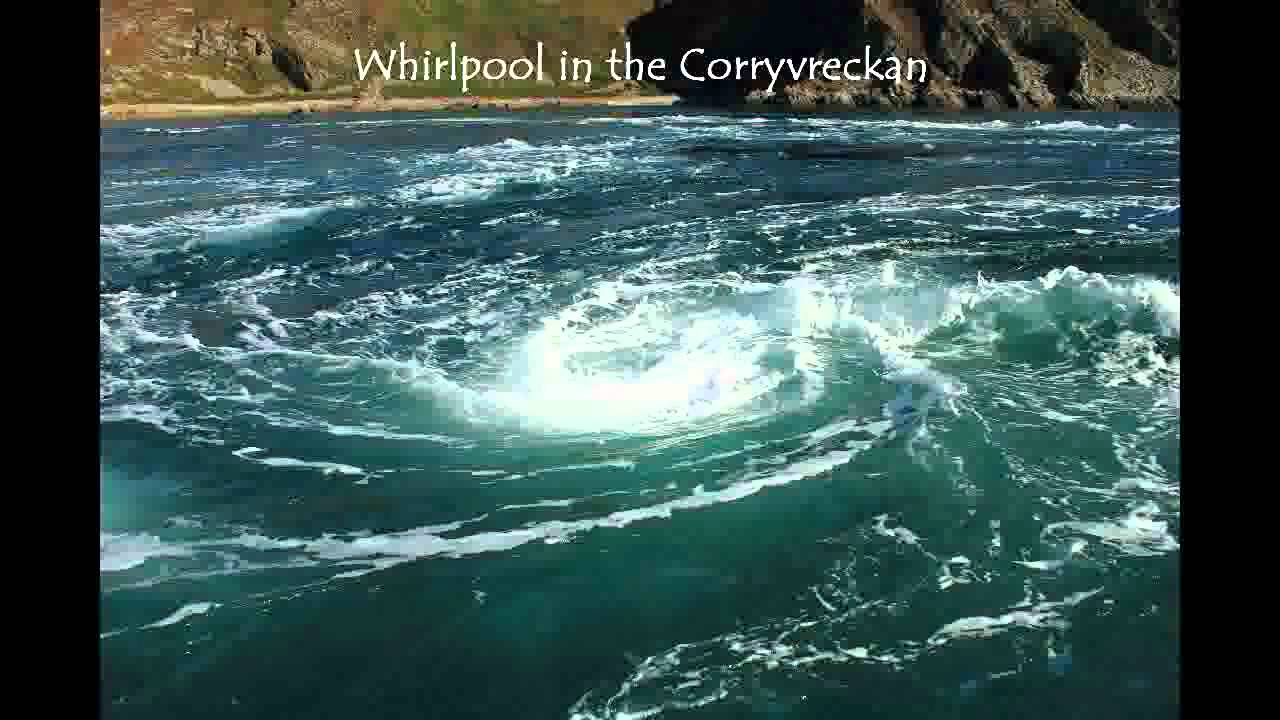
Corryvreckan WhirlpoolThe Corryvreckan, which is the strait between the isles of Jura and Scarba off the West Coast of Scotland, contains the world’s third largest whirlpool (following the Saltstraumen off of Norway, and the Moskstraumen, also off Norway), and is considered by many as the most dangerous scuba dive in the UK (there’s only a few minutes’ safe diving time there; when your bubbles start to go down, not up, you’ve overstayed your welcome).  Planted underwater in the middle of the strait is a giant pinnacle of basalt (the same rock that created the Scottish Isle of Staffa, and the Giant’s Causeway in Ireland); its position means that when tides flow in or out, they end up being churned into a broiling mass of suck-ships-under sea.

The name of Corryvreckan comes from the Gaelic Coire Bhreacain – “Cauldron of the Plaid”, and is connected with a myth of Cailleach Bheur, an old hag who was said to stir the waters of the strait in order to wash her plaid.  The English word whirlpool comes from Old English wirfelmere; in German this word paints the image of rolling dice (Würfel) on the ocean (Meer).  Harmlessly small swirling vortices of water are known as whirlpools, and you can see them when you drain a sink or flush a loo. But the more appropriate word for the ship-eating monster-vortices is the Norwegian word Maelstrom; since they have several of the largest, most dangerous ones, I think it’s only fair that they get to name them.

Now, is it a singularity or an anomaly?

Singularity:  “Anything singular, rare, or curious; the state of being singular, distinct, peculiar, uncommon or unusual.”

Anomaly:  “Something or someone that is strange or unusual; any event or measurement that is out of the ordinary regardless of whether it is exceptional or not.”

Our debate on which word to apply to the Corryvreckan is a tie, I think.  While it’s not singular as far as being the only maelstrom in the world, it is distinct, unusual and extraordinary; it’s an anomaly in the geological and topographical sense, which gives it its power and dangerous currents.  If you ever decide to check it out, don’t do it without a local guide unless you’re insane; if you are insane, enjoy washing your clothes with Cailleach Bheur.

6 Comments

Filed under Articles, History, Research

Writing Tip: Layering

Lightning BugIf you’ve ever painted a picture more than a colouring book or a paint-by-number, chances are you’ve learned something along the way about layers.  Layering is also a digital graphics technique in programs such as Photoshop, and as each layer is made, the image changes, taking on the shapes or colours as you add the consecutive elements.

Besides being a writer, I am also a vocal coach.  I only take on students who are already in bands, or preparing for recordings or competitions, and one of the things I teach them is layering within a vocal performance:  The nuances of thoughts, the power of imagination, the colouring of the vocals through not only the physical placement of the tone within their instrument (their body), but the placement of their imagination.  One can communicate boredom or interest or empathy with the exact same wording by merely varying the intonation, and that comes through the layering of the performance.

Writing is much the same way:  It is through the employment of grammar, spelling and punctuation that we signal the reader to prepare for a particular experience; as Mark Twain said, “The difference between the right word and the almost right word is the difference between lightning and a lightning bug.”  

Oh, the difference between, “It was rainy last night,” and “It was a dark and stormy night”!

So the next time you feel like your manuscript or poem is falling flat, take a minute to think about the layers, and see what creative brush strokes you can give your work.

1 Comment

Filed under Articles, Nuts & Bolts, Plot Thots & Profiles, Writing Exercise