Tag Archives: Links

The Thorny Issue of Horns

As an author and writer, I do a LOT of research.  I love history particularly, but then I could say the same thing about the topics of geology, astronomy, archaeology, science and technology, crafting, drawing, botany, and a dozen others.  As I apply my studies to my work, I am sometimes faced with the issue of horns – Viking helmet horns.
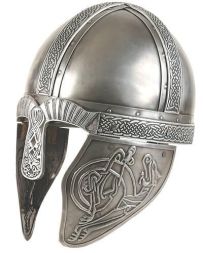
Real Viking Helmet


Accurate Viking helmet, reproduction.  Photo credit, Pinterest, unknown


While everyone seems to accept as a historically proven fact that Viking helmets had horns, the actual fact of the matter is that they didn’t.  While there were many horned helmets dating to before the rise of the Norse powers of Sweden, Norway and Denmark, most, if not all, were for religious or ceremonial purposes.  However, if I write a description of a Norse helmet and leave off the horns, someone will inevitably point it out.

Recently I spent a couple hours on Skype with one of my Beta readers for my current project, the third book in the Northing Trilogy (set in 18th century England).  Several of her comments were based on her knowledge of the 19th century as portrayed by Georgette Heyer, while others were based on her lack of historical knowledge that I, as the author, have amassed over time.  While some of that knowledge needs to seep into my writing to help the reader along, I have to continually remind myself (especially with this particular book in the trilogy, as it is centred around the Royal Navy) that I am not writing a history book but a novel, and anything I include needs to support the plot – the plot should never be forced to support a history lesson.  So it is that questions arose as to the behaviour and manners of the children of the time.

In any time period up until the mid-20th century, children in western societies matured far sooner than their modern counterparts, both out of necessity and out of cultural understanding of their roles in society.  Many families were dependent on the contribution made by the children in their household, whether it was housework, factory work, or working on the streets as beggars, shoe shiners, chimney sweeps, street sweepers, selling newspapers, or any other job they could earn money with (this is still true in many poorer countries of the world today).

If they came from a wealthy family, children were educated, but as to what extent and to which form it took very much depended on their particular circumstances:  They were educated either at home by tutors, or sent away to a boarding school.  Leaving school might be anywhere between ten and twenty; Jane Austen finished her formal education at the age of 10 or 11, whereas Charlotte Brontë’s character Jane Eyre left school at 18.  Boys who were second sons were often educated (after their basic education in either a college or at home) toward the military or toward a life as a minister (if their families held a high status in society, they might be trained toward politics; first-born sons, heirs, were rarely sent to the military due to the inherent dangers).
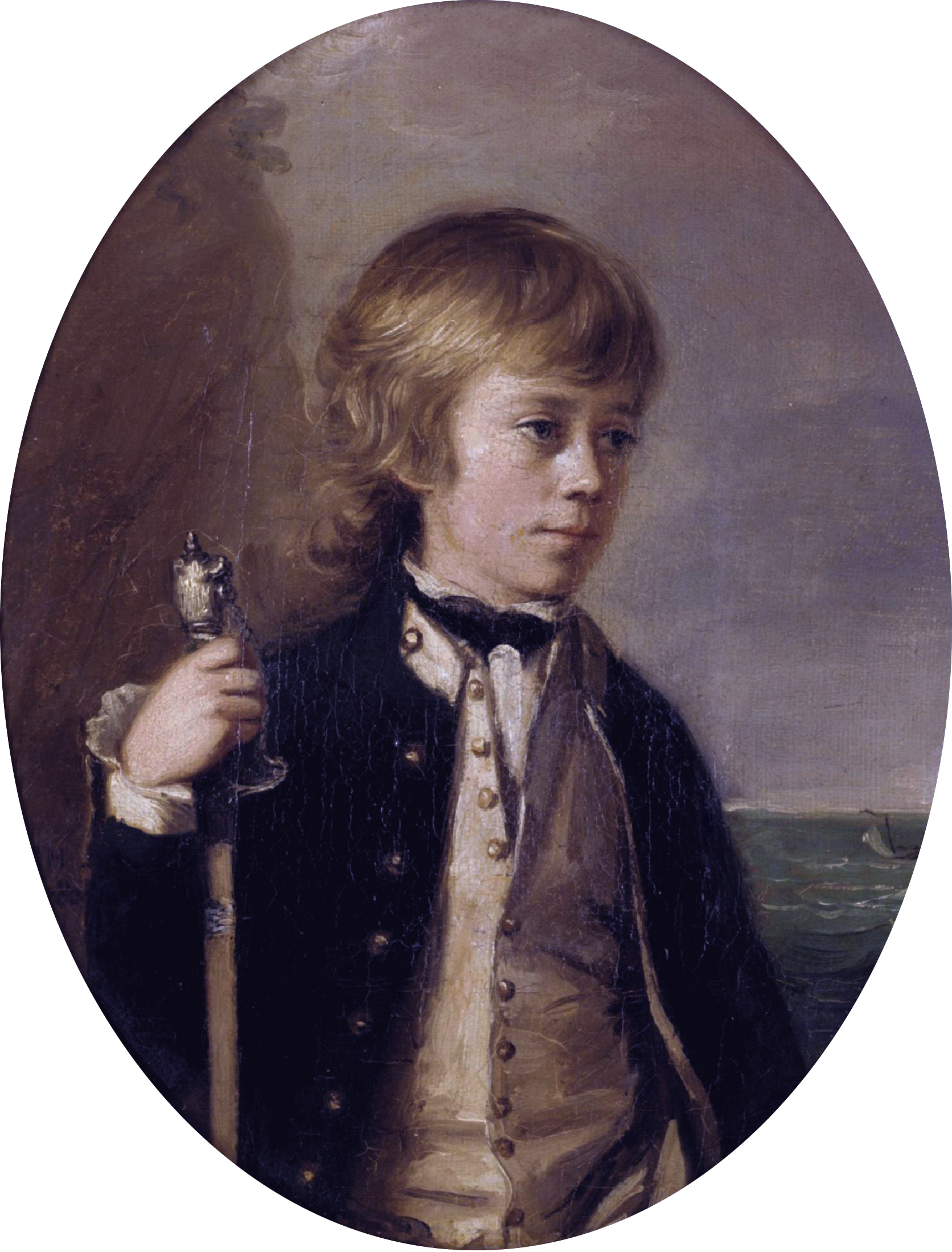
Midshipman Henry William Baynton, aged 13 -1780 - Wikipedia.jpg

Henry William Baynton, aged 13 years, 6 months, midshipman on the Cleopatra.  Photo Credit, Wikipedia.

If their fathers could afford to do so, these younger sons were often bought commissions in the military so that they would start off their career with some smidgen of position, such as a midshipman in the Royal Navy; the younger they entered, the sooner they could rise through the ranks, and thus it was not uncommon for lads of 7 or 8 to enter the navy.  Aboard ship they were trained in various skills, which included not only practical skills to do with the day-to-day running of the ship, but how to read navigational charts and how to use instruments such as sextants. How fast or slow they rose to higher ranks thereafter depended on their skills, intelligence, connections, and luck.

If poor children were either abandoned or given to workhouse orphanages because their families could not afford to keep them alive, they were also trained:  The girls were trained toward becoming servants (paying back society for the privilege of being alive), and the boys were trained for a life in the military (ditto).  They were taught to read using the Bible, and were expected to live by its principles.  Unfortunately, religion was often used as a guise for abuse and heavy-handed tyranny, but as the characters in Jane Eyre portrayed, some were true Christians in their behaviour toward her, such as her friend Helen, or the kind apothecary.  If the girls were going to become governesses, they would also be trained in more refined accomplishments such as French, drawing, needlework, history, etc.

All of this is to say that, were I to include all of this kind of information in a novel (and believe me, there’s a lot more where that came from!), it would get boring rather quickly.  And so I need to pick and choose what is used in the organic flow of the plot and character development that both serves those elements and also helps inform the reader; sometimes it’s a tricky balance.  So when the 11-year-old boy acts far more mature than a modern boy, unless the reader is aware of the historical context, I will inevitably get feedback to that effect.  Sometimes I can help their understanding by including e.g. the subjects he might be learning with his tutor, such as French, sciences, or elocution, but more than that might drag the story into the realm of a history lesson.

There are many modern myths, like the Viking horns, that people have accepted as historically accurate, when in fact they’re not.  One of my pet peeves is Christmas films that inevitably portray three kings showing up at the manger along with the shepherds in Bethlehem.  I won’t go into that here – if you’re interested in the historical details, read my article on History Undusted, here.  Other urban legends include:  We only use 10% of our brains; the full moon affects our behaviour; lightning never strikes the same place twice; cracking your knuckles gives you arthritis, and antibiotics kill viruses.  If I rankled any feathers there, or you said to yourself, “But that one is actually true,” then I would suggest you do your own research on the issue… I’ve got my plate full at the moment with the 18th century.

Save

7 Comments

Filed under Articles, History, Musings, Nuts & Bolts, Plot Thots & Profiles, Research

Odd Jobs #9: Lego Model-Maker to Oshiya (passenger shovers)

Once again, this odd job lineup has some gems!  Would you rather be paid to stand perfectly still for hours on end, or literally shove other people around all day, every day?  Some of these might not be so bad, such as a master distiller, or someone paid to come up with catchy nail polish names, while other jobs might have a certain prejudice or stigma attached to them – after all, how many of us haven’t had luggage damaged in transit at airports, and chosen a few special words, at least in our minds, for the people paid good money to do so?  I was once treated like a piece of luggage, and I wouldn’t wish it on my favourite enemy; however, it did give me a personal taste of just how luggage frequently comes out missing wheels, handles, or zippers.


Odd Job - Oshiya - Train Passenger Stuffers

Credit:  YouTube


  • Lego Model-Maker
  • Live Mannequin / Human Statue
  • London Dungeon Actor
  • Luggage Handler
  • Mascot
  • Master Distiller (This link also includes the job descriptions of several other jobs involved in the distilling process.)
  • Nail Polish Namer: Sometimes it’s a person, such as Essie Weingarten, and other times it’s a marketing department, or a freelance writer.
  • Nude Model
  • Ocularist: In short, they paint artificial eyes. It sounds easier than it is, since as with real eyes, no two are exactly the same.
  • Oil & Gas Diver
  • Online Book Seller
  • Online Reviewer: Often hired by a company to review a product; but, I then wonder how they could be unbiased in that review.  Such services are also offered for sale on sites such as Fiver.com.  Finding an actual, legitimate, detailed job description for this one is nigh on impossible, as most jobs are offered online now, and the term “review” can be used by anyone with an opinion…
  • Orchestra Manager: While this link is for an orchestra managing director’s job description, an even more specialized niche within the “genre” is that of the orchestra event manager:  They are responsible for booking airline tickets, arranging luggage transport for all shapes and sizes of instruments, booking hotel rooms, organizing and the overseeing of the setting up of venues, and making certain that the even runs smoothly from venue to venue.  That may also include hiring the local sound, light, and stage hands, though these tasks may be handed on to someone else in the managing office.  A friend recently flew in the seat next to such a manager, and passed on the details to me for this odd list… it just proves that you never know where you’ll meet interesting people!
  • Oshiya (Japan): Paid to push people onto trains.

5 Comments

Filed under Articles, Lists, Nuts & Bolts, Research

Odd Jobs #5:Deer Urine Farmers to Embalmers

I thought I’d switch gears for the weekend from my daily post challenge, to continue with an odd topic:  Odd jobs.  This batch has some doozies; people actually get paid to eat dog food, or smell a dog’s breath!  And while the deer urine farming sounds intrinsically disgusting, the purpose is even more dubious in my opinion:  To lure bucks to their deaths through hunting with the urine as bait.  Whatever happened to fair play… giving the buck a fighting chance?  I think I’d much rather prefer training dogs to surf, or wrangling ducks or training elephants; or maybe we could even come up with a job that combines all three!  Enjoy perusing the jobs below – just click on the links to learn more about each.

Odd Job - Dog Food Tester, Nancy Rica Schiff

Dog Food Taster – Photo Credit: Nancy Rica Schiff

3 Comments

Filed under Lists, Research

Odd Jobs #2: Ant Vendors to Beer Testers

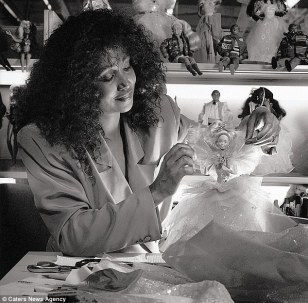
Odd Job - Barbie Doll dress designer, Nancy Rica Schiff

Barbie Doll Dress Desiger.  Image by Nancy Rica Schiff

Here are a few jobs that, only if one stops to think about it really (really) hard, might seem logical.  I guess that if you buy a ball, someone has to have tested it – at least random spot-checking of production lines; but selling ants?  Or making post mortem portraits from cremated ashes?  Or sniffing other people’s armpits (which is easier than sniffing your own, granted…)?  Go figure.  Follow the links to read more about them.

  • Ant Vendor: There are about 12,000 different species of ants in the world, so selling ants might actually be more complicated than you think. If you’ve ever had an ant farm, there was an ant vendor at work behind the scenes.
  • Armpit Sniffer
  • Ash Portrait Artists: Gets creative with the remains of loved ones. Following cremation, some people choose to hire these artists to create a token of remembrance, like a necklace or glass sculpture.
  • Barbecue Editor: Eating at restaurants and writing about it for magazines and newspapers. It may sound like a dream job until you stop to consider the fact that they must eat barbecue several times a day, every day…
  • Backpacking Instructor
  • Bed Tester
  • Ball Tester: Assess basketballs, footballs, volleyballs and soccer balls for air-retention, inflation, roundness, weight and reboundability. This job might also be called a “performance analyst” or “performance evaluation tester”.  If you think about it, someone’s got to test sports balls, tennis rackets for pros, etc.
  • Barbie Dress Designer: Fashion designers at Mattel Toys, the company behind Barbie, create hundreds of new styles for Barbie and her ever-expanding entourage.
  • Beefeater
  • Beer Tester: Taste — and spit out — beer all day to approve new and existing flavours.

9 Comments

Filed under Lists, Research

Mark Twain on Switzerland & the Awful Language of German

This past week I’ve been quite busy getting ready for a big change in our lives:  Taking in an exchange (high school) student for nearly a year.  She’s coming from Thailand, and wants to learn German; I’m not sure she knows what she’s getting herself into, as we don’t speak the German she will need to learn for school; we speak Swiss German, which is about as similar to High German as Old English is to modern English.

In preparation, I’ve been doing a bit of spring cleaning too – might as well, right?  My main work room, our library, is also where I keep folders full of stories I’ve saved over the years, and while sifting through them I was reminded of an article about Mark Twain’s observations on the German language.  I found what I was looking for in a Kindle book; it would be astonishing (and perhaps a bit discouraging) to Mark Twain if he could see his entire life’s work reduced to an e-book for less than $ 2.00, but so it is.  I was surprised to find a short description of his time in Switzerland, as part of his Grand Tour no doubt.  And as I mentioned above, the German dialects we speak are not the German Mark Twain describes, so I can laugh along with the rest of you (and I can laugh at the fact that the WordPress spell check is going berserk).  I’ll need to resort to High German for the sake of our exchange student, but it grates on my ears and tongue like sandpaper on the eyeballs.  Mark Twain seems to have had similar sentiments.  I will first share his impression of Switzerland, and then bombard you with his opinion of the German language.  This post is a bit longer than my usual offering, but Twain is well worth it!  So put your feet up, get a cuppa, and enjoy!

On Switzerland

Interlaken, Switzerland, 1891.

“It is a good many years since I was in Switzerland last. … there are only two best ways to travel through Switzerland. The first best is afloat. The second best is by open two-horse carriage. One can come from Lucerne to Interlaken over the Brunig by ladder railroad in an hour or so now, but you can glide smoothly in a carriage in ten, and have two hours for luncheon at noon—for luncheon, not for rest. There is no fatigue connected with the trip. One arrives fresh in spirit and in person in the evening—no fret in his heart, no grime on his face, no grit in his hair, not a cinder in his eye. This is the right condition of mind and body, the right and due preparation for the solemn event which closed the day—stepping with metaphorically uncovered head into the presence of the most impressive mountain mass that the globe can show—the Jungfrau. The stranger’s first feeling, when suddenly confronted by that towering and awful apparition wrapped in its shroud of snow, is breath-taking astonishment. It is as if heaven’s gates had swung open and exposed the throne. It is peaceful here and pleasant at Interlaken. Nothing going on—at least nothing but brilliant life-giving sunshine. There are floods and floods of that. One may properly speak of it as “going on,” for it is full of the suggestion of activity; the light pours down with energy, with visible enthusiasm. This is a good atmosphere to be in, morally as well as physically.

DCF 1.0

Vierwaldstättersee, taken 2006

“After trying the political atmosphere of the neighboring monarchies, it is healing and refreshing to breathe air that has known no taint of slavery for six hundred years, and to come among a people whose political history is great and fine, and worthy to be taught in all schools and studied by all races and peoples. For the struggle here throughout the centuries has not been in the interest of any private family, or any church, but in the interest of the whole body of the nation, and for shelter and protection of all forms of belief. This fact is colossal. If one would realize how colossal it is, and of what dignity and majesty, let him contrast it with the purposes and objects of the Crusades, the siege of York, the War of the Roses, and other historic comedies of that sort and size. Last week I was beating around the Lake of Four Cantons [Vierwaldstättersee], and I saw Rutli and Altorf. Rutli is a remote little patch of meadow, but I do not know how any piece of ground could be holier or better worth crossing oceans and continents to see, since it was there that the great trinity of Switzerland joined hands six centuries ago and swore the oath which set their enslaved and insulted country forever free…”

On the Awful German Language

What he had to say about the German and their language is quite different, however:

“Even German is preferable to death.”

“Surely there is not another language that is so slipshod and systemless, and so slippery and elusive to the grasp. One is washed about in it, hither and thither, in the most helpless way; and when at last he thinks he has captured a rule which offers firm ground to take a rest on amid the general rage and turmoil of the ten parts of speech, he turns over the page and reads, “Let the pupil make careful note of the following EXCEPTIONS.” He runs his eye down and finds that there are more exceptions to the rule than instances of it. So overboard he goes again, to hunt for another Ararat and find another quicksand.”

“German books are easy enough to read when you hold them before the looking-glass or stand on your head—so as to reverse the construction—but I think that to learn to read and understand a German newspaper is a thing which must always remain an impossibility to a foreigner.”

“…in a German newspaper they put their verb away over on the next page; and I have heard that sometimes after stringing along the exciting preliminaries and parentheses for a column or two, they get in a hurry and have to go to press without getting to the verb at all. Of course, then, the reader is left in a very exhausted and ignorant state.”… “It reminds a person of those dentists who secure your instant and breathless interest in a tooth by taking a grip on it with the forceps, and then stand there and drawl through a tedious anecdote before they give the dreaded jerk.”

Mark Twain, Young“Some German words are so long that they have a perspective. Observe these examples:

Freundschaftsbeziehungen.

Dilettantenaufdringlichkeiten.

Stadtverordnetenversammlungen.

These things are not words, they are alphabetical processions. And they are not rare; one can open a German newspaper at any time and see them marching majestically across the page—and if he has any imagination he can see the banners and hear the music, too. They impart a martial thrill to the meekest subject. I take a great interest in these curiosities. Whenever I come across a good one, I stuff it and put it in my museum. In this way I have made quite a valuable collection. When I get duplicates, I exchange with other collectors, and thus increase the variety of my stock. Here are some specimens which I lately bought at an auction sale of the effects of a bankrupt bric-a-brac hunter:

Generalstaatsverordnetenversammlungen.

Alterthumswissenschaften.

Kinderbewahrungsanstalten.

Unabhängigkeitserklärungen.

Wiedererstellungbestrebungen.

Waffenstillstandsunterhandlungen.

Of course when one of these grand mountain ranges goes stretching across the printed page, it adorns and ennobles that literary landscape—but at the same time it is a great distress to the new student, for it blocks up his way; he cannot crawl under it, or climb over it, or tunnel through it. So he resorts to the dictionary for help, but there is no help there. The dictionary must draw the line somewhere—so it leaves this sort of words out. And it is right, because these long things are hardly legitimate words, but are rather combinations of words, and the inventor of them ought to have been killed.”

“My philological studies have satisfied me that a gifted person ought to learn English (barring spelling and pronouncing) in thirty hours, French in thirty days, and German in thirty years. It seems manifest, then, that the latter tongue ought to be trimmed down and repaired. If it is to remain as it is, it ought to be gently and reverently set aside among the dead languages, for only the dead have time to learn it.”

Quotes from the Complete Works of Mark Twain (Illustrated). Delphi Classics. Kindle Edition.

11 Comments

Filed under Articles, Humor, Musings, Quotes

‘Tis the Season

Sometimes despite the best of intentions real life takes over.  I’ve been silent in cyberspace for nearly a fortnight as real-world events took precedence over the virtual world.  I try to post only when I find something interesting to share or to write about, and can take the time to make it worth my time and yours; but we all know those times when our energy and concentration power are required by more pressing events or situations, and so I hope you’ll pardon me for having been silent.

With Christmas approaching, perhaps your thoughts are turning toward the season of giving, of slowing down to spend time with friends and family, and perhaps it’s also a time of contemplation about the past year and the future:  What would you change if you could?  How can you move forward and learn from mistakes or challenges, and take positive steps to see things change for the better in the coming year?  I don’t mean New Year’s Resolutions; those rarely hold for more than a week or two, because they are purely decisions of the head, and if our hearts are not in agreement with those choices, it’s only a matter of time before they fall flat.  If it’s a decision of both head and heart, why wait until the New Year?  The old adage holds true:  “We cannot be guided unless we are moving.”  The greatest journey begins with the first step, followed by the next, and the next… eventually we’ll arrive at our goal, but only if we step out first.

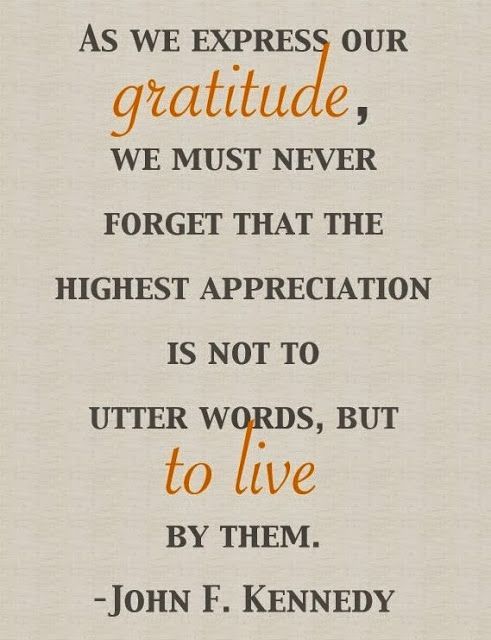
I recently watched a TED talk by Brother David Steindl-Rast, of the Gratefulness movement; for him one of the keys to finding moments of gratefulness in everyday life is to “Stop. Look. Go.”:  To pause in our hectic lives and take a moment to smell the roses; to open our senses to the world around us and become grateful for the things we take for granted, such as clean, flowing water on tap (even cold and hot), or for the roof over our heads.  The more we look around, the more we’ll find to be grateful for.  The “Go” part of that equation is to act on that gratefulness – passing it on to those around us.  Positivity and smiles are contagious, and they are magnets that draw people; negativity and scowls are also contagious, but they will repel and isolate us.  We all have times of trials, difficulties and challenges; how we choose to face them decides whether they master us, or serve us.  One example from my own life was this past summer, described in the article, “I got Staffa’d“; I chose to be grateful in the midst of it, and it made it much easier to master it.

Whatever you’ve got planned over the coming weeks, I’d encourage you to take a moment to stop, look and then go; become aware of things in your life to be grateful for, look around and see how you can bless others, and move forward with a fresh awareness of the beauty of life.

Ps.  If you’d like some ideas for advent calendar- and stocking-stuffers, click here.Gratitude

5 Comments

Filed under Articles, Musings

Novel Writing Pyramid

Novel Pyramid

When writing or drafting a new story, sometimes it’s easy to get lost in the forest due to the trees – in the myriad of ideas that flash up in a brainstorm.  The pyramid above helps remind me of the emphasis each area needs in the overall structure:

If a story is too complex, you’ll lose or confuse your readers; but if it’s too simple, it becomes predictable and therefore no challenge to the mind of the adventurer who’s picked up your book to get lost in another world.  Most of the best stories are, at their heart, quite simple – “boy meets girl”, or “person achieves goal”.

If you don’t know what your settings and themes are, how can you effectively work toward the final outcome?  If you don’t know who your character is, and what your basic plot (goal and how it’s achieved) is, how can you guide the reader through dialogue or prose toward the desired conclusion?  Diction is important because it is central to creating the voice of each character, and sticking to genre-specific vocabulary and expressions (i.e. no proverbial airplanes through the scenes of a historical novel).  As Mark Twain once wrote,

“The difference between the right word and the almost-right word is the difference between lightning and a lightning bug.”

And if you have the top four slices of the pyramid in place, but don’t have proper foundations – in other words, know your grammar, spelling, punctuation and syntax (sentence structures, tense usage, etc.) then no matter how brilliant your plot might be, or your character development, if readers can’t get past your bad diction and grammar, you’ve lost them as present and future readers!

I’d like to encourage you to know your weaknesses, and develop them into strengths!  If grammar or spelling is a weakness, work on it – invest time into reviewing the rules – Wikipedia is an excellent source for articles on how to use punctuation, etc.  Buy a good grammar book, or even a grammar practice book with an answer key at the back (The “English Grammar in Use” series is one I used for years with EFLA students).  If plot or character development is a weakness, then make a list of questions for each, and take the time to think about and answer them.

Good writing is about quality; it’s about solid foundations and constant development, the honing of your skills; it’s about research, thinking outside the box, and being able to convey in words the images born in your mind.  Just as sharpening a pencil makes it easier to write, so does sharpening your mind and skills.

1 Comment

Filed under Articles, Images, Nuts & Bolts, Plot Thots & Profiles, Research, Writing Exercise

Creative Writing over Christmas Holidays

I don’t know about the rest of you, but Christmas has snuck up on me this year!  Between publishing two books in November and all of the work involved in that process and the aftermath (promotion, etc.), I came up for breath last weekend, as I wrote about last week.  I took a short break, and now I’m beginning work on the next project (diving into research and scene layout).  But with Christmas coming up, it’s time to shift down a gear or two, and enjoy the season.  If you are a writer like me, writing can be addictive; it’s a good habit to write something every day.  But who says it needs to be a book manuscript, or whatever your next project or usual format is?  If you write poetry, try your hand at calligrams; if you write short stories, try writing an ambigram.  If you write constantly, take a break and read a book that has absolutely nothing to do with research or preparation for your next project!

Here are a few different styles to choose from, just to shake things up a bit:

  • Flash fiction (300-1,000 – word stories)

    One of my first calligrams; not very neat, but cathartic!

    One of my first calligrams; not very neat, but cathartic!

  • Short stories (fiction or nonfiction – limit yourself, e.g. to one page)
  • Nonfiction
  • Anecdotes
  • Jokes
  • Profiles
  • Travel writing
  • Children’s books
  • Screen writing
  • Play writing
  • Poetry
  • Freelance
  • Novel
  • Novella
  • Memoir
  • Autobiography
  • Biography
  • Song writing (lyrics, if you can’t write/read music)
  • Calligram (do a Google Image search to see examples)
  • Asemic writing
  • Book report
  • Fan fiction
  • Letter
  • Journal
  • Dialogue
  • Creative doodles (with or without words)
  • Cartoon strips
  • Ambigram
  • Micography (Microcalligraphy)
  • Concrete poetry (or any number of poetry styles – check out a small list here)
  • Haiku


2 Comments

Filed under Images, Lists, Nuts & Bolts, Writing Exercise

Ye Olde Spelling Laziness

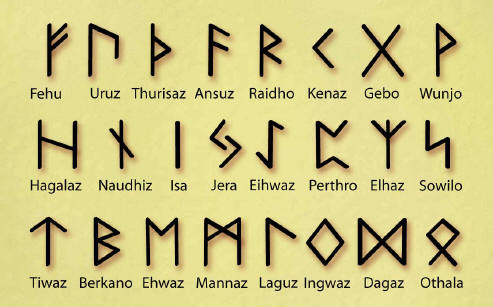
runesymbols

Have you ever wondered about the old-fashioned “ye” in shop signs?  It was a lazy printer’s solution to saving space for “th”, and should be pronounced as “the”, not “yee”!  The Old English character “y” was a graphic alteration of the Germanic rune “Þ” (which came over with the Viking raiders and the Norman King Canute and his rabble, but that’s another story).  When English printing typefaces couldn’t supply the right kind of “P” they substituted the “Y” (close enough, right?).  That practice continued into the 18th century, when it dropped out of use.  By the 19th century it was revived as a deliberate antiquarianism – to give a shop a pedigree, so to speak (read “marketing scam”), and soon came to be mocked because of it.  And now we think of it as the quaint way they used to write…

For a short, fun video on the topic, click on Ye Olde Web link, below.

ye-olde-web-link

7 Comments

Filed under History, Humor, Mistranslations, Nuts & Bolts, Translations

Euphemisms

Euphemism 1Language is a fluid concept, constantly changing, adapting, creating, compensating and inventing itself.  Euphemisms are a prime example of that fluctuation and adaptation; successive generations come to know only the euphemism which in turn ceases to be one by that very definition, and which means that new ones will be invented to skirt the issue once again. For instance, there are hundreds of words for smell or stink, yet only a handful of satisfactory synonyms for words like fragrance, simply because hiding the ugly requires far more creativity than hiding the lovely.  For that reason alone, writers who fall back on expletives like the highly offensive F-word (a euphemism for, well, you know) are simply lazy in my book; they’re missing a great opportunity for creativity!  Interestingly, that word’s meaning has never shifted over time – it’s been in the English language since before the fifteenth century, and even then it was only written in cipher because it was too offensive to record in ink.  In my opinion it still is, and one should consider very carefully before offending unknown numbers of readers from continuing to read your book or blog; more than once have I ended reading a book when they used the word several times in the course of the first few chapters, because honestly it says something about the extent of their language abilities and their spectrum (or lack thereof) of creativity.

As a society’s norms shift, so do the euphemisms that they use to communicate.  In the Renaissance, corpulent women were considered the height of beauty; curvy, curvaceous, and shapely were instances of positive euphemisms; today they might be used by some idiot in the media to insult a Hollywood starlet who (by any other standard would be considered normal if not a little thin) gained a pound or two. Now idiot might be too strong a word; I could say brain cell-deficient, or someone who has delusions of adequacy.  I would like to point out the obvious here:  If you’re going to insult someone, at least spell it right… more often than not, you see people calling someone “dumn” or “dumm”, which smacks of the pot calling the kettle black…

For an interesting TED Talk (13:00) on the topic of euphemisms, please click here.

4 Comments

Filed under Articles, Cartoon, Etymology, Grammar, Nuts & Bolts, Writing Exercise