Category Archives: Images

Never Give Up

I love this image; I used to have a tea mug with a similar image to the one below, and it made me smile every time I used it.  There are times in our lives when we might feel discouraged, or overwhelmed at what we have to do or to go through.  If you have a goal or a dream, just keep putting one foot in front of the other – do something each day, no matter how small or insignificant that action may seem, toward reaching that goal.  Eventually you’ll get there!never-give-up

“Don’t give up whatever you’re trying to do — especially if you’re convinced that you’re botching it up.  Giving up reinforces a sense of incompetence; going on gives you a commitment to success.”

George Weinberg, English writer, activist

1 Comment

Filed under Articles, Cartoon, Images

Novel Writing Pyramid

Novel Pyramid

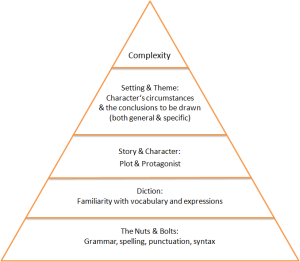
When writing or drafting a new story, sometimes it’s easy to get lost in the forest due to the trees – in the myriad of ideas that flash up in a brainstorm.  The pyramid above helps remind me of the emphasis each area needs in the overall structure:

If a story is too complex, you’ll lose or confuse your readers; but if it’s too simple, it becomes predictable and therefore no challenge to the mind of the adventurer who’s picked up your book to get lost in another world.  Most of the best stories are, at their heart, quite simple – “boy meets girl”, or “person achieves goal”.

If you don’t know what your settings and themes are, how can you effectively work toward the final outcome?  If you don’t know who your character is, and what your basic plot (goal and how it’s achieved) is, how can you guide the reader through dialogue or prose toward the desired conclusion?  Diction is important because it is central to creating the voice of each character, and sticking to genre-specific vocabulary and expressions (i.e. no proverbial airplanes through the scenes of a historical novel).  As Mark Twain once wrote,

“The difference between the right word and the almost-right word is the difference between lightning and a lightning bug.”

And if you have the top four slices of the pyramid in place, but don’t have proper foundations – in other words, know your grammar, spelling, punctuation and syntax (sentence structures, tense usage, etc.) then no matter how brilliant your plot might be, or your character development, if readers can’t get past your bad diction and grammar, you’ve lost them as present and future readers!

I’d like to encourage you to know your weaknesses, and develop them into strengths!  If grammar or spelling is a weakness, work on it – invest time into reviewing the rules – Wikipedia is an excellent source for articles on how to use punctuation, etc.  Buy a good grammar book, or even a grammar practice book with an answer key at the back (The “English Grammar in Use” series is one I used for years with EFLA students).  If plot or character development is a weakness, then make a list of questions for each, and take the time to think about and answer them.

Good writing is about quality; it’s about solid foundations and constant development, the honing of your skills; it’s about research, thinking outside the box, and being able to convey in words the images born in your mind.  Just as sharpening a pencil makes it easier to write, so does sharpening your mind and skills.

1 Comment

Filed under Articles, Images, Nuts & Bolts, Plot Thots & Profiles, Research, Writing Exercise

Creative Writing over Christmas Holidays

I don’t know about the rest of you, but Christmas has snuck up on me this year!  Between publishing two books in November and all of the work involved in that process and the aftermath (promotion, etc.), I came up for breath last weekend, as I wrote about last week.  I took a short break, and now I’m beginning work on the next project (diving into research and scene layout).  But with Christmas coming up, it’s time to shift down a gear or two, and enjoy the season.  If you are a writer like me, writing can be addictive; it’s a good habit to write something every day.  But who says it needs to be a book manuscript, or whatever your next project or usual format is?  If you write poetry, try your hand at calligrams; if you write short stories, try writing an ambigram.  If you write constantly, take a break and read a book that has absolutely nothing to do with research or preparation for your next project!

Here are a few different styles to choose from, just to shake things up a bit:

  • Flash fiction (300-1,000 – word stories)

    One of my first calligrams; not very neat, but cathartic!

    One of my first calligrams; not very neat, but cathartic!

  • Short stories (fiction or nonfiction – limit yourself, e.g. to one page)
  • Nonfiction
  • Anecdotes
  • Jokes
  • Profiles
  • Travel writing
  • Children’s books
  • Screen writing
  • Play writing
  • Poetry
  • Freelance
  • Novel
  • Novella
  • Memoir
  • Autobiography
  • Biography
  • Song writing (lyrics, if you can’t write/read music)
  • Calligram (do a Google Image search to see examples)
  • Asemic writing
  • Book report
  • Fan fiction
  • Letter
  • Journal
  • Dialogue
  • Creative doodles (with or without words)
  • Cartoon strips
  • Ambigram
  • Micography (Microcalligraphy)
  • Concrete poetry (or any number of poetry styles – check out a small list here)
  • Haiku


2 Comments

Filed under Images, Lists, Nuts & Bolts, Writing Exercise

Imagining a Brighter World

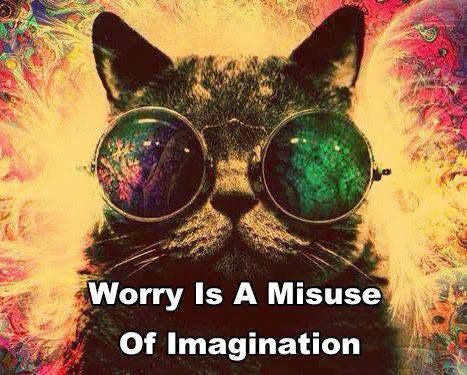
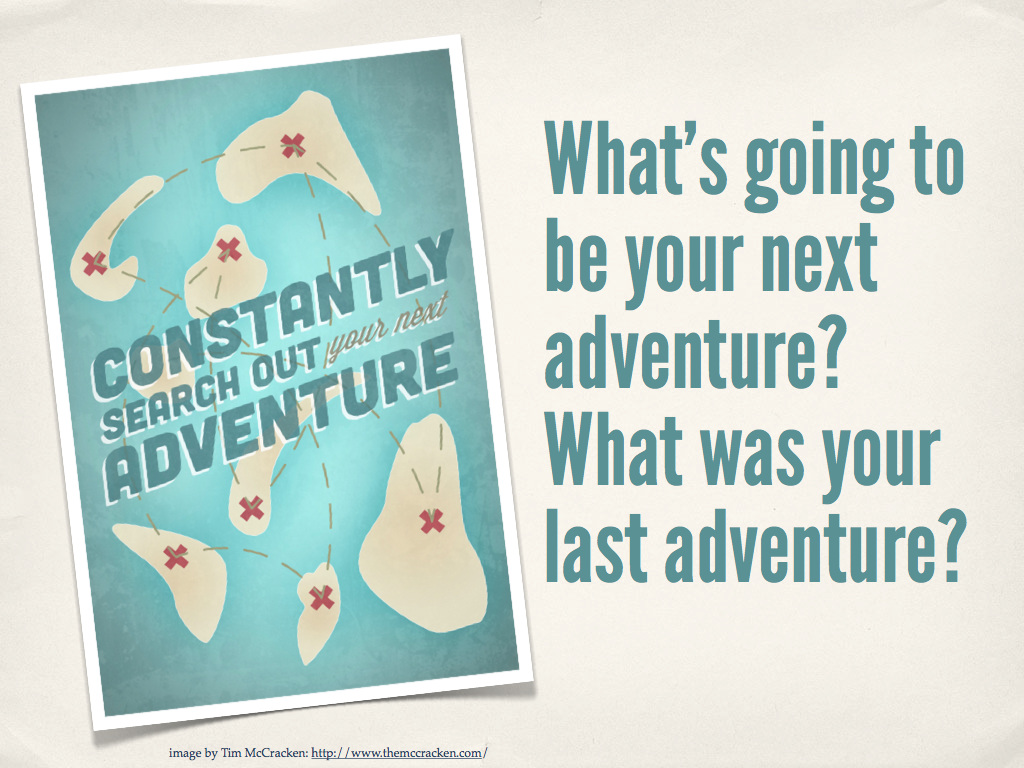
Worry, Misused ImaginationUse your imagination for creating exciting new possibilities!  And just to get you started, here’s a writing prompt:

adventures


Leave a comment

Filed under Humor, Images

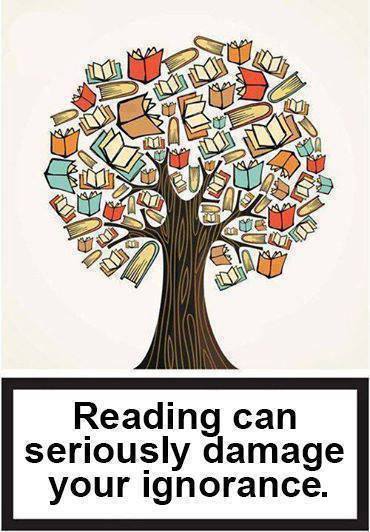
Warning about Reading

Reading

Leave a comment

Filed under Humor, Images, Quotes, Signs

Politeness Cultures

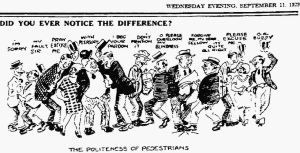
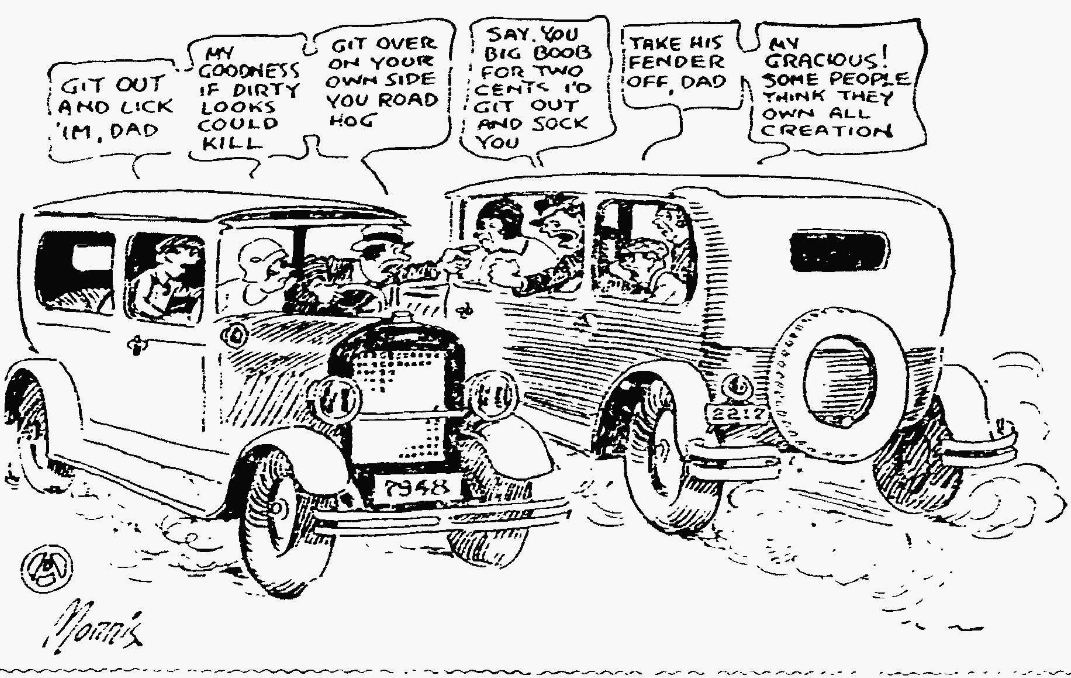
I recently came across a very interesting TED video addressing the differences between the American and British cultures on the specific aspect of politeness.  I grew up in the Midwest of America, emigrated to Scotland, lived in England for a while as well, and have friends scattered all over the “British Empire” & Commonwealth; I now live in Switzerland (adding several “Germanic” mentalities to my experience in that process!).  What the speaker (Lynne Murphy) observes makes a LOT of sense on both sides of the Puddle (Atlantic).  I share it with you because as a writer I know that those subtle, unspoken, unwritten differences in the ways people interact with each other and show their masks, or as Lynne calls them “faces”, make or break the authenticity in writing both prose and dialogue.  Click on the image below to watch the video; it’s 18 minutes long, so please watch it when you have time to focus! (By the way, the two cartoons below illustrate perfectly the difference between the “positive” face and the “negative” face.)

Politeness Politeness2

1 Comment

Filed under Articles, Cartoon, Images, Nuts & Bolts, Videos

Illiterate? Read These Ads…

Once in a while I come across ads that hit my funny bone; Some are simply not thought through as far as double meanings are concerned, while others are just downright bizarre.  My all-time favourite is the used tombstone:  Just the fact of it begs questions, but the name nearly pulled a muscle in my side from my laughing so hard…

Classified Ads classified-new class-new

Leave a comment

Filed under Images

Lost in Translation: Foreign Signs

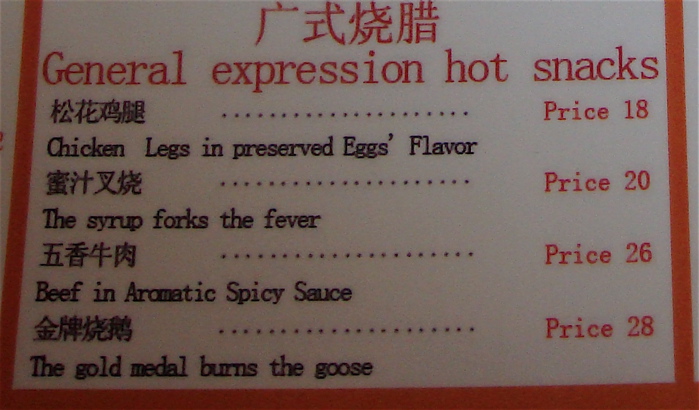
I love it when signs or notices are translated by non-mother tongue English speakers;it can be anything from cute to funny, misleading or just downright embarrassing.  I especially love Asian translations!  Here are a few examples.

Lost in Translation 1 Lost in Translation 2 Lost in Translation 9 Lost in Translation 11 Lost in Translation 23

Leave a comment

Filed under Images, Mistranslations, Nuts & Bolts, Quotes

Animal Idioms

Raining cats and dogs, 1817 caricatureI love idioms; they bring abstract concepts to life with vivid imagery, and range from the practical to the hilarious.  If I said someone was clumsy, that’s all clear and well enough; but if I said they were as clumsy as a cow on rollerskates?  I think you know where that one’s going…  Here are a just few of my favourite animal idioms:

“to be as nervous as a cat in a room full of rocking chairs” – very nervous

“to bark up the wrong tree” – to be mistaken in one’s goals or focus

“to be bright-eyed and bushy-tailed” – to be eager, lively (especially at unexpected times, e.g. morning)

“to have ants in the pants” – to be jittery, excited, animated, hyper

“to cry wolf” – to rouse others to action when it is not necessary

“to be raining cats and dogs” – to be raining hard

“in two shakes of a lamb’s tail” – very quickly

“to look a gift horse in the mouth” – to scrutinize or criticize a gift or an offer to help, etc.

“to look like something the cat dragged in” – to be very ill, to look ill

“not enough room to swing a cat” – a tight space, a small room

“to buy a pig in a poke” – to buy something without having seen its quality first (German:  “die Katze im Sack kaufen”, or “to buy a cat in a sack”)

“to cast pearls before swines” – to waste one’s efforts or investments on worthless schemes or people

“to fight like cats and dogs” – to fight with someone (regularly, or vehemently)

Leave a comment

Filed under Grammar, Images, Nuts & Bolts, Research, Writing Exercise