Category Archives: Musings

Just Smile

smileHave you ever stared at a word for days on end?  I have, and coming to the end of the tunnel is bliss.  When writing, I tend to use “place-markers” – anywhere from a single word to a rough-sketch of a scene that I know will need to be fleshed out, moved, replaced or “cannibalized” for a concept.  Some people like to use special writing programs, and I’ve tried a few over the years, but I tend to do all of my writing in Word; it’s got review “post-its” I can type into the side margins, and I’m usually more organized than programs like Scrivener anyway.  When I go back over such sections, I take off my writer’s hat and put on my editor’s cap, and dive in.

I’ve been editing a manuscript, and at the moment I’m focusing on repetitions; the most recent word was smile.  Each time I came across the word, I needed to read the context, think about whether it should be removed, replaced, the sentence reworded, or left as-is.  I’ve discovered that there are not actually that many synonyms for “smile” in the English language; smirk, sneer, grimace, simper, scowl, grin… they each have their own connotations, and are not simply interchangeable – each choice will effect the overall meaning in distinct ways.   as William Blake once said, “There is a smile of Love, And there is a smile of Deceit, And there is a smile of smiles In which these two smiles meet.”  Sometimes it can simply be left out – the context informs the reader about which emotions are being displayed by the characters.  Characters in love have a different smile for each other than for frenemies, or antagonists, or superiors, or subordinates, and each situation in which various characters are combined might result in a different word for smile.  And does one smile warmly, or coldly?  Broadly or tight-lipped?

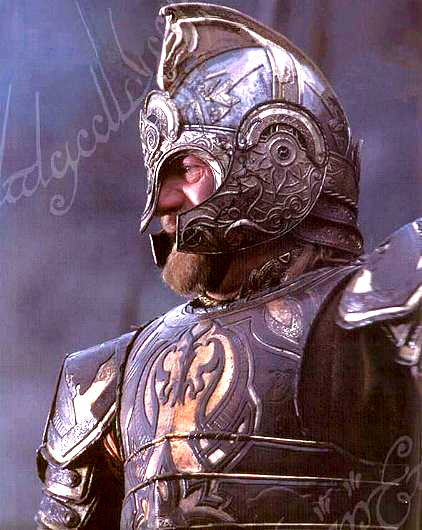
theoden-king-of-rohan-lord-of-the-ringsSometimes I wonder if I think far too much about such details; but I’d rather think about it once too often and get it right than not.  It might have seemed a tad extravagant for Weta Workshop to emboss the inside of King Théoden’s breastplate armour for the Lord of the Rings: The Two Towers, and Return of the King (in which the character appears), knowing it would never actually be seen in the films; but Bernard Hill, who played the king, said that such details helped him easily slip into the role, even feeling the nobility of a king, and it thus enhanced and influenced his performance.  As visuals matter in epic films such as LoR, words matter in writing a novel, drawing the reader into the imaginary landscape of the world the author creates. ever-after

They also matter in script-writing:  In Ever After, starring Drew Barrymore and Dougray Scott, some of the dialogue lines are just downright embarrassing – especially those of Anjelica Huston:  They go to the trouble of being opulent and period-accurate in costumes, locations and scene dressings, and then throw in lines like Relax, child and I’m management!  The editor in me cringes.

One man’s smile is another man’s smirk; one woman’s grin is another woman’s sneer.  Now, on to the next item on my list of editing revisions!

Save

Save

18 Comments

Filed under Articles, Images, Musings, Nuts & Bolts, Research, Writing Exercise

Wordless Wednesday no.2

batshit

Save

Save

Save

8 Comments

Filed under Humor, Images, Musings, Wordless Wednesday

The Thorny Issue of Horns

As an author and writer, I do a LOT of research.  I love history particularly, but then I could say the same thing about the topics of geology, astronomy, archaeology, science and technology, crafting, drawing, botany, and a dozen others.  As I apply my studies to my work, I am sometimes faced with the issue of horns – Viking helmet horns.
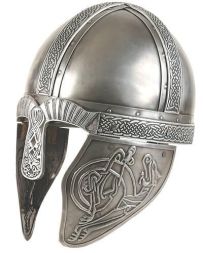
Real Viking Helmet


Accurate Viking helmet, reproduction.  Photo credit, Pinterest, unknown


While everyone seems to accept as a historically proven fact that Viking helmets had horns, the actual fact of the matter is that they didn’t.  While there were many horned helmets dating to before the rise of the Norse powers of Sweden, Norway and Denmark, most, if not all, were for religious or ceremonial purposes.  However, if I write a description of a Norse helmet and leave off the horns, someone will inevitably point it out.

Recently I spent a couple hours on Skype with one of my Beta readers for my current project, the third book in the Northing Trilogy (set in 18th century England).  Several of her comments were based on her knowledge of the 19th century as portrayed by Georgette Heyer, while others were based on her lack of historical knowledge that I, as the author, have amassed over time.  While some of that knowledge needs to seep into my writing to help the reader along, I have to continually remind myself (especially with this particular book in the trilogy, as it is centred around the Royal Navy) that I am not writing a history book but a novel, and anything I include needs to support the plot – the plot should never be forced to support a history lesson.  So it is that questions arose as to the behaviour and manners of the children of the time.

In any time period up until the mid-20th century, children in western societies matured far sooner than their modern counterparts, both out of necessity and out of cultural understanding of their roles in society.  Many families were dependent on the contribution made by the children in their household, whether it was housework, factory work, or working on the streets as beggars, shoe shiners, chimney sweeps, street sweepers, selling newspapers, or any other job they could earn money with (this is still true in many poorer countries of the world today).

If they came from a wealthy family, children were educated, but as to what extent and to which form it took very much depended on their particular circumstances:  They were educated either at home by tutors, or sent away to a boarding school.  Leaving school might be anywhere between ten and twenty; Jane Austen finished her formal education at the age of 10 or 11, whereas Charlotte Brontë’s character Jane Eyre left school at 18.  Boys who were second sons were often educated (after their basic education in either a college or at home) toward the military or toward a life as a minister (if their families held a high status in society, they might be trained toward politics; first-born sons, heirs, were rarely sent to the military due to the inherent dangers).

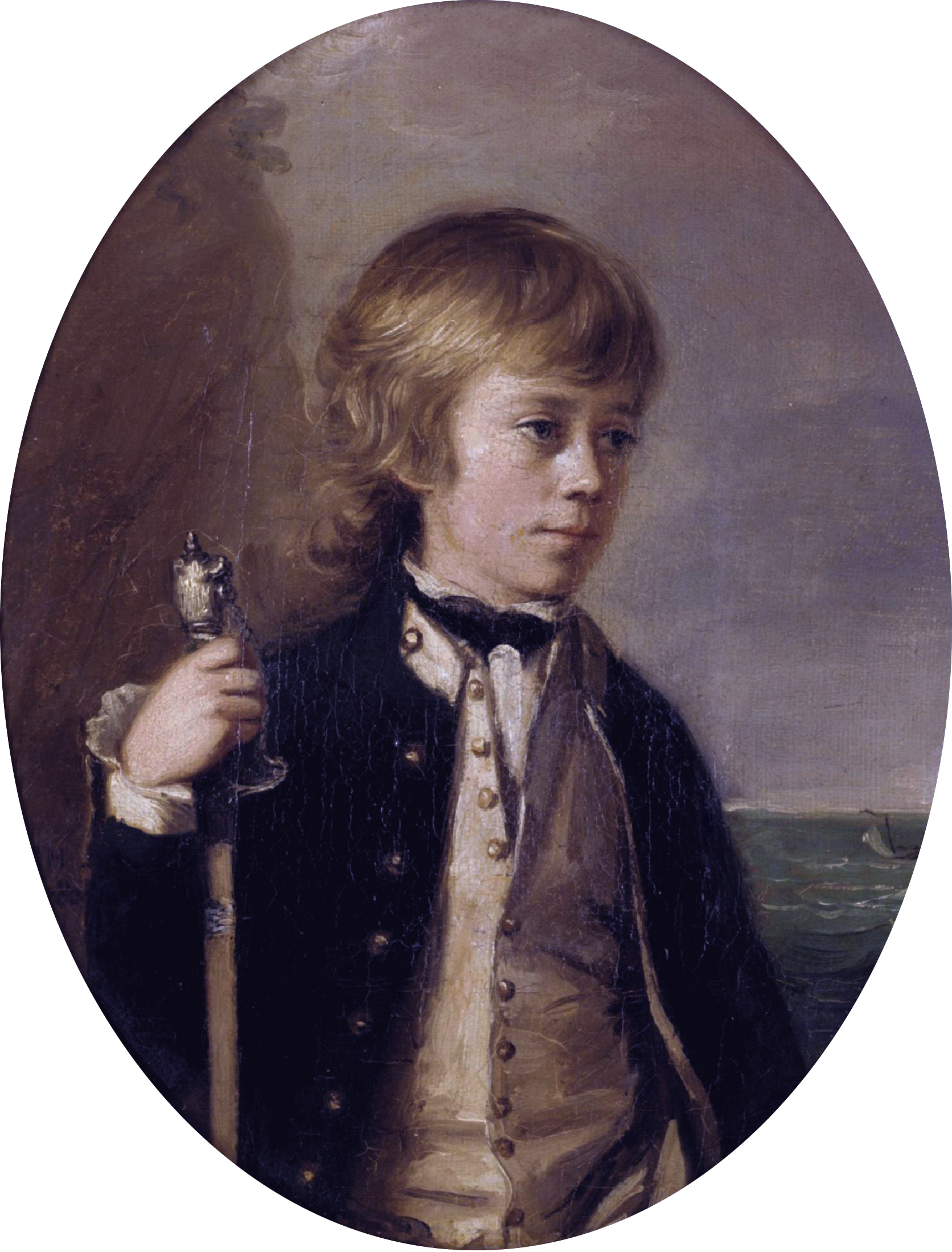
Midshipman Henry William Baynton, aged 13 -1780 - Wikipedia.jpg

Henry William Baynton, aged 13 years, 6 months, midshipman on the Cleopatra.  Photo Credit, Wikipedia.

If their fathers could afford to do so, these younger sons were often bought commissions in the military so that they would start off their career with some smidgen of position, such as a midshipman in the Royal Navy; the younger they entered, the sooner they could rise through the ranks, and thus it was not uncommon for lads of 7 or 8 to enter the navy.  Aboard ship they were trained in various skills, which included not only practical skills to do with the day-to-day running of the ship, but how to read navigational charts and how to use instruments such as sextants. How fast or slow they rose to higher ranks thereafter depended on their skills, intelligence, connections, and luck.

If poor children were either abandoned or given to workhouse orphanages because their families could not afford to keep them alive, they were also trained:  The girls were trained toward becoming servants (paying back society for the privilege of being alive), and the boys were trained for a life in the military (ditto).  They were taught to read using the Bible, and were expected to live by its principles.  Unfortunately, religion was often used as a guise for abuse and heavy-handed tyranny, but as the characters in Jane Eyre portrayed, some were true Christians in their behaviour toward her, such as her friend Helen, or the kind apothecary.  If the girls were going to become governesses, they would also be trained in more refined accomplishments such as French, drawing, needlework, history, etc.

All of this is to say that, were I to include all of this kind of information in a novel (and believe me, there’s a lot more where that came from!), it would get boring rather quickly.  And so I need to pick and choose what is used in the organic flow of the plot and character development that both serves those elements and also helps inform the reader; sometimes it’s a tricky balance.  So when the 11-year-old boy acts far more mature than a modern boy, unless the reader is aware of the historical context, I will inevitably get feedback to that effect.  Sometimes I can help their understanding by including e.g. the subjects he might be learning with his tutor, such as French, sciences, or elocution, but more than that might drag the story into the realm of a history lesson.

There are many modern myths, like the Viking horns, that people have accepted as historically accurate, when in fact they’re not.  One of my pet peeves is Christmas films that inevitably portray three kings showing up at the manger along with the shepherds in Bethlehem.  I won’t go into that here – if you’re interested in the historical details, read my article on History Undusted, here.  Other urban legends include:  We only use 10% of our brains; the full moon affects our behaviour; lightning never strikes the same place twice; cracking your knuckles gives you arthritis, and antibiotics kill viruses.  If I rankled any feathers there, or you said to yourself, “But that one is actually true,” then I would suggest you do your own research on the issue… I’ve got my plate full at the moment with the 18th century.

Save

7 Comments

Filed under Articles, History, Musings, Nuts & Bolts, Plot Thots & Profiles, Research

On Summer Holidays

Have you ever felt that you needed a holiday from holidays?  We’ve crammed more activities into one week that we’d previously done all year!  Gondolas (cable cars), waterfalls, mountains, waterfalls inside mountains, overnight in a hotel at the top of a mountain, international guests for a few days in between (take a deep breath), scenery galore, giant outdoor museums, a glass-blowing facility & its hands-on museum, a Benedictine abbey with a cheese factory, medieval castles, restaurants, a mammoth museum, more gondolas, late nights to stay up with the telescope to see Mars, Saturn and the Moon, and to watch for the Perseid meteor showers, and a car that decided it needed to go overnight for repairs (so we travelled partly in an uncomfortable replacement car) – this also included passengers getting out and pushing the car to jump-start it while up in the mountains, and delays waiting for the touring club mechanic twice… and that’s not including the plans for the coming week (fortunately the car’s problem was easily repaired, and we’re all happy again now).  Even though we thoroughly enjoyed the time our international guest was here for a visit, and are enjoying more quality time with our exchange student, my body is tired and my mind is full; I need time to process all of the impressions and experiences.  I don’t know about you, but this introvert needs a break… as in, “Don’t talk to me for a week…”  Later on I’ll say it was worth it, but right now, all I can say, “Stop the holidays, I want to get off!”

Here’s some photographic evidence:

This slideshow requires JavaScript.

6 Comments

Filed under Articles, History, Images, Lists, Musings

Musings on the A-Z Challenge

After a month of daily posts, A to Z plus weekend excursions into “Odd Jobs”, I can say that it was worth it; I’ve enjoyed the challenge of writing to a word limit, which meant that I could really only focus on one aspect of any given topic… that’s not something my brain does by nature, as it’s usually deep into networking ideas and possibilities long before I’ve finished typing the first sentence.  Along the way I’ve enjoyed spending more time surfing around cyberspace, discovering other WordPress blogs, reading into what makes others tick.  At the same time, I’ve felt the detour of time usually spent in writing manuscripts, editing, researching, and even housework and administration bits and bobs.

Would I do it again?  Probably.  When?  After my next novel is published, and I have more time again!  The feedback from my beta readers is starting to come in, and my own read-through has begun with the fresher eye of passed time and distance, so some other things in life will slide onto the back burner once more.  Through the challenge, I’ve been reminded of why I only post 1 or 2 blogs per week:  Real life is busy!

I hope you enjoyed the challenges along with me, and the breathing room once again afforded by my resumed “schedule”!

blogging-quote

3 Comments

Filed under A-Z Writing Challenges, Images, Musings, Writing Exercise

Odd Jobs #6: Face Feelers to Fortune Cookie Writers

I can’t believe it’s Saturday again already!  Our exchange student teen is off to France for a fortnight, so we’re breathing the air of liberté!

Taking a break from the current daily post challenge, here’s the next lineup of odd jobs:  Some can earn good money, such as being a Foley Artist for Hollywood, while others are as obscure as you can get, like being a fish sampler.

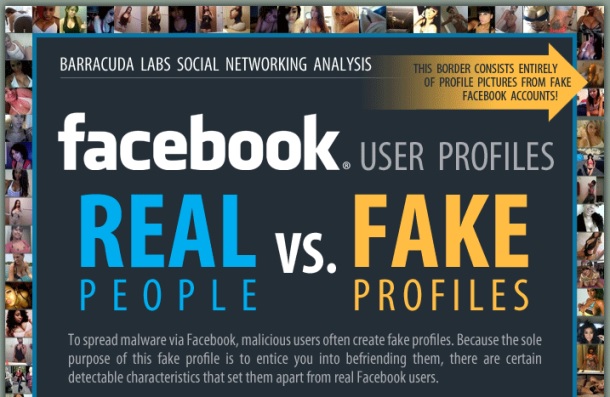
In doing the research for this article, I was shocked to find out just how prevalent fake Facebook accounts are; it says a lot about the superficiality of modern culture, and how much need there is to have our feet firmly planted in reality.  It is a known phenomenon that Generation Z (Millennials – enjoy this song by Micah Taylor) seems to get their own sense of worth online; but the number of likes, follows and subscribers should never reflect how much someone is worth, or valued; they need more of us to value them in real face-to-face time, or to express it via the virtual world in uplifting words of encouragement.

So enjoy this list of oddball jobs, and click on their links to learn more.  Then help make the world a better place:  Think about how you can encourage someone today!

Odd Job - Fake Facebooker

  • Face Feelers, also known as ‘sensory scientists’: Trained to use their hands and judge the effectiveness of products like lotions, facial cleansers, and razors. 
  • “Fake” Facebooker (According to Wikipedia, 7% of Facebook users were not real in August 2012). As of October 2012, Facebook crossed the 1 billion user-mark, which means that no less that 87 million accounts are fake.  Their “job” is either to con someone out of personal information in order to steal identities, or to amass “likes” for a video or personality to help them go viral, reaching fame or notoriety.
  • Fireworks Salesman
  • Fish Sampler
  • Flatulence Smell Reduction Underwear Maker: Tasked with engineering underwear that reduces the typically unpleasant post-fart stink for people who suffer from gastrointestinal problems.
  • Flavorist
  • Floating Architects: Design amphibious houses, which can float on water. With waterfront real estate becoming a scarcity, their market niche may grow in the coming years.
  • Foley Artist: Use whatever they can find to create and record the noises used to make the sound effects in films, like heavy footsteps, rolling thunder or creaking doors.
  • Food Stylist
  • Fortune cookie writer: Hired as freelancers or in-house writers to come up with inspiring or witty fortunes. EHow.com estimates that these professionals earn around $40,000 a year.

2 Comments

Filed under Articles, Lists, Musings, Research, Videos

Musings A to Z Challenge: A

For those of you who stop by for a visit and a chat regularly, you know that I post once a week (barring illness and holidays).  If you read through my “about the author” page, you’ll also learn that I rarely sit around on my laurels… a rolling stone gathers no moss, and all that.  I’ve recently finished the manuscript for my 5th novel – by “finish” I mean I’ve completed the third draft, which has now gone out to Beta readers, but I still have all the bits and bobs associated with the publishing of a book to begin tackling (the cover graphics, back cover copy, blurbs, synopsis, etc.), until the feedback comes in and I begin the next round of polishing and honing.

With all that extra time on my hands (splutter in uncontrollable laughter here), I thought I’d try something a bit more challenging with my writing blog:  One post a day for a month.  The posts will be an A to Z challenge of 100 words or less on a topic beginning with the sequential letters of the alphabet; each post will include one or more quotes (not in the word count) on the topic at hand.  On weekends I may break the pattern to continue on with the other topics of late, such as “Odd Jobs” or “Lost in Translation” posts. The entries will simply be my musings on the topic, thus the title of this post.

Let me know what you think, and if you’d like to take up the challenge on your own blog, just let me know in the comments so that I can come over and cheer you on!

So, without further ado, let the games begin!

Challenge:  Write a short entry (100 words or less) on a topic beginning with the sequential letter of the alphabet.

Achievement

When a goal is achieved, I need a new one or my momentum will peter out; I usually choose a new goal before the current project is completed so that I know where to go next.  When I’m working on a section of my novel’s manuscript, I jot down what I want to work on next (dialogue, scene, etc.), so that I know where to pick up the next day.  For me, achievement isn’t about the big goals or the milestones in my life as much as daily goals – without those daily goals, the life-goals will never come to be.

Achievement - Napoleon Hill Quote.jpg

Leave a comment

Filed under A-Z Writing Challenges, Musings, Quotes, Writing Exercise

Postcard from Lugano III

2016-06-15 06.59.28 smallYou know how, when you send a postcard from holidays, you’re usually back before the recipient receives it?  Well, same here… I’m back from holidays, and so this postcard has just arrived.  We were away just a week (could always be a bit longer, right?), and enjoyed beautiful weather, storms, rain, sunshine, and time.  Time away from internet connections (there is no wi-fi in the flat there, so the temptation is eliminated!), time to read, to write, to be, to watch football matches of the European Football Championships (that’s soccer to Americans), and to cook good Italian food.

2016-06-13 12.57.10 small

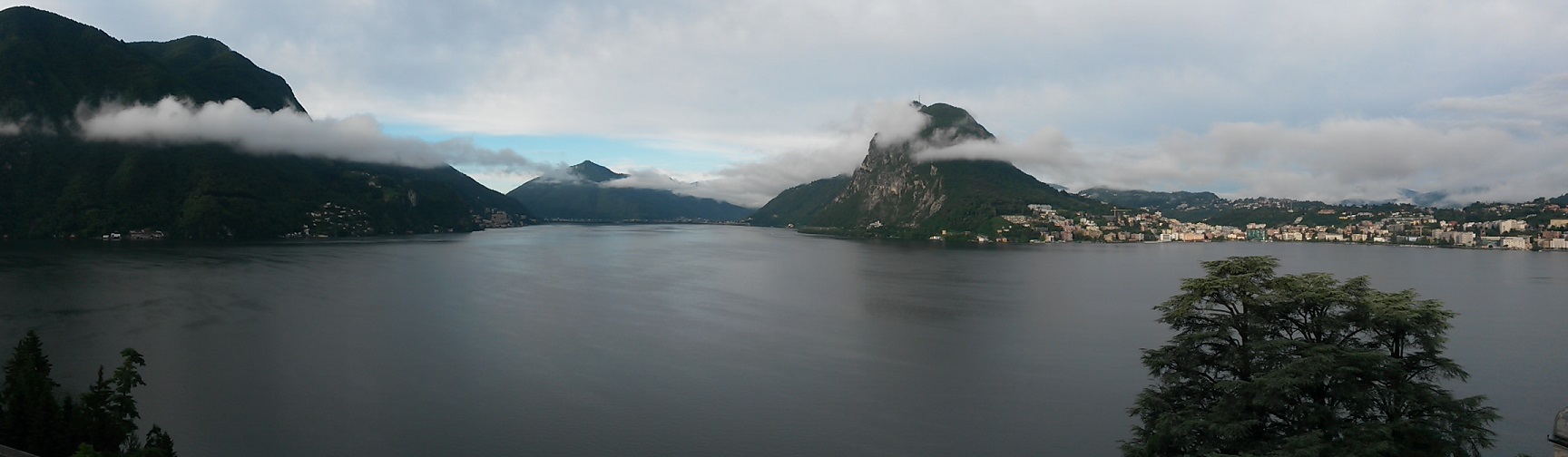
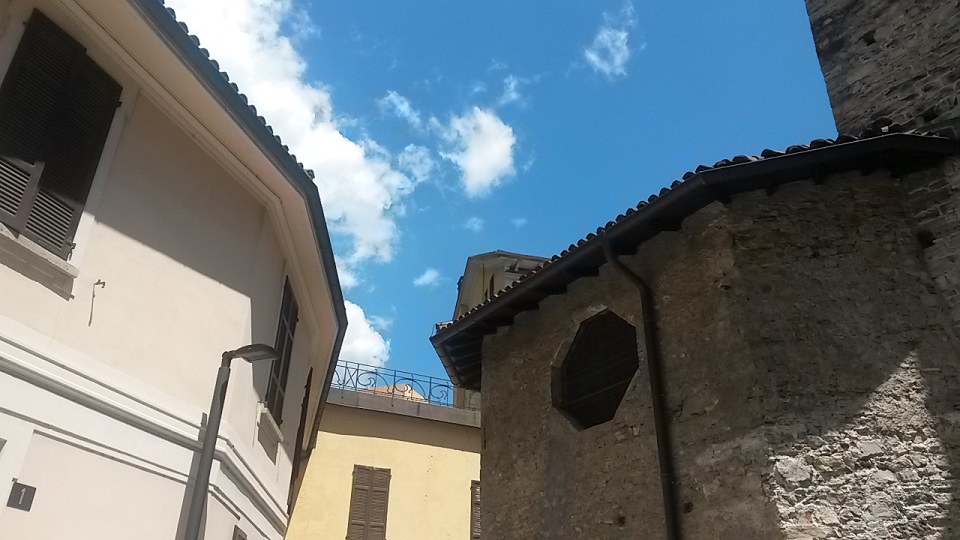
We were in Lugano, Switzerland, otherwise known as the Riviera, or the Monte Carlo, of Switzerland; it’s in the Italian-speaking area, and is nestled along the shores of Lake Lugano.  The top image is the view from our (glass) balcony, unbroken from Castagnola to just beyond Caprino (check it out on Google Earth!), and the lower image is of a side street by the Church of Santa Maria degli Angioli, along the shoreline of Lugano.  Our family holiday flat is in Castagnola, along the flank of Monte Bre, and is our go-to place for a short get-away.

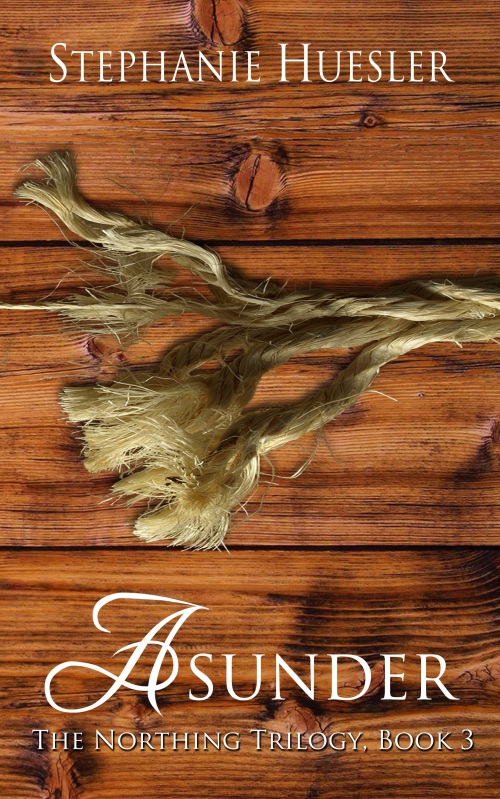
Whenever we’re down there, I switch from whatever manuscript I’m working on to a novel I’m writing that’s based on a house which our flat overlooks, and one that has captured our curiosity for decades:  Villa Helios sat vacant and decaying for over 30 years, and a few years ago began to be renovated.  This year was the first time we’ve seen life in the place.  From what I can tell, it has become either flats to rent, or buy.  There were only one or two flats occupied, as the rest of the windows were still either boarded over or shuttered; at night those windows were lit by small corner-lights to make it look occupied, but it was clear that they were vacant.  It was nice to get away for some quiet time together with my husband, but time there goes by very lazily, so even at a leisurely pace, I still managed over 10K on the novel!  It was especially relaxing to write on it because, just before going on holiday, I finished the manuscript for my 5th novel (the third book in the Northing Trilogy), and was able to send it off to my beta readers before leaving; I could work on the other novel with a “free conscience”.

Now back in the real world, I’m giving myself a short break from writing on my novels so that I can tackle the graphics of the cover, as well as all the bits and bobs that go along with marketing; once I get the beta feedback, it will be time to go through the manuscript again and make any changes necessary.

Here’s hoping you have a great week, and find inspiration for your own writing!

2016-06-16 21.53.24 small

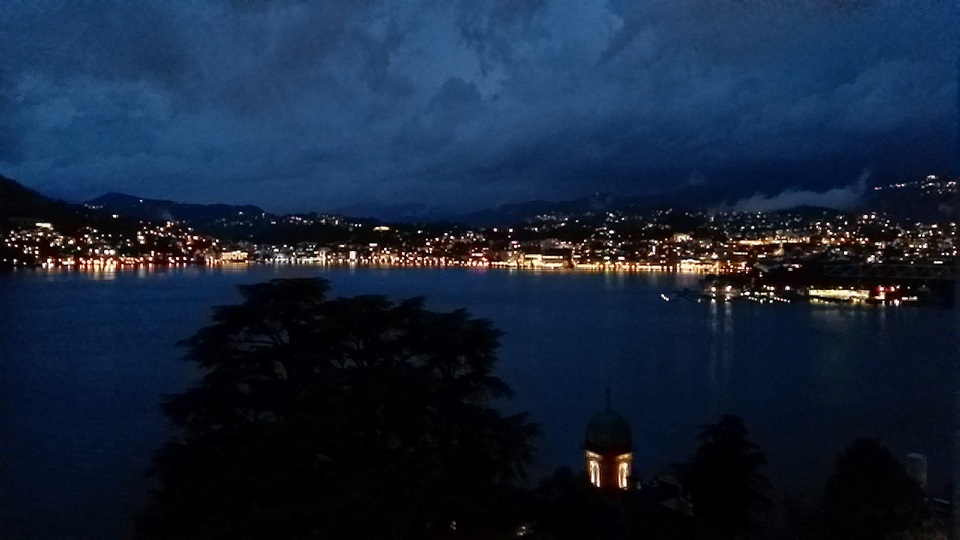
Lugano by night.  Foreground:  The dome of Villa Helios

3 Comments

Filed under Articles, Images, Musings, Writing Exercise

Odd Jobs #4: Chicken Sexers to Cup Keepers

Civil War Re-Enactors - Newsobserver-com

Photo credit:  Newsobserver.com

The jobs in this week’s list range wide in their requirements; while some require only natural skills, such as the organisational skills needed to be a closet organiser, or the brawn needed to muss up someone trying to steal your client’s car in Brazil (or South Africa – check out the comments on last week’s post), others require proof of one’s trustworthiness, such as the Crown Jeweller or the Cup Keeper, and some require specific training such as the re-enactor (besides being knowledgeable about the era they portray and its clothing, etc., they need to be physically fit to wield a sword for hours on end – even minutes on end!).  To be a crime scene cleaner, at least for violent crimes, I think one would need nerves of steel and a good therapist…

Of all the jobs on this list, I think the only one I’d really like is being a closet organiser; I actually did that once:  A family hired me to help sort out their cupboards; they literally could not find anything, and no wonder… dishes were stuffed in with board games and bedding, towels were on the out-of-reach top shelf of a hall closet far from the bathrooms while the other shelves were stuffed with candles, plant pots and other bedding, and their bedroom closets held more dishes, crafts supplies, books and even clothing.  I’d never seen such chaos, and it was a good project to sink my organisational “teeth” into!

  • Chicken Sexer: Determines the sex of a chick, relying heavily on intuition. Usually hired by commercial hatcheries, these professionals (who are more common in the UK and Japan) make up to $60,000 a year.
  • Chief Listening Officer: Monitors a brand’s presence across social media platforms.
  • Civil War Battlefield Re-enactor : This category could be expanded to any kind of re-enactor – Viking, British, Renaissance, Medieval, etc.
  • Closet Organizer
  • Colour Expert / Wardrobe Stylist
  • Crack Filler: Using a silicone sealant, they repair the wear and tear inflicted on monumental structures, like Mount Rushmore. The job description also includes repairs to blacktop, asphalt driveways and sidewalks, etc.
  • Crime Scene Cleaner
  • Crown Jeweller
  • Cruise Ship Entertainer
  • Cuidacarros (Brazil): Hire these guys to watch your car when you’re gone and beat up anybody trying to steal it.
  • Cup Keeper: Paid to babysit expensive trophy cups, such as the Stanley Cup, as they travel.

3 Comments

Filed under Articles, Lists, Musings, Research

Odd Jobs, #1: Pizza Lab Assistant

Have you ever stopped to think about how a product you use comes into being?  We know about the testing of cosmetics on animals, no matter how appalling that practice is to us, but what about products tested on humans?  How are paintball guns tested?  On live, moving (and well-paid) targets.  And who writes the messages in fortune cookies?  And if you think they taste-test dog food on dogs, think again… someone gets paid to eat it.  I came across an odd job in my online research recently, and it got me thinking about obscure professions.  I’ll be sharing them with you in small doses, as some of them are downright gross, while others seem on the surface to be dream jobs, yet when you shake a stick at them, they might not come up to snuff as a day-to-day routine.

When I was younger, I worked in various food industry jobs:  My very first job was a summer job working in a Dunkin’ Donuts; the first day or two, I thought I was in heaven; by the second week, I found myself craving savoury things like Doritos and burritos – anything to counter the incessant mist of powdered sugar inhaled and permeating my hair and skin and clothes.  A month later, I couldn’t even smell the sweet air.

Pizza Hut Lab Assistant, Photo ShootThat job was not in and of itself all that unusual; but the odd job I’d like to share with you today was one I worked at for a couple of years, off and on, through a temp service; I kept being called back for projects because the head chef liked working with me: In the Pizza Hut Laboratories, I assisted him in creating new doughs, sauces, and dishes to be served in Pizza Huts worldwide.  It was a fascinating job – before that, I’d never known what a difference 1 gram of yeast in a dough could make.
One memorable event from that time was assisting in the photoshoot for a billboard campaign; we needed four shots:  One whole deep-pan pizza, one slice of a deep-pan pizza, and one whole thin pizza and one slice of it.  For those four shots, we ensconced ourselves in the chosen photo studio for 10 days, nine-to-five, making literally hundreds of pizzas.  Steam doesn’t show up on photos, and back then – before the digital age – it couldn’t just be photoshopped in… it had to be produced with dry ice.  The pizza had 20 seconds to get from the oven to the studio across the hall before it would be declared “dead”… unusable for a photograph.

But have you ever seen a wilted, baked bell pepper strip, or a shrivelled mushroom?  They’re very unappetizing when blown up to billboard size, believe me.  However, according to the US regulations for advertising, we couldn’t just substitute those veggies for raw counterparts, as that would be fraudulent advertising – it had to be something customers could get in the restaurant.  So, we blanched vegetables (thus, technically cooked); when the pizza left the oven, we had 10 seconds to go in with toothpicks, loosen the melted cheese, slip the offending veggie out and slip in a replacement to that exact gap, then whisk it across the hall, where the photographer was ready for us.  At first, I was extremely popular with my friends, as we all had to take home tons of pizzas!  But after a few days, my friends and family were wishing I worked elsewhere… and still, the pizzas kept coming.  Needless to say, we got the shots, and we all survived the pizza overdose.

I remember one counterpoint to that penetrating smell of baking pizza:  The photographer had a coffee machine in which he brewed a caramel coffee that smelled absolutely heavenly!  I’ve never been a coffee drinker, but that was the closest I’d ever come to being tempted to try it!  The only thing that stopped me was knowing that it probably smelled much better than it could ever taste, and I didn’t want to ruin the one highlight of my pizza-riddled days.

6 Comments

Filed under Articles, Musings