Tag Archives: Etymology

Etymology Undusted: Catch-22

The idiom “Catch-22” comes from a book of the same title by American author Joseph Heller (1923-1999). The term originally referred to a military rule whose provisions are mutually frustrating. Heller used Catch-18 instead of Catch-22 when the first chapter of his book was originally published in 1955. He changed it by the time the entire book was published in 1961 because his publisher had already published a book that year with “18” in the title (Leon Uris’ novel, Mila 18). So in 1961, the phrase Catch-22 first appeared. It was first used figuratively in 1971 in Atlantic Monthly magazine. As far as the form goes, it is usually hyphenated and with a capital C, as that is the way Heller originally wrote it.

Since the author’s first usage of the idiom, it has taken on a life of its own: Today, its broader meaning is a paradoxical situation from which an individual cannot escape because of contradictory rules or limitations. It has also been used as a mnemonic for the symptoms of DiGeorge syndrome.

One particular quote from Heller is thought-provokingly insightful: “Everyone in my book accuses everyone else of being crazy. Frankly, I think the whole society is nuts – and the question is: What does a sane man do in an insane society?” In a way, this is perhaps an example of a Catch-22 for the sane person: If they stay in an insane society, they may lose their sanity; but by leaving such a society, they throw away any chance of bringing it back to a state of reason. Social and political polarisation are both poisons that infect society.

1 Comment

Filed under Etymology, Grammar, History Undusted, Images, Musings, Psychology Undusted, Quotes

History Undusted – The Tactile Language of the Quipu

Throughout history, languages have come and gone; an estimated 30,000 have existed at some point in time, though currently, there are roughly 6,000 to 7,000 languages in use – and most are threatened with extinction. Think about that. The impact on the loss of cultural history, connection to ways of thinking, ways of communicating, and ways of processing information; senses of humour, and national heritages will be lost.

An example of a language nearly lost, but which is now familiar to most of us by sight, is the logogram language of Egyptian hieroglyphs. The knowledge of how to interpret the symbols had been lost for centuries, until 1799, when a stone was found near Rosetta, along the Nile Delta in Egypt; the stone was a stele with a decree issued in 196 BC; the texts carved into the stone were Ancient Egyptian (“demotic” text), hieroglyphs, and Ancient Greek. Because Greek was a known language, they could use the Rosetta stone to decipher the forgotten languages.

When we think of writing, we may think of various alphabets: Greek, Roman (of which English makes use), Norse Runes, or the logographic or ideographic languages of Asia, such as Chinese or Japanese, or the cuneiform writing of the Ancient Near East. But did you know that there have been languages based on string?

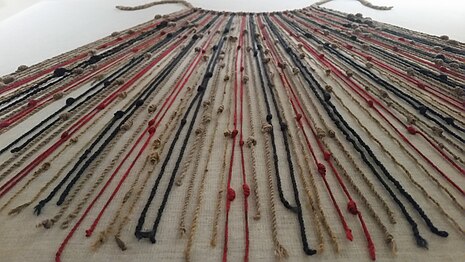
Quipu in the Museo Machu Picchu, Casa Concha, Cusco. Source: Wikipedia

The Inca people, in the region of modern Peru and Chile, used knots on an elaborate system of connected strings or cords for collecting data, keeping records, recording taxes or census records, making calendars, or for military organisation. When the Spanish Conquistadors swept through, they found numerous bundles of strings, but had no idea of their significance; they destroyed many of the quipu*, not realizing that they might have held in their hands a record of an individual’s wealth in animals or crops. [*Quipu is the Spanish spelling used in English; it is also spelled khipu or kipu.] Other cultures have also used similar concepts with knotted strings to record information, unrelated to South America; these include China, Japan, Taiwan New Zealand, Hawaii, and other parts of Polynesia.

As with most textiles, they unfortunately didn’t stand the test of time very well, and only a fraction remains today. The ancient world may have taken the concept of the quipu one step further in creating the more flexible abacus, though the latter was (and is still) used for temporary calculations, while the former was rather for recording information. Whether or not there is a historical link, both are visual tools that can be used for similar functions to a certain extent.

Even with such widespread use of these knotting records, their meaning was nearly lost, until a Harvard student, Manny Madrano, had time on his hands one summer and solved a centuries-old mystery!

For an interesting video on this topic, please click here. I hope you’ve learned something! Keep being curious about our fascinating world!

6 Comments

Filed under Etymology, History, History Undusted, Liguistics, Science & Technology, YouTube Link

Obscurities: Whilom

This word is doubly obscure, at least for me: Whilom (c. 1200), means having once been; former; once upon a time, erewhile, or at times past. It comes from the Old English hwilum, meaning at times, and is related to today’s while. It is doubly obscure for me because it has a similar formation to an equally obscure German word, weiland, meaning formerly, of yore. This German word is related to the modern weil, which is a false friend to the English word; the German word means because. The relation between the two is not a far stretch, as because implies that something happened in times past, once upon a time.

What do you think? Should we bring back whilom? I think, at any rate, we should start using of yore every chance we get!

3 Comments

Filed under Etymology, Grammar, History, Nuts & Bolts, Obscurities

When It Rains, It Pours

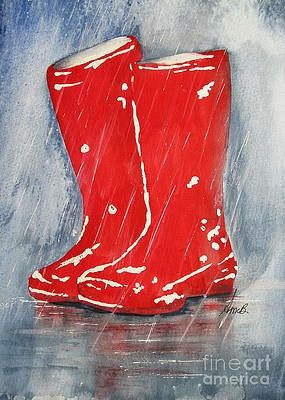
You’ve probably heard the saying, “When it rains, it pours” (or the British version, “It never rains but it pours”). The idiom refers to a series of unfortunate events occurring within a short amount of time.

I wouldn’t necessarily limit it to unfortunate events; sometimes they’re just inevitable occurrences or busy times. The latter two would describe my past few months: From mid-January to last weekend, one of our nephews was staying with us every weekend when he had time off from his basic military training; this 18-week period is mandatory here in Switzerland, but our nephew is half-Swiss, half-Mexican, and is currently living in South Africa, so he actually volunteered. Not only did he want to be near Swiss family and have the experience of being away from his home and in a camaraderie, but when he returns next autumn to begin university studies here, it would be easier for him to be accepted if he did so.

What that meant for us is that, though we really enjoyed having him here and spending time with him, the things that normally happen on weekends simply had no room, and the weeks were ultra-busy, leaving little time to tackle those things. When our nephew was here, the focus was on him; “Tia” (Spanish for “aunt”; Tio is “uncle”) was frequently heard. Laundry (tons of it!), cooking, shopping, meal-planning… they all happened much more frequently – he was a bottomless pit, as most teenage boys are. The first month or two were most intensive, as he had grown up with a maid – which he rapidly learned I am NOT. He learned a lot of “life lessons”, and about family house rules – things he’ll need to know when he finds a student flat-share; he learned to cook a few new meals, clean up the kitchen after himself, and how to cut his own hair. He learned that if he put his socks into the laundry bunched up into a ball, that’s exactly how he’d get them back – that, and we have no clothes dryer (only drying racks) – so timing on getting his clothes back clean and dry for the following week was a crash course. He learned to think about and change habits to reduce his environmental footprint.

My weekends were usually when I could plan, write and edit blogs. Because that time was either reduced or swallowed up entirely every weekend, some tasks took precedence; when I had time, focus and energy for writing, it went into getting my five books prepped for paperback release, and gradually getting them sent off for proof copies. So far, I’ve been able to release two of the five novels. The printer (who is either in England or in France) doesn’t ship to Switzerland (why do companies frequently act as if Switzerland is on another planet?!); it’s been a challenge getting the books to me – fortunately, some of our family lives in France, so they can receive it. Sometimes the packages are sent, sometimes carried by hand to closer family, sometimes handed off in car parks!

Two weeks before our nephew’s time here came to an end, we accidentally discovered that we’ve got a huge problem in our flat: Water damage coming from somewhere that will now require walls, floors, balcony tiles, windows and downstairs ceiling to be ripped out and repaired! Raining, pouring… For the past four years, repairmen have come and gone but none of them have gotten to the root cause. So this time, I’ll be watching them like a hawk and pestering them to push beyond their nose to find the actual cause, repairing that first! And that all begins this week.

After the past few intensive months, I’ve been trying to catch up on those things that, of necessity, were neglected, and those things I need to prepare for when our home is invaded by an army of repairmen – at least that’s what I’m imagining, though it will more likely be a steady stream of comings and goings, appointments, and cleaning up the aftermath of dust and debris…

And now that my schedule can resume a partial semblance of normal, I want to get back into creative writing – my next novel, as well as this blog! So many projects, so little time! But if a day had 40 hours, it would still not be enough to accommodate everything I’d like to do. Maybe it’s God’s mercy that we don’t have 40-hour days!

4 Comments

Filed under Articles, Family History, Musings

10 Everyday Phrases with Nautical Origins #3

Some of today’s nautical idioms are well known, such as to be on board with a proposal or suggestion or learning the ropes in a new job or position, while others, such as three sheets to the wind are less common (unless you happen to work in a bar – then it may come in quite handy). Either way, enjoy these, matey!

Be On Board: As part of a crew, a sailor bore their part of the responsibilities. In today’s terms, it means to accept or agree with a proposal or a way of doing something and go along with it.

Rats Deserting a Sinking Ship: Rats and mice were common aboard ships, often in the bulkhead (lowest section of a ship, where the grains were stored (the weightier things being stored low and balanced to keep the ship sturdy in rough seas). If the ship began to take on water, the rats would go up the deck ladders to stay away from the water; if they started jumping overboard, sailors wouldn’t stand much better of a chance (most sailors could not swim). It’s a vividly grim picture of life aboard. Now, it’s an idiom describing people abandoning a failing activity or situation.

Close/Tight Quarters: Tightly packed (e.g. people in a small space). Space was at a premium, especially on the lower decks of a ship of sail. Men slept in hammocks close together and shared the space with stowed ship equipment and their own storage chests. Even today on submarines, bunks are shared by those who are off-duty and those on-duty to save sleeping quarter space.

Run a Tight Ship: Manage and organization strictly, efficiently, and effectively. A ship, especially in times of war, was run tightly to avoid unnecessary dangers and/or deaths, and to maintain discipline that would be needed to succeed in crucial moments.

Learn the Ropes: Sails were raised and lowered with ropes, and knowing how to control the sails allowed a ship to take full advantage of the wind and sail safely. There were miles of ropes on a ship, each with an important and specific function. Learning the ropes was essential for everyone aboard – it would keep others out of danger and oneself alive! Today, one learns the way things are done in a given setting or situation.

Broadside: The broadside was the side of the ship which sat above the waterline; cannons were arranged on several decks, and when ships sat broadsides facing, firing simultaneously, it was known as broadsiding. Today, it refers to being taken off guard or being surprised by something unpleasant.

 Broad in the Beam: Describes the width of the beam or mast on a larger ship. It denotes a person who’s wide across the hips and buttocks.

Keel Over: To collapse, to die. If the keel of a boat were to rise out of the water, the ship would be in danger of capsizing; this might happen due to a storm or damage by an enemy attack.

To Keelhaul: To rebuke harshly. It was a punishment meted out in extreme cases by dragging someone, ankles weighted, by ropes beneath the ship along or over the keel (the backbone of wood along the bottom of the ship). As these were usually covered with barnacles, clothes and skin would be shredded by the barnacle shells, and if the salt water of the ocean didn’t disinfect the wounds on the way up, it could be a death sentence. How much it was actually practised is difficult to say, as written records are sparse (perhaps a cruel captain didn’t want it on record, or perhaps it was not as widely practised as we think); the most concrete records of the punishment come from the Dutch. It was banned by the British Royal Navy around 1720, and by the Dutch around 1750. That bans were necessary tells its own tale…

Three Sheets to the Wind: Implies an unsteady, drunk person. The sheet referred to the ropes (lines) used to control the trim (the advantageous angle of the sails in relation to the wind) of the sail. If the sheets are loose, the sails will flap in the wind which causes the ship to lurch about like a drunken sailor. There are variations of the number of sheets in the idiom: 1 would be tipsy, 3 would be staggering drunk!

3 Comments

Filed under Etymology, History, History Undusted, Lists, Military History

History Undusted: William Caxton (the father of English as we know it today)

I’ve been trying to blog the last few weeks, but to do so, it helps to be logged in to WordPress – and it kept logging me out every time I switched to my site. I finally found the solution this morning, so here I am!

One thing I’ve been ruminating about is the etymology of everyday words; words come from somewhere, and I’ve always wondered what word(s) were used before a word came along. There are famous examples of invented words that never stuck, such as Lewis Carol’s “Jabberwocky“, but what I’m referring to are common words. What did they use before the word “egg” came along? The word itself comes from Old Norse, eggys, eggja, or egge, but before the common spelling was decided on, every English dialect in Britain had at least a couple of different spellings of the word!

William Shakespeare (1564-1616) is sometimes credited with having created upwards of 1,700 words, but many of those were likely already in circulation – he simply wrote them down in his plays. Some words accredited to him are: dishearten; dislocate; auspicious; obscene; monumental; majestic; accommodation; amazement; dwindle; exposure; bloody; countless; courtship; impartial; gnarled; gloomy; generous; reliance; pious; inauspicious; bump; frugal; submerge; critic; lapse; laughable; lonely, suspicious, and many, many more.

But long before William Shakespeare drew breath, there was another William who influenced English in profound ways, and yet his name is little known today: William Caxton. Born around 1420, he was a merchant, printer and the first English retailer of books; he introduced the printing press to England, set up in Westminster, 1476. Though he published many books, the first book he is known to have published is The Canterbury Tales, by Geoffrey Chaucer (1340s – 1400); that work alone is credited with influencing both the English language and literature, as it shows a clear correspondence between the rhythm of written English poetry and the cadence of spoken English. Chaucer is also known for having looted the French language, bringing into English such words as governance, paramour, difficult, dishonest, edifice, and ignorant, to name a few. Chaucer was aware of the wide variety of English dialects, which we would never recognize as English today, and he was anxious about the confusion of languages in Britain and that his work would be able to be comprehended in the future. In his poem, Troilus and Criseyde, he bids it a poignant but troubled farewell: “Go, litel bok . . . And for ther is so gret diversite In Englissh and in writyng of oure tonge, So prey I God that non miswryte the [thee]. . . . That thow be understonde, God I biseche!”

However, because William Caxton chose to publish Chaucer’s work, we still have it to this day. Caxton was also the first to translate Aesop’s Fables into English (1484). Although he was not a great translator and sometimes simply used the French word “Englishified”, his translations were popular; because of that, he inadvertently helped promote Chancery* English as the standard English dialect throughout England. (*Chancery refers to the dialect used by the officials of Henry V’s government). Thanks to men like William Caxton and those who followed, refining and shaping the language we know today, we are able to enjoy a standard English spelling and grammar structure that is understood around the world; there are still regional and national dialect differences, but we can be understood wherever in the world English is used.

If you’d like to learn more about this topic, one book I can highly recommend is Melvyn Bragg’s The Adventure of English (The Biography of a Language); it’s available in physical form, e-book, and audiobook.

William Caxton

8 Comments

Filed under Etymology, Grammar, History, History Undusted, Links to External Articles, Lists, Poetry

Obscurities: Anthropause

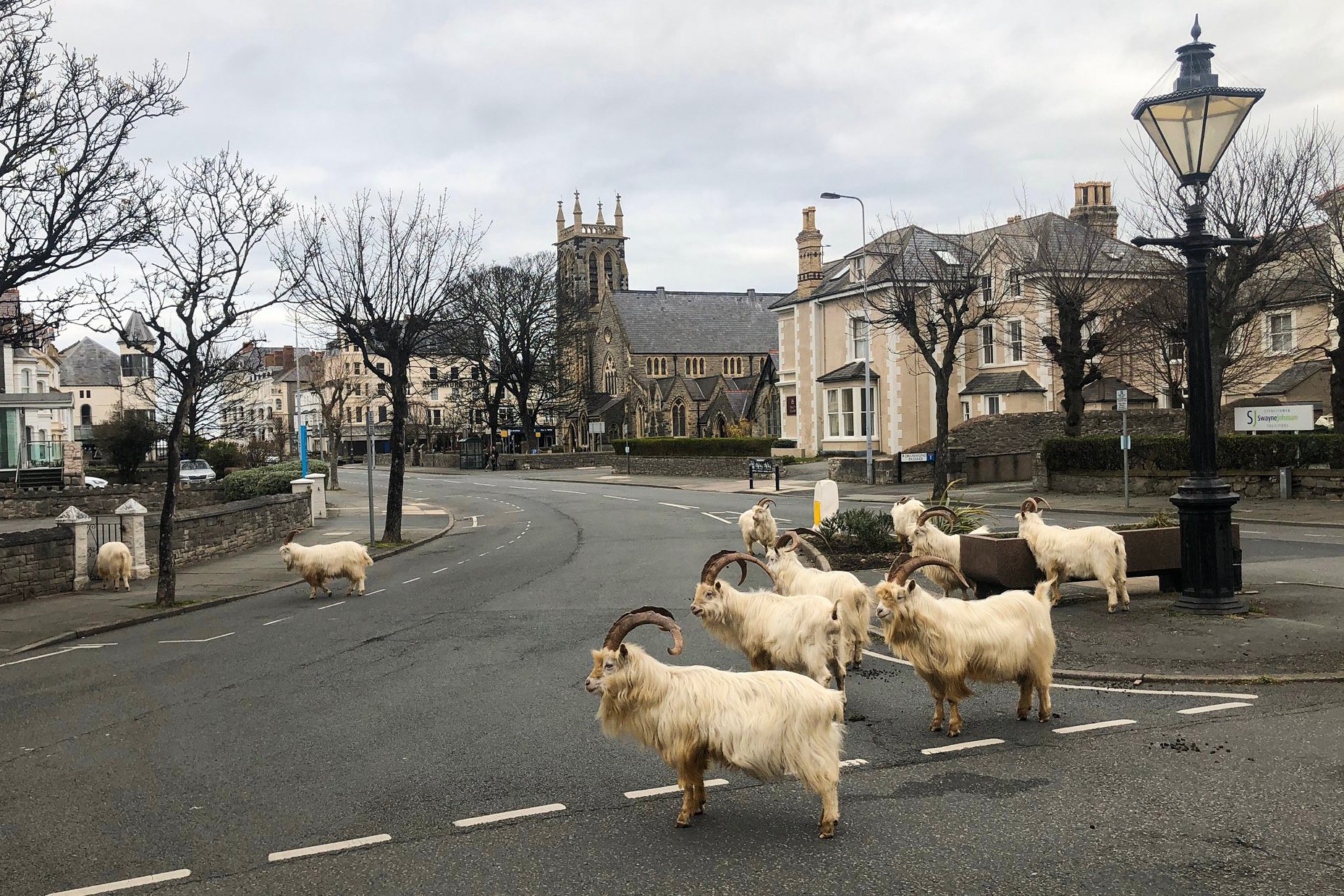
I came across this word today, and knew I had to find out more: Coined by scientific researchers in 2020, it refers to the impact on wildlife that Covid-19 has had; specifically, the pause of mankind on a global scale through lockdowns and travel restrictions.

Whales have changed their conversations – it’s quieter out there, with fewer cruise ships (those massive floating cities can drown out every other sound in underwater monitors for an hour as they pass by); Pumas have been spotted roaming through Santiago, Chile, and flocks of Flamingos have landed in the waterways of Mumbai, India. The wild animals that live in cities, coming out only at nights in normal times, have started coming out to play in broad daylight. Birds, who have had to learn to call louder to attract mates in areas with traffic, can suddenly be heard loud and clear.

Not all changes have been positive, however; we live in a complex world, and in a world where some people will take advantage of the situation: Poaching has risen, as has Amazon deforestation. But on the whole, wildlife has benefited from the absence or reduction of human activity and presence. Roadkill has been reduced, and in those areas near nesting sites, such as beaches, birds have been laying more eggs than in previous years, possibly because they feel safer and are less disturbed by human noise pollution. Studies are beginning to emerge about just how the withdrawal of humans on a mass scale is impacting the environment and wildlife, and I hope that one of the results of such research is a plan for making our lives on a global scale become more compatible with, and supportive of, nature and natural rhythms.

In the meantime, with lockdowns continuing in many parts of the world (and because one never knows when and how travel restrictions will return, and no one wants to get stuck paying for a hotel in a foreign country for weeks on end of quarantine, travel is largely self-restricted), mankind is safely behind closed doors, and wildlife will come out to play.

Photo credit: NY Times, Andrew Stuart

Leave a comment

Filed under Articles, Etymology, Nature, Obscurities, Science & Technology

Psychology Undusted: Lines of Desire

Have you ever felt guilty for taking a shortcut across a grassy patch rather than following the official concrete path? Or have you ever noticed a bare strip through grass? These are known as desire paths, or lines of desire (the latter term comes from the French phrase, “lignes de désir”, from the French philosopher Gaston Bachelard’s 1958 book, “The Poetics of Space”).

Architects would be well advised to pay attention to these worn paths when planning official paths through public parks or around businesses, because no matter how neat their officially-laid paths look, those lines of desire will continue to be followed and worn into the earth. Perhaps it’s a manifestation of democracy triumphing when a desire path gets paved over after the fact.

So why do they happen? Sometimes it’s a question of taking a shortcut from one building to the next, or from one corner to the next. Sometimes they are made out of consideration for others: During the pandemic, new lines of desires began appearing, but rather than being shortcuts, they simply ran parallel to existing paths – these were likely an attempt at avoiding proximity with others when passing on a side walk. Desire paths can be seen as the paths of least resistance, or as a silent protest against being told where to walk or how to get from points A to B. These paths have been seen as symbols of rebellion, anarchism, individual creativity, intuitive design, opportunities to take fate into one’s own hands even if treading the expected nine-to-five otherwise, or even as a passive aggressive reaction against authority.

Many languages have their own terms for desire paths or lines of desire: In Dutch, they’re known as “elephant paths”, and in French, they’re known as donkey paths, while the Germans, pragmatically, call them “trample paths” (so unimaginative!) But the diversity proves that desire paths are a universal human tendency.

Some businesses or schools, such as the University of Michigan, waited until students and staff showed them where paths would be most appreciated before paving them in; the aerial view (Google Earth) over the campus shows the intricate weave of the lines of desire that would likely not have occurred to the landscape architects:

I’d encourage you to take a walk, keeping an eye out for those lines of desire near you; if you’d prefer not to go out, then take a virtual walk – google the term “desire paths” in the image mode, and see just what pops up! Enjoy!

Personal update:

For those of you following our situation, I will say that the day after my last update everything got turned on its head once again! Chemo has been delayed another 3-4 weeks, as my husband ended up in emergency again, and they finally decided to rebuild his stoma before starting chemo. He’s now back home after over a week in the hospital, and is gaining appetite, and hopefully gaining weight again now! He’ll have a couple weeks to recover before the next phase of his treatment takes off… that’s as of THIS moment. Planning further ahead than a day is a bit pointless right now, so it’s a wait-and-see game…

9 Comments

Filed under Articles, Etymology, History Undusted, Science & Technology

History Undusted: Limbo

Over the past year and more, we’ve all experienced limbo in one form or another: Lock downs, restrictions, cancellations of events or flights or holidays or plans to meet up with friends, and the uncertainty of how long it will all last. Then there is the feeling of limbo that comes with my personal situation of waiting for the cascade of appointments for my husband’s chemo to begin; we had a set-back last week with a bacterial infection and a week’s hospitalization, so we’ll just have to wait and see if he can keep the appointments already made or not. Limbo. Waiting to find out if he can be brought home tomorrow. Limbo.

My writing, both in the forms of this blog and of my manuscript, have both been sucked into the state of limbo as well, as I’ve spent most of the past few weeks, and more intensively the past three days, on the phone with people who’ve asked how we’re doing, or answering messages on my phone or social media. Sometimes I feel like my manuscript is calling for me to work on it, and I’m trying to reach it while wading toward it waist-deep in a thick sludge of other priorities – it’s been just out of reach for days, because by the time I actually reach it, I have no energy left.

As I was thinking about those limbo moments, I actually started wondering just where the limbo dance comes from, historically; I remember doing it as a child – the local indoor skating rink played limbo every night. So, here’s a brief low-down on the low-down dance:

The origins are vague, as is the etymology of the name: Starting in late-1800s Trinidad, the name might have come from the Jamaican English “limba“, i.e. limber. Interestingly, the game is used in Africa as a funeral game, and there may be a connection between the two regions through the slave trade which brought Africans to the Jamaican islands, as it is also a popular “dance” for wakes in Trinidad. The rules are simple: a person passes under a bar, face-up, with the only body part allowed to touch the ground being the feet. The game is considered the unofficial national game of Trinidad and Tobago, it only began to gain popularity beyond the region in the 1950s; it was adopted in the mid-1950s as a form of physical exercise for American military troops. It was often attempted to a rhythmic song, and one of the most popular was the Limbo Rock, by Chubby Checker. Just listening to the song brings back the feeling of the cool breeze blowing around the skating rink as people sped to get in line for the limbo stick as soon as they heard the music start over the loudspeaker!

As we face our own times of limbo in this age of Corona, or in the circumstances we find ourselves in, perhaps it would perk up our spirits to hum the Limbo Rock and take it with a bow and a smile.

5 Comments

Filed under Articles, Etymology, History, History Undusted, Military History, Research, Snapshots in History

Virtual Tour 5: Switzerland

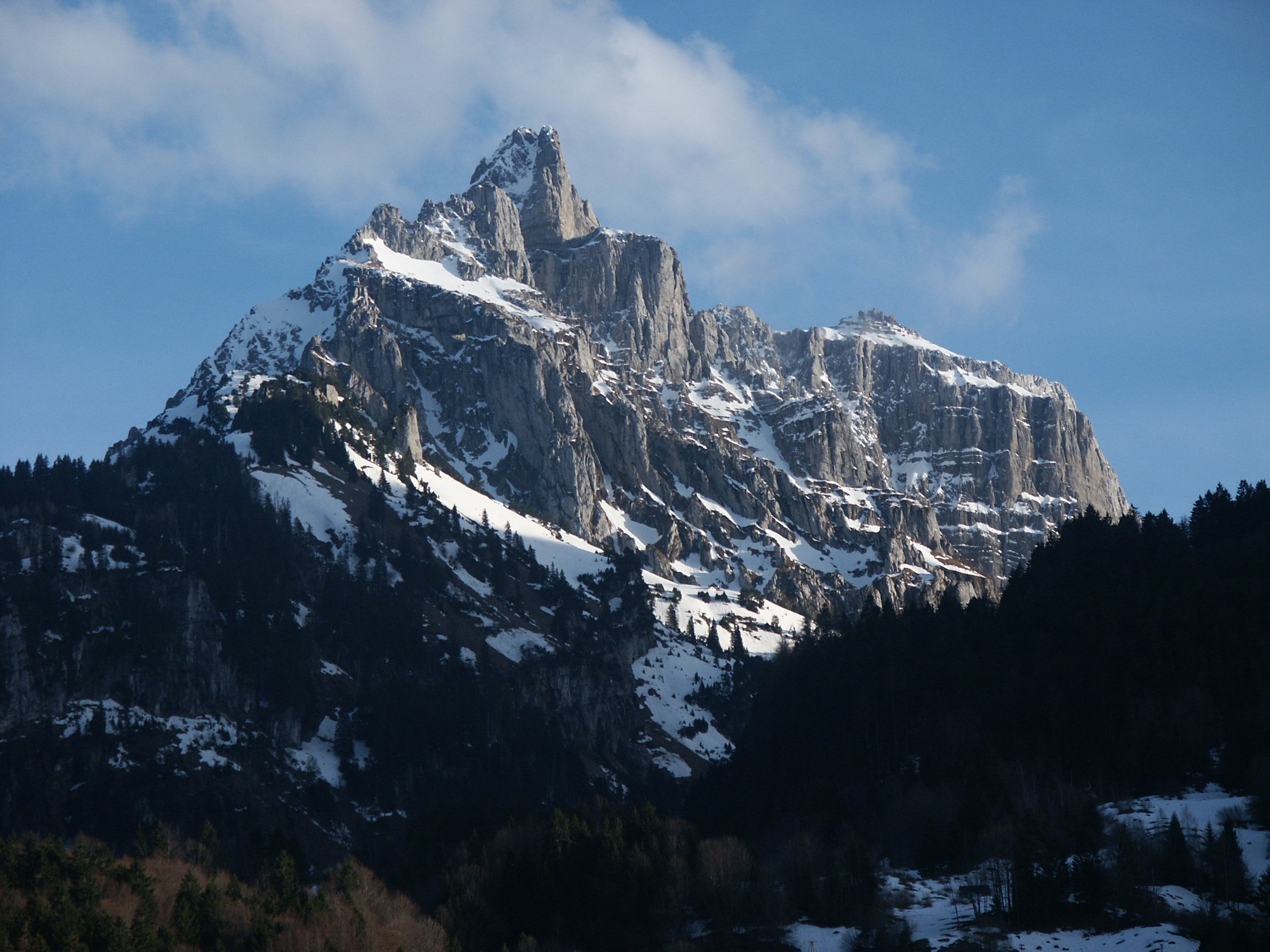
View from Lihn, Switzerland. Taken by Stefan Huesler in March 2005

Today’s tour brings you to my neck of the woods, so to speak: Switzerland. How many mountains we have here depends on who you ask; whatever the exact number, I can say that it’s hundreds. Even the Swiss Plateau, while technically lying between the Jura Mountains and the Alps, is mostly hilly. But perhaps what Swiss would consider a hill, others would view as a mountain. So what’s the actual difference between the two? That’s a grey area, at best: A hill is a landform that rises above the surrounding terrain and does not usually have a defined summit (peak); a mountain has a limited or defined summit area, and rises 300 metres or more above the surrounding landscape. While hills may be a result of glacial flow, erosion of surrounding regions, or faulting, mountains are formed through volcanic activity or faulting. But notice – both hills and mountains can be formed by faulting (the shifting of tectonic plates).

Whatever you call them, Switzerland is full of the beauties. They influence weather, sometimes dramatically, from one side to the other; while Lugano usually has Mediterranean weather, the northern side of the mountains has a cooler climate. Once, as we came over the Gotthard mountain pass from Lugano toward home on a warm, sunny day, we saw a wall of white cloud ahead, clearly defined on the road; when we drove into it, it was absolutely white, and we were unable to see much ahead. Not fog. A cloud. Where we live, our wet weather usually comes from the local mountain range; if the wind shifts from that direction during a grill dinner on our balcony, grab your plates and get inside before it hits.

Did you know that the term homesickness comes from the Swiss German word Heimweh (= home + ache)? It was exported in the 17th century by Swiss merchants and mercenaries working abroad, and refers not to family or house, but to the mountains and their longing for the sights of the Alps.

Below are a few links:

With the first, you can choose various panoramic starting points, exploring visually and/or with information about each point of interest.

Switzerland Virtual Tours

The second link takes you to live webcams in Switzerland, where you can see what’s going on. Keep in mind that if you’re looking at these webcams at the time of my uploading this blog (February 2021), we are currently in lockdown due to the second wave of COVID-19, so activity is far less than when shops are open (if you’re looking at town centres or skiing zones), though in town centres you’ll see kids riding bikes home from school in the afternoons, around 16:00 Swiss time (e.g. the town centre Appenzell webcam). Come back in a few weeks, and activity will have picked up once again. Hopefully!

Swiss Webcams

The third link takes you to a YouTube live webcam feed that switches locations occasionally, giving you an overview of several sites. The music they play over this live feed is a bit monotonous, so I’d suggest turning on your favourite musical alternative and muting the actual video.

24/7LIVEWebcams,Switzerland- YouTube

However you choose to enjoy this tour, welcome to Switzerland! Let me know what you viewed, and what you experienced, in the comments below!

2 Comments

Filed under Articles, Etymology, Links to External Articles, Nature, Virtual Tours